

Experts believe the devastating wildfires in Hawaii are the result of a combination of factors that have long existed in the archipelago and have precedents.
After winds from a storm caused wildfires to spread across the Hawaiian Islands, USA, in 2018, researchers sifted through countless scientific documents to find similar disasters. They found two.
Now, wildfires fueled by storm winds have once again ravaged residential areas in the state, killing at least 80 people and nearly destroying the historic town of Lahaina.
Scientists and wildfire activists say the fires in Hawaii have been amplified by multiple factors and that more disasters could occur in the future.
Elizabeth Pickett, co-director of the Hawaii Wildfire Response Organization, said that while the fires this past week came as a surprise to many, they weren't entirely unexpected. Despite its many rainforests and waterfalls, Hawaii is a place of consistently hot weather, and temperatures are rising.
"We couldn't adjust everything, but this disaster was predictable," she said.
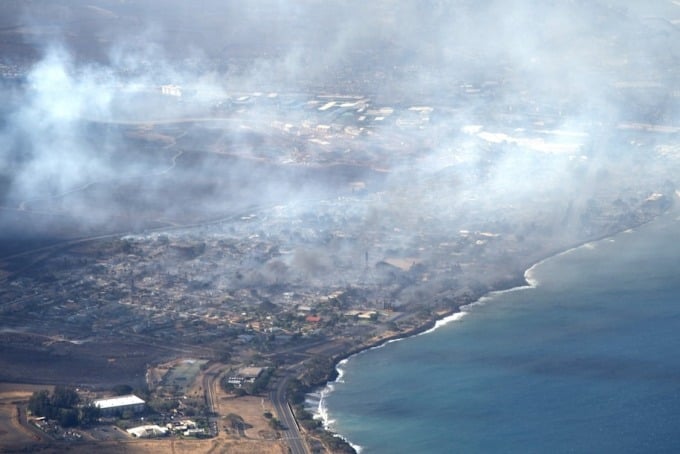
Smoke rises from wildfires in Hawaii on August 10. Photo: AFP
Wildfires began spreading across Maui, Oahu, and the Big Island of Hawaii on August 8th when the National Weather Service issued a red alert. Much of the state had been experiencing months of drought, particularly the area surrounding the town of Lahaina.
This means that even a small spark can quickly ignite a wildfire on vegetation already parched by the heat. And, due to the wind, the fire spreads toward populated communities.
Strong winds are common in Hawaii. Even in typical summer weather, wind speeds can reach 65 km/h. But the winds that swept across the islands and fueled wildfires last week were particularly strong, with gusts exceeding 130 km/h on both the Big Island and Oahu, and reaching nearly 108 km/h on Maui, according to data from the National Weather Service.
Some Hawaiian officials admitted the scale of the fires surprised them. "We didn't anticipate that a storm that didn't affect our islands could cause such devastating wildfires," said Lieutenant Governor Josh Green.
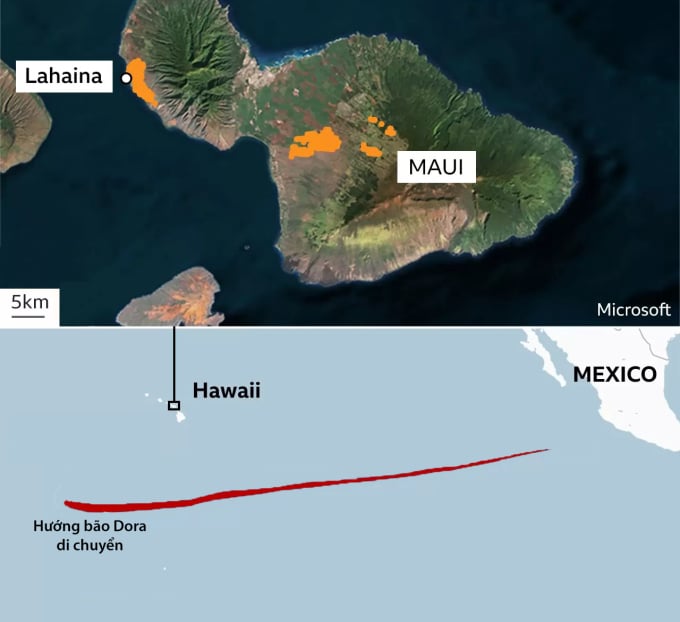
Location of Maui island and the path of Hurricane Dora. Graphic: BBC
The winds, believed to be the product of a difference in atmospheric pressure between a high-pressure area in the North Pacific and a low-pressure area at the center of Hurricane Dora, were hundreds of kilometers south of the Hawaiian Islands on August 8.
Alison Nugent, a meteorologist from the University of Hawaii, said that even without Hurricane Dora, the impact of normal winds, which are relatively dry and blow along the slopes of Hawaii, would have been enough to cause the fires to flare up intensely. But according to her, Hurricane Dora contributed to the increased wind intensity.
Similar scenarios occurred in two examples the researchers found. In 2007, a tropical storm caused smoldering wildfires in Florida and Georgia to flare up intensely. A decade later, wildfires across Portugal and Spain killed more than 30 people when a storm swept across the coasts of those two countries.
Nugent said there is a perfectly valid reason for scientists to worry that future storms, even those that rarely make direct landfall in Hawaii but only pass through, still pose a risk of causing significant damage to the archipelago.
Although there is no clear link between human-induced climate change and drought in Hawaii, the general trend in the region is decreasing rainfall and increasing numbers of consecutive dry days.
Ian Morrison, a meteorologist in Honolulu, Hawaii, said this year's monsoon season brought below-average rainfall, meaning the weather will be unusually dry as summer approaches.
One factor increasing the risk of wildfires in Hawaii is the growth of non-native, flammable grasses. Like much of the rest of the archipelago, Maui's native vegetation has been replaced by sugar and pineapple plantations and cattle ranching. However, in recent decades, agricultural activity has declined significantly.
Nugent's research shows that before Hurricane Lane struck in 2018, 60% of the land previously used for farming and livestock in Hawaii had been abandoned. This land was then overgrown with flammable grasses such as lemongrass or pampas grass, which had been brought to the islands to cover barren pastures and for ornamental purposes.
Both species have adapted to thrive after wildfires, providing more fuel for subsequent fires and outcompeting native vegetation.
"It's like throwing a ton of weeds into your backyard and then planting some really fragile plants in between," says Lisa Ellsworth, an associate professor at Oregon State University who has studied invasive weeds in Hawaii. "It's a cycle that creates more invasive weeds and more wildfires."
Researchers found that non-native, flammable grasslands and scrublands accounted for more than 85% of the area burned in wildfires caused by Hurricane Lane in 2018. Local fire response agencies estimate that such areas now cover about a quarter of Hawaii's land area.
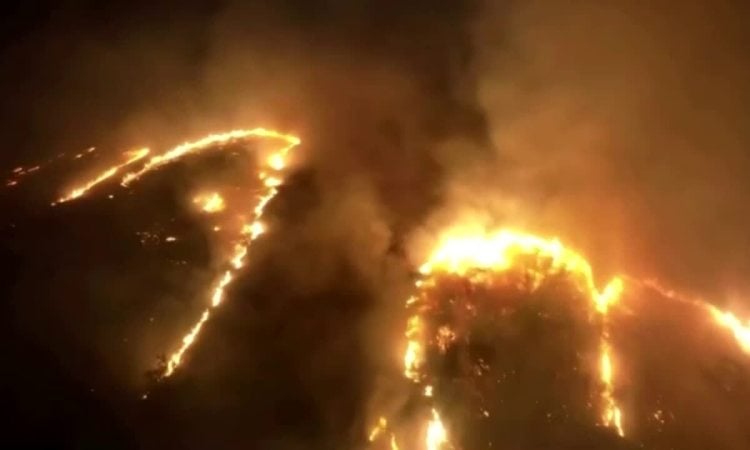
Wildfires ravage a resort town in Hawaii. Video : Reuters, AFP
This type of vegetation often runs along densely populated areas with many valuable properties. Therefore, according to Pickett, the government needs to invest significantly and implement new policies so that such communities can respond promptly to the fire risks they face.
In addition to material damage and loss of life, the effects of wildfires also damage the landscape of Hawaii in the long term.
Unlike the western United States, where moderate fires can improve forest health (recycling essential nutrients for plants), Hawaii's ecosystems are not adapted to coexist with wildfires, assesses Melissa Chimera, coordinator from the wildfire prevention organization Pacific Fire Exchange.
Native vegetation that is burned does not regrow but is replaced by invasive species. A wildfire in 2007 almost completely destroyed the yellow hibiscus, the iconic flower of Hawaii, on Oahu Island.
On the other hand, rain can also wash fire debris into the ocean, suffocating coral and degrading water quality.
"For the ecosystem of the area, fire has no effect whatsoever," Chimera said. "Absolutely none."
Vu Hoang (According to Washington Post )
Source link




































































































Comment (0)