

Ms. Lo Thi Thuy, Vice President of the Women's Union of Son Lam commune, shared with Vietnam Women's Newspaper about the changes and development direction of tourism in the locality.
- Son Lam is a mountainous commune, primarily inhabited by the Thai and Khmu ethnic groups. After many years of resettlement, how has the local area changed today, Madam?
Son Lam commune was formed by merging Thanh Son and Ngoc Lam communes, in accordance with the administrative unit reorganization policy. The residents are mainly Thai and Khmu ethnic minorities who previously lived in the old Tuong Duong district and had to relocate to make way for the Ban Ve Hydropower project. Leaving their ancestral land to move to a new area was not easy, both psychologically and in terms of livelihood.
In the early years after moving to their new settlement, the people faced immense difficulties. The soil, climate, and farming practices were all different. Many households were unfamiliar with the new production methods, resulting in unstable incomes, and at times, some even returned to their old homes. However, thanks to the attention of the Party and the State, the decisive involvement of the Party committee, the government, and various organizations, along with the people's own efforts, Son Lam gradually stabilized.
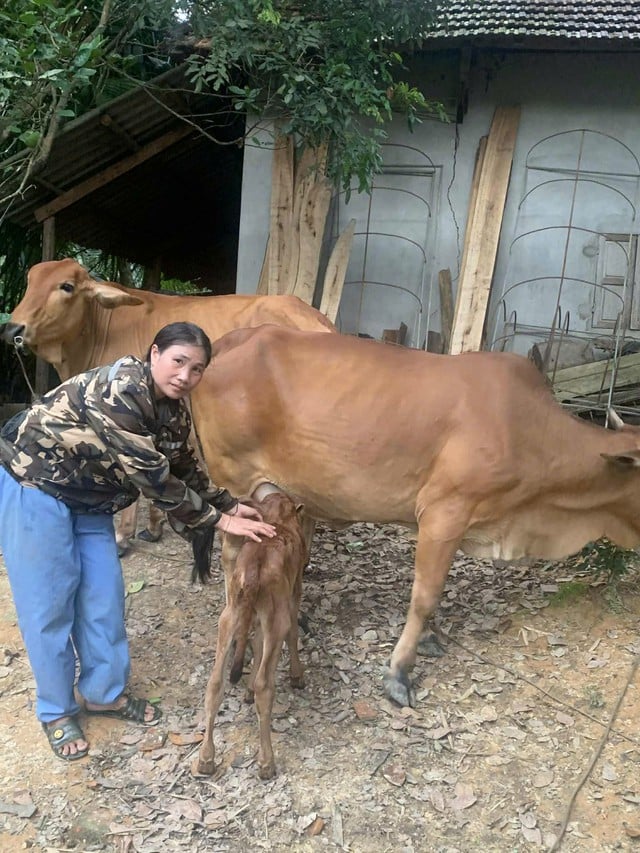
Poor women in Son Lam commune receive support in the form of breeding cows.
Compared to 10-15 years ago, Son Lam today has changed remarkably. The internal road system has been gradually invested in, the national power grid has reached the villages, and economic forestry, tea cultivation, and livestock farming models are gradually taking shape. The material and spiritual lives of the people have improved significantly.
While poverty remains a problem, most households now enjoy stable lives and no longer face the hardships of the past. More importantly, people have gradually changed their mindset regarding business, no longer relying on others but proactively seeking new opportunities.
- Why did Son Lam choose tourism development as one of its key priorities, Madam?
Son Lam boasts a very special "treasure" bestowed by nature: Liep Waterfall. Located deep within the primeval forest, the waterfall cascades down from the Truong Son mountain range over many layers of rock, creating a majestic yet poetic scene. Notably, the water is clear and cool year-round, quite safe, and ideal for experiential tourism, swimming, and picnicking.
Around 2017, as the number of spontaneous visitors to Liếp Waterfall increased, some households started selling drinks and food. At that time, the path to the waterfall was just a small trail, making travel very difficult, but those initial steps opened a new door for the service industry.
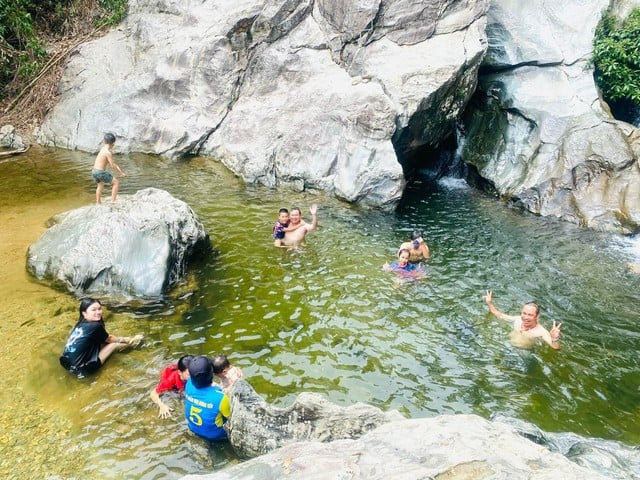
Liếp Waterfall is considered a gift from nature to the forest.
Initially, only a few households participated, but gradually more households invested in restaurants, parking services, and selling local specialties. However, because it is a spontaneous model, it still has many limitations such as a lack of planning, a lack of professional tourism skills, and inadequate control over environmental hygiene.
Recognizing the enormous potential but also the obvious shortcomings, with the support of the local government, the Thac Liep Cooperative was officially established in June 2024 with 19 members. This is a crucial turning point, transforming tourism activities from spontaneous to an organized, managed, and sustainably oriented community economic model.
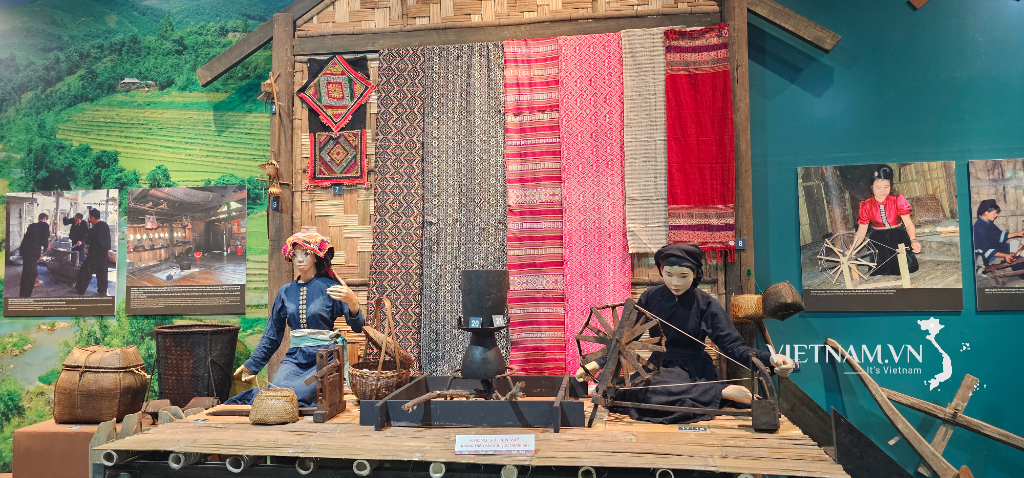
We have clearly identified tourism as the most suitable path to help people escape poverty sustainably while preserving their cultural identity. Therefore, along with developing services, the locality pays special attention to restoring and maintaining traditional crafts such as brocade weaving, making bamboo-cooked rice, and brewing herbal rice wine. These products not only serve tourists but also tell the cultural stories of the Thai and Khmu people in Son Lam.
- What role has the Women's Union of the commune played in the development of tourism, Madam?
The Women's Union of Son Lam commune is a very important force in developing community tourism. In fact, women are directly involved in many aspects such as cooking, running homestays, selling souvenirs, and introducing local cuisine and culture.
Right from the start of identifying the direction for tourism development, the Women's Union of the commune proactively coordinated with relevant departments and organizations to organize training courses to improve the skills of its members. The training content was very diverse, ranging from skills in welcoming guests, communication, service, food safety and hygiene, to how to operate homestay models and provide services according to standards.
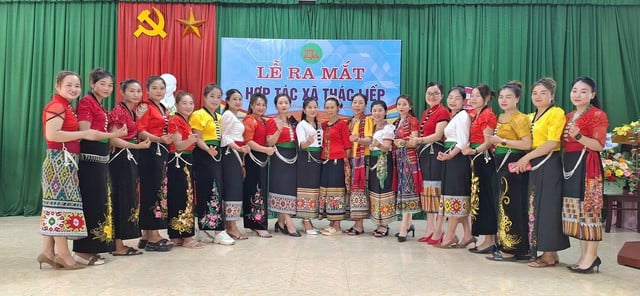
The establishment of the Thac Liep Cooperative has transformed tourism activities from spontaneous to a community-based economic model with organized management and a sustainable development orientation.
Most recently, on November 26-27, the Nghe An Union of Science and Technology Associations, in coordination with the Son Lam Commune People's Committee, organized a training conference to enhance knowledge on rural tourism and community tourism in a green and environmentally friendly direction. Participants were equipped with knowledge on the foundations of ecotourism and community tourism; how to build and operate rural tourism models linked to the new rural development program; and the principles of sustainable tourism development, harmonizing economic, social, and environmental benefits.
In addition to theoretical training, local people are also guided on how to exploit the cultural value, landscape, and local products to create unique tourism products; skills in serving and managing guesthouses, restaurants, and homestays; and knowledge of legal matters, finance, marketing, and tourism promotion.
Following the training course, the Nghe An Union of Science and Technology Associations also provided essential equipment such as water heaters, sanitary equipment, mirrors, basins, tables and chairs, bedding, trash cans, and financial support for upgrading floors and tiling... These items were handed over to cooperative members and homestay households, helping them feel more confident when welcoming guests.
For women, these training courses not only help improve their skills but also help them change their mindset, from "working out of habit" to "providing professional service".
- What difficulties and challenges is Son Lam facing during the implementation process, Madam?
The biggest challenge currently remains the transportation infrastructure. Although the road to Liếp Waterfall has been improved, many sections are still difficult to navigate, especially during the rainy season. This significantly impacts the attraction of tourists.
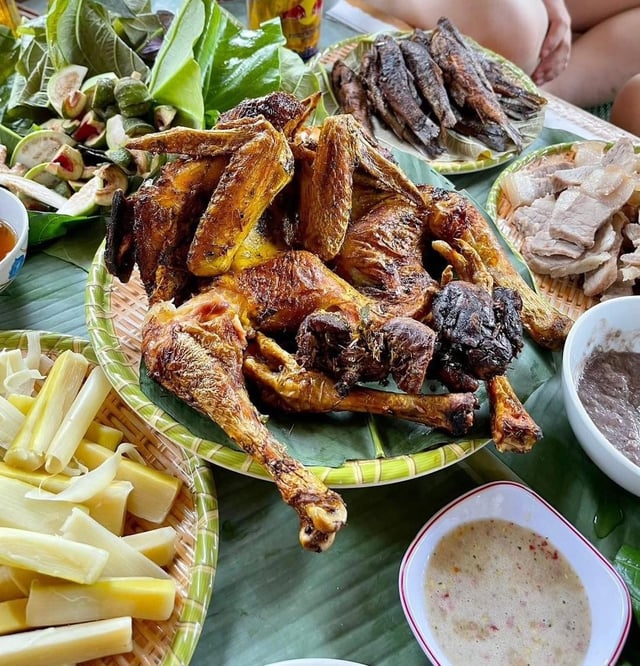
Famous Thai dishes in Son Lam
The second difficulty is investment capital. To engage in tourism, households must invest in infrastructure such as toilets, guest rooms, kitchens, and equipment… while most people have limited financial resources.
Another challenge is that the local people are still relatively new to developing a professional approach to tourism. Maintaining the environment, behaving courteously towards tourists, and ensuring safety during the exploitation of the waterfall and stream all require regular guidance.
Furthermore, balancing economic development and cultural preservation is a complex challenge. If not handled carefully, it can easily lead to commercialization and the loss of the essence of cultural identity.
- What kind of results has the application of digital technology in tourism promotion yielded, Madam?
It can be said that digital technology is Sơn Lâm's biggest "lever" today. Because we have almost no budget for traditional advertising, using Facebook and TikTok to post images and videos of Liếp Waterfall and the cultural life of the local people is a very suitable approach.
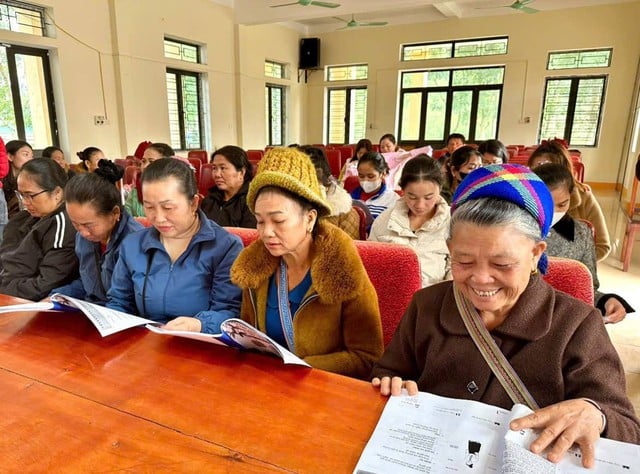
Training and educating people in Son Lam on rural tourism and community-based tourism in a green and environmentally friendly direction.
Thanks to social media, images of Liếp Waterfall have become widely known. Many tourists seek information and book services directly via phone, Facebook, and TikTok, helping to reduce intermediary costs and increase income for the local people.
Technology not only helps promote the beautiful scenery but also allows us to tell authentic stories about the people and culture of Son Lam, about bamboo-cooked rice, fermented rice wine, Thai dances, and brocade weaving looms. These things create a strong emotional connection with tourists.
- What are your expectations for the future of tourism in Son Lam?
We aspire for Son Lam to become a unique eco-tourism and community-based tourism destination in western Nghe An province. There, visitors can not only admire the waterfalls and bathe in the streams but also immerse themselves in the local culture and experience the lives of the people. We urgently need attention and investment from all levels of government regarding transportation infrastructure, parking facilities, waste management systems, and specialized tourism training programs.
I believe that, with the determination of the Party Committee, the government, and the people, along with the supportive role of the Women's Union, Son Lam will soon become a bright spot for tourism in Nghe An, contributing to job creation, increased income, and sustainable poverty alleviation for the people.
Thank you very much, Madam!
Source: https://phunuvietnam.vn/bat-song-cong-nghe-de-danh-thuc-du-lich-vung-cao-son-lam-238251210182111722.htm

































![[Video] The craft of making Dong Ho folk paintings has been inscribed by UNESCO on the List of Crafts in Need of Urgent Safeguarding.](https://vphoto.vietnam.vn/thumb/402x226/vietnam/resource/IMAGE/2025/12/10/1765350246533_tranh-dong-ho-734-jpg.webp)









































Comment (0)