

Modernizing tax administration
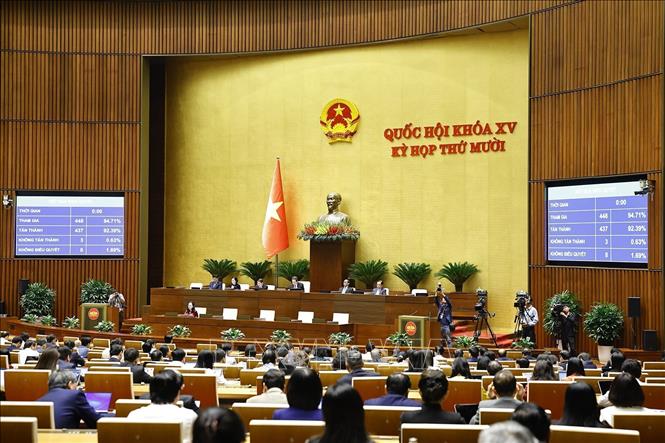
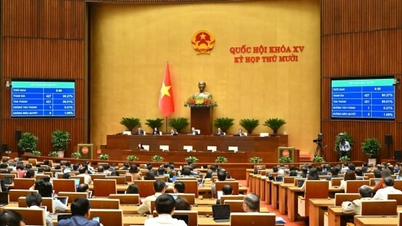
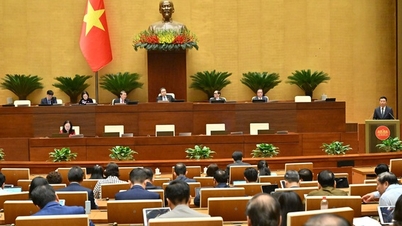
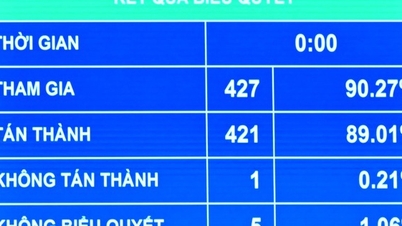
With 437 out of 448 participating delegates voting in favor, representing 92.39% of the total National Assembly delegates, the National Assembly passed the draft Law on Tax Administration (amended). The Law on Tax Administration (amended) comprises 9 chapters and 53 articles, built on the spirit of comprehensive reform, ensuring the full institutionalization of the Party, National Assembly, and Government's policies on institutional reform, digital transformation, and modernization of tax administration, in line with the new organizational structure of the tax sector.
The law takes effect from July 1, 2026, but regulations on tax management for business households, individual businesses and electronic invoices will take effect earlier, from January 1, 2026.
The amended Law on Tax Administration introduces several new points. Accordingly, the Law tightens the management of e-commerce taxes by requiring e-commerce platforms to pay taxes on behalf of sellers. This is one of the most important measures to combat tax evasion in the digital age. The Law stipulates that foreign organizations and individuals doing business on e-commerce platforms are subject to taxation. Specifically, for households and individuals doing business on e-commerce platforms with order placement and payment functions, the platform management organization (domestic or foreign) is responsible for deducting, declaring, and paying taxes on behalf of the sellers. This regulation aims to simplify procedures for citizens and enhance the efficiency of budget revenue collection.
Notably, the new law changes the method of tax management for household businesses. Accordingly, from January 1, 2026, the method of tax management for household businesses will undergo a significant transformation. Instead of applying a flat-rate tax as before, tax calculation will be based on actual revenue generated. The tax authorities will support the automatic creation of tax returns based on electronic invoice data generated from cash registers and databases connected from other sources. This helps to increase transparency of tax obligations and minimize risks for taxpayers.
In addition, the Law expands the subjects of temporary exit suspension to prevent tax evasion. The Law allows additional declarations after the conclusion of tax inspection and examination; promotes automatic tax refunds and tax exemptions. Regarding debt settlement, the Law provides a transitional mechanism allowing the settlement of debts arising before July 1, 2026 according to new regulations, helping to thoroughly resolve "virtual" debts that have been over 10 years old and are no longer recoverable by enterprises whose licenses have been revoked.
Official increase in personal allowance.
With 438/443 National Assembly deputies participating in the vote in favor, accounting for 92.60% of the total number of National Assembly deputies, the National Assembly passed the draft Law on Personal Income Tax (amended).
The Law on Personal Income Tax (amended) consists of 4 chapters and 30 articles with many new points: increasing family deductions, adjusting the progressive tax schedule and raising the threshold of non-taxable revenue of business households to a more appropriate level.
The law contains several new provisions compared to the current law. Notably, the law increases the personal allowance to 15.5 million VND/month. Responding to feedback from the National Assembly Standing Committee and National Assembly deputies, the Government has officially incorporated the new allowance into the law. Specifically, the allowance for the taxpayer themselves has increased to 15.5 million VND/month (instead of the current 11 million VND); the allowance for each dependent has increased to 6.2 million VND/month (instead of the current 4.4 million VND); the law mandates the Government to submit to the National Assembly Standing Committee proposals to adjust these levels in the future based on price and income fluctuations, ensuring flexibility to suit the socio- economic situation.
The law also reduces tax rates for wage earners at middle-income levels. The progressive tax schedule has been revised to reduce tax liability and avoid sharp increases in tax rates between levels.
One of the provisions that attracted the attention of National Assembly deputies in the draft Law is the tax policy for business households. Incorporating the opinions of National Assembly deputies, the draft Law passed by the National Assembly raised the threshold of non-taxable revenue. Accordingly, the threshold of non-taxable revenue was raised from the current level of VND 100 million (and VND 200 million in previous draft Laws) to VND 500 million/year. Thus, business households with revenue of VND 500 million or less will not have to pay personal income tax.
To help manage the gold market and combat speculation, the law stipulates a personal income tax on income from the transfer of gold bars at a rate of 0.1% on the transfer price for each transaction. However, to protect the rights of people hoarding gold, the government will specify a tax threshold for gold bars. Individuals who buy and sell gold for savings or safekeeping purposes below this threshold will not be taxed.
The law also expands the scope of tax exemptions to encourage labor and innovation, such as a 100% tax exemption on night work and overtime pay (instead of only exempting the higher pay portion as before); a 5-year tax exemption on income from salaries and wages of high-tech personnel and high-quality digital technology industry personnel; and tax exemption on income from the first transfer of carbon credits and green bonds.
The law is expected to take general effect from July 1, 2026. However, to help people benefit from the increased family deductions and reduced tax rates, regulations related to income from salaries, wages and business income will be applied earlier, from January 1, 2026.
Making waste prevention a mandatory regulation.
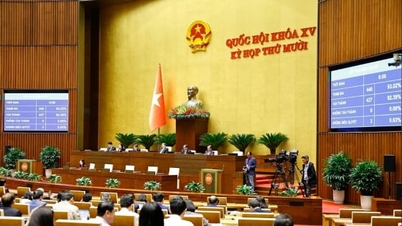
With 433/440 delegates participating in the vote in favor, accounting for 91.54% of the total number of delegates, the National Assembly passed the draft Law on Thrift and Anti-Waste.
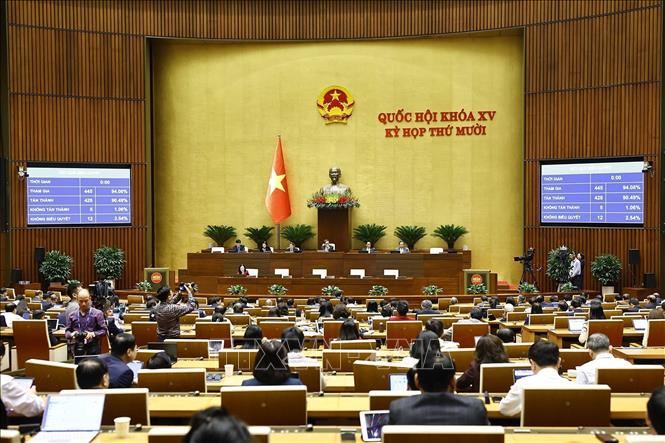
The Law on Thrift and Anti-Waste consists of 6 chapters and 38 articles. Compared to the current Law on Practicing Thrift and Anti-Waste 2013, the new Law changes its name to "Law on Thrift and Anti-Waste".
According to the government, removing the word "practice" aims to highlight the urgency and decisiveness in the current context. Saving and combating waste is not merely a matter of "practice," but must become a mandatory regulation, a social ethical standard, and a decisive factor for the country to enter a new era.
The law has several notable new points in terms of content. Accordingly, the law clearly defines the scope of application between the public and private sectors, in which regulations for the state sector are mandatory, while those for production, business, and consumption activities of the people are encouraged, without deeply interfering in the management and use of resources by the private sector.
The Law expands and clarifies the concepts of "saving" and "waste", in which saving is not only using less than the norm, but also includes "using the correct norms, standards, and regimes but achieving results higher than the set target"; waste is defined as including creating barriers to socio-economic development, missing out on development opportunities for the country.
The Law also institutionalizes Party regulations, detailing wasteful behaviors in specific areas such as public finance; public investment capital; resources, energy; public assets... This helps to clearly identify behaviors for handling, avoiding misunderstandings with law-making activities.
The law dedicates a specific article to regulating the rights, obligations, and protective measures for those who fight against waste and their relatives (including spouses, parents, and children). This regulation is consistent with Regulation No. 231-QĐ/TW of the Politburo, ensuring the safety and rights of those who report or expose waste.
A new and humane aspect of the Law is found in Articles 6 and 37, which clearly distinguish between wasteful behavior due to irresponsibility and objective risks. Officials who are dynamic, innovative, creative, and willing to think outside the box and act for the common good, or who accept risks in scientific research, will be considered for exemption, waiver, or mitigation of responsibility.
To reduce administrative burdens and ensure long-term vision, the Law stipulates that the Prime Minister shall promulgate a National Strategy on Waste Prevention and Control with a 10-year vision, instead of only establishing a Program on practicing thrift and combating waste as before.
The Law stipulates the establishment of a National Database on thrift and anti-waste managed by the Government; taking May 31 of each year as "National Day of Thrift and Anti-Waste" to spread the culture of thrift throughout society.
The Law on Thrift and Anti-Wastefulness takes effect from July 1, 2026. The Law on Practicing Thrift and Anti-Wastefulness No. 44/2013/QH13 will expire from this point.
Source: https://baotintuc.vn/thoi-su/bieu-quyet-thong-qua-2-luat-thue-va-luat-tiet-kiem-chong-lang-phi-20251210101404511.htm
![[Photo] The captivating scenery of the fragrant maple forest in Quang Tri](/_next/image?url=https%3A%2F%2Fvphoto.vietnam.vn%2Fthumb%2F1200x675%2Fvietnam%2Fresource%2FIMAGE%2F2025%2F12%2F10%2F1765353233198_lan09046-jpg.webp&w=3840&q=75)


![[Photo] Explore the US Navy's USS Robert Smalls warship](/_next/image?url=https%3A%2F%2Fvphoto.vietnam.vn%2Fthumb%2F1200x675%2Fvietnam%2Fresource%2FIMAGE%2F2025%2F12%2F10%2F1765341533272_11212121-8303-jpg.webp&w=3840&q=75)



















![[Video] The craft of making Dong Ho folk paintings has been inscribed by UNESCO on the List of Crafts in Need of Urgent Safeguarding.](https://vphoto.vietnam.vn/thumb/402x226/vietnam/resource/IMAGE/2025/12/10/1765350246533_tranh-dong-ho-734-jpg.webp)




































































Comment (0)