

The principle of "acting proactively, proactively, and not waiting until an outbreak occurs" has been concretized through practical actions and has initially yielded clear results.
Dengue fever is an acute infectious disease transmitted by mosquitoes, which can occur at any age and can easily become severe if not detected and treated promptly. |

From the beginning of 2025 to the present, the whole country has recorded more than 32,000 cases of dengue fever. In the context of rainy, hot, and humid weather conditions ideal for disease-carrying mosquitoes to thrive, the Ministry of Health assesses that the risk of an outbreak is entirely possible if preventive measures are not implemented synchronously and decisively.
However, the health sector also affirmed that the epidemic is still under control thanks to the early intervention of relevant agencies and authorities at all levels.
According to Mr. Vo Hai Son, Deputy Director of the Department of Disease Prevention (Ministry of Health), dengue fever is an acute infectious disease transmitted by mosquitoes, which can occur at all ages and can easily become severe if not detected and treated promptly.
Each year, the world records approximately 390 million cases of the disease, primarily in Southeast Asia, the Western Pacific , the Americas, and Africa, where about 2.5 billion people live in endemic areas.
In Vietnam, the disease is endemic in most localities, with approximately 100,000 cases and nearly 100 deaths each year. The epidemic typically surges from June to November, not only in the South but also in the North, Central, and Central Highlands regions, which have been recording an increasing trend in cases in recent years.
As of July 8, 2025, the whole country had recorded 32,189 cases of dengue fever, including 5 deaths. Compared to the same period in 2024, the number of cases decreased by more than 11%, and the number of deaths decreased by 1 case.
However, the pandemic situation poses many potential risks, especially in localities such as Ben Tre, Tay Ninh, Long An, Dong Nai and Ho Chi Minh City, where high increases have been recorded, ranging from 150% to over 340% compared to the same period last year.
Mr. Son warned that Vietnam is currently entering the peak season for dengue fever, which lasts from June to December. Hot, humid weather and heavy rainfall create favorable conditions for disease-carrying mosquitoes to thrive. Notably, the outbreak cycle in recent years has been shortening, from 5 years to 3-4 years.
The most recent major outbreak in 2022 recorded over 370,000 cases nationwide. Therefore, without timely and strong intervention, a resurgence of the disease in 2025 is entirely possible.
According to Mr. Vo Hai Son, Deputy Director of the Department of Disease Prevention, Ministry of Health, the dengue fever epidemic is currently well controlled, but the current weather conditions are very favorable for the development of disease-transmitting mosquitoes, therefore the risk of an increase in the number of cases in the coming time is entirely possible.
Years of practical experience have shown that the number of cases tends to increase from June to December each year, coinciding with the rainy season nationwide.
Another worrying point is that the dengue fever outbreak cycle is shortening from about 5 years to 3-4 years. The most recent outbreak in 2022 recorded more than 370,000 cases. "If localities do not decisively implement prevention measures from the beginning of the season, the risk of a resurgence of the disease in 2025 is very high," Mr. Son warned.
Therefore, the Ministry of Health did not wait until an outbreak occurred to act. Throughout the first half of 2025, the Ministry continuously issued directives to the entire health system and local authorities to proactively participate in epidemic prevention and control with the spirit of "early and proactive." These specific actions have shown positive results, according to Mr. Son's assessment.
As early as April, the Ministry of Health sent a document to the People's Committees of provinces and cities requesting them to strengthen measures to prevent and control dengue fever, while also observing ASEAN Dengue Prevention Day.
By May 24, 2025, the Ministry will continue to launch a peak campaign in June and July, when the risk of the epidemic reaches its peak. In addition, the Ministry will coordinate with the Ministry of Education and Training to implement epidemic prevention and control measures in schools, especially in high-risk areas, to protect students' health.
According to Mr. Son, localities have proactively taken action. Many provinces and cities have identified hotspots, old outbreaks, and high-risk areas to organize close monitoring, detect cases early, and handle them promptly, preventing the spread of the disease.
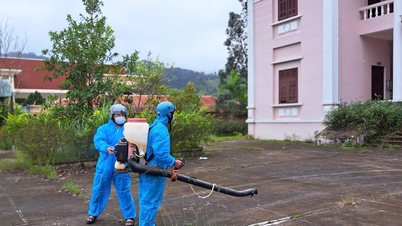
Chemical spraying to kill mosquitoes and eliminate mosquito larvae and pupae has been implemented vigorously. "Early and targeted implementation has significantly contributed to stabilizing the epidemic situation to date," he affirmed.
Not only the healthcare system, but also the political system at the grassroots level has been mobilized. Authorities at all levels, socio-political organizations, neighborhood committee officials, and influential community members actively participate in disseminating information and guiding people to eliminate mosquito breeding grounds within their households. Many localities have launched comprehensive disease prevention campaigns down to the commune and ward levels, especially in remote areas with limited sanitation.
In addition, the Institutes of Hygiene and Epidemiology and the Pasteur Institute have sent numerous working groups to support, inspect, and guide high-risk localities in handling outbreaks correctly, monitoring cases early, and promptly addressing the first case. According to Mr. Son, this proactive approach helps to "contain and quickly suppress" potential outbreaks, contributing to effective control of the rate of spread.
In terms of communication, the Ministry of Health has identified this as a fundamental solution for raising public awareness. Communication campaigns are being implemented widely through radio, newspapers, social media, and direct outreach within the community.
Simple messages like "Sleep under a mosquito net even during the day," "Cover water containers," and "10 minutes a week to kill mosquito larvae" are widely disseminated, easy to remember, and easy to implement, helping people proactively prevent the spread of the disease at home.
The treatment system has also been thoroughly prepared. Hospitals have implemented a tiered treatment system to avoid overcrowding, while also preparing medications, intravenous fluids, chemicals, personnel, and equipment to effectively receive and treat patients, reducing the risk of death. The Ministry of Health requires enhanced training in diagnostic and patient classification skills, especially at the grassroots level.
“Through monitoring, the campaigns that have been implemented are proving effective. Local authorities have organized intensive communication campaigns reaching every household, focusing on disadvantaged areas and ethnic minority communities. Environmental sanitation activities, removal of stagnant water containers, mosquito larva eradication, and sleeping under mosquito nets have been implemented simultaneously, contributing to limiting the increase in the number of cases,” Mr. Vo Hai Son emphasized.
Representatives from the Department of Disease Prevention highly appreciated the decisive involvement of all levels of government, departments, organizations, and the people.
However, Mr. Son also noted that to maintain results and effectively control the epidemic during the season, prevention activities need to be persistent, continuous, and widespread, with the participation of every household. "Epidemic prevention is not just the responsibility of the health sector; each citizen is a crucial link in preventing outbreaks," he concluded.
According to Mr. Son, dengue fever is a mosquito-borne disease, so controlling the disease vector is a key factor. Therefore, the Ministry of Health has mobilized the entire political system, from all levels of government and neighborhood organizations to mass organizations, to disseminate information and guide people in implementing disease prevention measures in their own households.
Removing stagnant water sources, cleaning water tanks, eliminating mosquito larvae, and sleeping under mosquito nets even during the day are all practical and effective measures that people can proactively implement.
Alongside disease prevention efforts, the Ministry of Health is also paying special attention to the treatment system. Hospitals have been instructed to prepare adequately in terms of personnel, medicines, intravenous fluids, and equipment, while also implementing a clear tiered treatment system to reduce overcrowding, improve admission and treatment efficiency, and minimize mortality risks. Training and skill development in patient diagnosis and classification for grassroots healthcare workers is also being intensified.
Regarding the public, the Ministry of Health advises against complacency and negligence in disease prevention. To prevent dengue fever, people need to implement a comprehensive set of measures such as: covering water containers tightly, removing waste materials that collect water, changing the water in flower vases regularly, introducing fish into aquariums, sleeping under mosquito nets even during the day, wearing long clothing, and using mosquito repellent.
In particular, if you experience symptoms such as fever, you should immediately go to a medical facility for examination, diagnosis, and timely treatment. Absolutely do not self-medicate at home.
Notably, dengue fever vaccines are now being offered as a service at some medical facilities. Mr. Vo Hai Son believes this is an important step forward, contributing to proactive disease prevention and protecting public health. However, vaccines cannot completely replace traditional disease prevention measures.
Source: https://baodautu.vn/bo-y-te-hanh-dong-tu-som-tu-xa-de-phong-chong-dich-sot-xuat-huyet-d328370.html


![[Photo] Prime Minister Pham Minh Chinh holds a phone call with the CEO of Russia's Rosatom Corporation.](/_next/image?url=https%3A%2F%2Fvphoto.vietnam.vn%2Fthumb%2F1200x675%2Fvietnam%2Fresource%2FIMAGE%2F2025%2F12%2F11%2F1765464552365_dsc-5295-jpg.webp&w=3840&q=75)


![[Photo] Closing Ceremony of the 10th Session of the 15th National Assembly](/_next/image?url=https%3A%2F%2Fvphoto.vietnam.vn%2Fthumb%2F1200x675%2Fvietnam%2Fresource%2FIMAGE%2F2025%2F12%2F11%2F1765448959967_image-1437-jpg.webp&w=3840&q=75)















































![[OFFICIAL] MISA GROUP ANNOUNCES ITS PIONEERING BRAND POSITIONING IN BUILDING AGENTIC AI FOR BUSINESSES, HOUSEHOLDS, AND THE GOVERNMENT](https://vphoto.vietnam.vn/thumb/402x226/vietnam/resource/IMAGE/2025/12/11/1765444754256_agentic-ai_postfb-scaled.png)



































Comment (0)