

Cooked rice becomes cooked rice. When rice cools, its starch structure changes, increasing the content of resistant starch. This type of starch is not absorbed in the small intestine, thus helping to reduce post-meal blood sugar spikes and prevent sudden glucose spikes. This benefit is not present in freshly cooked, hot white rice, according to the American website Eating Well .
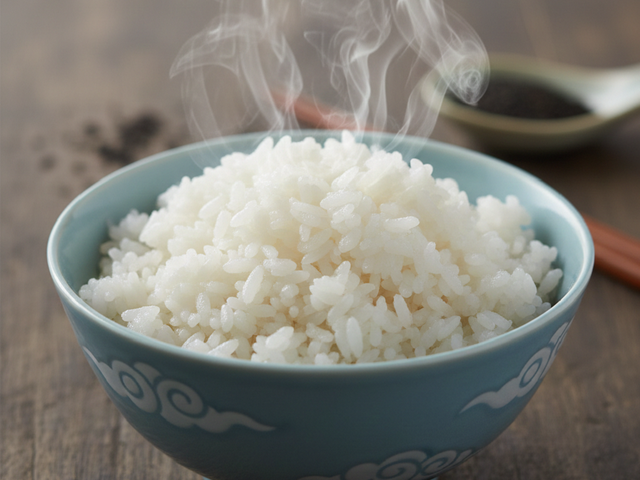
White rice that has cooled or been refrigerated will have an increased amount of resistant starch.
PHOTO: AI
When rice is cooked, the starch in it becomes soft and easy to digest. If you eat white rice, the starch will be digested and converted into glucose in the small intestine. This glucose is absorbed into the bloodstream and causes a rapid increase in blood sugar levels.
However, if cooked rice is allowed to cool or refrigerated, the starch structure will change. A portion of the rapidly digestible starch will transform into resistant starch. Resistant starch is a form of starch that digestive enzymes in the small intestine have difficulty or cannot break down. Therefore, resistant starch is not converted into glucose but instead travels to the large intestine, similar to dietary fiber.
The result is that it helps prevent blood sugar levels from rising too high after meals. This is especially beneficial for people with diabetes or those who want to control their weight.
In a study published in the Asia Pacific Journal of Clinical Nutrition , scientists compared the amount of resistant starch in three types of rice: hot rice, rice left to cool for 10 hours at room temperature, and rice refrigerated at 4 ° C for 24 hours and then reheated.
The results showed that in 100 grams, the amount of resistant starch in hot rice was only about 0.64 grams. Meanwhile, this figure was about 0.96 grams in rice that had cooled for 10 hours, and 1.65 grams in refrigerated rice. In the study, the group that ate refrigerated rice had a lower post-meal glycemic response than the group that ate hot rice.
One thing to note is that while cooled and refrigerated rice has an increased amount of resistant starch, it still contains easily absorbed starch. Eating large quantities of this type of rice can still cause blood sugar levels to rise.
To produce resistant starch effectively and ensure food safety, cooked rice should be cooled quickly, then refrigerated and stored below 4-5°C. If left at room temperature for too long or improperly stored, bacteria such as Bacillus cereus can grow and cause food poisoning.
When reheating leftover rice, it's best to heat it to around 70-80°C to ensure food safety. However, avoid adding too much water or cooking it for too long at very high temperatures. This can reduce some of the resistant starch that has already formed. Gentle reheating, such as microwaving or quick steaming, will better preserve the amount of resistant starch, according to Eating Well.
Source: https://thanhnien.vn/com-nguoi-va-com-nong-loai-nao-it-lam-tang-duong-huyet-hon-185251211201028105.htm



![[Photo] Prime Minister Pham Minh Chinh holds a phone call with the CEO of Russia's Rosatom Corporation.](/_next/image?url=https%3A%2F%2Fvphoto.vietnam.vn%2Fthumb%2F1200x675%2Fvietnam%2Fresource%2FIMAGE%2F2025%2F12%2F11%2F1765464552365_dsc-5295-jpg.webp&w=3840&q=75)

![[Photo] Closing Ceremony of the 10th Session of the 15th National Assembly](/_next/image?url=https%3A%2F%2Fvphoto.vietnam.vn%2Fthumb%2F1200x675%2Fvietnam%2Fresource%2FIMAGE%2F2025%2F12%2F11%2F1765448959967_image-1437-jpg.webp&w=3840&q=75)









































![[OFFICIAL] MISA GROUP ANNOUNCES ITS PIONEERING BRAND POSITIONING IN BUILDING AGENTIC AI FOR BUSINESSES, HOUSEHOLDS, AND THE GOVERNMENT](https://vphoto.vietnam.vn/thumb/402x226/vietnam/resource/IMAGE/2025/12/11/1765444754256_agentic-ai_postfb-scaled.png)











































Comment (0)