

When we think about improving brain health, we often think of activities that stimulate thinking, such as solving crossword puzzles or Sudoku.
But a sharp mind doesn't just come from brain games; it also comes from daily habits, starting with diet.
There are certain common foods and drinks that brain health professionals such as neurologists and neuroscientists try to avoid as much as possible.
Here are seven of them:
1. Protein powder
If you're used to adding a scoop of protein powder to your smoothie every day, you should probably reconsider or at least double-check the ingredients.
Although protein powders are advertised as a healthy, low-calorie option suitable for those wanting to lose weight, many types contain a lot of artificial sweeteners, according to neuroscientist Friederike Fabritius (USA).
“It’s those additives that worry me about protein powder, because they disrupt the gut microbiome,” Fabritius said. “A healthy microbiome is incredibly important for brain health, since most neurotransmitters are produced in the gut.”
2. Soft drinks
My condolences to soda lovers. Neurologist Shaheen Lakhan says soda is "one of the worst foods for the brain" due to its very high simple sugar content.
"Simple sugars damage the blood vessels that nourish the brain," he said. "Over time, this deprives the brain of the necessary energy, leading to premature dementia and stroke. In the short term, sugar also causes brain inflammation, irritability, poor mood, and sleep disturbances."
Furthermore, the constant "on-off" sensation creates an addictive mechanism, accompanied by cravings for sweets and discomfort when deprived.
"Even diet or calorie-free sodas have a negative impact, because the additives stress the brain and trick the body into craving real sugar," he said.
3. Margarine
Trans fats are trans fatty acids, also known as trans fatty acids or artificial isomers of fatty acids. They are formed during food processing, through the hydrogenation of cooking oils, to help food last longer, look more appealing, and be more attractive to consumers.
Neurologist Shae Datta (USA) says she avoids margarine because it contains trans fats. (However, some margarines now do not contain trans fats – check the ingredients carefully.)
“We often hear that trans fats are bad for the heart and blood vessels. That’s also true for the blood vessels of the brain,” she said. “A study in the journal Neurology showed that older adults with high levels of elaidic acid (a type of trans fat) in their blood have a higher risk of dementia. It’s best to use real olive oil or butter.”
5. Beer

"Beer is just empty calories and has no nutritional value," says neurologist Byran Ho (Movement Disorders Program, Tufts Medical Center, USA).
Dr. Byran Ho said: "Alcohol is a neurotoxin that can damage both the central and peripheral nervous systems even when consumed in moderation."
6. Decaf coffee (decaffeinated)
If you enjoy decaf coffee, neuroscientist Sean Callan (CEO of Ellipse Analytics) advises against it unless you are certain the decaffeination process does not use chemical solvents.
“The solvents used to extract caffeine are often toxic to the body,” he said. “Many are associated with an increased risk of cancer or nerve damage, especially with repeated exposure. For example, methylene chloride—a common solvent in decaf—can cross the placenta, posing a risk to the fetus.”
7. French fries
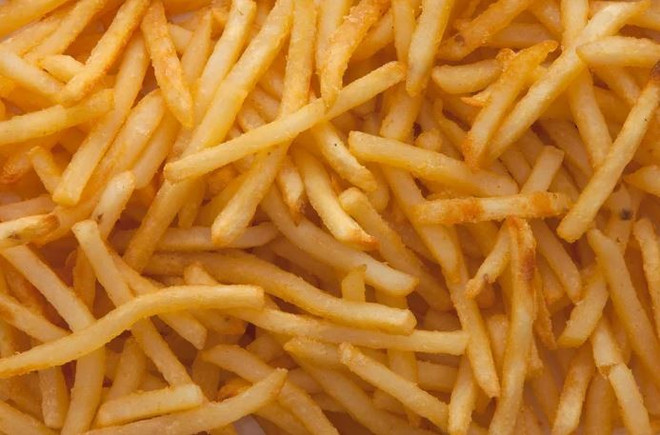
French fries are one of the foods that neurologist Pedram Navab avoids eating.
"Diets high in fat, like french fries, can damage the blood vessels that nourish the brain, leading to cognitive decline," he said. "It weakens the integrity of the blood-brain barrier and damages neurons in the hippocampus—a crucial area for learning and memory."
Some items on this list are easy to give up, like protein powder or decaf coffee, but others are harder. So, if possible, limit your intake or replace them with healthier options. If you can't, consume them in moderation to minimize negative impacts on your brain.
Source: https://www.vietnamplus.vn/cac-nha-than-kinh-hoc-chia-se-nhung-loai-thuc-pham-ho-khong-bao-gio-an-post1080307.vnp


































































































Comment (0)