

The Australian government has just passed a ban on social media use for children under 16, one of the strictest regulations in the world . The ban will take effect from the end of 2025. Many countries around the world, especially in Europe, and technology companies have introduced various solutions to manage children's access to social media.
Australia: Tech companies face fines of up to 50 million AUD . (800 billion VND)
The new law forces tech giants to prevent minors from logging into social media or face staggering fines of up to AUD 50 million (VND 800 billion).
Australian Prime Minister Anthony Albanese said the law was necessary to protect children from the harmful effects of social media, a concern raised repeatedly by parent groups. But critics say questions about how the ban will work – and its impact on privacy and social connection – remain unanswered.
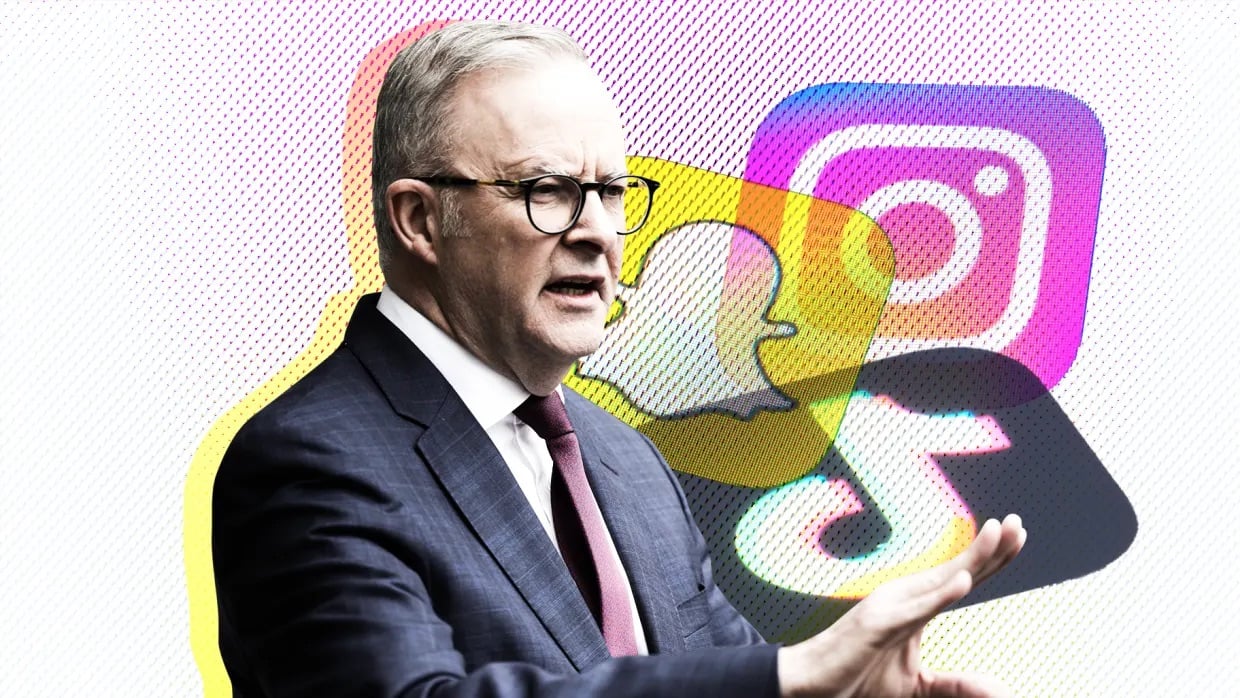
Australian Prime Minister Anthony Albanese believes that laws banning social media use for children under 16 are necessary to protect children.
Photo: Sydney Morning Herald
Australian Communications Minister Michelle Rowland said the ban would include Snapchat, TikTok, Facebook, Instagram and X. Gaming and messaging platforms, as well as websites accessible without an account such as YouTube, are unlikely to be affected.
The government will rely on age verification technology to implement these restrictions, and various methods will be tested in the coming months. Technology companies are involved. They have additional responsibilities in these processes.
Polls show that a majority of Australian parents support the ban. However, many experts argue that the ban is "too heavy-handed" to effectively address the risks associated with social media use and warn that it could push children into less regulated corners of the internet.
Google, Snapchat, Meta, and TikTok argue that the ban is vague and lacks sufficient detail. Meanwhile, X questions the "legality" of the bill, suggesting it may be inconsistent with international regulations and human rights treaties that Australia has signed.
However, the Australian Prime Minister remained steadfast in his position, saying: "We don't think the implementation will be perfect, just as a ban on alcohol for children under 18 doesn't mean that people under 18 will never drink alcohol, but we know that it is the right thing to do."
Specific regulations of technology companies
Social media platforms including TikTok, Facebook, and Snapchat have a minimum registration age of 13. However, child protection organizations argue that the controls are not strict enough, and official data in some European countries shows that many children under 13 already have social media accounts.
UK : Strict standards for social media platforms.
Currently, the UK has no plans for Australian-style restrictions. However, Digital Minister Peter Kyle said everything is being carefully considered when it comes to keeping people online safe. The government has launched a study to explore the impact of smartphone and social media use, particularly on children.
He prioritizes the design, transparency, and accountability of technology companies as the Online Safety Act takes effect next year. The act, passed in 2023, sets stricter standards for social media platforms like Facebook, YouTube, and TikTok – including appropriate age restrictions.
Norway : Raising the age for using social media to 15.
The Norwegian government proposed last month raising the age at which children can consent to mandatory terms and conditions for using social media to 15, from the current 13, although parents will still be allowed to sign on behalf of their children if they are under the age limit. The government also stated that it has begun drafting legislation to establish a minimum legal age for using social media, but it remains unclear when this mandatory legislation will reach parliament.
According to the government, half of nine-year-old children in Norway use some form of social media.
France : Proposal to ban internet-connected phones for children under 13.
In 2023, France passed a law requiring social media platforms to obtain parental consent for minors under 15 to create accounts. However, local media reported that this order has yet to be enforced due to technical challenges.
In April, a council commissioned by President Emmanuel Macron proposed stricter rules, including banning mobile phones for children under 11 and internet-connected phones for children under 13. However, it is unclear when this law might be passed and to what extent it will adhere to expert recommendations.
The European Union stipulates that parental consent is required to process personal data of children under 16. However, individual member states can lower that limit to 13. France, however, is now likely to persuade the EU to adopt a bloc-wide solution.

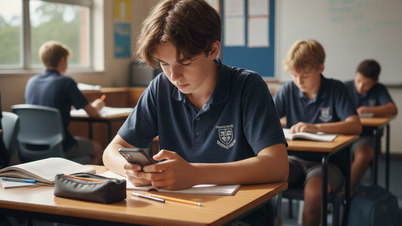
Children using smartphones and browsing social media is becoming increasingly common.
Germany, Belgium, Italy: Many measures to limit age for social media use.
Legally, minors aged 13 to 16 in Germany are only permitted to use social media with parental consent. Currently, the government has no plans to go any further. However, child protection organizations argue that the existing legal controls are insufficient and are calling on authorities to better enforce current regulations.
The law in Italy is stricter; children under 14 need parental consent to register for social media accounts, while those over that age do not require parental consent.
In 2018, Belgium enacted a law requiring children to be 13 years of age or older to create social media accounts without parental permission.
Netherlands: Mobile devices banned in classrooms.
Although the Netherlands does not have any laws regarding the minimum age for using social media, the government has banned mobile devices in classrooms from January 2024 to reduce distractions. Exceptions apply for digital lessons, medical needs, or disabilities.
A law similar to the one in Australia was struck down by a federal judge in Utah (USA) on the grounds that it was unconstitutional. A complete ban on children under 14 in Florida is being challenged in court for violating freedom of speech.
Source: https://thanhnien.vn/cac-nuoc-lam-gi-de-kiem-soat-viec-truy-cap-mang-xa-hoi-cua-tre-em-185241203102234877.htm























































































Comment (0)