

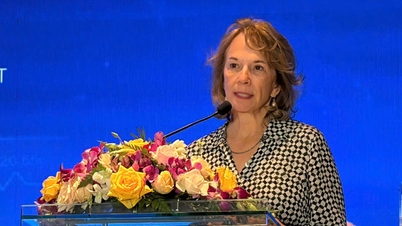
Speaking at the International Conference on Epilepsy Surgery organized by Viet Duc Friendship Hospital on December 10th, Assoc. Prof. Dr. Dong Van He, Deputy Director of Viet Duc Friendship Hospital and President of the Vietnam Neurosurgery Association, stated that the majority of epilepsy patients in Vietnam do not receive systematic treatment, with some experiencing drug resistance, and this group of patients requires surgery. However, Vietnam currently lacks a method for accurately assessing whether a patient needs surgery and what type of surgery is appropriate.
"This workshop emphasizes the very important issue of invasive electroencephalography (EEG), which involves placing electrodes in the brain to detect epileptic foci, the causes of seizures, identify why medication treatment has been ineffective, and develop a plan for the next steps, including whether or not surgery is necessary, how the surgery should be performed, and how to achieve the best possible outcome for the patient," Associate Professor Hệ stated.
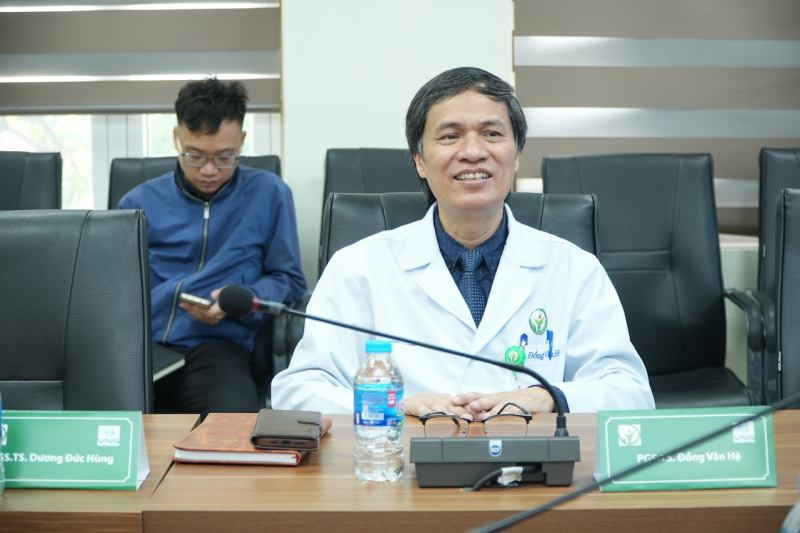
Currently, children account for 30-40% of epilepsy patients in Vietnam. Drug-resistant epilepsy is found in about 30% of epilepsy patients. According to the President of the Vietnam Neurosurgery Association, these patients still experience seizures despite MRI, PET scans, and electroencephalograms (EEGs), leading many to believe that nothing more can be done. However, this is not the case. Through today's workshop, this group will undergo invasive EEG (electroencephalogram) procedures – implanting electrodes and then recording the EEG results – which will help identify the cause and find a cure for their condition.
“The workshop brought together leading experts from both within and outside the country, which is very important for the overall development of epilepsy nationwide. The experts raised the issue of invasive epilepsy diagnosis, which is crucial for the overall development of epilepsy treatment, helping to diagnose patients and guide their treatment effectively,” Associate Professor Hệ emphasized.
Currently, minimally invasive epilepsy surgery has only been performed in a few cases in Vietnam, and none in the North. This method helps determine the cause of epilepsy and identify the epileptic focus when patients have used medication for 10-20 years without success, still experiencing seizures (some have dozens of seizures per day), and have undergone hundreds of scans and spent a lot of money without finding the cause. Performing surgery to implant electrodes in the brain will answer these questions.
"If done well, this measure will benefit a large number of patients, helping many recover and return to normal life," said Associate Professor Dr. Dong Van He.
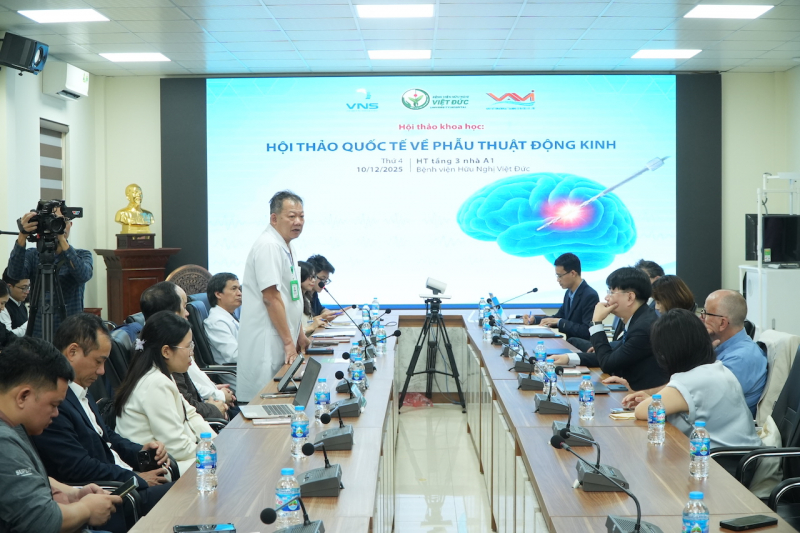
According to Associate Professor Dr. Duong Duc Hung, Director of Viet Duc Friendship Hospital, while other organs can be transplanted or replaced when their function deteriorates, the brain cannot be transplanted or "replaced"; any intervention must be based on the principle of preserving vital functions as much as possible.
This makes neurosurgery in general, and epilepsy surgery in particular, a difficult field requiring absolute precision.
Epilepsy surgery is increasingly becoming a lifesaver for patients with drug-resistant epilepsy, and accurately identifying the seizure-triggering site is a crucial factor in its success.
Transparenchymal electroencephalography (EEG) – the placement of deep electrodes to record EEG – has proven to be a valuable tool, with a high success rate in identifying seizure areas and a low complication rate (approximately 1–2%).
The trend of applying transparenchymal electroencephalography (EEG) techniques is increasing globally, especially in specialized centers in the US, Europe, China, and India.
In Vietnam, with the development of neurosurgery and neurophysiology, transparenchymal electroencephalography (EEG) is an important direction for improving the effectiveness of epilepsy surgery, helping many patients overcome seizures and improve their quality of life.
However, according to Associate Professor Dr. Dong Van He, the cost of this technique is currently very high, around several hundred million VND per case. Currently, this technique is not covered by health insurance. Experts suggest that a proposal should be made to the health insurance system to consider covering this new technique to increase the cure rate for epilepsy patients, especially those with low incomes and the poor.
Source: https://cand.com.vn/Xa-hoi/can-de-xuat-bhyt-chi-tra-cho-phau-thuat-dong-kinh-khang-thuoc-moi-i790647/






















![[Video] The craft of making Dong Ho folk paintings has been inscribed by UNESCO on the List of Crafts in Need of Urgent Safeguarding.](https://vphoto.vietnam.vn/thumb/402x226/vietnam/resource/IMAGE/2025/12/10/1765350246533_tranh-dong-ho-734-jpg.webp)



























































Comment (0)