


The Prime Minister urged prompt action to mitigate the consequences of natural disasters, restore production and business activities, boost consumption, and meet the people's Tet holiday needs.
Prime Minister Pham Minh Chinh signed Official Dispatch No. 239/CD-TTg on December 12, 2025, requesting ministries, sectors, and localities to urgently overcome the consequences of natural disasters, restore production and business, boost consumption, and serve the Tet holiday needs of the people.
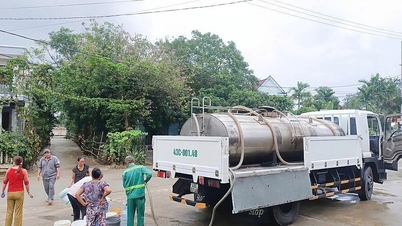
The Prime Minister requested that ministries, agencies, and localities decisively and effectively implement the "Quang Trung Campaign," determined to complete the repair of houses for families whose homes were severely damaged before December 31, 2025; and rebuild houses and resettle all families whose houses were destroyed, collapsed, or swept away by January 31, 2026 at the latest.
The People's Committees of provinces and cities affected by natural disasters, in coordination with relevant ministries and agencies, shall proactively implement solutions within their authority to ensure social welfare, education, medical care, and stabilize people's lives; restore production and business activities, and stabilize the market in their areas.
At the same time, ministries, agencies, and localities, according to their assigned functions and tasks, are implementing solutions to promote production and business, strongly develop the domestic market, and stimulate consumer demand.
State-owned corporations and enterprises should urgently address the consequences of storms and floods, implement production, business, and import-export plans effectively and flexibly; strengthen the application of science and technology, build brands, improve the quality and competitiveness of products to meet the requirements of export markets; and focus on developing and diversifying markets, products, and supply chains.
Reviewing growth scenarios, determined to maintain macroeconomic stability and promote growth.
The government issued Resolution No. 406/NQ-CP On December 10, 2025, the Government's regular November 2025 meeting requested ministries, sectors, and localities to promptly assess the impact of natural disasters, storms, and floods in order to review growth scenarios and consistently pursue the priority goal of maintaining macroeconomic stability, controlling inflation, and ensuring major economic balances to create a favorable investment and business environment, promoting rapid and sustainable growth.
The Prime Minister directed that the disbursement of public investment funds be accelerated in the remaining months of 2025.
To accelerate progress and strive to achieve the goal of disbursing 100% of the public investment capital plan, Prime Minister Pham Minh Chinh signed Official Dispatch No. 237/CD-TTg dated December 6, 2025, on accelerating the disbursement of public investment capital in the remaining months of 2025.
In the directive, the Prime Minister requested ministries, central agencies, and localities to urgently allocate the remaining planned capital for 2025 that has not yet been detailed for tasks and projects, and to take decisive and timely measures to accelerate the implementation and disbursement of public investment capital and national target program capital that has been allocated; to speed up the progress of implementing key national and important public investment projects, highways, key inter-regional projects, projects with spillover effects, etc.; this is a key political task associated with the responsibility of the heads of ministries, central agencies, and localities.

The Prime Minister is cracking down on irregularities in the review, purchase, sale, and leasing of social housing.
Prime Minister Pham Minh Chinh signed Directive No. 34/CT-TTg on December 11, 2025, regarding rectifying, enhancing transparency, and preventing corruption in the review, purchase, sale, and leasing of social housing.
The Prime Minister has instructed the People's Committees of provinces and centrally-administered cities to direct the Departments of Construction and other relevant local departments to strictly implement the procedures for selling, leasing, and renting social housing in accordance with the law; and to strictly handle illegal brokerage and profiteering in the procedures and documentation for buying and selling social housing.
The developer is prohibited from collecting deposits or authorizing individuals or real estate agencies to collect deposits outside of regulations.
People who need to buy social housing must proactively learn about legal regulations to avoid being exploited or taken advantage of. They should submit applications and carry out the purchase or lease-purchase procedures directly with the investor, not through consulting organizations, individuals, brokers, or real estate agencies.
Mechanism for managing the financial aspects of investment projects under the public-private partnership model.
The Government issued Decree No. 312/2025/ND-CP dated December 6, 2025, stipulating the financial management mechanism for investment projects under the public-private partnership (PPP) method and the payment and settlement mechanism for projects applying the BT contract type.
Decree No. 312/2025/ND-CP clearly stipulates: the sources of capital for implementing PPP projects by investors and PPP project enterprises; the management, use, and payment of state capital in PPP projects; and the final settlement of investment capital for works and infrastructure systems of PPP projects...
Regarding the investor's equity capital, the Decree stipulates that the investor is responsible for contributing equity capital to the PPP project as prescribed in Article 77 of the PPP Law. During the implementation of the PPP project contract, if there are changes in the structure of equity capital and investor capital, or changes in the capital mobilized by the PPP project enterprise that do not alter the investment policy and yield higher financial, economic, and social benefits, the parties to the PPP project contract may review and amend the provisions on capital structure in the PPP project contract.
The use of aid for tax evasion or personal gain is prohibited.
The Government issued Decree No. 313/2025/ND-CP dated December 8, 2025, regulating the management and use of non-refundable aid not classified as official development assistance from foreign agencies, organizations, and individuals to Vietnam.
Decree 313/2025/ND-CP clearly states the prohibited acts in the use of aid, including:
- Using aid to serve the purposes of money laundering, terrorist financing, tax evasion, undermining national security and social order, disrupting national unity; harming social morality, customs, traditions and national cultural identity.
- Using aid to seek profit-sharing and personal gain, not for humanitarian purposes, socio-economic development, or the benefit of the community.
- Acts of corruption, causing losses, waste, and profiteering in the use and management of aid funds; misuse of aid funds; and other violations of the law.
Apply a 10% relending rate on ODA loans for public science and technology organizations.
Currently, the relending of foreign loans by the Government does not apply specifically to "public science and technology organizations and financially autonomous public higher education institutions," but rather has general regulations applicable to all public service units.
Decree No. 317/2025/ND-CP , issued by the Government on December 10, 2025, added the above content to Clause 2, Article 21 of Decree No. 97/2018/ND-CP as follows: Public non-business units that are public science and technology organizations, public higher education institutions with investment projects in science, technology, innovation and digital transformation activities within the scope of Resolution No. 57-NQ/TW dated December 22, 2024 of the Politburo and the Law on Science, Technology and Innovation, and that self-finance recurrent and investment expenditures according to the law on public debt management, are eligible to apply a 10% relending rate of ODA loans and preferential loans used for investment projects."
The government has issued a model working regulation for provincial People's Committees.
On December 8, 2025, the Government issued Decree No. 314/2025/ND-CP promulgating the model working regulations of the People's Committees of provinces and centrally-administered cities.
One of the working principles of the Provincial People's Committee is to operate collectively, making decisions by majority vote; implementing the principle of democratic centralism, while emphasizing the authority and responsibility of the Chairman of the Provincial People's Committee, and promoting the leadership role of the Chairman of the Provincial People's Committee.
The organization and operation of provincial-level People's Committees must ensure efficiency, effectiveness, and efficiency, meeting the requirements of professional and modern local governance, promoting administrative reform, applying information technology and digital transformation, and fostering innovation; managing and processing work, exploiting digital data, and providing public services in an electronic environment to enhance governance efficiency, aiming towards the goal of building a digital government, digital economy, and digital society...
Model working regulations for the People's Committee of communes, wards, and special zones.
The Government issued Decree 315/2025/ND-CP dated December 8, 2025, on the Model Working Regulations of the People's Committees of communes, wards, and special zones (the Regulations).
This regulation stipulates the working principles; responsibility system; working relationships; scope, methods, and procedures for handling work; work programs, activities, and information and reporting regime of the People's Committee of communes, wards, and special zones (commune level).
Regarding the working principles of the People's Committee at the commune level, the Regulations clearly state that all activities of the People's Committee at the commune level must comply with the Constitution and laws; resolve matters according to the provisions of the law; ensure the leadership and direction of the commune-level Party Committee, the supervision of the People's Council at the same level and of the people in the performance of assigned tasks and powers; and closely coordinate with the Vietnam Fatherland Front Committee at the same level in the process of implementing tasks.
The People's Committee at the commune level operates on a collective basis, making decisions by majority vote; at the same time, it emphasizes the authority and responsibility of the Chairman of the People's Committee at the commune level; it implements the principle of democratic centralism and regulations on openness, transparency, and accountability...
Criteria for selecting organizations to receive technology transfer for railway projects.
The Government issued Decree 319/2025/ND-CP dated December 12, 2025, detailing the content, order, procedures, and authority for implementing special mechanisms and policies on the development of science and technology, research, application, and technology transfer for key national projects and important projects in the railway sector, in accordance with the Resolutions of the National Assembly.
Regarding the criteria for selecting Vietnamese organizations and enterprises to be assigned or commissioned to receive technology transfer for railway projects, the Decree stipulates that: Vietnamese organizations and enterprises are assigned or commissioned to receive technology transfer for railway projects when they simultaneously meet the following criteria:
a) Being an organization or enterprise established in accordance with Vietnamese law;
b) Having clear functions and responsibilities (for organizations) or registered business lines and operating licenses (for enterprises) that are consistent with the technology field being transferred;
c) Having workshops and facilities of sufficient scale to meet the requirements for receiving and installing machinery, equipment, and technological lines;
d) Having sufficient financial resources or the ability to mobilize financial resources to cover and settle the costs of technology transfer;
d) Having a team of experts, technical staff, and workers with management and research capabilities, as well as professional and technical qualifications, to ensure the reception, mastery, and operation of the transferred technology;
e) There is a plan to mobilize resources to meet the requirements for receiving technology transfer;
g) There is a commitment to ensure the completion of the acquisition, mastery, and operation of the transferred technology;
h) Having experience in international cooperation on technology transfer;
i) Not currently undergoing dissolution procedures or having its business registration certificate or business license revoked; not subject to insolvency as defined by bankruptcy law;
k) The technology transfer price does not exceed the estimated cost of technology transfer in the railway project that has been approved by the competent authority.
Approve the Project for Training High-Quality Human Resources in Russia, China, Eastern European Countries, and Former Soviet Union Countries.
Deputy Prime Minister Le Thanh Long signed Decision No. 2672/QD-TTg dated December 10, 2025, approving the Project "Sending Vietnamese citizens to study in the Russian Federation, China, Eastern European countries and former Soviet Union countries in the period 2026 - 2035".
The objective of the Project is to train high-quality human resources at the undergraduate, master's, and doctoral levels, as well as provide short-term internships in the Russian Federation, China, Eastern European countries, and former Soviet Union countries; prioritizing training in fields where these countries have strengths.
During the period 2026-2035, it is projected that approximately 1,500 candidates will be sent to study abroad each year under both Agreement and Non-Agreement scholarship programs. The projected number of students studying in the Russian Federation is 1,000 per year; the total number in other countries is 500 per year. The number of students sent to study abroad may change depending on the scholarship quotas provided by foreign countries, actual training needs, and the state budget's capacity to balance resources.

Regulations on the principles of nuclear power plant design and nuclear safety monitoring.
The Government issued Decree No. 316/2025/ND-CP dated December 10, 2025, detailing some provisions and implementation measures of the Atomic Energy Law regarding nuclear power plants and research nuclear reactors.
The Decree comprises 9 chapters and 74 articles, detailing some provisions and implementation measures of the 2025 Atomic Energy Law regarding safety and security requirements for nuclear power plants and research reactors; location, design, investment decisions, construction, operation, and decommissioning of nuclear power plants…
This Decree provides guidance on measures to implement the Atomic Energy Law 2025 to ensure radiation safety, nuclear safety, and nuclear security throughout the lifecycle of nuclear power plants and research reactors.
Promote the implementation of the Atomic Energy Law, ensuring consistency and effectiveness.
Deputy Prime Minister Nguyen Chi Dung signed Decision No. 2663/QD-TTg dated December 8, 2025, promulgating the Plan for the implementation of the Atomic Energy Law No. 94/2025/QH15.
Specifically, the Plan assigns the Ministry of Science and Technology to chair and coordinate with ministries, ministerial-level agencies, People's Committees of provinces and centrally-administered cities, and relevant agencies and organizations to develop four Government Decrees detailing the implementation measures for the Atomic Energy Law, in accordance with Decision No. 1526/QD-TTg dated July 14, 2025, of the Prime Minister promulgating the List and assignment of agencies to chair the drafting of documents detailing the implementation of laws and resolutions passed by the 15th National Assembly at its 9th session; and to submit them to the Government in the fourth quarter of 2025.
Peak period for combating smuggling, trade fraud, and counterfeit goods during the Lunar New Year of the Horse 2026.
On December 8, 2025, Deputy Prime Minister Bui Thanh Son - Head of the National Steering Committee for Combating Smuggling, Commercial Fraud, and Counterfeit Goods - signed document 176/KH-BCĐ389 promulgating the Plan for a high-intensity campaign against smuggling, commercial fraud, and counterfeit goods before, during, and after the Lunar New Year of the Horse 2026.
The overall task of the Steering Committee 389 of ministries/sectors and localities is to proactively plan the deployment of forces, means, and measures to strictly inspect and control along border lines, land, rail, river, sea, and air border gates, as well as trails, open routes, goods gathering areas near the border, in the domestic market, and in cyberspace to prevent and handle acts of smuggling, trade fraud, and counterfeit goods; Focus on prohibited goods (drugs, weapons, firecrackers, e-cigarettes, endangered and rare wild animals and plants...), counterfeit goods (pharmaceuticals, food, functional foods, cosmetics, traditional medicine ingredients...), substandard goods, goods infringing intellectual property rights, conditionally imported and exported goods, high-tax goods, essential goods for production, business, and consumption (petroleum products, minerals, gold, foreign currency, electronics, telephones, high-end clothing and fashion, beer, wine, cigarettes, sugar, confectionery, livestock, poultry and products from livestock and poultry, fruits...), and other consumer goods; strengthen market inspection and control of essential goods and goods in high demand for production, business, and consumption during the year-end and Lunar New Year holidays...
Extend the deadline for resolving policies and regulations for non-tenured employees at associations until December 31, 2025.
In Resolution No. 405/NQ-CP dated December 10, 2025, the Government decided to extend the deadline for resolving policies and regulations for employees working outside the allocated staff quota at associations assigned by the Party and State at the provincial and district levels before July 1, 2025, as stipulated in Resolution No. 07/2025/NQ-CP dated September 17, 2025, of the Government on policies and regulations for those affected by the reorganization of the organizational structure and administrative units at all levels according to Conclusion No. 183-KL/TW dated August 1, 2025, of the Politburo and the Secretariat, ensuring the completion of payment of policies and regulations no later than December 31, 2025...

3 groups of people eligible for labor registration
The government has just issued Decree No. 318/2025/ND-CP dated December 12, 2025, which details some provisions of the Employment Law regarding labor registration and the labor market information system.
The decree stipulates three groups of individuals eligible for labor registration:
1. Workers are subject to mandatory social insurance participation as stipulated in Clause 1, Article 2 of the Social Insurance Law No. 41/2024/QH15.
2. Workers who are currently employed and are not subject to mandatory social insurance.
3. An unemployed person is someone who is currently without a job, is actively seeking employment, and is willing to work.
The government has assigned targets for expanding social insurance coverage to 34 provinces and cities.
The Government issued Resolution No. 403/NQ-CP dated December 10, 2025, assigning targets for the development of social insurance participants by 2030 to provinces and centrally-administered cities.
The government has assigned targets for the development of social insurance participation by 2030 to each province and centrally-governed city.
Nationwide, the target for the number of people participating in social insurance is 29,334,000; of which the minimum target for voluntary social insurance is 2,444,500 people...
Updated December 13, 2025
Source: https://laichau.gov.vn/tin-tuc-su-kien/chuyen-de/tin-trong-nuoc/chi-dao-dieu-hanh-cua-chinh-phu-thu-tuong-chinh-phu-noi-bat-tuan-tu-6-12-12-2025.html


















































































Comment (0)