

On the morning of December 4, the National Assembly Standing Committee met to give opinions on explaining, accepting and revising a group of 5 draft laws amending and supplementing a number of articles of the Law on Education ; the Law on Higher Education (amended); the Law on Vocational Education (amended); and draft resolutions on education and training.
Regulations on textbooks are one of the issues that National Assembly delegates are interested in when discussing in groups and halls.
Agreeing with the State's policy of issuing a unified set of textbooks nationwide and implementing them from the 2026-2027 school year, many delegates proposed clearly defining the scope of "mandatory books or standard books for selection".
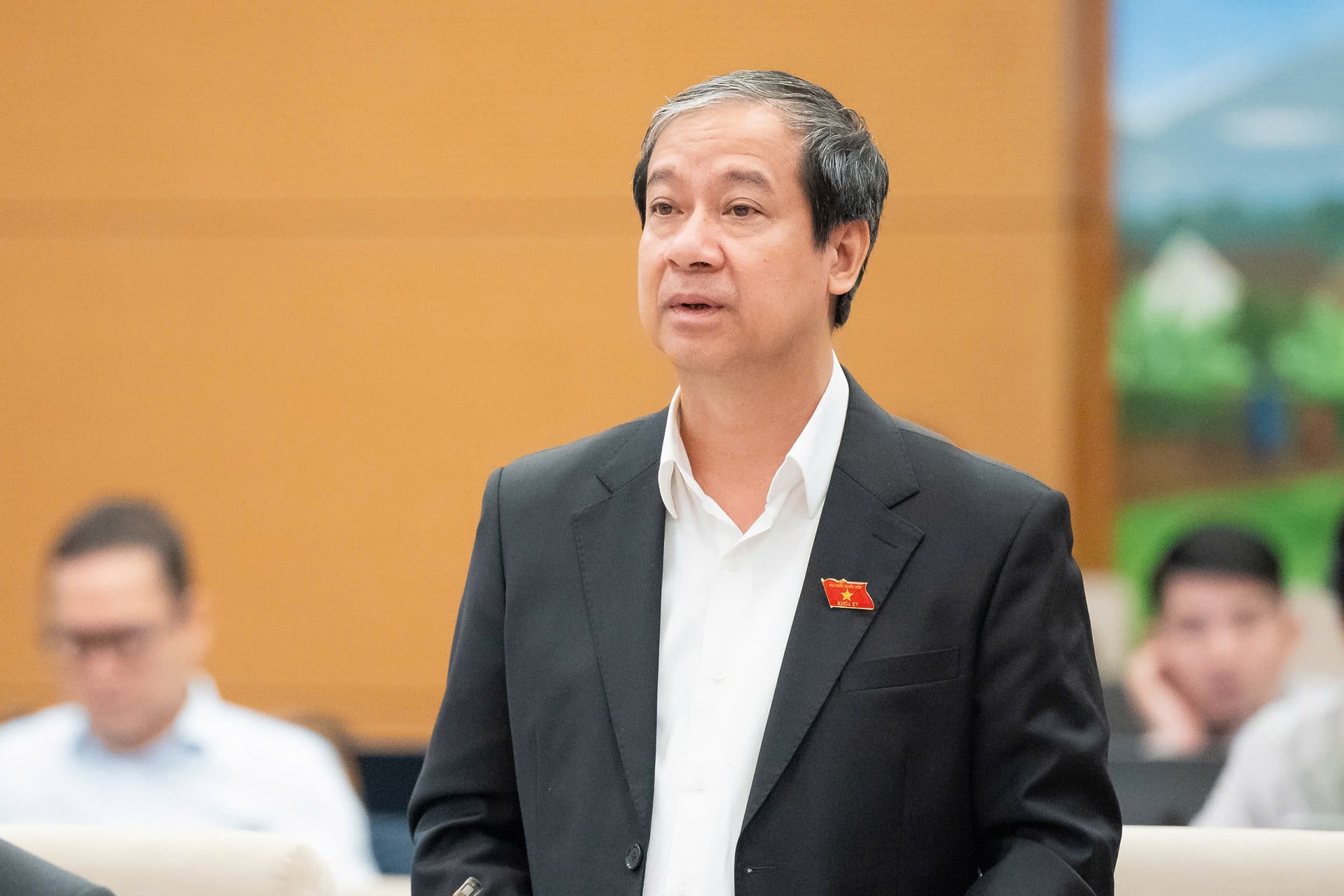
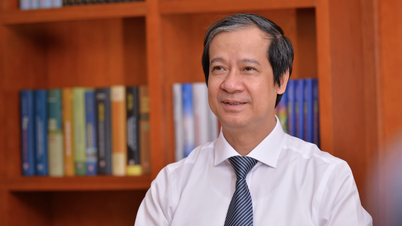
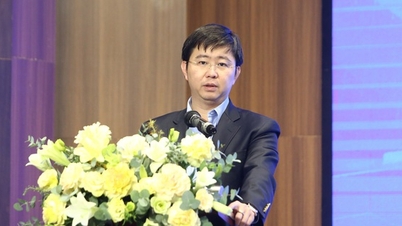
Minister of Education and Training Nguyen Kim Son presented a report on explanation and acceptance. Photo: National Assembly
Minister of Education and Training Nguyen Kim Son said that, taking into account the opinions, the draft Law on Education was adjusted in the direction of removing the regulation that the Government decides on the socialization of textbooks; the regulation in the open direction is that the Ministry of Education and Training decides on a unified set of textbooks nationwide.
"This allows flexibility in compiling new plans or selecting and editing current textbooks," said the Minister of Education and Training.
This regulation is intended to ensure that the ministry can choose to compile a new set of books or select and edit from existing sets of books, depending on the practical situation and the decision of the competent authority.
According to the explaining agency, at the present stage, determining in the law whether the unified set of books is directly compiled by the State or implemented by socialization is not feasible, because the specific plan is being considered by the competent authority.
Open regulations as in the draft will ensure the stability of the law, not creating "hard" constraints while the policy is still being researched and its impact assessed.
In addition, the Government has assigned the Ministry of Education and Training to develop a report on the plan to deploy a unified set of textbooks nationwide from the 2026-2027 school year, ensuring publicity, transparency, objectivity, economy, and anti-waste; at the same time, inheriting and promoting the advantages of existing textbooks, minimizing the impact on teachers and students and not causing disruption to teaching and learning activities.
Also accepting the proposal to inherit the current textbook sets, the Government will direct the Ministry of Education and Training to carefully research, select and distill the advantages of the textbook sets currently in use as a basis for building or selecting a unified textbook set.
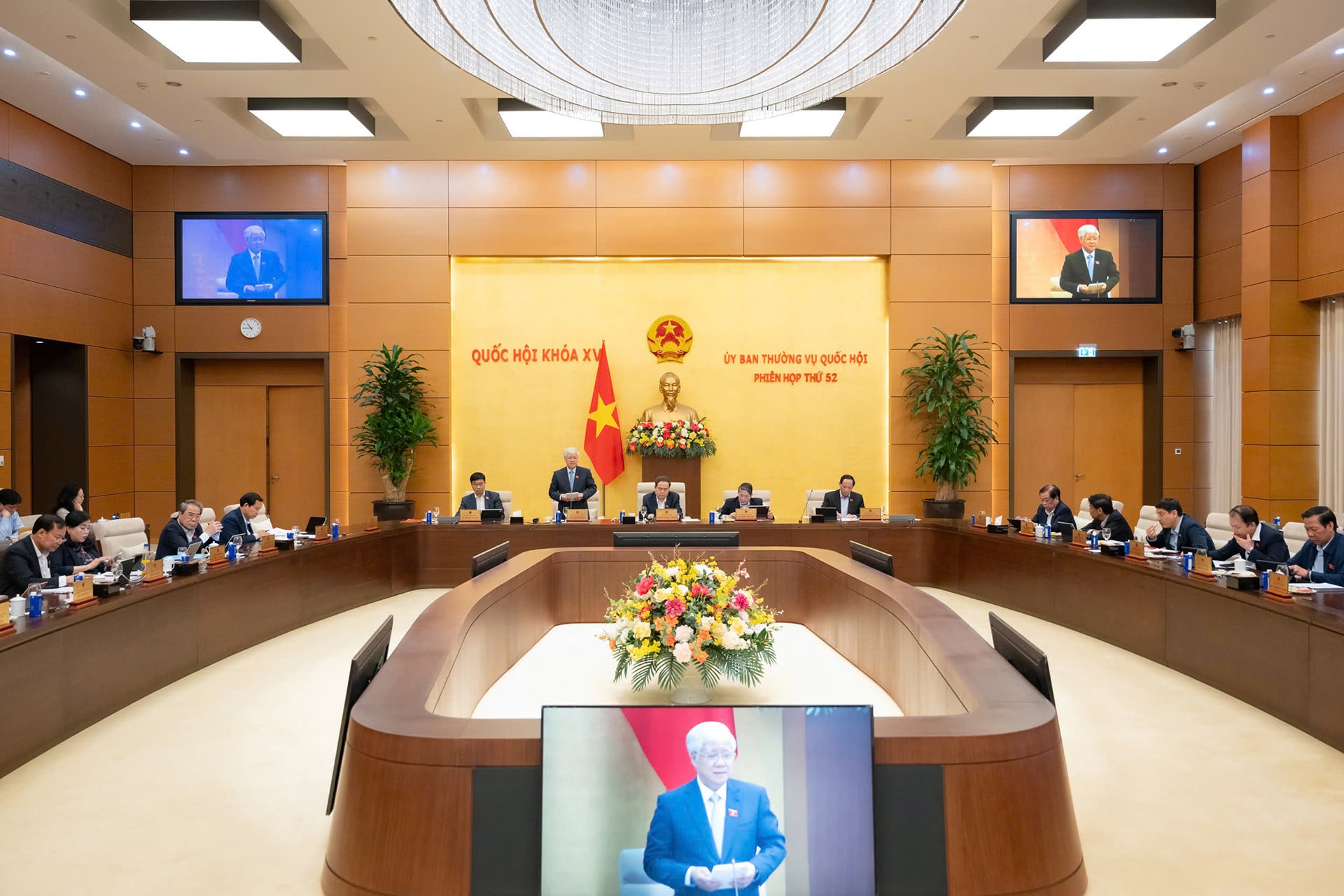
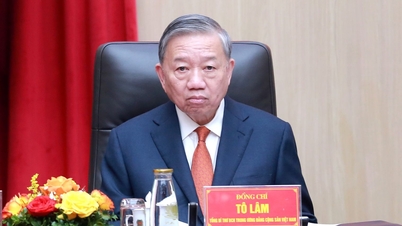
The National Assembly Standing Committee gives opinions on draft education laws. Photo: National Assembly
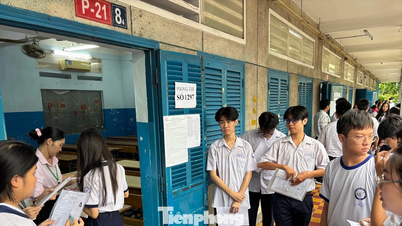
Regarding the high school graduation exam, many opinions agree to keep the exam stable to ensure both the graduation function and the provision of data for university admission. However, opinions suggest that it is necessary to improve the way questions are created, graded, and results are analyzed to accurately reflect the quality of teaching and learning.
There is a proposal to not organize high school graduation exams, only keep a highly differentiated university entrance exam to select people with the ability to study at university.
Regarding this content, the Government agrees that maintaining the high school graduation exam is necessary in the current period. The exam aims to assess the level of output standards of the general education program, ensuring uniformity in graduation recognition nationwide, while providing reliable data to monitor and evaluate the quality of education between regions and serve university admissions.
According to the Government, maintaining the exam contributes to ensuring objectivity, fairness and discipline in the education system.
Regarding the proposal to improve the examination method, the Government has directed the Ministry of Education and Training to continue reviewing and perfecting the question-making, grading and analysis of results; increasing the application of technology and reducing pressure on students.
Regarding the proposal to abolish the graduation exam and only keep the university entrance exam, the Government recognizes that the two exams have different goals and functions. University admission is a highly differentiated activity under the autonomy of higher education institutions; institutions can use the results of the high school graduation exam, organize their own exams or apply appropriate admission methods.
Therefore, maintaining the high school graduation exam is in line with the requirements of quality management and ensuring fairness in general education.
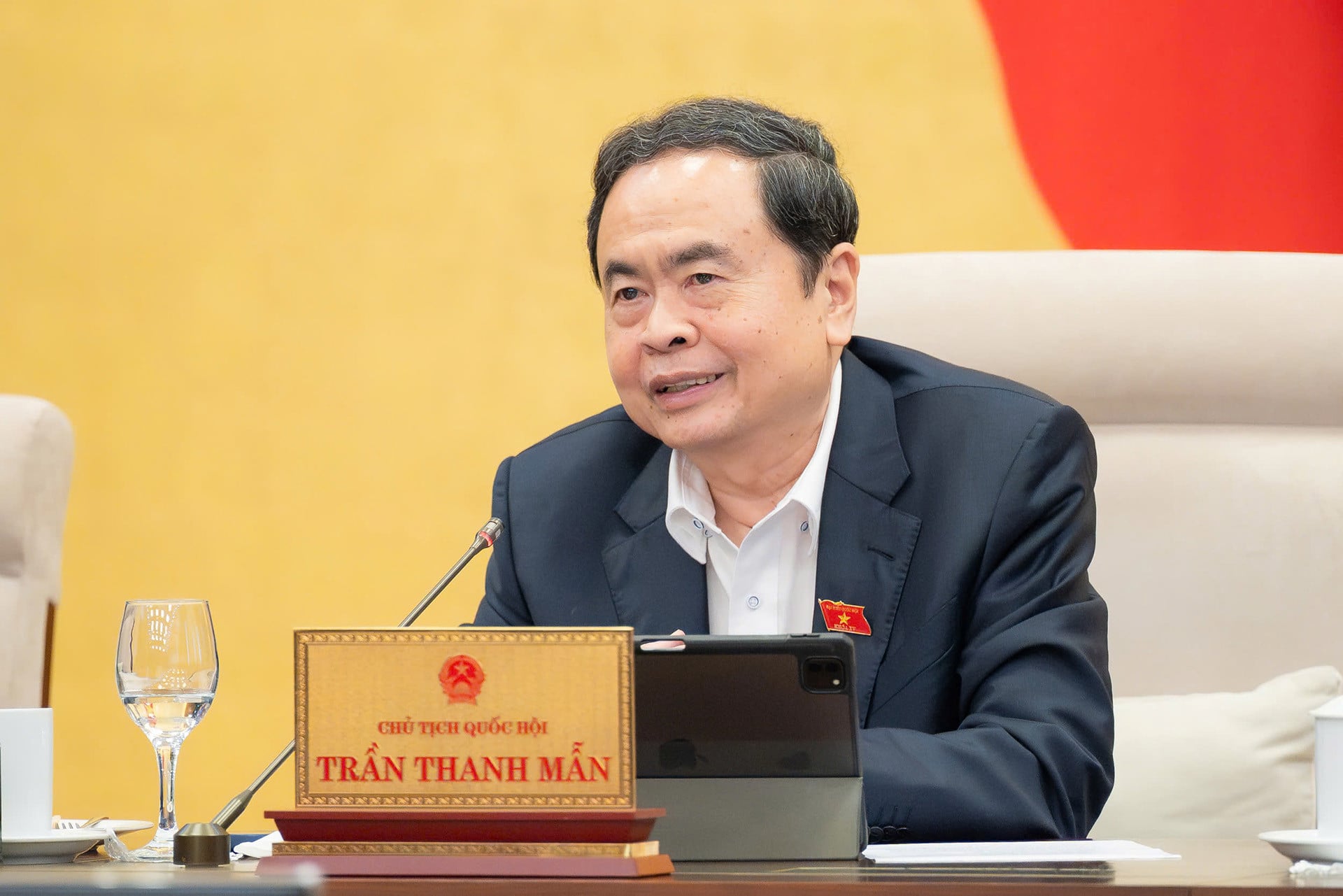
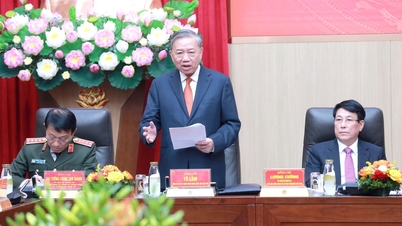
National Assembly Chairman Tran Thanh Man speaks at the meeting. Photo: National Assembly
Speaking at the meeting, National Assembly Chairman Tran Thanh Man shared that this morning at the National Assembly's discussion session on the Government's term of office, delegate Nguyen Thi Tuyet Nga (Quang Tri) mentioned the heavy pressure when taking the 10th grade entrance exam.
"In the future, the issue of exams must be carefully calculated and managed, whether it is input or output. International experience or studying a master's or doctoral program makes it easy to get in but difficult to get out," the National Assembly Chairman suggested to study and review carefully.
Emphasizing that textbooks are an issue of concern to parents, people, and voters, National Assembly Chairman Tran Thanh Man raised the question of whether or not the revision of these laws can be resolved. The National Assembly Chairman also stated that there have been cases of disciplinary action, including criminal prosecution, related to textbooks.
Source: https://vietnamnet.vn/chinh-phu-tra-loi-kien-nghi-bo-thi-tot-nghiep-thpt-giu-thi-tuyen-sinh-dai-hoc-2469320.html


![[Photo] Cat Ba - Green island paradise](/_next/image?url=https%3A%2F%2Fvphoto.vietnam.vn%2Fthumb%2F1200x675%2Fvietnam%2Fresource%2FIMAGE%2F2025%2F12%2F04%2F1764821844074_ndo_br_1-dcbthienduongxanh638-jpg.webp&w=3840&q=75)




































![[VIMC 40 days of lightning speed] Da Nang Port: Unity - Lightning speed - Breakthrough to the finish line](https://vphoto.vietnam.vn/thumb/402x226/vietnam/resource/IMAGE/2025/12/04/1764833540882_cdn_4-12-25.jpeg)


































Comment (0)