

A Japanese Coast Guard aircraft's mission to rescue earthquake victims turned into tragedy when it collided with a passenger plane, killing five people.
On January 2nd, Major Genki Miyamoto, 39, received orders from headquarters to pilot a Bombardier DHC-8-315 patrol and rescue aircraft of the Japan Coast Guard (JCG) carrying relief supplies from Haneda Airport to Niigata Prefecture to assist victims of the earthquake disaster the previous day.
Joining Major Miyamoto on this mission were a co-pilot, radio operator, radar operator, flight mechanic, and aircraft maintenance technician. Miyamoto is considered a highly experienced pilot, with 3,641 accumulated flight hours, including 1,149 hours as a captain. He began flying the DHC-8-315 in early 2017 and was assigned to the JCG's Haneda base in April 2019.
The Bombardier DHC-8-315 is a medium-range twin-rotor aircraft equipped with infrared sensors and sea-scanning radar, and capable of carrying cargo when not on patrol duty. The aircraft has a unique design, with the wings positioned above the fuselage, allowing those inside to easily observe the sea below through the windows.
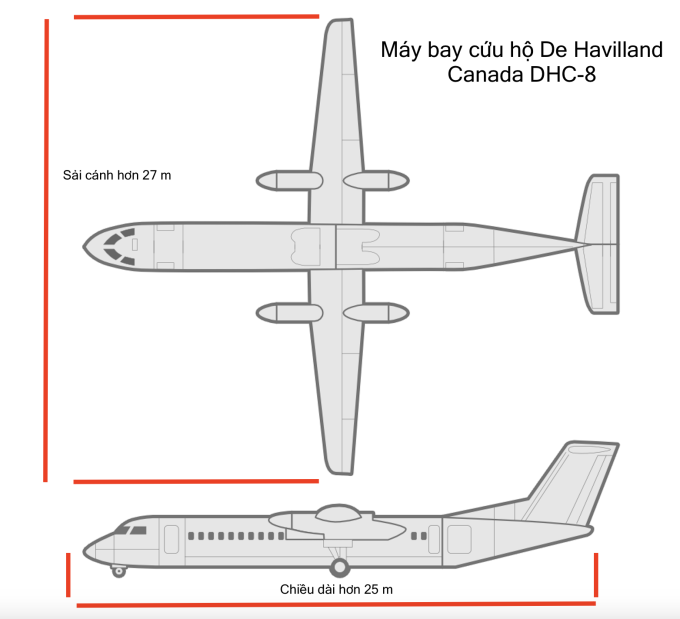
The DHC-8 aircraft features wings positioned above the fuselage. Graphic: USA Today
However, this design is considered by experts to be one of the possible causes of the tragedy involving the DHC-8-315 in its collision with a Japan Airlines Airbus A350-900 passenger plane on the runway of Haneda International Airport, Tokyo, on January 2nd.
At approximately 5:43 PM that day, Major Miyamoto piloted the aircraft from the parking area along the taxiway to approach runway 34R at Haneda Airport. He contacted the Coast Guard headquarters, reporting that he had received "permission to proceed to the runway for takeoff" from Haneda Airport air traffic controller.
At the same time, the A350 carrying 379 people approached runway 34R after receiving instructions from air traffic controllers, according to radio transcripts on LiveATC. From the cockpit of the A350, the pilot likely could not see the much smaller Bombardier DHC-8-315 taxiing onto the runway, as it was already dark and the design of the patrol aircraft meant that its cabin lights were obscured by the wings when viewed from above.
As soon as the A350 landed, passengers heard a loud explosion, followed by a massive fire and smoke quickly filling the cabin. The huge aircraft skidded on the runway, the flames spreading from the left side. Miraculously, all passengers and crew members were safely evacuated from the aircraft within about 5 minutes, before it was engulfed in flames.
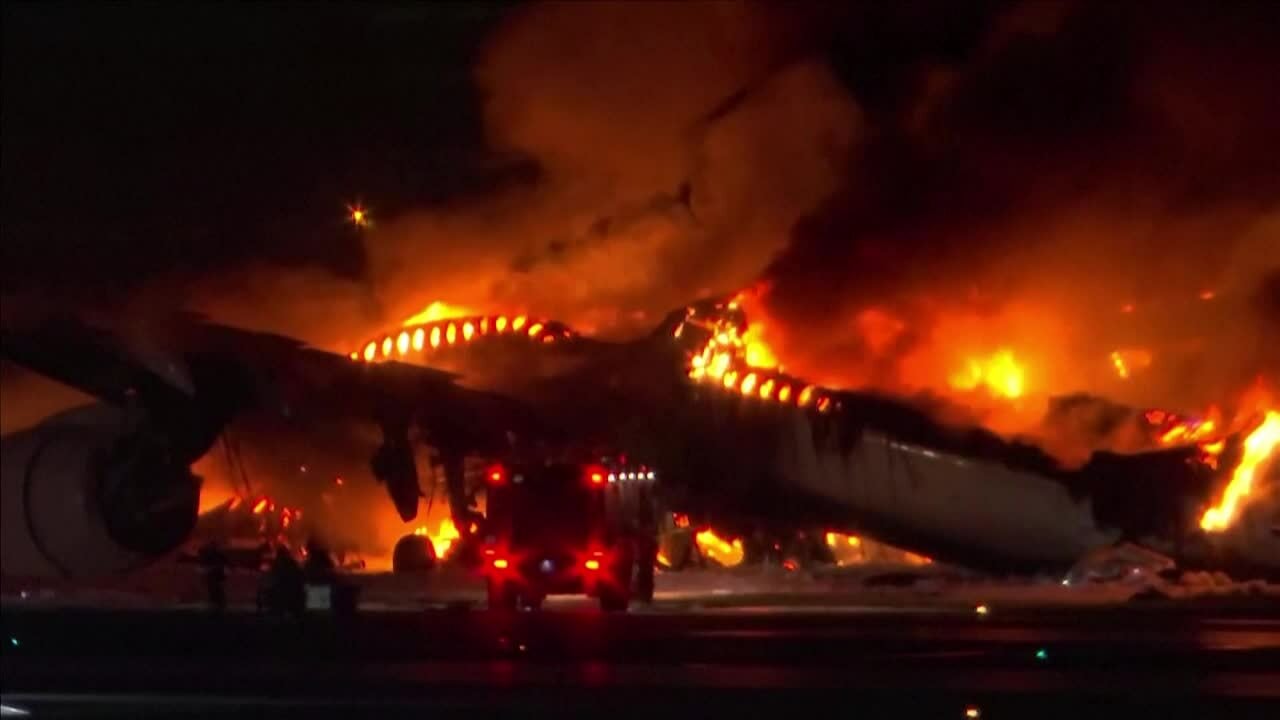
The moment the A350 aircraft was engulfed in flames. Video : Reuters
At the beginning of the runway, the patrol plane was not so lucky. The aircraft was also deformed and caught fire after the collision, burning to ashes. Major Miyamoto managed to escape with serious injuries, but five of his colleagues perished.
Sally Gethin, an aviation expert in the UK, suggests that the fact the patrol aircraft was not equipped with a modern ADS-B transponder could be another reason for the collision.
ADS-B enhances the ability to identify and locate aircraft, providing crucial information for collision avoidance such as GPS position, altitude, and speed. Information from ADS-B is transmitted to GPS satellites and relayed in real time to air traffic control and other aircraft. This system is considered more accurate than conventional radar systems, according to the U.S. Federal Aviation Administration (FAA).
"The transponders on the aircraft help both the air traffic control tower and other aircraft in the area to understand the situation," Gethin said.
Footage from the scene shows that the underside of the Airbus A350-900 appears to have struck the nose of the patrol aircraft, severing the aircraft's fuel line. The leaking fuel immediately ignited, creating a massive fireball.
British aviation expert Tim Atkinson said that the Bombardier aircraft is considerably smaller than the A350, but it still weighs around 20 tons and carries a significant amount of fuel when preparing for takeoff.
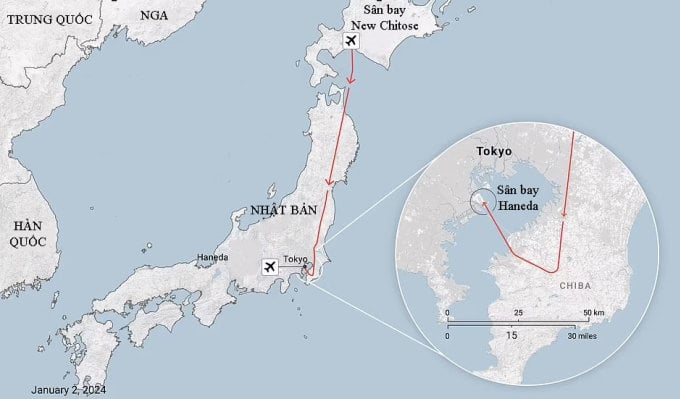
The flight path of the Japan Airlines A350 before the accident. Graphic: AA
Japanese authorities announced on January 3rd that they had found the two black boxes from the Japanese Coast Guard aircraft and would retrieve the data to determine what happened to the plane before the crash. Tokyo police also launched a parallel investigation into suspected negligence causing casualties and established a special unit to interview those involved.
Japanese aviation safety officials and the JCG stated that they will need considerable time to determine the cause of the tragedy, considering factors such as technical issues, human error, and objective conditions. However, the hypothesis of communication failure between the pilots and air traffic control is receiving the most attention.
Japanese broadcaster NHK quoted an official from the Ministry of Land, Infrastructure, Transport and Tourism as saying that the accident may have occurred because "the Coast Guard pilot misunderstood instructions from air traffic controllers."
"The first question that needs to be clarified is whether the patrol aircraft entered the runway and why this happened," said Paul Hayes, director of aviation safety at the UK-based consulting firm Ascend.
Expert Gethin also suggested that the investigation needs to clarify what happened in the communication between the parties. "It's unclear what the reason was, but it appears the smaller aircraft was in the wrong place at the wrong time," Gethin said.
John Cox, a former aviation accident investigator in the US, suggested that the investigation in Japan should prioritize focusing on air traffic control instructions, and then assess why the Japan Airlines pilot did not see the patrol plane while preparing to land.
According to the Flight Safety Foundation (FSF), a US-based consulting organization, errors in aircraft communication and coordination are often the cause of collisions or near-collisions on runways. The FSF recommends that airlines develop and equip their aircraft with better navigation technology so that air traffic controllers and pilots can detect collision risks earlier.
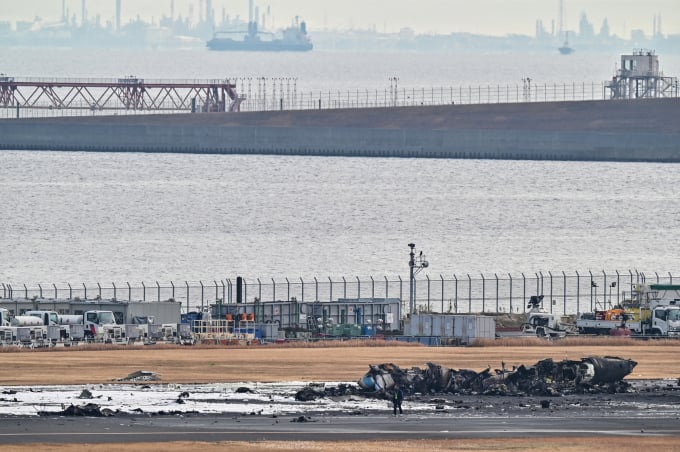
The wreckage of a Japanese Coast Guard plane lies on the runway of Haneda Airport on January 3, following a collision that killed five people. Photo: AFP
"The risk of collisions on runways is a global concern. We have seen how serious the consequences of these incidents can be," said FSF CEO Hassan Shahidi.
After escaping from the crippled, burning aircraft, Major Miyamoto immediately contacted headquarters, reporting, "The plane exploded on the runway." "I escaped. The condition of my comrades on board is unknown," he said.
The bodies of Miyamoto's five colleagues were found when firefighters extinguished the fire on the aircraft. "The most heartbreaking thing is that they sacrificed their lives while carrying out a rescue mission for earthquake victims," said Roger Whitefield, a former British pilot.
Thanh Danh (Based on USA Today, Reuters, BBC, Sky News )
Source link


![[Photo] Prime Minister Pham Minh Chinh holds a phone call with the CEO of Russia's Rosatom Corporation.](/_next/image?url=https%3A%2F%2Fvphoto.vietnam.vn%2Fthumb%2F1200x675%2Fvietnam%2Fresource%2FIMAGE%2F2025%2F12%2F11%2F1765464552365_dsc-5295-jpg.webp&w=3840&q=75)












































































Comment (0)