

But from there, a worrying reality gradually emerged: Many places implemented digital transformation following trends, in a race for form, leading to waste of resources and failure before creating sustainable value.
The bottom line is: Agriculture is an industry that is deeply influenced by natural conditions, soil, labor skills and production scale. A factory can replace production lines and fix errors in a few hours, but a failed harvest means a year of effort is wasted.
Therefore, digital transformation in agriculture cannot be a "communication campaign", nor can it be a race to follow trends. It must be a long-term, strategic process that is suitable for each production model. Otherwise, the technology that is expected to support farmers will turn into a "burden", making them hesitant or even shun technology.
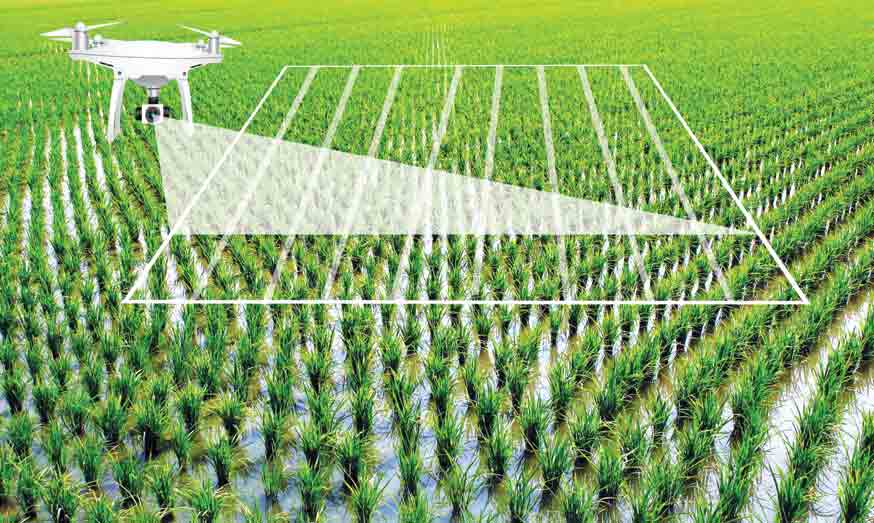
In reality, in many localities, the digital transformation model often starts with the installation of modern technical equipment: phone-controlled drip irrigation systems, greenhouse surveillance cameras, pesticide spraying drones, and garden management software.
However, due to lack of data analysis and lack of synchronous usage process, many models quickly fell into disuse after the project ended. A cooperative was funded to buy a spraying plane but did not have a properly trained operator, no maintenance plan, and the cost of replacing components was too high compared to its capacity. After the initial excitement, the equipment remained in the warehouse, and people returned to the familiar hand sprayers. In some other places, the QR traceability system was widely deployed but did not have complete input data, no quality control process, leading to the situation where labels were attached to products just for "pretend", consumers scanned the code but did not receive valuable information.
One of the underlying reasons why digital transformation is so easy to become a movement is the lack of synchronization. Digital transformation is not simply the emergence of new technology, but the transformation of production, management and business methods.
Installing an IoT device or implementing a smartphone application is not enough to create value without a comprehensive data system: from soil, water, and nutrient parameters; to farming logs, input control; to logistics management, trade, and customer feedback. When data is not connected, discrete solutions will not create a comprehensive picture that helps farmers make decisions. Coffee growers in the Central Highlands may know how much water their plants need, but without linking that data to weather information, price fluctuations, export forecasts, or processing enterprise needs, farmers still cannot optimize production.
On the other hand, successful models often have one thing in common: Digital transformation starts from the "pain" of the producer, not from technological equipment. A greenhouse vegetable growing enterprise in Lam Dong only invested in a nutritional sensor system after realizing that fertilizer costs accounted for 30% of total costs and nutritional imbalances caused products to not meet export standards. A mango growing cooperative in Dong Thap only applied traceability when the Japanese market required transparency in the entire process of pest control, harvesting and preservation. Such models have "endogenous motivation", because digital transformation solves practical problems, helps reduce costs, increase revenue, and expand the market. People will proactively use technology, instead of being "forced" to use it in a mass project.

Sustainable digital transformation also requires investment in people. It is not difficult to buy a sensor, but training operators, data analysts, and people who convert information into farming decisions is the real challenge. Many older farmers are not familiar with reading dashboards, do not understand the concepts of "big data", "predictive AI", "NDVI pixels from drones". Without simple, easy-to-understand instructions in their own language, technology will become alien. Local practical training models, where young engineers work with farmers on their own fields, have proven to be clearly effective. When farmers are "held by the hand", they not only know how to use technology but also confidently propose improvements suitable to production conditions.
Besides, support policy is an indispensable factor.
Digital transformation in agriculture is a long-term investment, not a short-term cost. Without preferential credit mechanisms, capital support, reduced maintenance costs, or connections between businesses, research institutes, and farmers, it is difficult for small units to pursue digital transformation to the end.
Policies also need to encourage data standardization and platform connectivity to avoid the situation where each locality has one software and each cooperative has one application, causing data fragmentation and the inability to integrate.
A national agricultural data system, where processors can access forecasted yields, where scientists can monitor climate change, where banks can estimate credit risk, will be an important foundation for digital transformation to become more than just a slogan.
Finally, it is important to recognize that digital transformation in agriculture is not just about "bringing technology to the fields". It is also about changing production thinking.
The mindset of "make a lot - sell cheaply" will gradually give way to the mindset of "make standard - sell at the right value". The mindset of "good harvest - low price" must be transformed into the mindset of producing according to market demand. At that time, data is not just numbers, but assets. Digital platforms are not just tools, but operating systems. Farmers are not just workers, but decision makers based on information.
Digital transformation can be a boost for Vietnamese agriculture to reach out to the world, but only if it is done responsibly, planned and based on practice. If we stick to the movement, we can see many models that are "beautiful on paper", but few sustainable models. If we start from real needs, from direct producers, from specific and measurable values, digital transformation will become a real driving force, helping Vietnamese agriculture modernize, increase competitiveness and enter a new era of development.
Source: https://mst.gov.vn/chuyen-doi-so-trong-nong-nghiep-khong-the-theo-phong-trao-197251130212731988.htm

![[Photo] National Assembly Chairman Tran Thanh Man attends the VinFuture 2025 Award Ceremony](/_next/image?url=https%3A%2F%2Fvphoto.vietnam.vn%2Fthumb%2F1200x675%2Fvietnam%2Fresource%2FIMAGE%2F2025%2F12%2F05%2F1764951162416_2628509768338816493-6995-jpg.webp&w=3840&q=75)
![[Photo] 60th Anniversary of the Founding of the Vietnam Association of Photographic Artists](/_next/image?url=https%3A%2F%2Fvphoto.vietnam.vn%2Fthumb%2F1200x675%2Fvietnam%2Fresource%2FIMAGE%2F2025%2F12%2F05%2F1764935864512_a1-bnd-0841-9740-jpg.webp&w=3840&q=75)




































































Comment (0)