

Poverty reduction from community tourism model
In Vietnam, community tourism is considered a "boost" for many localities in remote, rural areas. For example, in mountainous provinces where infrastructure and labor market conditions are limited, community tourism takes advantage of available resources such as natural landscapes, traditional stilt houses, handicrafts, indigenous festivals, etc. to create new economic values. Typically, in Lac village (Mai Chau, Hoa Binh ), from a poor agricultural area, Thai people have known how to make homestays, introduce cuisine and perform cultural performances. Thanks to that, life has been improved, many households have increased their income by 3-4 times compared to before.
The homestay model here has become one of the most successful stories of community tourism in the northern mountainous region. In Nam Dam village (formerly Ha Giang province), community tourism has also contributed to a sharp reduction in the poverty rate. The Dao ethnic people not only provide accommodation services but also develop tours to experience traditional occupations such as herbal baths, medicinal herb processing, and indigo dyeing. Every year, the locality welcomes tens of thousands of domestic and foreign visitors, bringing in a stable source of income.
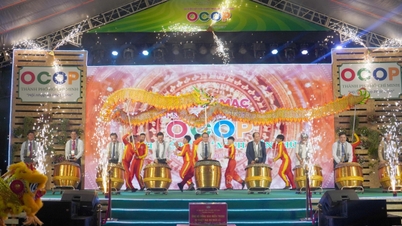
Not only in the northern mountainous areas, in Can Tho, Ben Tre, An Giang, community-based ecotourism in the garden also creates livelihoods for thousands of households, from running boats, serving food, doing clean agriculture to selling OCOP products. Tourists enjoy experiencing the authentic life on the river, while people have the opportunity to increase their income right in their hometown. Community-based tourism has therefore become a development model suitable for rural Vietnam: low capital, taking advantage of available resources, development combined with conservation.
According to statistics from the Vietnam National Tourism Administration, the country has about 300 villages, hamlets, and villages with community tourism activities with more than 5,000 homestays, but only about 2,000 establishments meet standards to serve tourists. The community tourism model is currently developing strongly and becoming one of the most potential types in Vietnam.
Preserving identity to develop sustainable community tourism
Although community tourism has brought significant results, there are still many limitations, such as uneven service quality, low professionalism, unsynchronized infrastructure and the risk of losing local identity. For community tourism to truly become a driving force for long-term poverty reduction, it is necessary to focus on a number of orientations.
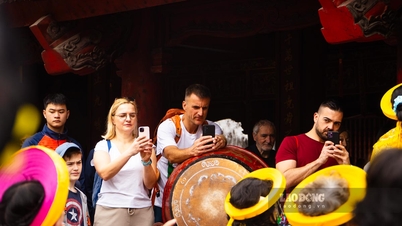
First, it is necessary to develop local tourism products. Such as the programs "One Commune One Product - OCOP", "Rural Tourism"... For example, in Sa Pa (Lao Cai), about 3km from the center, Cat Cat village of the Mong people has become a tourist destination attracting tens of thousands of tourists every year. In addition to developing diverse tourism products to meet customer needs, Cat Cat village still preserves its ethnic identity by encouraging tourists to rent Mong costumes to take photos; maintain traditional houses; organize art performances typical of the Mong people... Or in Den village (Lao Cai), the experience of weaving linen and dyeing indigo attracts many foreign tourists. In Kon Tum, tourists like to participate in Ba Na rituals, drink rice wine, and listen to gongs.
In addition to preserving national cultural identity, community tourism also has some issues that need attention such as environmental protection and tourist management. For example, the "green tourism" model in Cu Lao Cham (Quang Nam) that says no to plastic bags is a typical example of the community and the government's commitment to preserving the ecosystem. In addition, managing the number of tourists to avoid overload is also an important requirement, in order to preserve identity and quality of experience.
Or strengthening regional linkages and cooperation for community tourism in localities. For example, the linkage between destinations, travel agencies, authorities and communities helps create a richer product chain. For example, the Mai Chau - Moc Chau - Son La linkage model has helped expand tourism routes, extend the length of stay and increase income for people.
Source: https://baophapluat.vn/co-hoi-thoat-ngheo-tu-nhung-gia-tri-ban-dia.html

![[Photo] Parade to celebrate the 50th anniversary of Laos' National Day](/_next/image?url=https%3A%2F%2Fvphoto.vietnam.vn%2Fthumb%2F1200x675%2Fvietnam%2Fresource%2FIMAGE%2F2025%2F12%2F02%2F1764691918289_ndo_br_0-jpg.webp&w=3840&q=75)
![[Photo] Worshiping the Tuyet Son statue - a nearly 400-year-old treasure at Keo Pagoda](/_next/image?url=https%3A%2F%2Fvphoto.vietnam.vn%2Fthumb%2F1200x675%2Fvietnam%2Fresource%2FIMAGE%2F2025%2F12%2F02%2F1764679323086_ndo_br_tempimageomw0hi-4884-jpg.webp&w=3840&q=75)









































































Comment (0)