

Legal controversy surrounding the use of force
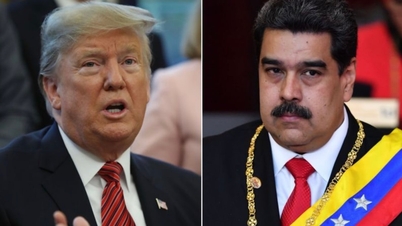
At the heart of the crisis are US military raids on alleged Venezuela-linked drug vessels since September 2. The White House has described these as “self-defense” actions aimed at eliminating threats to the US. Washington argues that drug trafficking groups labeled “foreign terrorist organizations” can be legitimate targets.
However, this argument is being strongly refuted by experts and jurists. Many international law experts, including Professor Laura Dickinson (George Washington University), believe that anti-drug trafficking activities do not meet the criteria of constituting an “armed conflict”. In the absence of an armed conflict, the use of lethal force is only allowed as a last resort in direct self-defense situations, not for intentional attacks on survivors after the ship has been disabled.
Many international legal instruments also emphasize that shipwrecked or incapacitated persons cannot be targeted for attack. Therefore, the allegations of a “double attack” to kill all survivors, if confirmed, would raise serious questions about the legality and even open up questions related to war crimes.
US politics are divided: both Republican and Democratic lawmakers have called for an investigation, while a group of former military lawyers have called the strike order “completely illegal.”
The larger implications of these disputes lie not only in the bilateral US-Venezuela relationship, but also in the potential for a new precedent: the expansive use of the concept of “counterterrorism” to justify military action outside the country without the authorization of the US Congress or international consensus. This threatens to erode the principle of the use of force in international law, which is based on the norm of “self-defense or Security Council authorization.”
Security implications for the Western Hemisphere
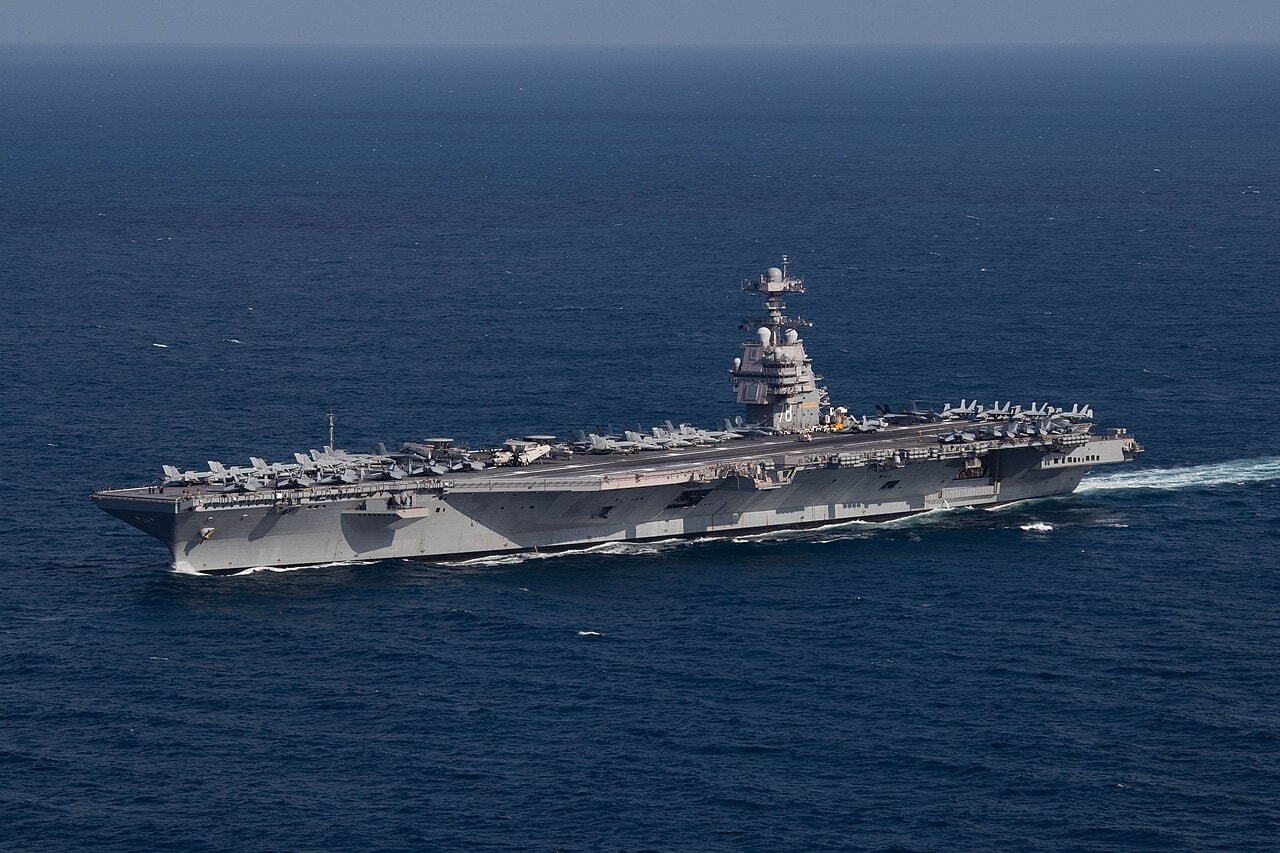
Along with the legal wrangling has been a significant military escalation. Washington has massed some 15,000 troops, deployed the aircraft carrier USS Gerald R. Ford and conducted at least 19 to 21 raids on suspected drug vessels since September, killing more than 80 people. Many experts say the military deployment is too large for a purely anti-drug campaign.
Caracas responded by warning of “22 weeks of invasion” and beefing up troop deployments and air defenses around the capital. While Venezuela’s military capabilities are not comparable to those of the United States, officials say they are preparing for asymmetric warfare scenarios involving sabotage, guerrilla attacks and the mobilization of loyalist forces.
Analysts say that at the regional level, US-Venezuela tensions increase the risk of overall instability. First , the risk of a refugee crisis. Venezuela has already seen millions of people leave the country due to the economic and political crisis. A military intervention could trigger a new wave of migration, pushing neighboring Colombia, Brazil and the Caribbean islands into serious social and security pressure.
Second , regional instability and the risk of conflict expansion. In an escalation scenario, non-state armed groups operating along the Colombia-Venezuela border could exploit the chaos to expand their influence. This would further complicate the already fragile security environment in northern South America.
Third , the broader geopolitical implications. Caracas maintains close ties with Russia, China, and Iran. A direct conflict could trigger indirect responses from these countries, pushing the United States into a multi-regional tension that would weaken Washington’s strategic advantage on other fronts.
Fourth , the political risk for the US administration. According to surveys, the majority of the American public opposes attacking Venezuela. A new war would contradict the commitment to avoid conflicts abroad.
The US-Venezuela crisis is a prime example of the complex intersection of international law, political objectives and regional security strategy. Any escalation could have far-reaching consequences for the Western Hemisphere: from humanitarian crises to prolonged security instability and even global strategic balance.
Source: https://congluan.vn/cuoc-khung-hoang-my-venezuela-va-nhung-thach-thuc-an-ninh-khu-vuc-10320307.html
![[Photo] Cat Ba - Green island paradise](/_next/image?url=https%3A%2F%2Fvphoto.vietnam.vn%2Fthumb%2F1200x675%2Fvietnam%2Fresource%2FIMAGE%2F2025%2F12%2F04%2F1764821844074_ndo_br_1-dcbthienduongxanh638-jpg.webp&w=3840&q=75)



























![[VIMC 40 days of lightning speed] Hai Phong Port determined to break through, reaching the target of 2 million TEUs by 2025](https://vphoto.vietnam.vn/thumb/402x226/vietnam/resource/IMAGE/2025/12/04/1764816441820_chp_4-12-25.jpeg)

































Comment (0)