

The patient was taken to the emergency room at Nam Saigon International General Hospital approximately 40 minutes after being stung by bees. Upon taking the patient's medical history, it was revealed that while exercising near their home, they were suddenly stung by a swarm of wasps.
On July 18, specialist doctor Lai Thanh Tan (Intensive Care - Emergency Department, Nam Saigon International General Hospital) said that the patient was admitted to the hospital in a state of grade 3 anaphylactic shock, with complications of acute liver failure, acute kidney failure, acute respiratory failure and rhabdomyolysis, which would be life-threatening if not treated promptly.
Quickly, the patient is applied intensive measures such as continuous blood filtration, mechanical ventilation, multi-organ support, hemodynamic support ( medical interventions to maintain or improve the patient's blood flow and blood pressure when the circulatory system is not working effectively) and infection control.
After 10 days of intensive treatment, the patient was conscious, had the endotracheal tube removed, was transferred to a regular room and was discharged from the hospital.
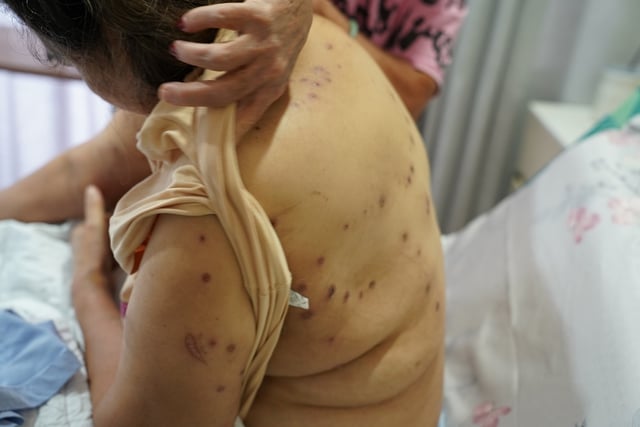
The patient had numerous bee stings all over their body.
PHOTO. TH
Do not be subjective when stung by a wasp
According to Doctor Tan, toxins from wasp venom can cause acute allergic reactions, leading to anaphylactic shock, kidney failure, hemolysis, and multiple organ failure. Especially when stung multiple times simultaneously, the amount of toxins in the body can reach dangerous levels.
"Wasp stings do not simply cause pain and swelling as many people mistakenly believe. Their venom contains many strong enzymes and toxins, which can cause anaphylactic reactions, toxic shock, liver and kidney damage, blood clotting disorders and multiple organ failure, especially in people with underlying diseases such as high blood pressure, diabetes, cardiovascular disease, immunodeficiency...", Dr. Tan shared.
If stung by a bee, move away from the area immediately, do not scratch, do not squeeze the sting, remove any remaining venom, wash the area with saline solution or under running water, and apply a cold compress.
"If you experience shortness of breath, dizziness, nausea, or swelling at the bite site, you should go to the nearest medical facility for treatment. Timely intervention, following the correct protocol, and close monitoring have helped patients escape critical situations and recover well," Dr. Tan shared.
Source: https://thanhnien.vn/cuu-nguoi-phu-nu-bi-ong-vo-ve-dot-70-vet-gay-soc-phan-ve-185250718110454561.htm






























![[Video] The craft of making Dong Ho folk paintings has been inscribed by UNESCO on the List of Crafts in Need of Urgent Safeguarding.](https://vphoto.vietnam.vn/thumb/402x226/vietnam/resource/IMAGE/2025/12/10/1765350246533_tranh-dong-ho-734-jpg.webp)





























































Comment (0)