

Entering a new era, if we correctly understand the changes and adapt appropriately to the trends of the times, Vietnam's agricultural sector will turn challenges into opportunities to "rise up," upgrade the agricultural product value chain, shift from exporting raw products to deeply processed products; establish green and sustainable agricultural product brands; create international competitive advantages; and increase the ability to attract climate finance, green credit, and carbon credits.
Promoting digital transformation in agriculture, digitizing farming households, identifying planting area codes, and applying IoT, blockchain, and GIS presents both unprecedented challenges and golden opportunities for Vietnam to build a "transparent and digitized" agricultural sector, enhancing the nation's position in the global supply chain.
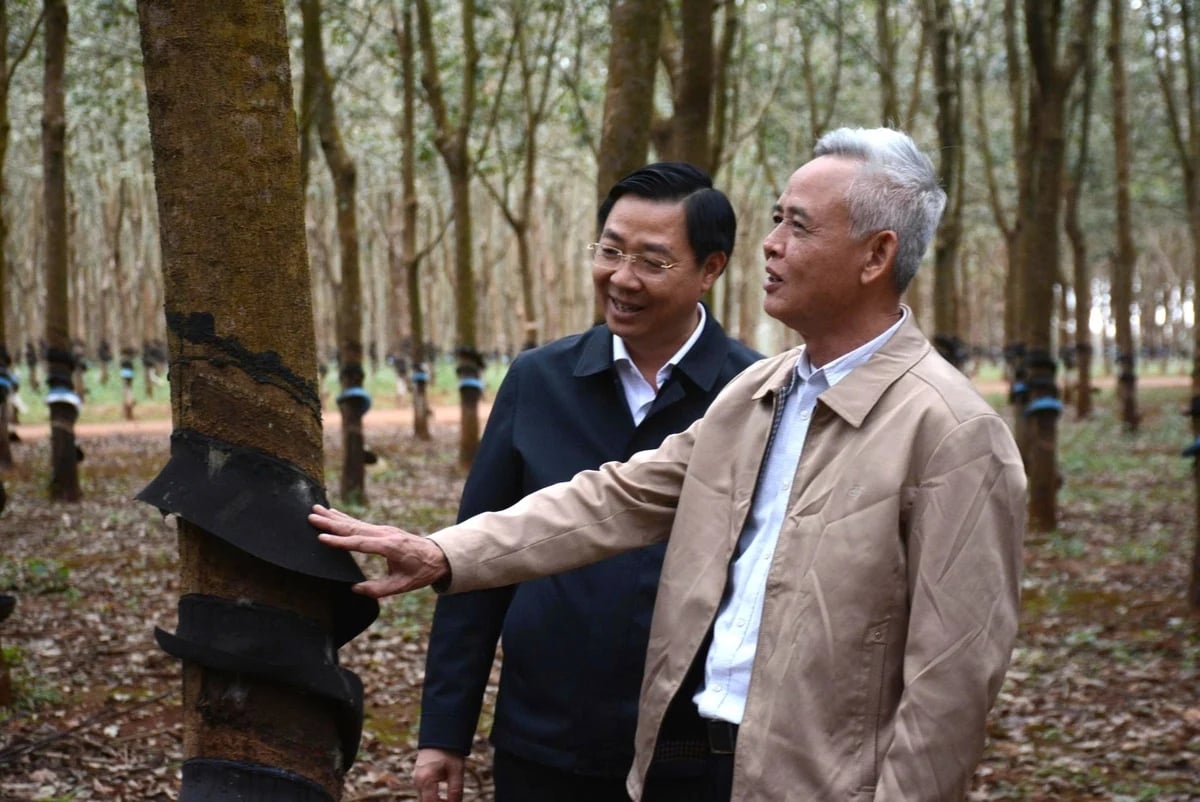
Mr. Ha Cong Tuan (right), former Deputy Minister of Agriculture and Rural Development, Chairman of the Vietnam Association of Agricultural Economics and Rural Development, visits and works at Chu Se Rubber Company Limited on December 8, 2025. Photo: Van Vinh.
Over the past years, Vietnamese agriculture has undergone restructuring amidst rapidly changing domestic and international economic conditions, with both favorable and unstable circumstances, unpredictable economic trends, and profound impacts from the prolonged effects of the Covid-19 pandemic and natural disasters. However, with the will and aspiration for rapid and sustainable development, innovative thinking, decisive action, and collective effort, our agriculture has achieved very important and relatively comprehensive results.
The internal structure of the agricultural sector continues to shift in the right direction, initially developing towards ecological, green, circular, and high-tech applications, improving quality, added value, and social efficiency; continuing to play a "pillar" role in the economy and ensuring national food security. Resource management and utilization, disaster prevention and mitigation are strengthened, and the capacity to adapt to climate change is enhanced; emphasis is placed on developing science , technology, innovation, and digital transformation... creating momentum for innovation in growth models and increasing the added value of agricultural products.
However, broadly speaking, Vietnam's agricultural sector is also facing many difficulties and challenges, some of which are more severe and serious than in previous periods. Agricultural economic development is not yet sustainable; development thinking has not kept pace with global development trends; policy responses have been untimely, slow to adjust and comprehensively improve the development institutions. More decisive action is needed to meet the requirements of rapid and sustainable development in the new era – the era of striving forward.
Entering a new era amidst ongoing globalization and economic integration, we face numerous new difficulties, major challenges, protectionism, imposed tariff policies, and the risk of trade wars, all coupled with the trend of adjusting global production and supply chains.
The Fourth Industrial Revolution continues to develop strongly and profoundly, with unprecedented breakthroughs in high technology and artificial intelligence; green transformation, digital transformation, structural transformation, and the quality of human resources are increasingly being promoted.
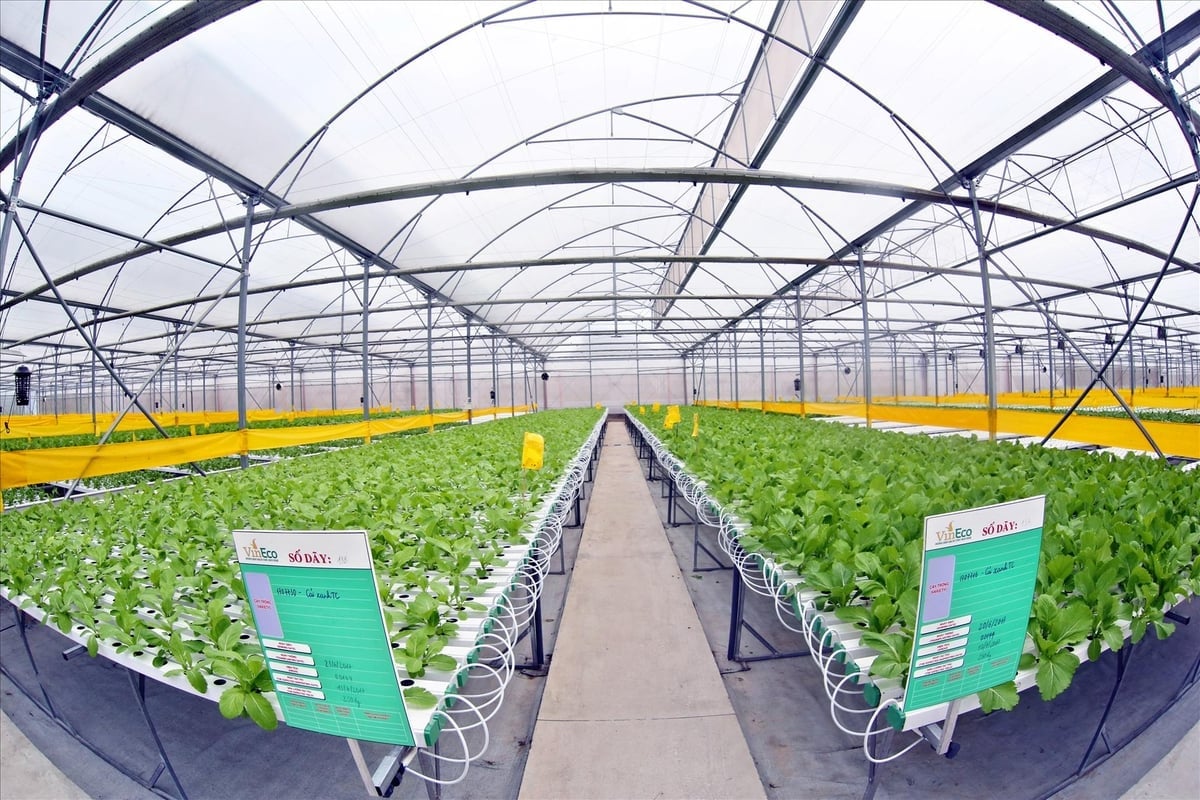
Clean agriculture as seen from the VinEco "garden". Photo: Thanh Giang/Vietnam Photo News.
The global trend toward reducing emissions and combating deforestation aims to prevent three serious environmental challenges: rapidly escalating climate change; large-scale deforestation and land degradation; and pressure from consumers and investors for "green, clean, and deforestation-free" products.
Many countries and international regions have been and will continue to strengthen strict management measures for the trade of clean and safe agricultural products, which will directly impact many of Vietnam's key agricultural products, especially certain products. Coffee, rubber, wood and wood products, pepper, cocoa, aquatic and marine products. Many international regulations impose non-tariff barriers with due diligence statements and traceability of agricultural products down to the plot level to prevent the import of products that cause deforestation and illegal exploitation; narrowing the supply chain to only those businesses that comply with green regulations, creating a global impetus to shift towards sustainable agricultural models (typical examples include the EU Deforestation-Free Products Regulation and the European Union's illegal fishing regulations).
Given the demand for the agricultural sector to quickly adapt to this global trend, and recognizing the many difficulties and challenges we face, especially the lack of land databases, the absence of land ownership certificates for many households, unclear boundaries of leased land, the lack of a unified digitized mapping system, and the failure to promptly update changes in forests and land; the small-scale, fragmented production areas of over 3 million households engaged in agriculture, forestry, and fisheries, making consolidation difficult; and the numerous intermediaries (traders) in the value chain, making it difficult to record data and monitor the product's journey transparently.
The national governance system lacks uniformity and has many gaps in standards, identification codes, export inspection, and loose cooperation mechanisms, resulting in the absence of a unified, integrated national system. The lack of technological resources to establish and deploy GIS, pinpoint planting areas, store large datasets, and build verification systems poses a high risk.
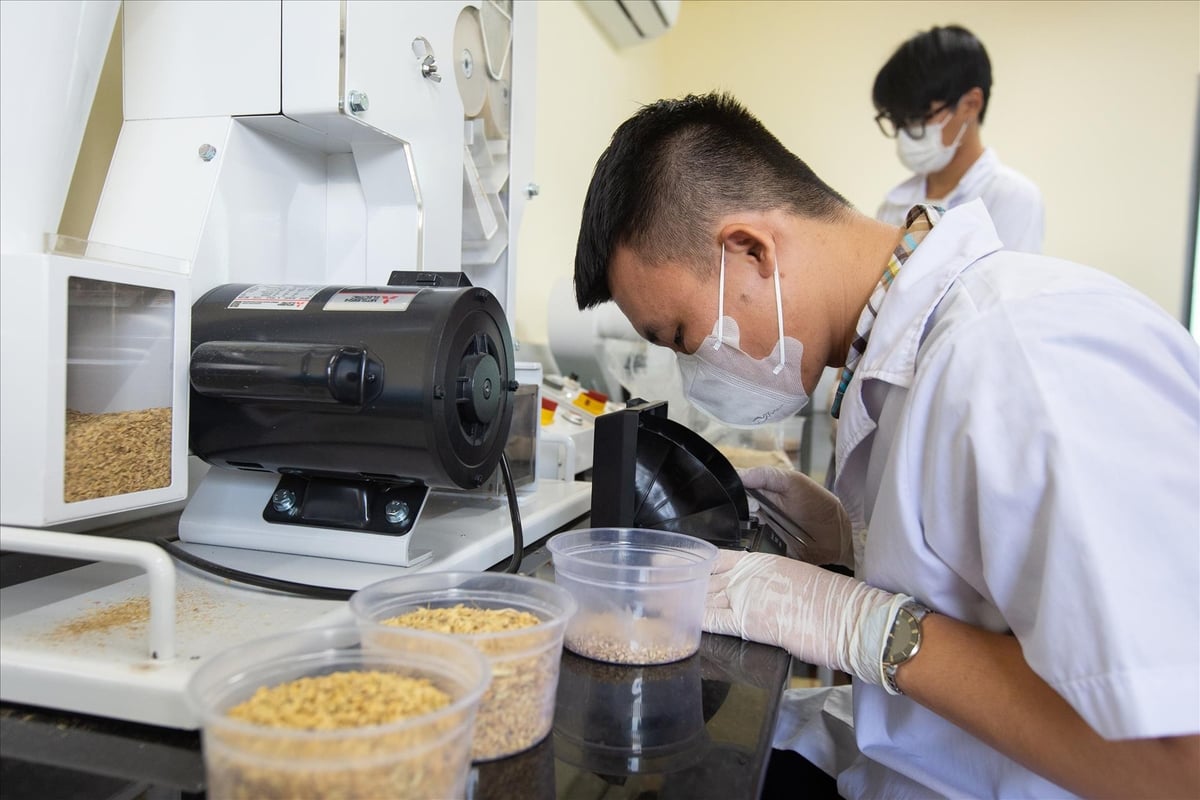
In a laboratory researching drought- and salt-tolerant rice varieties in the Mekong Delta. Photo: Vietnam Photo News.
Entering a new era, if Vietnamese agriculture proactively and correctly recognizes the changes and adapts appropriately to the trends of the times, we will turn challenges into opportunities to "rise up". These opportunities include: Upgrading the agricultural value chain, shifting from exporting raw products to deeply processed products; establishing sustainable green agricultural brands; creating international competitive advantages; increasing the ability to attract climate finance, green credit, and voluntary and mandatory carbon credits. Promoting digital transformation in agriculture, digitizing farming households, identifying planting area codes, and applying IoT, blockchain, and GIS. This presents both unprecedented challenges and golden opportunities for Vietnam to build a "transparent and digitized" agricultural sector, enhancing the nation's position in the global supply chain.
We believe that the agricultural sector needs to quickly identify its adaptation direction, which includes continuing to build and comprehensively improve institutions, mechanisms, policies, and a roadmap for rapid and sustainable development with a medium- and long-term vision based on the Party's guidelines and resolutions, with a focus on the following priorities:
Firstly, accelerate the industrialization and modernization of agriculture and rural areas sustainably; develop modern forms of production organization in agriculture; closely link industrial and service development with agriculture; and develop agricultural and rural economies in conjunction with building new rural areas.
Secondly, we need to build and perfect appropriate institutions to establish a new growth model, restructure the economy, promote industrialization and modernization, and use science, technology, innovation, and digital transformation as the main drivers to revitalize traditional growth drivers.
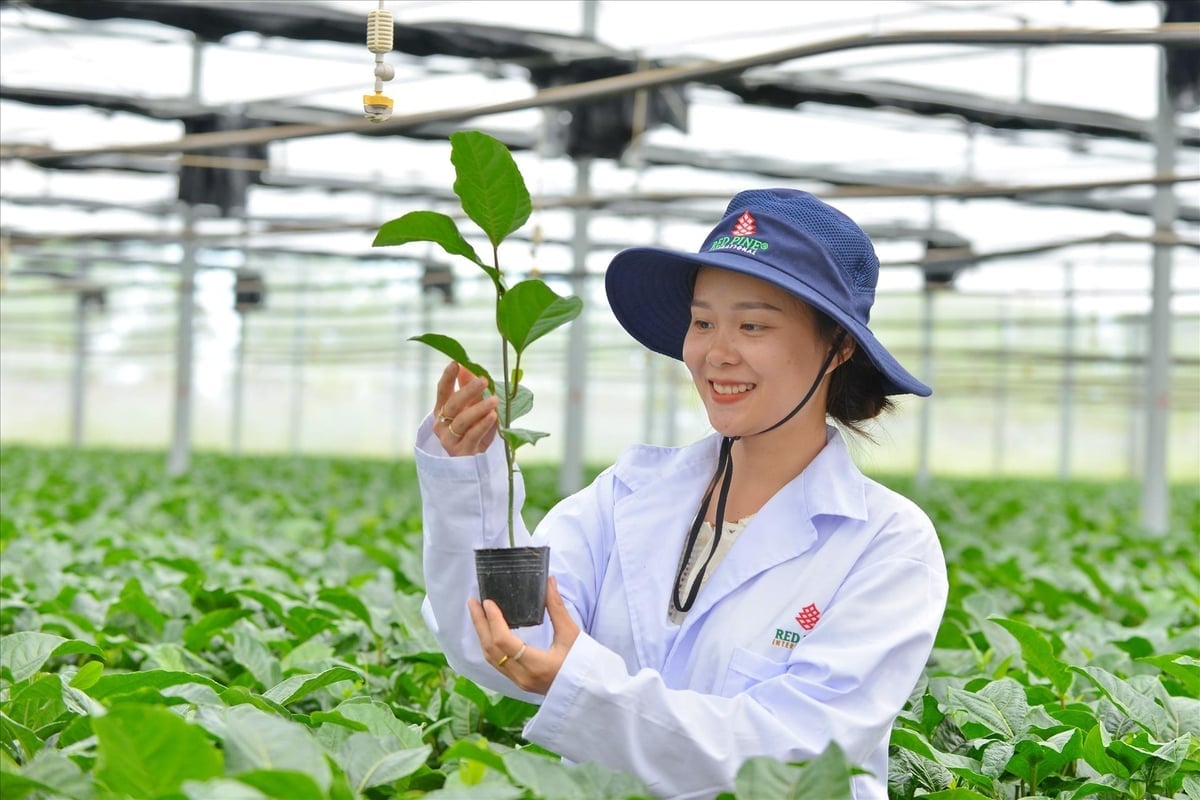
Sustainable development direction for the passion fruit export industry in the Central Highlands (Gia Lai). Photo: Thanh Hoa/Vietnam Photo News.
Thirdly, we need to build and perfect a legal system that meets the requirements of developing the digital economy, artificial intelligence, and e-commerce; and have breakthrough and superior mechanisms and policies to develop new agricultural economic models in the areas of digital economy, green economy, and circular economy. We must strongly shift the method of socializing the management of agricultural product origin, fundamentally moving the state from pre-inspection to post-inspection based on the development of standards and regulations for the production cycle and quality of agricultural products, along with enhancing the self-responsibility of economic entities and strengthening inspection and supervision by society and competent state management agencies. In the short term, it is necessary to urgently issue legal regulations on geographical traceability in agricultural products; and synchronize the provisions of the 2024 Land Law and the forestry law.
Fourth, improve institutions to enhance the self-reliance and effectiveness of international economic integration and competitiveness, creating the most favorable conditions to attract investment from businesses and society into agriculture.
Fifth, comprehensively improve laws, mechanisms, policies, and plans for integrated management and utilization of resources, environmental protection, nature conservation, and biodiversity; proactively adapt to climate change, prevent biodiversity loss, and maintain ecological balance. Strengthen supervision, inspection, and effective handling of violations of laws on resources and the environment. Maximize the mobilization and effective use of international resources and preferential mechanisms to support green transition, reduce greenhouse gas emissions, and aim for net-zero emissions by 2050.
Sixth, upgrade the agricultural value chain, establish sustainable green agricultural brands; create an international competitive advantage. First, focus on establishing a number of tasks:
- Establish a national database of land, forests, and cultivated areas (ideally located at the Ministry of Agriculture and Environment). Support a free traceability platform for smallholder farmers based on data review and consolidation, updating unified status maps, sharing and common use, and implementing the issuance of identification numbers for each cultivated land parcel. GIS standards - data - verification. Digitize the entire supply chain using GIS mapping, Blockchain/QR traceability, and electronic contracts.
- Develop and promulgate state regulations on the criteria for growing areas; the responsibilities of economic institutions in the agricultural value chain. Standardize the internal code of conduct for verifying growers and growing areas. Shift from a trader-based model to a linkage model: digitized enterprises/cooperatives/farmers' organizations, FDI - Vietnamese enterprises.
- There should be mechanisms and policies to support the poor, especially GPS surveying, standardization of land records, training on sustainable production; and unsecured loans for cooperatives. Land use right certificates or appropriate confirmation documents should be issued urgently.
Source: https://nongnghiepmoitruong.vn/day-manh-ung-dung-cong-nghe-chuyen-doi-so-de-phat-trien-ben-vung-d789710.html
![[Photo] Prime Minister Pham Minh Chinh receives Lao Minister of Education and Sports Thongsalith Mangnormek](/_next/image?url=https%3A%2F%2Fvphoto.vietnam.vn%2Fthumb%2F1200x675%2Fvietnam%2Fresource%2FIMAGE%2F2025%2F12%2F16%2F1765876834721_dsc-7519-jpg.webp&w=3840&q=75)
![[Image] Leaked images ahead of the 2025 Community Action Awards gala.](/_next/image?url=https%3A%2F%2Fvphoto.vietnam.vn%2Fthumb%2F1200x675%2Fvietnam%2Fresource%2FIMAGE%2F2025%2F12%2F16%2F1765882828720_ndo_br_thiet-ke-chua-co-ten-45-png.webp&w=3840&q=75)
![[Photo] Prime Minister Pham Minh Chinh receives the Governor of Tochigi Province (Japan)](/_next/image?url=https%3A%2F%2Fvphoto.vietnam.vn%2Fthumb%2F1200x675%2Fvietnam%2Fresource%2FIMAGE%2F2025%2F12%2F16%2F1765892133176_dsc-8082-6425-jpg.webp&w=3840&q=75)
![[Live] 2025 Community Action Awards Gala](/_next/image?url=https%3A%2F%2Fvphoto.vietnam.vn%2Fthumb%2F1200x675%2Fvietnam%2Fresource%2FIMAGE%2F2025%2F12%2F16%2F1765899631650_ndo_tr_z7334013144784-9f9fe10a6d63584c85aff40f2957c250-jpg.webp&w=3840&q=75)





































































Comment (0)