

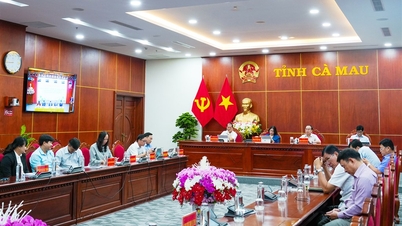
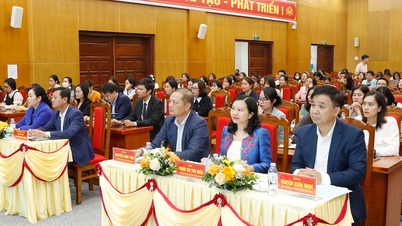
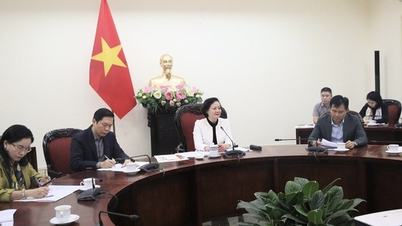
On the morning of November 4th, at the National Assembly building, continuing the program of the 8th Session, under the chairmanship of National Assembly Chairman Tran Thanh Man, the National Assembly discussed in the plenary hall the assessment of the results of the implementation of the socio- economic development plan for 2024; and the projected socio-economic development plan for 2025.
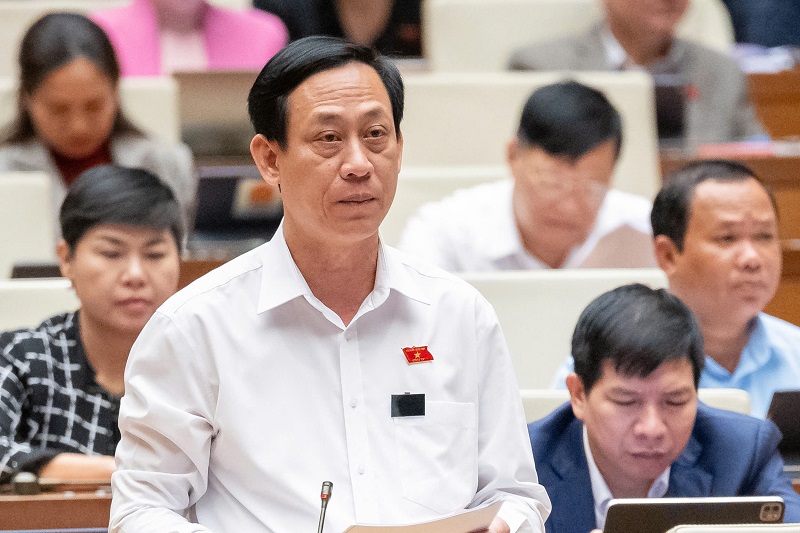
Participating in the discussion, National Assembly Deputy Mai Van Hai, Provincial Party Committee member and Deputy Head of the Thanh Hoa National Assembly Delegation, expressed strong agreement with the Government's report and the Economic Committee's verification report on the implementation of the socio-economic development plan for 2024 and the projected socio-economic development plan for 2025.
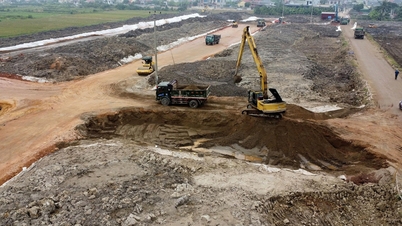
The report shows that under the leadership of the Central Government and the Prime Minister, the country's economy has recovered and developed rapidly, with many bright spots in socio-economic development in 2024, achieving and exceeding the set targets. For example, the economic growth rate is high compared to other countries in the region and the world ; inflation is under control; major balances are ensured; investment in infrastructure construction continues to be strongly promoted, creating a clear breakthrough in the construction of expressways and the 500 KV power line project (circuit 3), which was basically completed in 6 months – an unprecedented achievement and a valuable lesson in leadership and direction of investment in national key projects.
In addition, the government report also clearly outlined the shortcomings, limitations, causes, and main tasks for 2025. Representative Mai Van Hai addressed two issues:
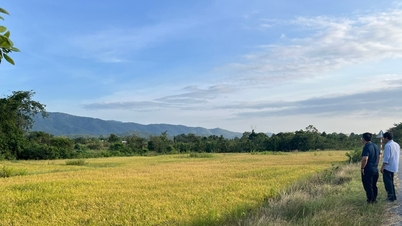
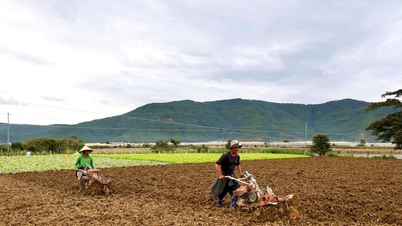
Regarding agriculture and rural development: Despite facing natural disasters, storms, floods, and unfavorable weather conditions, agricultural, forestry, and fisheries production still achieved relatively high growth; food security was ensured; and the restructuring of the agricultural sector continued to be promoted towards the development of ecological agriculture, green agriculture, circular agriculture, increasing added value, and linking it with rural development; the One Commune One Product (OCOP) program continued to be implemented by localities, increasingly creating more high-quality products and increasing the value of goods...
However, agricultural production remains fragmented and small-scale, with low economic efficiency, and some people are not enthusiastic about farming. The New Rural Development program still faces several challenges, such as: significant disparities in the number of communes achieving New Rural Development standards in some regions, with the most disadvantaged areas being the mountainous provinces of the North and Central Highlands; the involvement of some local Party committees and authorities has not been truly decisive, and the New Rural Development movement in some localities shows signs of stagnation; economic development and income improvement for rural people have not improved significantly; and the maintenance and improvement of the quality of New Rural Development criteria have not received adequate attention. The implementation of specialized programs supporting the New Rural Development program has not received sufficient attention in some localities, resulting in slow progress.
Based on the above issues, delegate Mai Van Hai proposed several points: He requested that the Government and the Ministry of Agriculture and Rural Development provide more decisive direction in restructuring the agricultural sector towards large-scale, high-value-added commodity production, linked with the construction of new rural areas, advanced new rural areas, and model new rural areas. He also called for overcoming the fragmented nature of production, promptly finalizing guiding documents for the implementation of the 2024 Land Law, especially those under the authority of local governments, to accelerate land consolidation, expand production scale, apply high technology, and promote good agricultural practices.
Continue to effectively implement the "nationwide effort to build new rural areas" movement, effectively implement the Law on Grassroots Democracy, mobilize maximum resources, especially resources from the people, and integrate resources from programs and projects under the three National Target Programs to invest in infrastructure development, develop effective production models, create livelihoods, and increase income for the people. Research and consider supplementing funding to support the implementation of the National Target Program for communes that have not yet met the new rural area standards, especially those in mountainous, remote, and disadvantaged areas.
Directing the effective implementation of specialized programs supporting the New Rural Development Program, it is necessary to identify the "One Commune, One Product" program as one of the key specialized programs to standardize and improve the quality and value of agricultural and handicraft products, linked to the production process in rural areas; and to have specific policies for small and micro enterprises, cooperatives, and households to innovate technology and develop OCOP products to create linkages in production and generate more high-value-added OCOP products.
Regarding the pilot implementation of specific mechanisms and policies: Based on the Government's reports assessing the three-year implementation of the National Assembly's Resolution on specific mechanisms and policies in the four localities of Hai Phong City, Can Tho, Thanh Hoa, and Thua Thien Hue, it shows the determination of the Government, ministries, and localities in directing and organizing the implementation of these mechanisms. The implementation of these specific mechanisms and policies has created a shift in awareness and responsibility at all levels and sectors. Policies related to finance, investment, and decentralization and delegation in land management and planning management have been quite effective, contributing to unlocking the resources and advantages of each locality, and initially making a significant contribution to promoting the socio-economic development of these localities.
Besides, some specific mechanisms and policies implemented have not achieved the desired results and have not created breakthrough momentum for the provinces; these mechanisms are not truly comprehensive or strong enough to unleash resources. To make them more comprehensive, the 7th session of the National Assembly allowed Nghe An to pilot the implementation of some specific mechanisms and policies.
Given the issues mentioned above, we propose that the National Assembly allow Thanh Hoa and other provinces and cities, after the Government's preliminary assessment of the past three years, to develop and pilot additional specific mechanisms and policies to create conditions for localities to mobilize all resources and exploit all potential advantages for investment and development, and to quickly achieve the goals assigned by the Politburo's Resolution.
Quoc Huong
Source: https://baothanhhoa.vn/dbqh-mai-van-hai-doan-dbqh-tinh-thanh-hoa-de-nghi-chinh-phu-chi-dao-quyet-liet-hon-nua-tai-co-cau-nganh-nong-nghiep-229414.htm


















































































Comment (0)