

The Editor-in-Chief's instructions
My first visit to Tan Trao was in 2009, during a business trip with Ms. Tran Thi Thai Hoa, former Editor-in-Chief of Binh Thuan Newspaper (formerly). As soon as the car arrived in Son Duong district, she told me in a firm yet emotional voice: “As a Party newspaper journalist, when you come to Tuyen Quang, you must visit Tan Trao. Without visiting, you can’t fully comprehend the hardships our ancestors endured to achieve what we have today.”
Later, whenever a young reporter or anyone in the delegation visited the sister province of Tuyen Quang but had never been to Tan Trao, she would take the time to go to the historical site. For her, it was not just a destination, but a living classroom about revolutionary traditions, a place to "further hone the will and responsibility of revolutionary journalists."
During that trip, I gained a deeper understanding of the fraternal relationship between Binh Thuan (formerly), Lam Dong (present-day), and Tuyen Quang. At that time, this fraternal relationship was a highly significant event in the context of the entire country entering the extremely fierce phase of the resistance war against the US. Specifically, in 1960, when the revolution in the South shifted from political to armed struggle, the North became the great rear base supporting the front lines. President Ho Chi Minh and the Central Committee of the Party launched the North-South Fraternal Relationship movement, binding the localities together like blood relatives, demonstrating the immutable truth: "Vietnam is one country, the Vietnamese people are one nation."
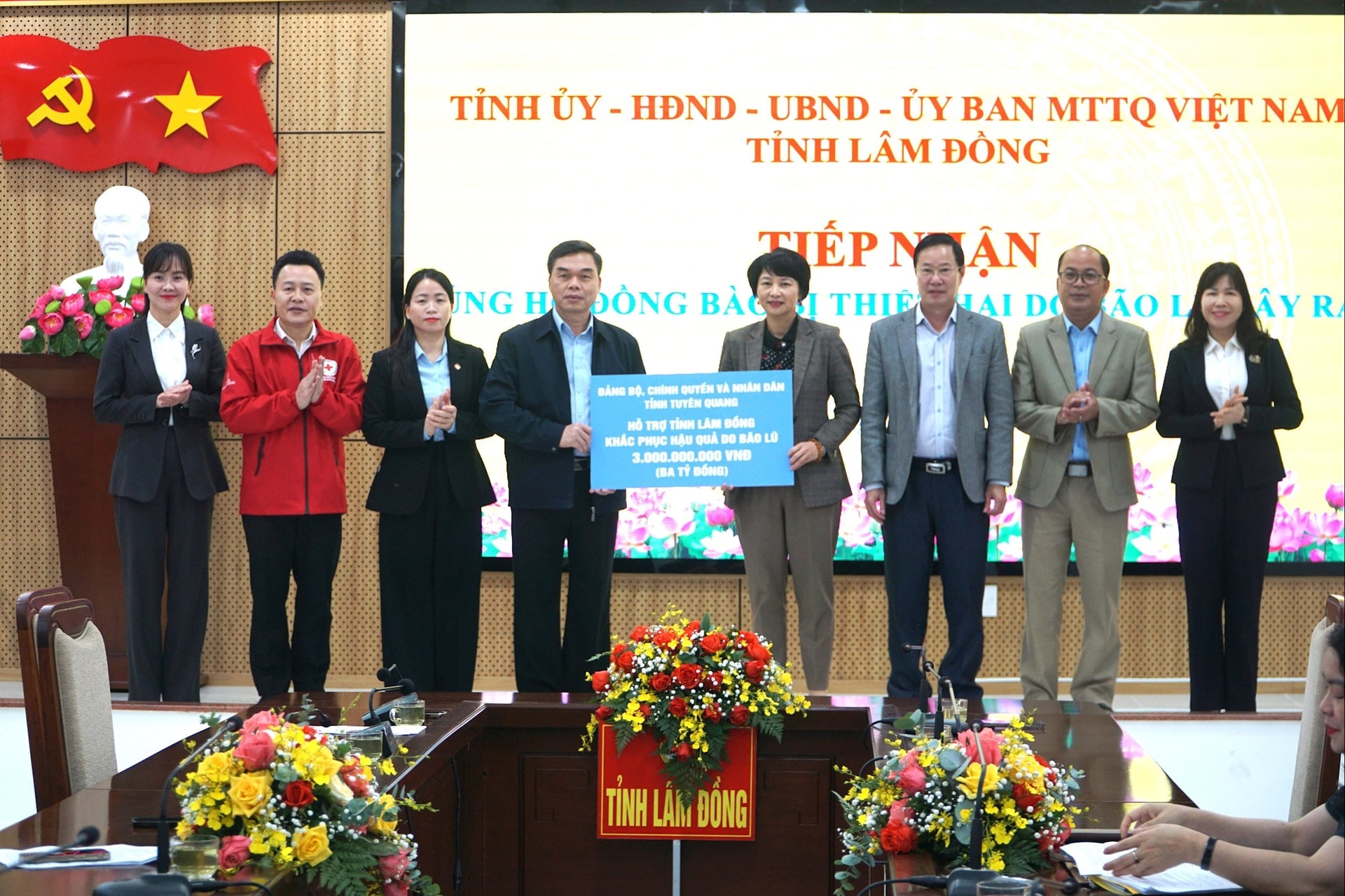
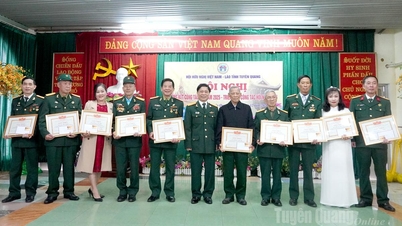
Tuyen Quang – the liberated capital of the resistance, the birthplace of revolution – forged a fraternal bond with Binh Thuan, a steadfast land then facing countless difficulties and challenges. Even before the ceremony, the movement "For our beloved South, for our fraternal Binh Thuan, for the reunification of the Fatherland" spread widely among all strata of the people of Tuyen Quang province. And after the ceremony on April 3, 1960, from localities, agencies, and units to villages, from classrooms to factories, the spirit of solidarity with Binh Thuan was further strengthened, becoming a beautiful symbol of North-South friendship during the brutal years of war. Even now, Tuyen Quang and Binh Thuan, now Lam Dong, remain steadfastly bound by this unwavering fraternal bond. This was clearly demonstrated during the recent devastating floods, the worst in over 30 years. Despite their own difficulties, the people of Tuyen Quang province visited and personally delivered 3 billion VND to Lam Dong province to help overcome the consequences of the natural disaster. This sentiment likely stems from the trust, responsibility, and the sweat and tears of the people of both provinces over many generations.
Proud of Tan Trao today.
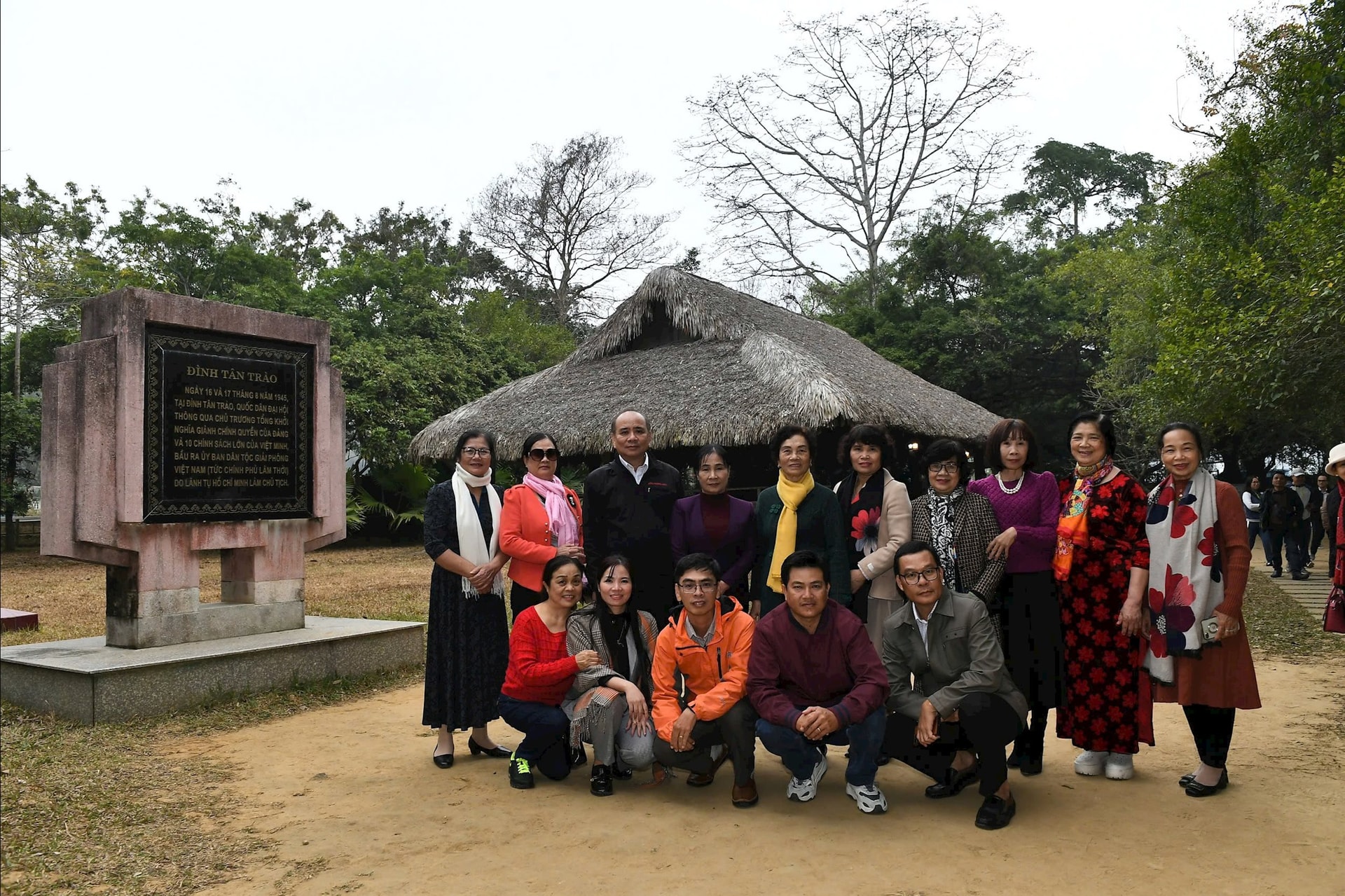
During our recent trip back to Tuyen Quang, traveling on the winding but smooth paved roads through various localities to reach Tan Trao, interspersed with densely populated residential areas and well-built houses, we were able to sense the changes and the resilience of the people in this revolutionary region in overcoming difficulties through their own efforts.
In conversation with us, Quang Hoa, a reporter from Tuyen Quang Newspaper and a companion of the delegation throughout the journey to Tan Trao, spoke with a glint of pride in his eyes: “It is a great honor to have led many journalist delegations to Tan Trao. Almost every delegation, upon arriving in Tuyen Quang, wants to visit the historical site as a way to report their achievements and remind themselves to live up to the legacy of their ancestors. Each time, I feel even more proud to live and work in Tuyen Quang, the cradle of Vietnam's revolutionary tradition.” Hoa's words are simple yet thought-provoking: the people of Tuyen Quang today are not only proud of their past, living with it, but also preserving it with genuine affection and concrete actions every day, to educate future generations about revolutionary ideals.
Greatness comes from simple things.
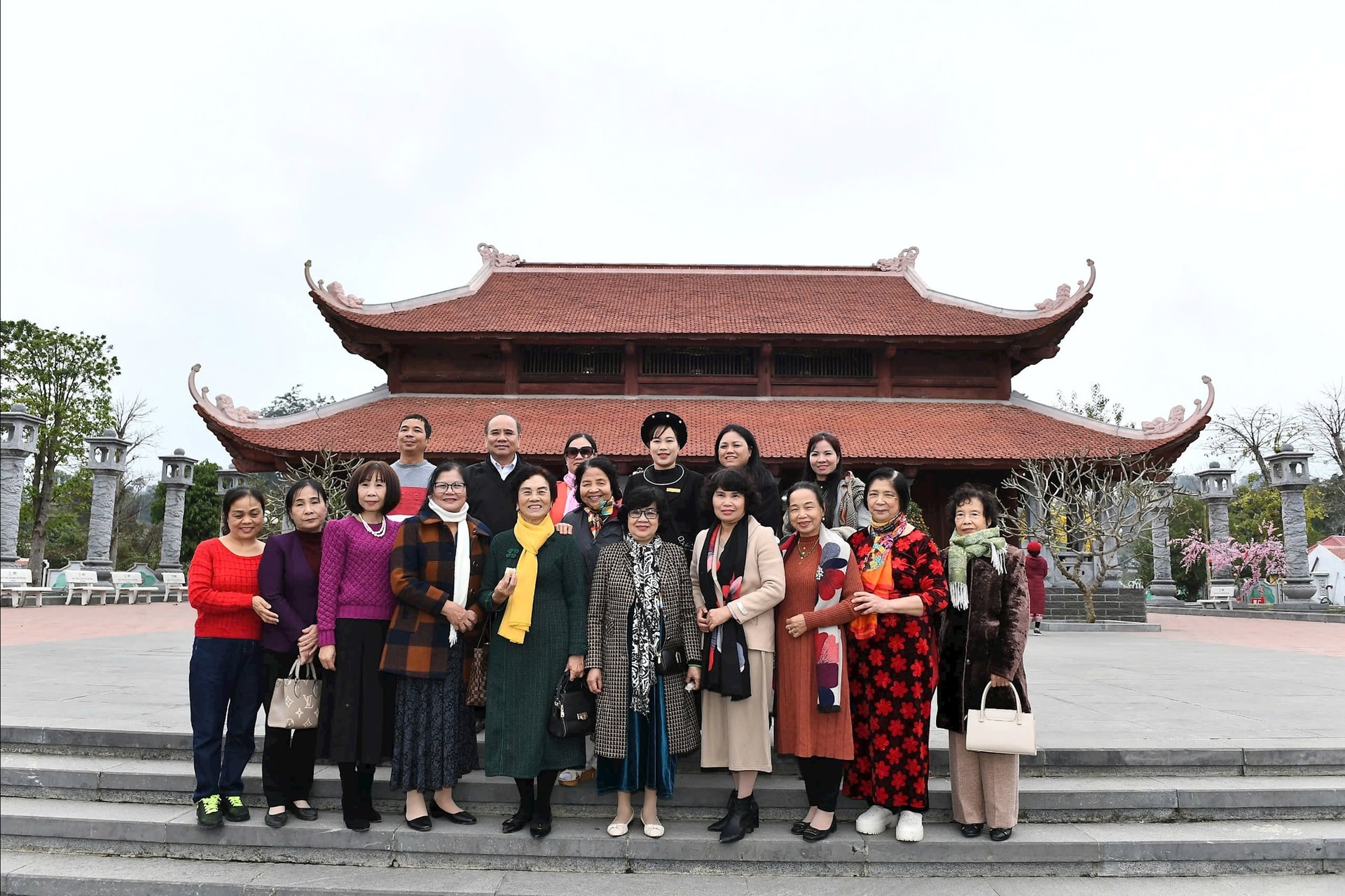
Among the countless historical sites in Tan Trao, the Na Nua hut is perhaps the place that left me and others most speechless.
Nestled beneath the forest canopy, the small hut consisted of only two simple rooms made of bamboo. Yet, from May 1945, President Ho Chi Minh lived, worked, and drafted documents that determined the fate of the entire nation. From here, the policies and plans for the August Revolution were born, and as we know, the results were later revealed. Amidst the silent mountains and forests, we, the people of the South, felt as if we could hear the sound of his pen, each stroke writing the golden pages of our nation's history. We listened to the guide recount the story of how Uncle Ho was saved from a life-threatening situation thanks to a local folk remedy, demonstrating the solidarity and support of the people, their sacrifice for national independence, and Uncle Ho's extraordinary willpower. Despite his illness, Uncle Ho still cared for the revolution, as he instructed, "Even if we have to burn down the entire Truong Son mountain range, we must win independence." It is precisely this simplicity, this dedication to the country and its people, that has made Uncle Ho great in the hearts of the people to this day.
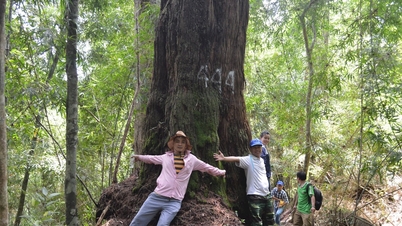
From the Na Nua hut to the Hong Thai communal house, the Tan Trao communal house, or the historic banyan tree… each historical site is a layer of time's sediment, an echo of a nation that rose from hardship to achieve independence. Walking through Tan Trao, our group deeply understood that there are still things to think about and do for today and for future generations, in light of the dedication and sacrifice of Uncle Ho and the revolutionary predecessors for the independence and freedom of the nation.
That awakened in each member of the delegation a sense of preserving tradition, nurturing ideals, and doing their jobs better—this is how each of us repays our ancestors; it is also the most worthy way to return and stand in the revolutionary land of Tan Trao...
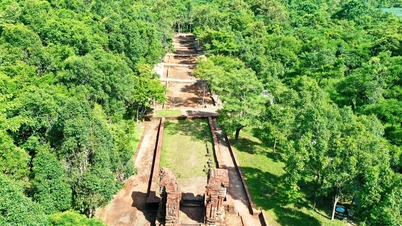
The Tan Trao Special National Historical Site, spanning 11 communes of the former Son Duong and Yen Son districts, comprises 138 historical sites and clusters of sites. The site was designated a Special National Historical Site by the Prime Minister on May 10, 2012. This site is where President Ho Chi Minh and the central government agencies resided.
and worked during the pre-insurrection period and the resistance war against French colonialism, including typical relics such as: Hong Thai Temple, Na Nua historical complex, Tan Trao Temple, Tan Trao banyan tree…
Source: https://baolamdong.vn/di-de-thay-minh-con-nhung-dieu-phai-nghi-phai-lam-410131.html



































































Comment (0)