

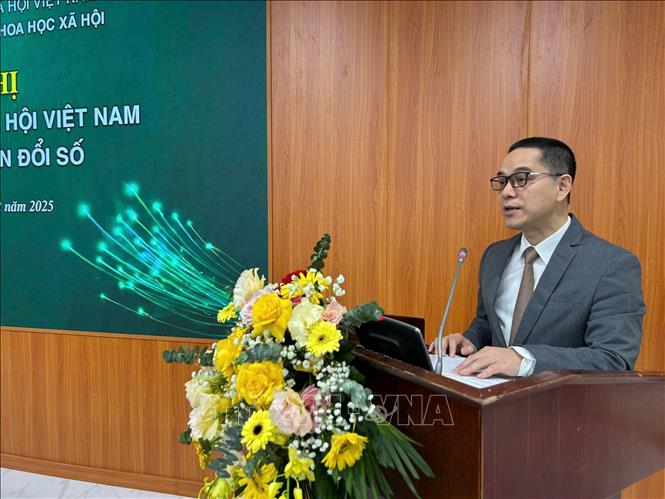
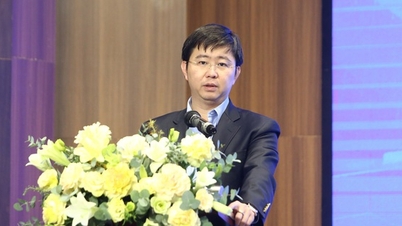
Speaking at the workshop, Associate Professor, Dr. Ta Minh Tuan, Vice President of the Vietnam Academy of Social Sciences, said that the Party and State always emphasize the key role of science and technology, innovation and digital transformation. In particular, Resolution No. 57-NQ/TW, dated December 22, 2024 of the Politburo on breakthroughs in science and technology development, innovation and national digital transformation, along with many other important directives, have clearly defined the task of promoting digital transformation, breakthrough development in science and technology, publications and scientific communication.
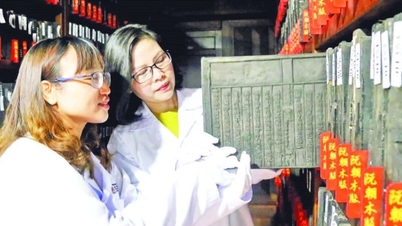
In recent years, journals in the Vietnam Academy of Social Sciences in general and the Vietnam Journal of Social Sciences in particular have made efforts to implement digital transformation such as: increasing participation in electronic publishing; applying article management software according to international models; assigning a digital identifier of an object (DOI) to published articles; expanding cooperation with research institutions and universities; improving content quality according to international standards.
However, practice also raises many issues that need further research, discussion and improvement, such as: the application of digital technology is still uneven among journals; the capacity for digital management, data analysis, and exploitation of artificial intelligence in editing and review work is still limited; the volume of scientific data has not been integrated and interconnected, etc.
“In the digital age, social science journals not only perform the function of preserving and disseminating knowledge, but also contribute to orienting values, strengthening scientific beliefs and refuting false information, a particularly important task in today's knowledge economy and digital society,” Associate Professor, Dr. Ta Minh Tuan emphasized.
Associate Professor, Dr. Pham Minh Phuc, Acting Director, Editor-in-Chief of the Social Sciences Publishing House and Journal (Vietnam Academy of Social Sciences) said that, implementing the Party and State's guidelines and policies, promoting innovation and development of the country's social sciences, the system of Vietnamese social sciences journals, with the role of a platform for disseminating knowledge, criticizing policies, and orienting scientific public opinion, needs to strongly innovate in terms of content, management methods, publishing technology and operating model.
Digital transformation is not simply about digitizing processes, but also about comprehensively restructuring research, publishing and knowledge distribution activities, aiming to improve academic quality, expand accessibility, and increase interaction with the domestic and international scientific community.
According to Associate Professor, Dr. Nguyen Duy Loi, Editor-in-Chief of the Vietnam Journal of Social Sciences, digital transformation in the field of social sciences and humanities takes place through four main stages: digitizing content; applying manuscript management systems; standardizing internationalization in publishing; applying new technologies to improve search and increase visibility in scientific journal index systems. In particular, digital transformation of social sciences and humanities journals is an inevitable trend, not only because of international requirements but also stemming from the intrinsic needs of knowledge development.
This roadmap requires systematic investment and coordination between management agencies, research institutions, publishers and the academic community itself. The future of social science and humanities journals will depend on the ability to grasp and apply technology, maintain academic standards, develop sustainable digital infrastructure and attract digital human resources. Only when fully meeting the digital transformation criteria can journals assert their position in the global knowledge ecosystem.
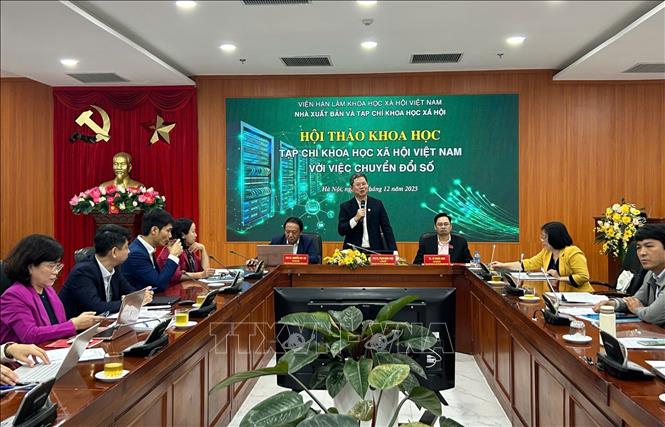
At the workshop, experts and scientists focused on analyzing and discussing to deepen some contents such as: the current status of digital transformation in the activities of Vietnamese social science journals in recent times; models and experiences in applying digital technology to publishing, reviewing, distributing and managing knowledge; difficulties and challenges that domestic journals are facing in the digital transformation process... From there, delegates proposed technological, organizational and human resource solutions to improve the quality of articles, increase transparency, international standardization and expand academic influence.
Source: https://baotintuc.vn/thoi-su/dinh-huong-phat-trien-he-thong-tap-chi-khoa-hoc-xa-hoi-viet-nam-trong-thoi-ky-so-20251204180048059.htm


![[Photo] Cat Ba - Green island paradise](/_next/image?url=https%3A%2F%2Fvphoto.vietnam.vn%2Fthumb%2F1200x675%2Fvietnam%2Fresource%2FIMAGE%2F2025%2F12%2F04%2F1764821844074_ndo_br_1-dcbthienduongxanh638-jpg.webp&w=3840&q=75)













































![[VIMC 40 days of lightning speed] Da Nang Port: Unity - Lightning speed - Breakthrough to the finish line](https://vphoto.vietnam.vn/thumb/402x226/vietnam/resource/IMAGE/2025/12/04/1764833540882_cdn_4-12-25.jpeg)







































Comment (0)