

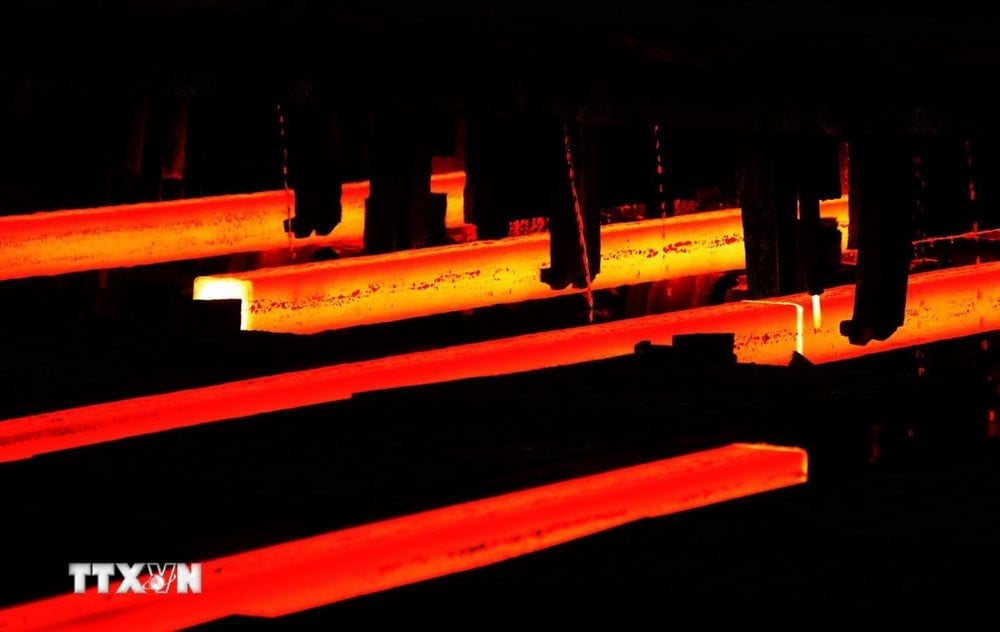
Recently, hot-rolled steel (HRC) manufacturers such as Formosa and Hoa Phat have filed requests to initiate anti-dumping investigations into imports of this product from China and India, citing threats to domestic production.
So how is the massive influx of steel affecting domestic production, and should Vietnam investigate and potentially impose tariffs on this product?
Protecting production from upstream
According to data from the General Department of Customs, in 2023, the amount of imported hot-rolled steel coils was 143% of the amount produced domestically.
It is estimated that in the first quarter of 2024, HRC imports reached 3 million tons, 1.5 times the domestic production volume, with imports from China and India increasing dramatically, accounting for 75%.
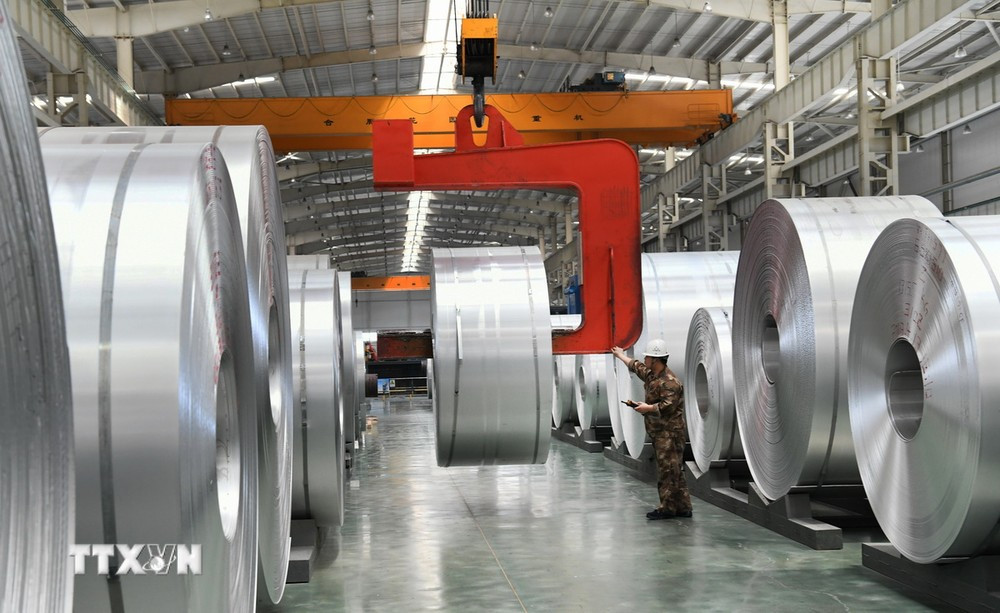
This is the first time Vietnam has had a yearly HRC import volume exceeding domestic production. According to a 2023 report by the Vietnam Steel Association, the production of the two domestic hot-rolled steel producers, Formosa and Hoa Phat, declined, reaching only 73% of their designed capacity compared to 86% in 2021, due to unfair competition from imported goods sold below cost.
In terms of price, import prices have fallen sharply from $613 at the beginning of 2023 to $541 in the fourth quarter of 2023.
A representative from a domestic company shared: "This is alarming. Some countries like Thailand and Indonesia, which have lower production than Vietnam and import significantly less than their domestic production, have also used trade safeguard measures to protect their upstream steel production."
The sharp increase in imports and low selling prices have caused the domestic sales market share of the two local HRC manufacturers to plummet from 45% in 2021 to 30% in 2023.
Conversely, the market share of imports from China and India increased from 32% to nearly 46% in 2023. The import trend is expected to continue strongly in 2024 amidst China's steel oversupply crisis.
With unprecedented levels of imports, domestic production has suffered heavy losses, impacting the steel industry's decades-long efforts to achieve self-sufficiency in high-quality steel production.
According to Mr. Phan Dang Tuat, Chairman of the Vietnam Supporting Industries Association, previously, Vietnam could not produce hot-rolled steel due to the enormous investment capital and highly demanding technology requirements. However, since Formosa Ha Tinh and Hoa Phat invested billions of USD, they have been able to do this.
"Before we could produce hot-rolled steel, importing was inevitable, but now we can produce it ourselves and the product is highly competitive. However, this type of product is still flooding the market in large quantities, especially recently with signs of being sold below cost, so we need to consider launching an anti-dumping investigation," said Mr. Phan Dang Tuat.
An investigation is necessary.
The Vietnamese government has always encouraged investment in upstream steel production, prioritizing domestic production because steel is considered the foundation for manufacturing industrial products, helping domestic industries become self-sufficient in raw materials.
Following this policy, Vietnam's steel industry, which was previously unknown on the world map, has risen to become number one in Southeast Asia and among the top 13 globally, producing a diverse range of high-quality steel products for automobile tires, screws, structural steel, elevator cables, container shells, railway steel, etc.
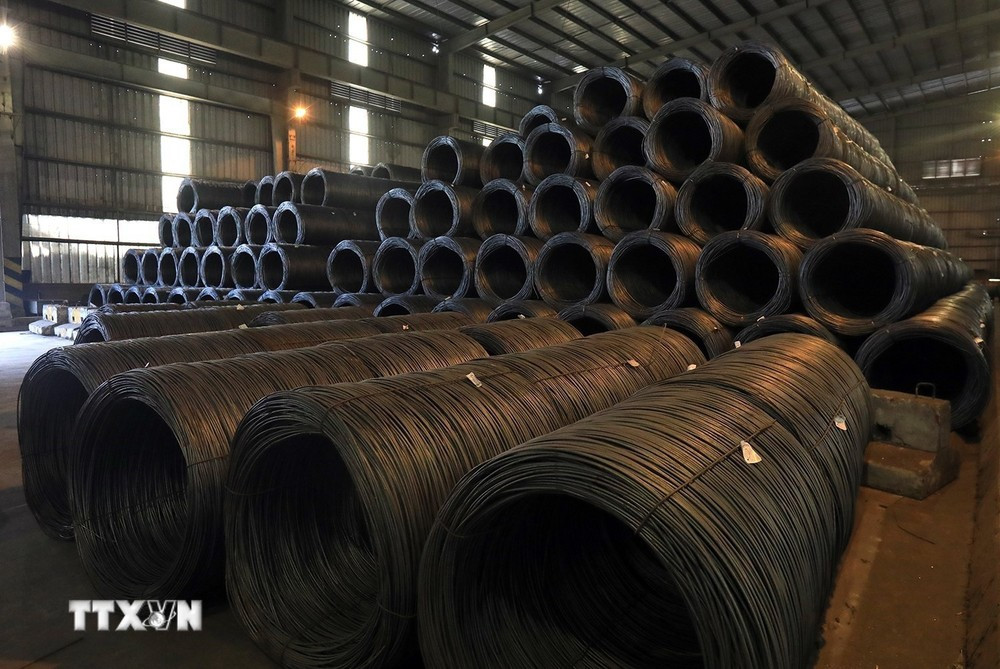
According to steel industry expert Nguyen Van Sua, protecting domestic upstream production also means protecting jobs and creating a sustainable source of government revenue.
Hoa Phat alone creates jobs for 30,000 workers and contributes between 10,000 and 20,000 billion VND to the state budget annually, equivalent to the contribution of an average province.
Initiating anti-dumping investigations is a common practice adopted by countries to protect domestic production when there are signs of irregularities in the quantity and price of imported goods.
According to statistics from the Vietnam Chamber of Commerce and Industry (VCCI), globally, from 2010 to the present, 27 cases requesting anti-dumping investigations on hot-rolled steel have been initiated, with a 100% success rate. This demonstrates the importance of this trade defense measure for the hot-rolled steel industry in many countries worldwide.
Almost all countries with domestic hot-rolled steel production industries have initiated anti-dumping investigations into this product, for example, the United States, Thailand, Brazil, the EU, Indonesia, India, Canada, Australia, etc. China and India are frequently on the list of countries accused of dumping hot-rolled steel products.
Hoa Phat Group stated that hot-rolled steel (HRC) accounts for a very large percentage of the cost structure of downstream products, specifically 96% for cold-rolled steel sheets and over 80% for various types of coated steel sheets.
According to expert Nguyen Van Sua, it is essential to utilize and protect the hot-rolled steel production originating from Vietnam for downstream product manufacturing. This is crucial for protecting domestic production and, at the same time, to avoid the risk of facing anti-circumvention lawsuits when exporting goods to the United States and EU countries.
In practice, anti-circumvention and anti-dumping cases investigated by the US in recent years have all concluded that galvanized steel, cold-rolled steel, and steel pipes using dumped raw materials originate from China and Taiwan (China).
Furthermore, the long-term use of a large proportion of domestically sourced hot-rolled steel will be a positive factor for export activities, increasing the competitiveness and transparency of product origin, rather than a negative one, Mr. Sưa noted.
Mr. Phan Dang Tuat also argued that conditions must be created for domestic businesses, especially the steel industry, which is upstream of other industries and therefore needs protection. "I agree with opening a safeguard investigation into this product because there are currently no tariff barriers on hot-rolled steel, and anti-dumping measures can be investigated," Mr. Phan Dang Tuat suggested.
In the long term, Mr. Phan Dang Tuat said that the government must have solutions to support the development of domestic businesses. Currently, domestic businesses like Hoa Phat have invested in producing steel for cable-stayed bridges and railway tracks, and they are ready to produce steel for mechanical engineering and equipment.
"Why doesn't the government have solutions to support domestic businesses in upstream production and investment through tariff and technical barriers? That's for the long term, but in the short term, anti-dumping investigations are necessary. These investigations not only protect domestic production but also prevent importing markets like the US and Europe from viewing Vietnam as a 'transit' market for Chinese goods entering the US to evade tariffs," said Mr. Phan Dang Tuat.
From the perspective of an industry association, Mr. Nghiem Xuan Da, Chairman of the Vietnam Steel Association, stated that the association's stance is to support domestic steel production and encourage investment in the upstream sector, as this is the foundation for other manufacturing industries, requiring significant investment and employing tens of thousands of workers.
"With signs of dumped imports, an investigation should be launched first, following the proper procedures," Mr. Da said. Currently, the Ministry of Industry and Trade has received requests from domestic hot-rolled steel coil manufacturers to apply anti-dumping measures to imported products (mainly from China and India).
A representative from the Trade Remedies Department (Ministry of Industry and Trade) stated that the unit is currently reviewing the dossiers of the businesses. Based on the assessment, if deemed valid, they will recommend to the Ministry of Industry and Trade to consider initiating or not initiating an anti-dumping investigation into hot-rolled steel.
After initiating an investigation, the investigation period will last 12 months, and in some cases, it may take longer. During that time, the investigating authority will notify and request relevant parties to provide all evidence for comprehensive, objective, and fair consideration. The entire process will be public and transparent – a representative from the Trade Remedies Department stated.
TB (according to VNA)Source













































































Comment (0)