

According to experts from The Economist, the European economy is stagnating in every respect. Specifically, growth in the bloc over the past decade has been only 4%. Furthermore, since 2022, the economies of both the bloc and the UK have experienced no growth at all.
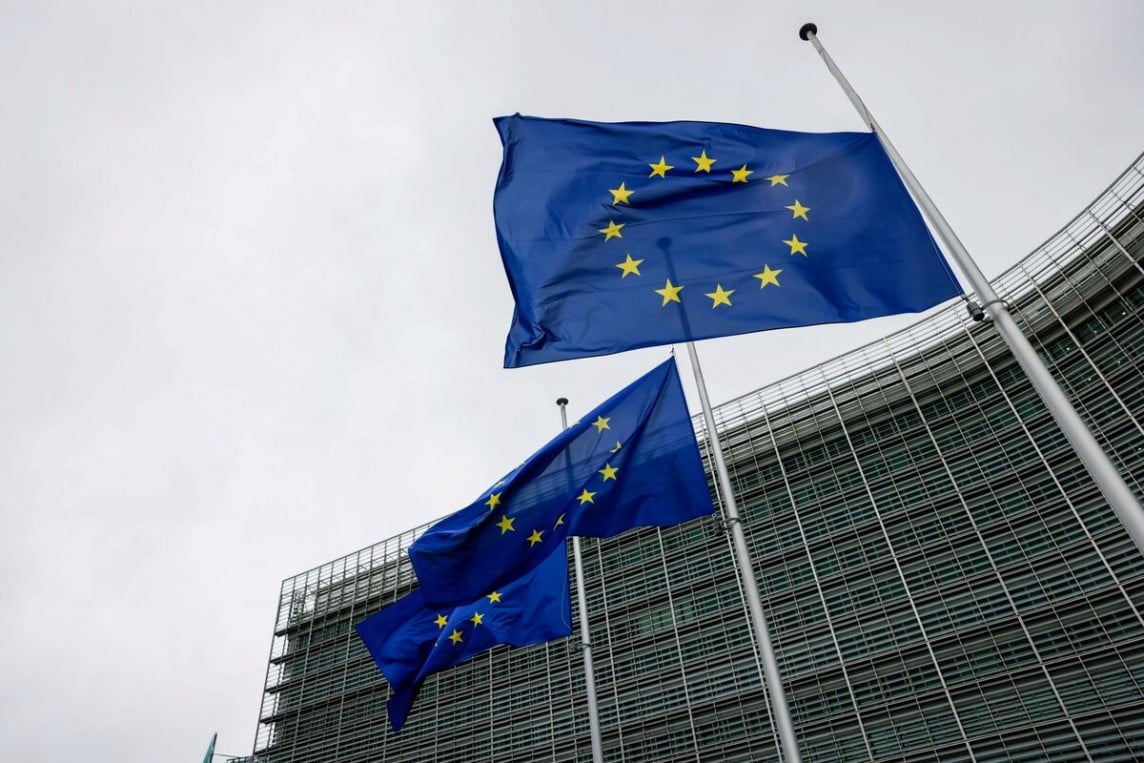 |
| The European Commission headquarters in Brussels, Belgium. Image source: Simon Wohlfahrt, Bloomberg |
This stagnation is occurring against a backdrop where Europe needs economic growth to fund its defense, especially as US aid to Ukraine is running out. The continent also needs the economic conditions to meet its green energy goals, with the expectation that the EU will become carbon neutral by 2050. And that's not even considering the long-term obstacles to economic growth such as population inflation, stringent regulations, and incomplete market integration.
According to experts, the EU economy will continue to face difficulties in the coming period due to three major shocks: energy, imports from China, and tariffs from the US.
Regarding energy, although the gas crisis in the region has passed, its aftereffects linger. Following Russia's military campaign in Ukraine in 2022, which led to tight supply, natural gas prices in the EU surged, reaching a historic high of over 330 Euros/MWh in August 2022. While gas prices returned to normal earlier this year, the long-term supply of gas for the region remains uncertain. Continued gas imports could jeopardize the EU's renewable energy targets.
More serious is the shock from the surge in cheap imports from China. While this benefits consumers, it could harm manufacturers and exacerbate social tensions. Green growth is also an economic goal for China, which relies on green products as a driver of domestic economic development. Particularly in electric vehicle exports, its global market share could double by 2030. This will be a major concern for large European car manufacturers like Volkswagen and Stellantis, which already dominate the market.
The final shock comes from the EU's oldest ally, the United States. Recent surveys show that the outcome of the upcoming November election in that country is extremely close. If Donald Trump returns to the White House next January, goods from the continent could also be subject to massive tariffs. If in his previous term Trump imposed tariffs on steel and aluminum imports from Europe, this time he could impose a 10% tariff on all goods imported from the bloc. A new trade war would be a terrible prospect for European exporters, who are expected to generate €500 billion in revenue in the US by 2023.
What does Europe need to do to save its economy?
In recent years, European central banks have successfully combated inflation by raising interest rates. Unlike the US, European governments are balancing their budgets better, which will soothe the economy, while cheap goods imported from China will directly reduce inflation. This will create opportunities for central banks in the bloc to cut interest rates to support growth. If central banks keep the economy out of recession, dealing with external impacts will be easier.
According to experts from The Economist, the biggest mistake would be for Europe to follow the protectionist path of the US and China by showering massive subsidies on key industries. Competition over subsidies is not only a risky battle, but it also wastes already scarce resources in Europe. The slow economic growth of recent times has exposed the flaws in economic planning that was overly biased towards China. As for the US, President Joe Biden's industrial policy has failed to impress voters as expected, further diminishing his prospects for a second term.
Conversely, if seized upon, protectionism from China and the US could make the EU economy more prosperous. The manufacturing boom in the US presents an opportunity for European manufacturers to supply components. Cheap imports from China would facilitate the transition to green energy and help struggling consumers.
Furthermore, experts recommend that Europe should develop its own economic policies suited to the current times. Instead of pouring public funds into industry like the US, Europe should spend on infrastructure, education, and research and development. Instead of copying China's economic plans, Europe should learn from Chinese companies about accessing the domestic market. If the EU integrates its services market, unifies its capital markets, and loosens existing regulations, it can encourage manufacturing innovation and replace lost jobs.
In particular, The Economist emphasized that: "Only an expanded market has the potential to boost European economic growth in a world full of uncertainty." The newspaper also advised European diplomats to sign trade agreements whenever possible, rather than letting them be delayed in negotiations as in the past.
Opportunities for economic development between Vietnam and the EU
Strengthening economic cooperation between Vietnam and the EU will undoubtedly benefit both sides in a period of increasingly complex global economic and geopolitical developments. The EU is currently Vietnam's fourth largest trading partner, sixth largest investor, and largest provider of non-refundable aid. Meanwhile, Vietnam is one of the few Asian countries with the most comprehensive relationship with the EU, being the only country in the region with cooperation across all pillars of the EU.
From Vietnam's perspective, the EU is considered a potential market for agricultural products, especially since the Vietnam-EU Free Trade Agreement (EVFTA) came into effect. Under the agreement, many of Vietnam's key agricultural products exported to the EU, such as coffee, rice, pepper, cashew nuts, fruits and vegetables, tea, and rubber, enjoy preferential tariff rates, giving Vietnamese agricultural products a significant competitive advantage.
Since the implementation of the EVFTA, many Vietnamese businesses have not only benefited from increased exports but have also increased imports of machinery and equipment from the EU. This has helped raise product standards and increase their ability to integrate into global value chains, enhancing the competitiveness of Vietnamese products in the world market. In addition, import turnover of other key items from the EU such as pharmaceuticals, chemicals, milk and dairy products also increased last year, according to a report by the Ministry of Industry and Trade.
Recently, during his visit to Vietnam in January 2024, Bernd Lange, Chairman of the European Parliament's International Trade Committee, stated that Vietnam will be a stable destination in the future, given the current global uncertainties. He also assessed that Vietnam and the EU have a stable, reliable relationship and good cooperation in many areas, with numerous agreements signed. Therefore, both sides need to cooperate closely to further promote the development of this relationship in the future.
Source















































































Comment (0)