

"Greece or Portugal?" - this seemingly simple question puzzled Laura Houldsworth, Managing Director for Asia Pacific at Booking.com, for weeks while planning her summer vacation.
"ChatGPT, Google, chatbots... I used them all. The results were overwhelming. I couldn't decide which was the best option. In the end, I had to call a friend – a travel agent who lived in Greece for 20 years – for specific advice, and I chose... Portugal!", she recounted at the APAC Trust Summit 2025 organized by Booking.com in Singapore on July 24th.
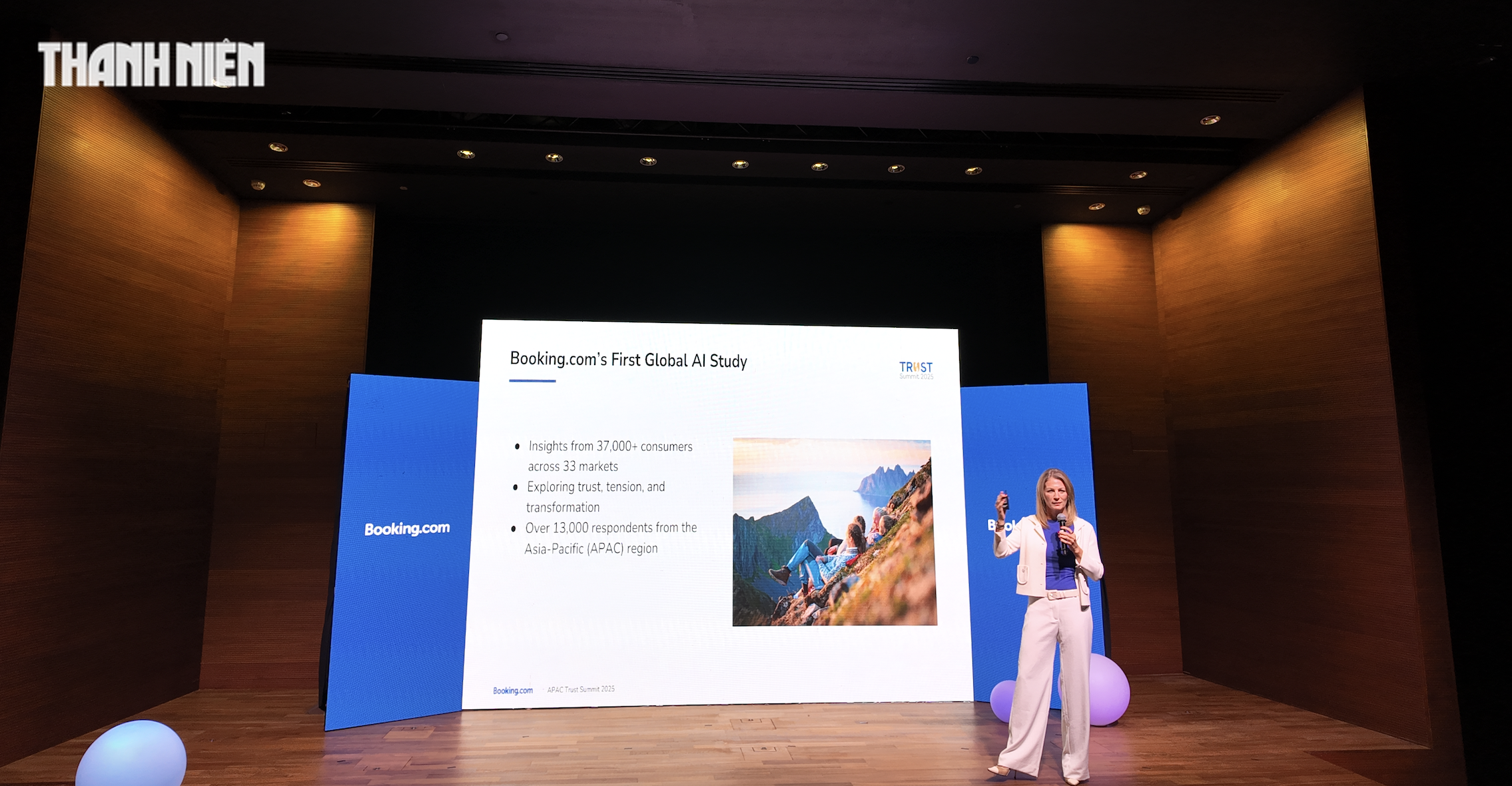
The CEO of Booking.com's Asia Pacific region spoke about AI-driven travel trends at the APAC Trust Summit 2025.
PHOTO: LE NAM
When AI becomes a personal "travel agent"
AI is quietly changing the way we plan and enjoy each trip. According to a global report published by Booking.com, 91% of users are excited about AI in travel. However, only 6% fully trust the information that AI provides.
"Tourism has returned, but in a different form," Laura observed. "Travelers have higher expectations, information overload, and search behavior is increasingly complex and deeply personalized."
The report also indicated that 77% of participants believe AI-powered travel agencies will become mainstream within the next three years. Young people no longer want to ask friends or colleagues where to go; instead, they type into ChatGPT, Gemini, or any other virtual assistant: "Where should I go in September to avoid crowds and respect sustainability?"
At the conference, a reporter from Thanh Nien Newspaper, representing Vietnamese media, directly asked Ms. Laura about the timing of the AI Trip Planner's deployment in Vietnam.
She stated, "We're not in a hurry to launch a product that isn't ready. In markets like Vietnam, where users are very active and have a strong spirit of exploration, we're especially cautious to ensure that when we launch, the tool will be truly useful and reliable."
Currently, the AI Trip Planner feature works only in English-speaking countries, and will expand to become a "trip companion," an AI-powered travel friend that goes beyond simply scheduling itineraries.
Observations from Singapore, where the conference took place, show that AI-powered travel is becoming increasingly popular, especially among Vietnamese tourists.
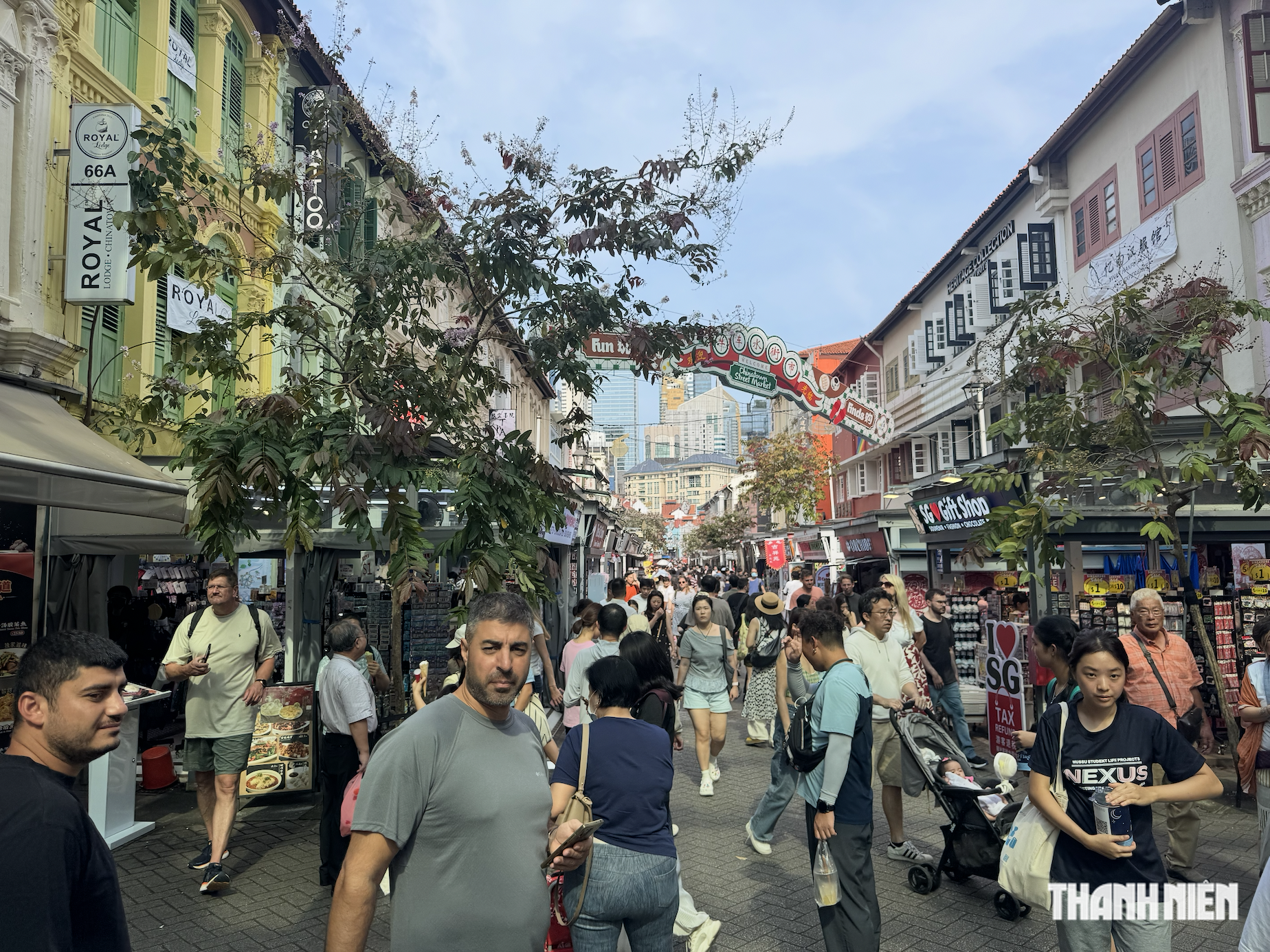
Singapore's Chinatown is crowded with tourists on weekends.
PHOTO: LE NAM
Finding suitable attractions, cultural sites, and restaurants to match your taste now takes only seconds with AI tools, instead of browsing through countless blogs and review groups as before. This convenience and immediacy are making artificial intelligence an indispensable "assistant" for travel enthusiasts.
Has the travel blogger title been "dethroned"?
In Vietnam, it's not uncommon to see young people planning trips by asking TikTok, Google, or "chatting with AI" to create itineraries. However, each trip is still linked to personal emotions and human elements, something that AI cannot yet completely replace.
Will travel bloggers—who were once "travel guides"—be pushed out of the game by AI? Laura believes that... not entirely.
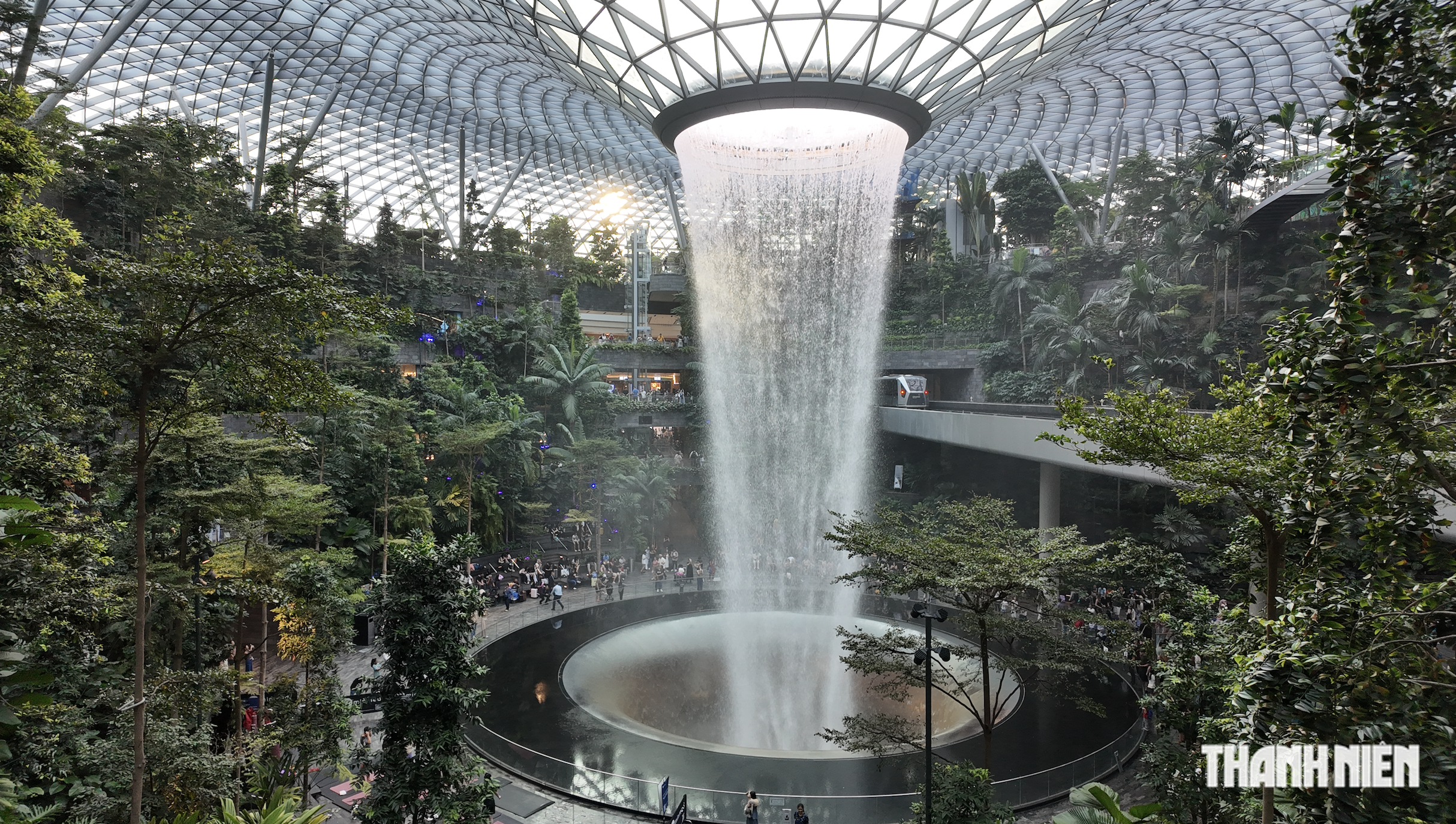
Waterfall at Changi Airport
PHOTO: LE NAM
In an exclusive interview with Thanh Nien Newspaper, Laura shared: "We see that users are not just looking for hotels or destinations. They want an experience that aligns with their values: avoiding crowds, sustainable travel, and being environmentally friendly. This is where AI combines with human emotions to provide truly effective suggestions."
"Previously, hotels would typically describe things like: 27 rooms, 3 restaurants, a swimming pool. But now, people want to know what the place smells like, what it feels like to walk in, and what special things are around. These things usually come from real-life reviews, not just dry data," she explained.
The more emotionally rich the information, the more accurate the AI's suggestions will be. And this is also an area where travel bloggers can delve deeper, using their real-world experience and ability to tell compelling stories.

Tourism is entering a new era – where AI is the tool, data is the fuel, and trust is the most valuable asset.
PHOTO: LE NAM
Travel bloggers aren't disappearing, but they have to change. They're no longer just people who check in for others to photograph, but storytellers, inspirers, and creators of value in the digital world.
Laura asserted, "Travel is a human experience. Technology helps us get there, but it's the people who make us want to return."
Source: https://thanhnien.vn/du-lich-thoi-ai-cac-travel-blogger-co-nguy-co-bi-loai-khoi-cuoc-choi-185250728085946159.htm

![[Photo] Prime Minister Pham Minh Chinh attends the Conference summarizing and implementing tasks of the judicial sector.](/_next/image?url=https%3A%2F%2Fvphoto.vietnam.vn%2Fthumb%2F1200x675%2Fvietnam%2Fresource%2FIMAGE%2F2025%2F12%2F13%2F1765616082148_dsc-5565-jpg.webp&w=3840&q=75)

















































































Comment (0)