

Coffee prices reverse course and fall.
On the London exchange, robusta coffee prices for January 2026 delivery fell further by 1.84% (equivalent to $78/ton) compared to the previous session, to $4,128/ton. The March 2026 contract also lost 2.42% ($100/ton), dropping to $4,007/ton.

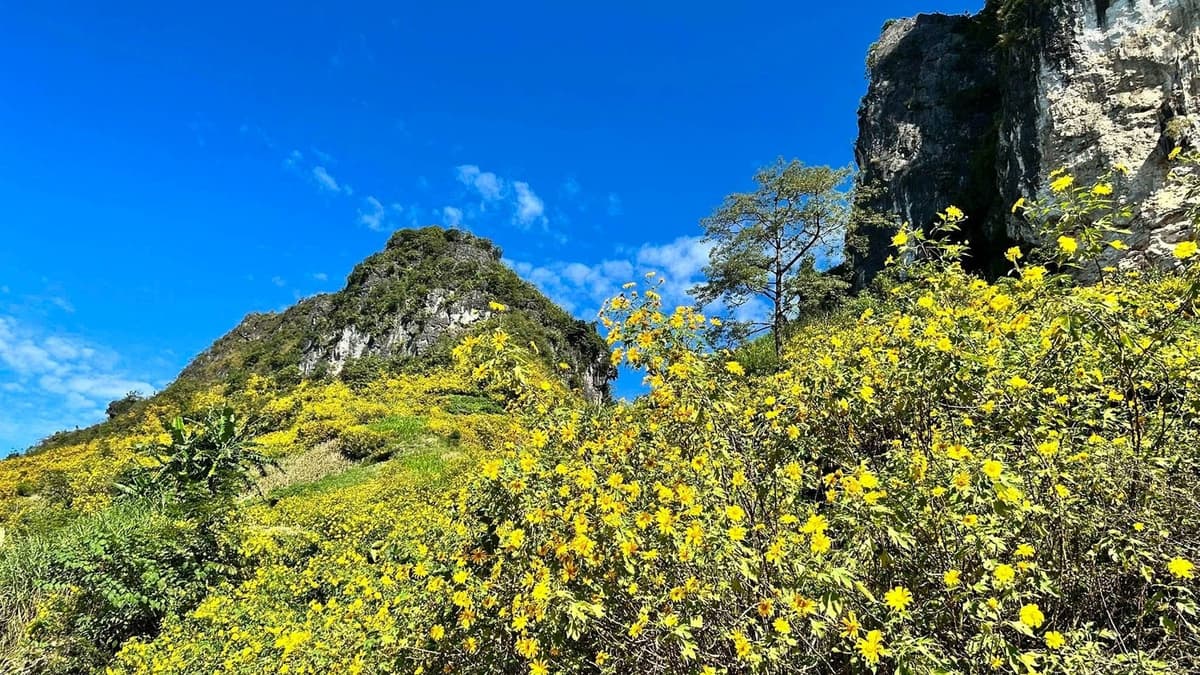
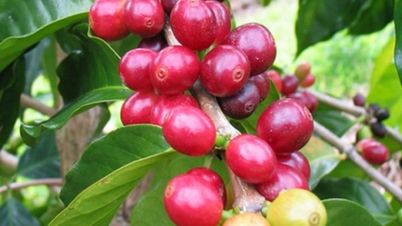
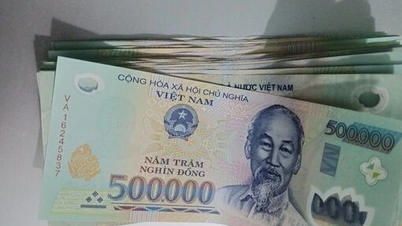
Illustrative image. Photo: Internet
On the New York exchange, December 2025 arabica coffee futures fell sharply by 2.02% (8.25 US cents/pound) to 397.2 US cents/pound; while the March 2026 contract fell by 1.82% (6.9 US cents/pound), trading at 369.3 US cents/pound.
In the Central Highlands region this morning, December 13, 2025, coffee prices recorded a slight decrease of 600-800 VND/kg, fluctuating between 100,500 and 101,200 VND/kg.
In Lam Dong province, the price in Di Linh, Bao Loc, and Lam Ha decreased by 800 VND/kg compared to yesterday, now standing at 100,500 VND/kg.
In Dak Lak , Cu M'gar coffee is currently being purchased at 101,000 VND/kg, a decrease of 800 VND/kg; while Ea H'leo and Buon Ho maintain a price of 100,900 VND/kg.
In Dak Nong , the trading price in Gia Nghia and Dak R'lap both decreased by 800 VND/kg compared to yesterday, reaching 101,200 and 101,100 VND/kg respectively.
In Gia Lai, Chư Prông coffee prices remained at 100,700 VND/kg, while Pleiku and La Grai prices both decreased by 600 VND/kg to 100,600 VND/kg.
Recent fluctuations in coffee prices have been quite narrow, in contrast to the previous period when the market frequently rose and fell by hundreds of dollars. This sideways trend facilitates trading but makes speculation less attractive.
On December 12th, the National Assembly passed the Law amending and supplementing several articles of the Value Added Tax Law – positive news for many manufacturing and export sectors such as coffee, pepper, seafood, and rice. The new law will come into effect on January 1st, 2026.
The adjustments are considered a necessary step to help mitigate damage caused by natural disasters, storms, and floods, and to promote the recovery of production and business, especially in the agricultural sector. In addition, the long-standing issue of VAT refunds is also expected to be resolved soon.
According to the Nguoi Lao Dong newspaper, since July 1st, agricultural export businesses have been required to pay VAT in advance and wait for refunds. This cumbersome procedure has caused capital flow bottlenecks and risks non-refunds due to errors from third parties. In the coffee industry alone, the amount of outstanding tax is estimated at around 10,000 billion VND annually.
Pepper prices continue to rise.
Domestic pepper prices on the morning of December 13, 2025, continued to increase by 500-1,000 VND/kg. In Dak Lak, pepper reached 150,500 VND/kg, an increase of 500 VND/kg; in Chu Se (Gia Lai), it was 149,000 VND/kg, an increase of 1,000 VND/kg; and in Dak Nong, it recorded 150,500 VND/kg, an increase of 500 VND/kg compared to yesterday.
The Southeast region also maintained an upward trend, with pepper prices in Ba Ria - Vung Tau and Binh Phuoc both at 149,000 VND/kg, 500 VND/kg higher than yesterday.
According to the International Pepper Association (IPC), at the close of the most recent trading session, the price of Lampung black pepper (Indonesia) reached US$6,996/ton (up 0.01%), while Muntok white pepper reached US$9,645/ton (up 0.09%).
Brazilian ASTA 570 black pepper is trading at $6,075/ton; Malaysian ASTA black pepper at $9,000/ton and the country's ASTA white pepper at $12,000/ton.
Vietnamese black pepper is currently priced at US$6,500/ton for the 500 g/l variety, US$6,700/ton for the 550 g/l variety, while white pepper is priced at US$9,250/ton.
Domestic pepper prices have risen continuously for three days, mainly due to limited supply. When prices returned to the 150,000 VND/kg mark, many farmers believed there was still room for further increases before the Lunar New Year, so they decided to hold onto their stock instead of selling.
Conversely, export businesses are under pressure to fulfill year-end orders, forcing them to raise purchasing prices to ensure sufficient supply for delivery.
According to data from VPSA, Vietnam currently has approximately 200 pepper processing and trading enterprises. Of these, 15 large enterprises account for about 70% of exports, while 5 foreign-invested enterprises hold nearly 30% of the market share.
Currently, the pepper industry boasts 14 internationally certified deep processing plants such as ASTA, ESA, and JSSA, supplying a diverse range of products from black and white pepper to ground and packaged pepper. The Chairman of VPSA stated that businesses are actively leveraging the 16 free trade agreements already signed to expand export markets.
Source: https://doanhnghiepvn.vn/kinh-te/gia-nong-san-ngay-13-12-2025-ca-phe-dao-chieu-giam-ho-tieu-tiep-tuc-tang/20251213104716039

























































































Comment (0)