

 |
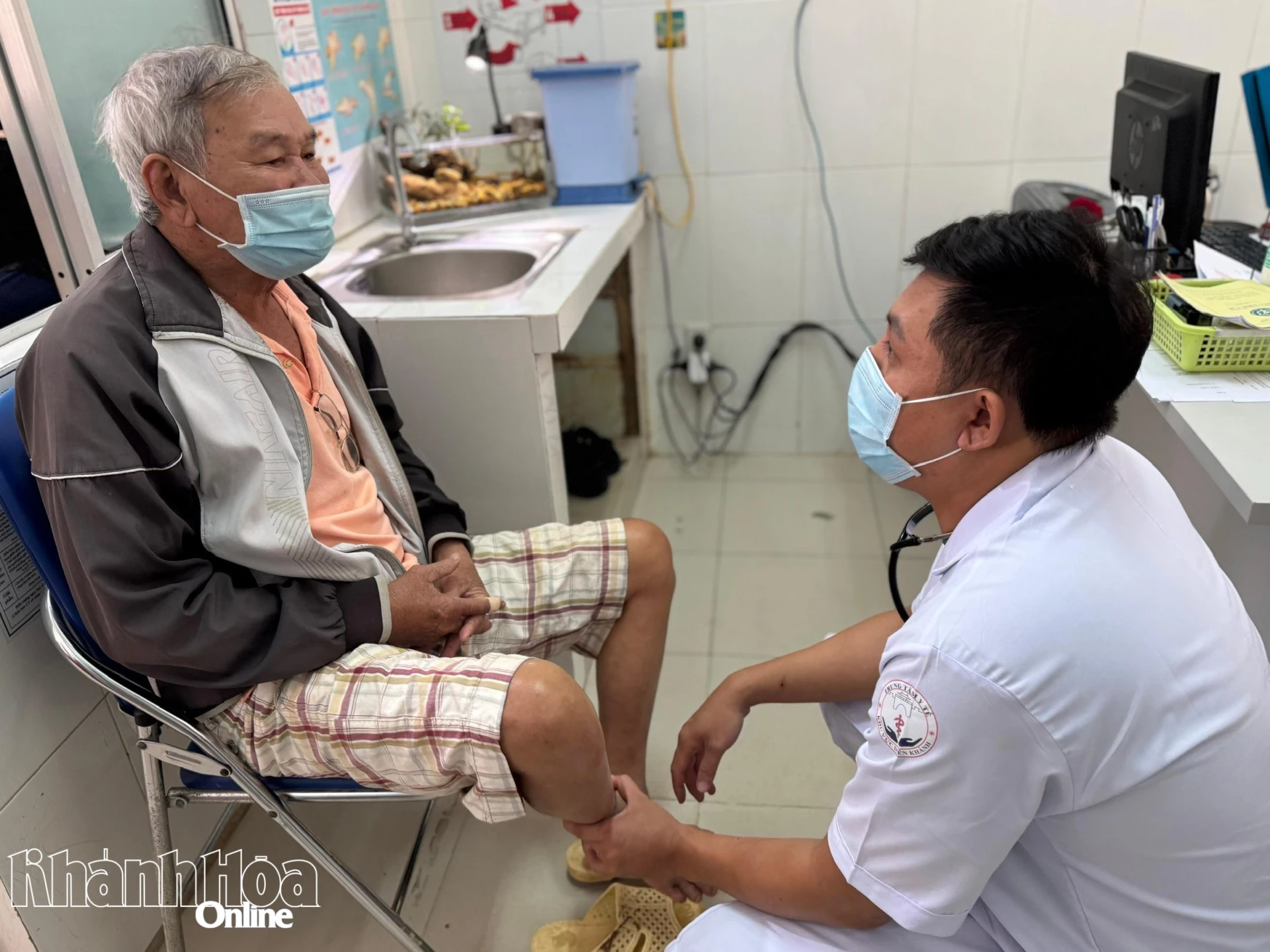
| Doctor of Dien Khanh Regional Medical Center examines Mr. Vo Van Cu. |
Mr. Vo Van Cu (72 years old, Dien Dien commune) came to the Examination Department, Dien Khanh Regional Medical Center for a medical examination with damaged skin on many parts of his legs. Mr. Cu said that his house was flooded more than 2m. After the water receded, the area around his house was littered with garbage and mud. Having to wade in dirty water for many days to clean the house made his legs itchy and painful. “My legs were sore, itchy and painful, I couldn’t sleep for many days. The mud was as thick as a hand, I had to clean for several days, I couldn’t go to the doctor. Now I have free time to go to the doctor.”
After the flood, due to the difficulty of traveling and medical examination and treatment, many people choose to buy topical medications when itching and rashes appear. Ms. Huynh Thi Hoai, in Dien Khanh commune, shared: "The flood flooded my house, I waded through water for a whole week. My legs had red pimples, then turned into boils. I went to the pharmacy to buy topical medications. Today, I have free time so I went to the doctor for peace of mind." According to doctors, arbitrarily using drugs containing antibiotics or Corticoids without professional guidance can make the skin condition worse, easily get infected, spread, and even cause drug resistance, making future treatment more complicated.
The leader of Dien Khanh Regional Medical Center said that after the flood, the Examination Department received an average of 20-30 cases of skin diseases every day, 2-3 times higher than before the flood. Medical stations in the Nha Trang area also recorded about 160 cases related to skin diseases. Most people suffered from contact dermatitis, itchy rashes or infections due to contact with polluted floodwater. According to doctors, after each flood, skin diseases always increase. Floodwater contains mud, chemicals, animal feces and waste, making the skin vulnerable. Even a small scratch can allow bacteria to enter, causing inflammation, swelling, pus and even ulcers if not treated promptly. Doctor Le Truong Van - Examination Department, Dien Khanh Regional Medical Center said: "In the first days after the flood, the number of cases coming for examination was not much, but from the third day onwards, it increased rapidly, with several cases of severe infection. Common skin diseases are contact dermatitis, skin fungus, and athlete's foot (foot rot). We recommend that when skin diseases are detected, people should go to the doctor early. During the process of clearing mud, people should wear gloves, shoes, boots...; then clean their bodies thoroughly." Along with skin diseases, the center's Examination Department also recorded many cases of digestive disorders, pink eye...
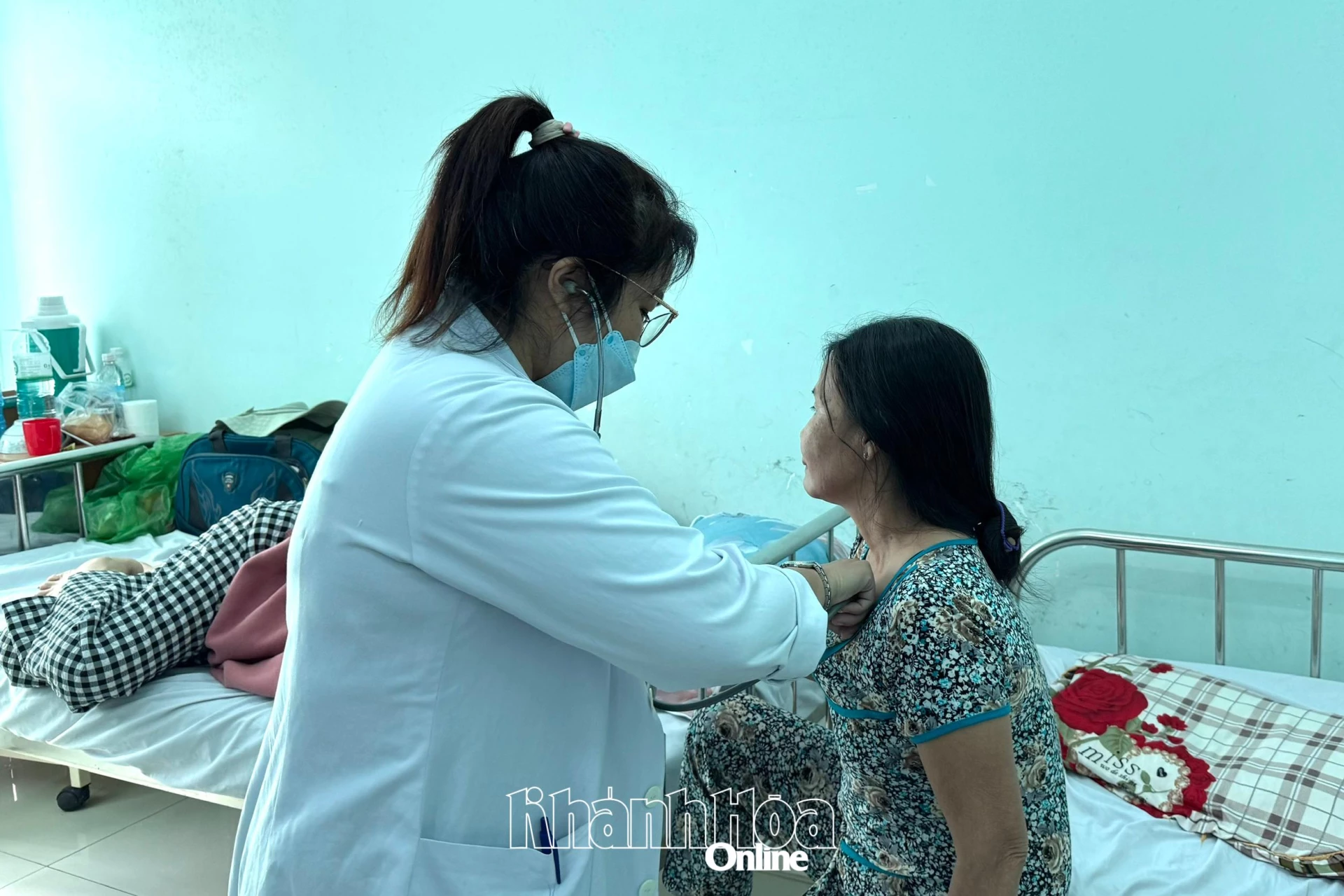 |
| Doctors at the Provincial Tropical Diseases Hospital examine a patient with scrub typhus. |
At the Provincial Tropical Diseases Hospital, in the first week after the flood, the number of inpatients was nearly 120. Of which: 15 cases of hand, foot and mouth disease, 18 cases of dengue fever, 1 case of diarrhea, especially 1 case of scrub typhus. Although scrub typhus is rare, it is easy to get after the flood. The danger of scrub typhus is that the symptoms are similar to some other diseases (prolonged high fever, severe headache, skin and mucous membrane congestion and rash...) so it is easy to misdiagnose. If this disease is not detected and treated promptly, it will have extremely dangerous complications. Ms. Tran Thi Hoa (Dien Tho commune) said: “After the flood, I had a fever and body aches. I went to many places for examination but no disease was detected. I suspected dengue fever or a cold... Seeing that the disease did not improve, I went to the Provincial Tropical Diseases Hospital. Here, the doctor diagnosed me with scrub typhus. Before that, I was bitten by something and had some swelling, but then the swelling healed so I did not pay attention to it.” Doctors recommend that after the flood, people should limit contact with dirty water, use boots and gloves when cleaning, and bathe with clean water immediately after contact with flood water; limit going into areas with dense, damp vegetation. When unusual symptoms appear, go to a medical facility immediately for timely examination and treatment.
Proactive prevention after floods will help each person protect their health, limit the risk of diseases after floods and then progress to dangerous complications, more serious and can spread into epidemics in the community.
C.DAN
Source: https://baokhanhhoa.vn/xa-hoi/202512/gia-tang-mot-so-benh-sau-mua-lu-b2f4705/


![[Photo] National Assembly Chairman Tran Thanh Man attends the VinFuture 2025 Award Ceremony](/_next/image?url=https%3A%2F%2Fvphoto.vietnam.vn%2Fthumb%2F1200x675%2Fvietnam%2Fresource%2FIMAGE%2F2025%2F12%2F05%2F1764951162416_2628509768338816493-6995-jpg.webp&w=3840&q=75)
![[Photo] 60th Anniversary of the Founding of the Vietnam Association of Photographic Artists](/_next/image?url=https%3A%2F%2Fvphoto.vietnam.vn%2Fthumb%2F1200x675%2Fvietnam%2Fresource%2FIMAGE%2F2025%2F12%2F05%2F1764935864512_a1-bnd-0841-9740-jpg.webp&w=3840&q=75)



























































































Comment (0)