

Revising tax policies is urgent to ensure businesses can operate with peace of mind in 2026.
Numerous pressures for reform
As 2026 approaches, the tax system continues to face pressure for reform, while the business community yearns for a transparent, predictable environment with minimized legal risks. The problems arising from the 2024 Value Added Tax Law quickly became apparent just months after its enactment, forcing the Ministry of Finance to submit amendments to the National Assembly, demonstrating the regulatory body's proactive approach to addressing practical impacts.
Minister of Finance Nguyen Van Thang emphasized that although the new law has only been in effect for a few months, proposing further amendments is a difficult but necessary choice because the new regulations "are directly affecting all agricultural, forestry, and fisheries procurement activities nationwide, causing significant difficulties for businesses and impacting people's lives." Therefore, the Ministry of Finance has proposed reinstating regulations that have been in stable operation since 2016, allowing businesses to exempt themselves from declaring output tax at the commercial stage while still being able to deduct input tax. According to the Minister, this is "a measure that both ensures the true nature of VAT and combats fraud while reducing the procedural burden on businesses."
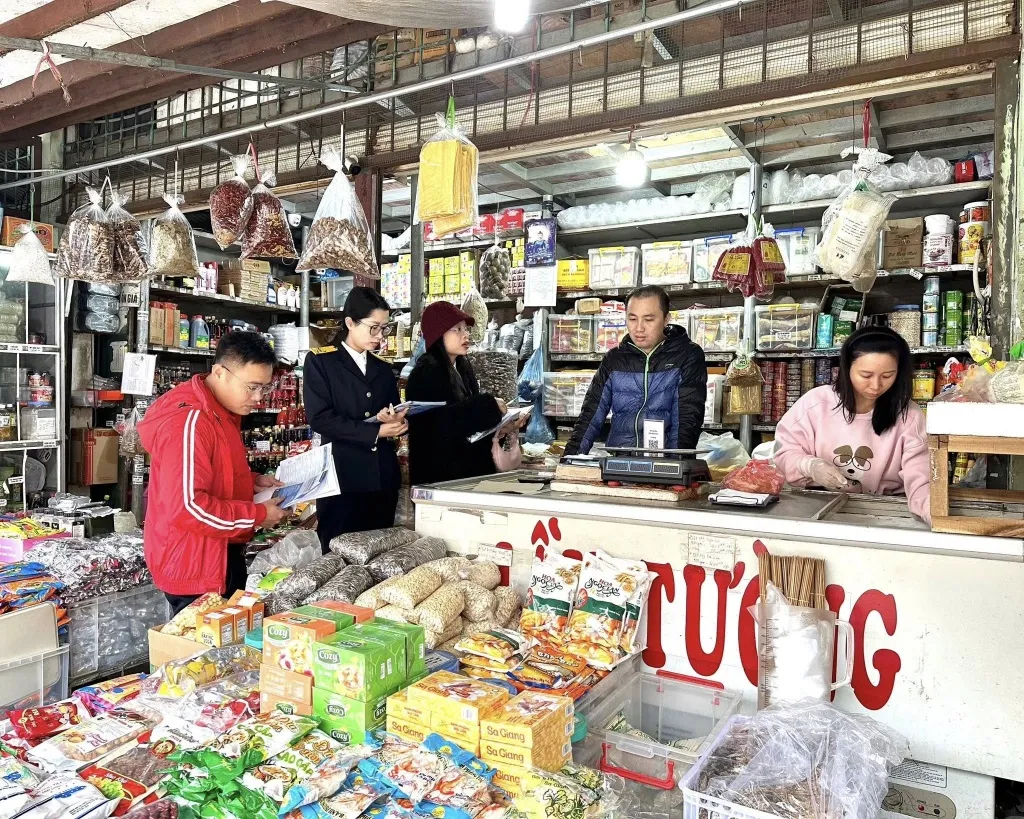
The Ministry of Finance has proposed allowing businesses to not have to declare output tax at the commercial stage but still be allowed to deduct valid input.
It's not just agriculture that's facing difficulties under the new regulations requiring buyers to prove that sellers have declared and paid taxes; something that "buyers cannot verify the seller's tax obligations," as pointed out by the Ministry of Justice . Minister Nguyen Van Thang warned that this situation is spreading to other sectors. The steel industry is a prime example: businesses buying scrap metal from individuals without invoices are facing bottlenecks in input tax deductions. These shortcomings, if not addressed promptly, will weaken the economy's ability to recover.
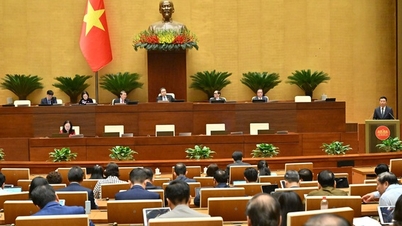
During a recent National Assembly discussion on this issue, Representative Huynh Thanh Chung (Dong Nai) argued that the amendment is "necessary," emphasizing that agriculture is characterized by small-scale operations and low yields. He stressed that placing a heavy tax burden on farmers would distort the goal of support and contradict the policy of tax exemptions and reductions for agriculture and farmers. This is precisely why businesses expect timely adjustments to create a balance between tax management and production practices.
Meanwhile, this draft amendment to the law introduces three important points: restoring the deduction mechanism to suit agricultural activities; ensuring tax equality between domestically produced and imported animal feed, given that domestic inputs are currently subject to a 5% tax; and removing the requirement that buyers can only receive tax refunds after the seller has declared them, while transferring management regulations to the amended Tax Administration Law for unified supervision of tax refunds. These adjustments are considered reasonable, stemming from an assessment of practical impacts and reflecting the dynamics of the economy.
Confidence in reform
But for businesses to confidently enter 2026, amending the law is only the beginning. What businesses also need is a flexible, fair, and predictable enforcement mechanism. Stories from the recent Ho Chi Minh City Business-Government Dialogue Conference also show that the gap between regulations and reality remains wide. The K-factor in the electronic invoice risk warning is proof: although the management objective is legitimate, the implementation method causes businesses to suffer losses.

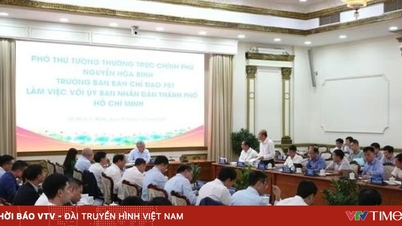
Many businesses are interested in the Ho Chi Minh City Business - Government Dialogue Conference.
A representative from Daikin stated that the automated alerts sent to partners damaged the company's reputation, while the discrepancy between input and output was essentially due to the timing of the parent company's invoice issuance. Similarly, Bach Sen's contract was canceled simply because the alert system was issued before the company had a chance to explain its position. These consequences demonstrate, as tax experts have noted, that technology is only truly effective when there is a "human delay," allowing for dialogue before automated decisions are made.
Moreover, the issue of tax refunds remains a persistent bottleneck. Thanh Cong Textile and Garment Company stated that its tax refund application was held up for "further verification" even though all documents were complete and the goods, clearly entering the bonded warehouse, were entitled to a 0% tax rate. The Ho Chi Minh City tax authorities explained that the verification was to ensure accuracy, but the company hopes for faster and more transparent processing times to avoid prolonged capital stagnation, a significant factor in the context of high interest costs and cash flow pressures weighing heavily on the manufacturing sector.
Concerns about the risk of being subject to retroactive tax collection due to "phantom businesses" are also causing many businesses to hesitate. A representative from IPL Company stated that despite thorough verification, they were still subject to retroactive tax collection several years later because the seller was found to have violated regulations. The tax authorities recommend that businesses develop their own internal control mechanisms and proactively check invoices on hoadondientu.gdt.gov.vn and gdt.gov.vn. This is a reasonable approach, but it also emphasizes the need to improve the tax ecosystem, where both the management agency and taxpayers have effective risk prevention tools.
2026 will only truly be a year of recovery and breakthrough if businesses feel secure in investing, expanding, and innovating. To achieve this, the tax problem needs to be addressed at its root, through a combination of legal reforms, management modernization, and improved service quality. Tax reform is not only about collecting taxes correctly and completely, but also about paving the way for a smooth-running economy, unlocking resources, and fostering long-term growth momentum. Only then will business confidence be strengthened, and the goal of sustainable growth in 2026 become a reality.
Source: https://vtv.vn/giai-bai-toan-thue-de-doanh-nghiep-an-tam-trong-2026-100251209150536135.htm


![[Photo] The captivating scenery of the fragrant maple forest in Quang Tri](/_next/image?url=https%3A%2F%2Fvphoto.vietnam.vn%2Fthumb%2F1200x675%2Fvietnam%2Fresource%2FIMAGE%2F2025%2F12%2F10%2F1765353233198_lan09046-jpg.webp&w=3840&q=75)

![[Photo] Explore the US Navy's USS Robert Smalls warship](/_next/image?url=https%3A%2F%2Fvphoto.vietnam.vn%2Fthumb%2F1200x675%2Fvietnam%2Fresource%2FIMAGE%2F2025%2F12%2F10%2F1765341533272_11212121-8303-jpg.webp&w=3840&q=75)














![[Video] The craft of making Dong Ho folk paintings has been inscribed by UNESCO on the List of Crafts in Need of Urgent Safeguarding.](https://vphoto.vietnam.vn/thumb/402x226/vietnam/resource/IMAGE/2025/12/10/1765350246533_tranh-dong-ho-734-jpg.webp)



























































Comment (0)