

According to engineer Vu Dinh Thanh, the East India Companies of England, France, the Netherlands, Portugal, and Spain all possessed powerful military forces, controlled many colonies, and were especially heavily dependent on saltpeter from Southeast Asia - the key ingredient for making black gunpowder.
Vietnam at that time had a great advantage in natural saltpeter reserves from bat guano, a strategic commodity worth up to nearly 0.4 kg of gold per kg in the late 17th - 18th centuries.
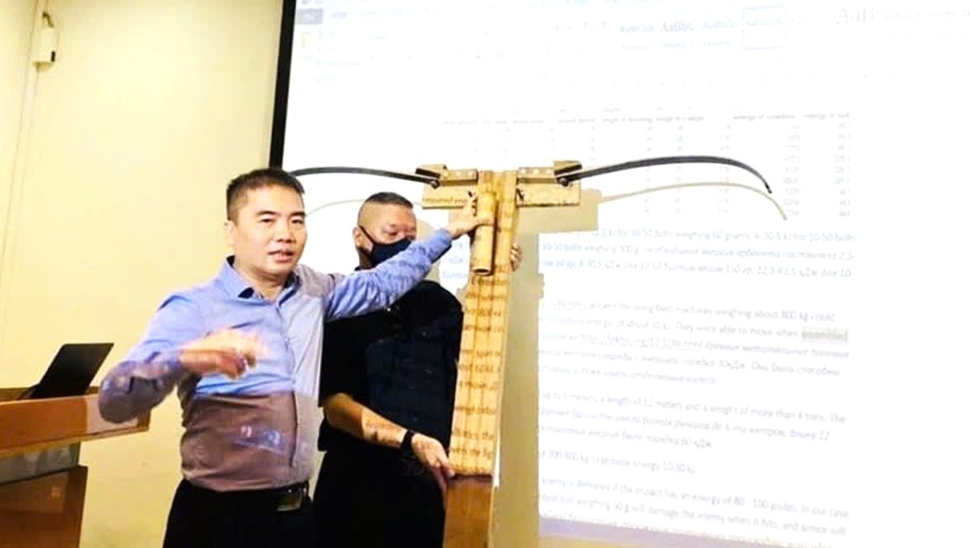
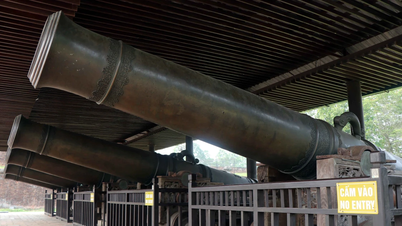
Possessing saltpeter is considered one of the factors that helped Dai Viet make early progress in firearms. From the 14th to 15th centuries, Dai Viet manufactured and used cannons and the famous “Giao Chi” matchlock, hundreds of years ahead of the West.
Based on remaining technological traces and comparison with European firearms, engineer Vu Dinh Thanh determined that the Tay Son army had created a special type of gunpowder, possibly containing phosphorus, which burned for a long time and was difficult to extinguish.
Nguyen Dynasty historical documents describe “fire tigers” and “fireballs” with intense heat, while Qing Dynasty records also mention the characteristic of being “as fast as lightning”. These descriptions, compared with artifacts, show that Tay Son firearms had superior capabilities at that time.
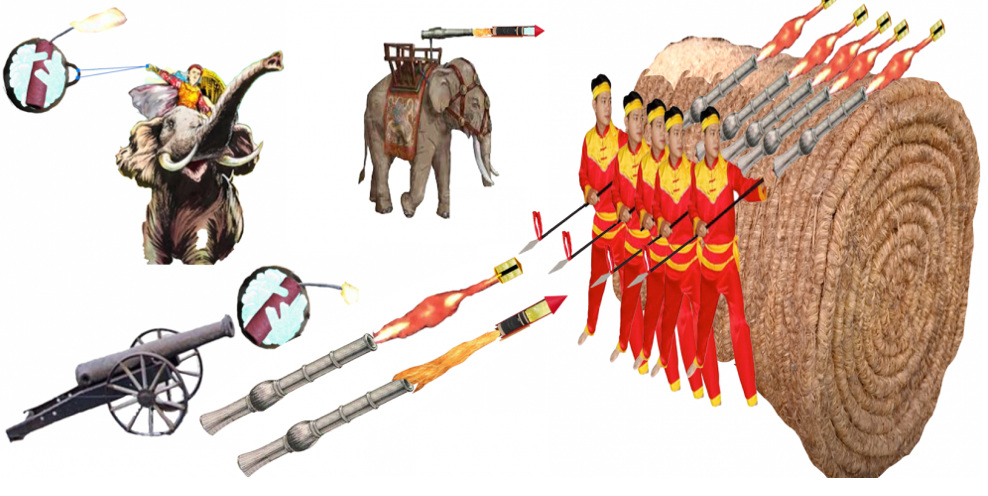
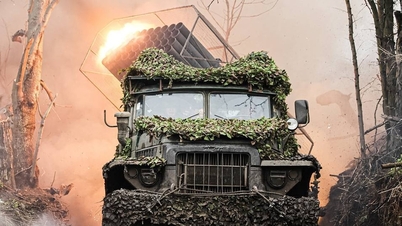
Engineer Vu Dinh Thanh tested Tay Son's gunpowder composition in a rocket engine simulation, registered the patent, and had it evaluated by international weapons experts. The conclusion about the Tay Son army's ability to use phosphorus weapons was also examined and evaluated by Senior Lieutenant General Nguyen Huy Hieu as consistent with the reality of the battle.
Although the above hypotheses need further scientific verification, engineer Vu Dinh Thanh's research opens a new perspective on the history of the Quang Trung period - a period in which Dai Viet's scientific and military technological achievements may have developed more strongly than commonly perceived.
Continuing to study, restore and verify these values is expected to contribute to arousing the pride, self-reliance and creativity of Vietnamese people in the new era.
Source: https://congluan.vn/giai-ma-suc-manh-vu-khi-dai-viet-thoi-vua-quang-trung-10321691.html

























































Comment (0)