

Only by thoroughly addressing institutional bottlenecks can we unlock all resources for national development, creating a solid foundation for the country to enter a new era.
Procedural barriers
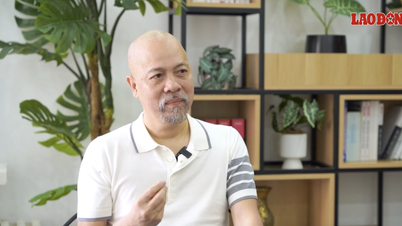
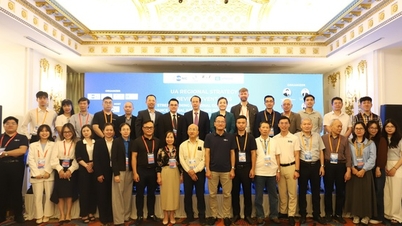
At the recent seminar "Removing Legal Bottlenecks for Infrastructure and Real Estate Development Investment," Mr. Nguyen Huu Duong, Chairman of Hoa Binh Construction Group, shared some noteworthy insights. According to him, in response to the government 's call to build 1 million social housing units, Hoa Binh Construction Group applied to build social housing in 2021.
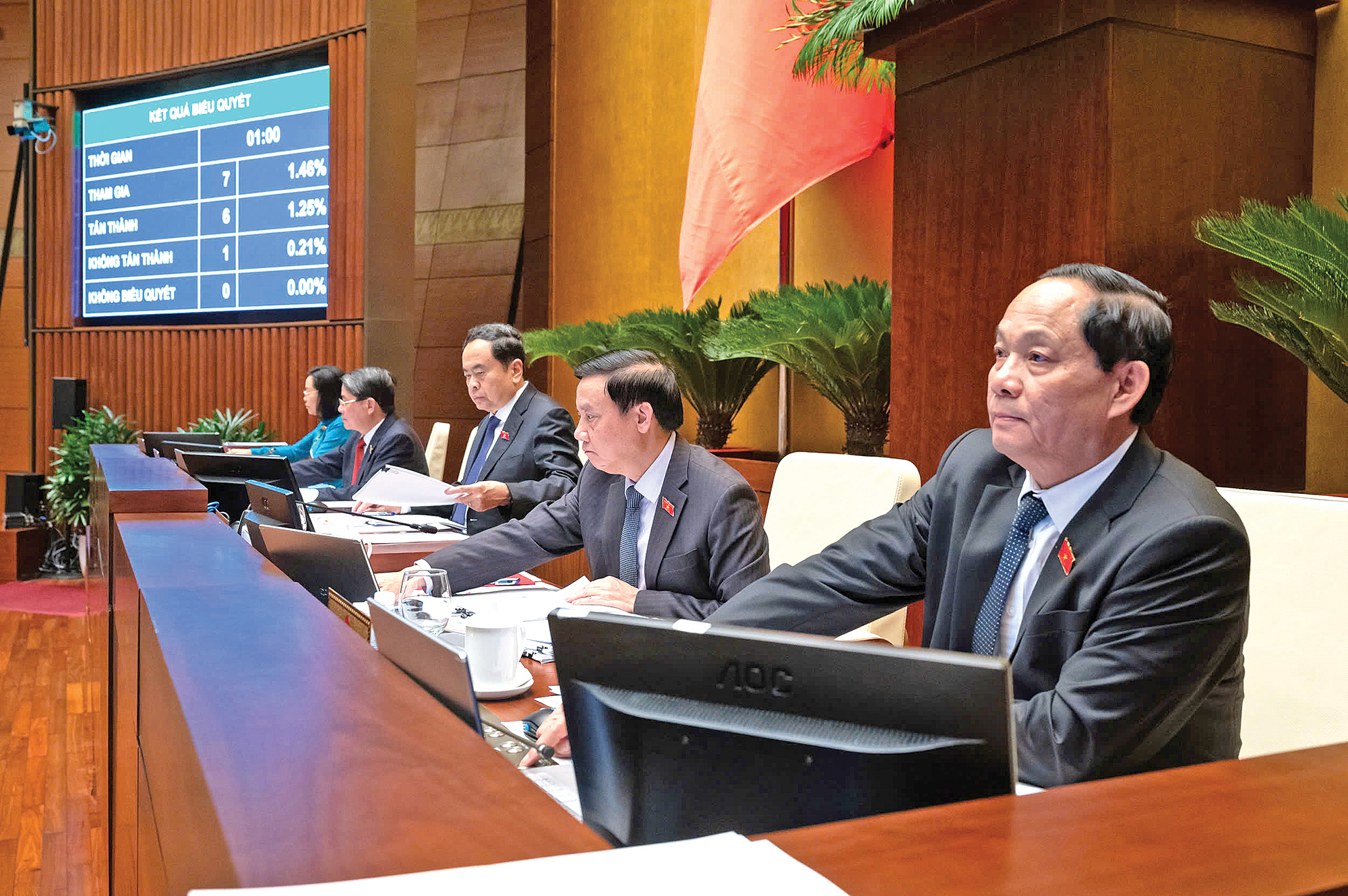
The National Assembly voted to pass the Law amending and supplementing a number of articles of the Law on Securities; the Law on Accounting; the Law on Independent Auditing; the Law on State Budget; the Law on Management and Use of Public Assets; the Law on Tax Management; the Law on Personal Income Tax; the Law on National Reserves; and the Law on Handling Administrative Violations at the 8th session of the 15th National Assembly.
Despite the company owning 3,500 square meters of legally acquired land and having submitted the necessary documents, the project has still not been granted a permit after 11 consultations with various departments and agencies regarding land procedures. "Many regulations in legal documents have different interpretations and explanations. There are regulations that I don't know who to ask, because no matter which level of authority I ask, they don't know," Mr. Duong lamented.
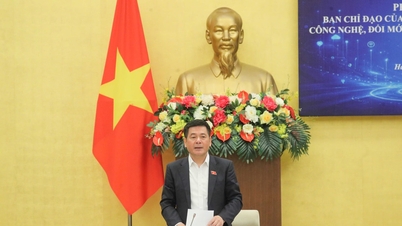
During the group discussion on the draft Law on Planning and the Law on Investment (amended) at the 8th session of the 15th National Assembly, when discussing the simplification of administrative procedures, Minister of Planning and Investment Nguyen Chi Dung recounted a story about the construction procedures in the United Arab Emirates.
"It only took them 5 years to build Dubai, a city with 500 buildings worth $20 billion. Meanwhile, each 5-star hotel in Vietnam requires three years of paperwork. If Dubai were built with a 'forest' of regulations like in Vietnam, it would take… 1,500 years," Mr. Dung said.
Mr. Dung went on to cite the example of China, where the process of building an automobile factory worth over $1 billion, from licensing to completion, took only 11 months; and building a shopping mall, including both procedures and implementation, took only 68 days.
" The world is developing at a breakneck pace, we cannot afford to lag behind," said the Minister of Planning and Investment, adding that this reform in lawmaking is very powerful and represents a major revolution.
Institutional thinking reform
At the opening session of the 8th meeting of the 15th National Assembly, General Secretary To Lam delivered a speech highlighting three major current "bottlenecks" facing the country, including institutions, infrastructure, and human resources, with institutions being considered the "bottleneck of bottlenecks".
The above content was highly appreciated by many National Assembly delegates and experts, who also believed that this is a top priority issue to be addressed in order to create strong momentum for the country's rapid and sustainable development.
Representative Nguyen Van Manh, a member of the National Assembly's Economic Committee, stated that General Secretary To Lam's directive is timely and appropriate to current realities. Given the inadequacies and overlaps between legal regulations, creating bottlenecks, streamlining the institutional framework is crucial for unlocking the most important resources for socio-economic development.
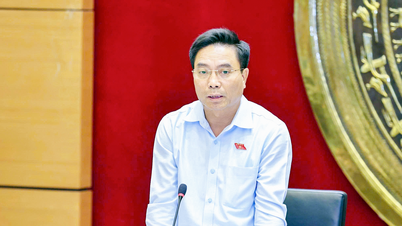
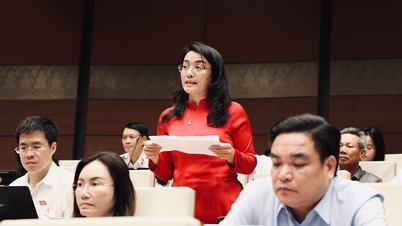
Meanwhile, Hoang Van Cuong, a member of the National Assembly's Finance and Budget Committee, stated: "At this point, we clearly see and are determined to completely change our thinking about lawmaking and institutional development."
This is clearly demonstrated by the fact that previously only one law was used to amend one law, but recently one law has been used to amend multiple laws. This is a clear sign that "waiting is no longer an option."
"There are laws that were enacted in the previous term and have to be amended immediately in the next; we accept this by closely following the pulse of life," Mr. Cuong said, adding that the National Assembly is not concerned about laws being passed in one term and then amended in the next. The National Assembly can meet even in the evenings and on holidays, and its agencies are always working late into the night, aiming to address institutional issues as promptly as possible.
More drastic reforms
Dr. Do Duc Hong Ha, Vice Chairman of the National Assembly's Judicial Committee, stated that reforming thinking, perspectives, and law-making processes is one of the key and urgent requirements and tasks in the coming period to create a stronger breakthrough in institutional reform. This is a crucial issue for achieving the goal of Vietnam becoming a developed country by 2045.
Mr. Ha stated that at the 8th session of the 15th National Assembly, legislative work fundamentally demonstrated the spirit of innovation as required. The agencies and units assigned the responsibility of drafting, submitting, reviewing, incorporating feedback, and revising draft laws and resolutions, as well as National Assembly deputies and the team of officials and civil servants working in lawmaking, have thoroughly studied and understood the spirit of innovative thinking in lawmaking according to Resolution No. 27-NQ/TW and the directives of the General Secretary.
Draft laws and resolutions must meet the following requirements: conciseness, inclusion of provisions within the scope of authority, adherence to practical realities, and avoiding perfectionism and haste. Absolutely no codification of regulations from decrees and circulars should be implemented; issues falling under the authority of the Government, ministries, and other agencies should be excluded from the draft law. The provisions of the law must be clear, substantive, not vague, and not merely a copy of content already found in other laws, ensuring they are easy to understand and implement.
At the same time, for new issues that are in the process of development, whose practices are constantly changing and unstable, only a framework of principles should be stipulated, and the Government, ministries, and local authorities should be entrusted with the authority to regulate them in order to ensure flexibility in management.
According to Representative Pham Van Thinh, a member of the National Assembly's Economic Committee, the government's report indicates that there are up to 18 areas where numerous obstacles and contradictions exist within the legal framework.
"Development practices often precede progress, and legal regulations don't always keep pace, so improving the legal framework is an ongoing and continuous process," Mr. Thinh stated.
Another pressing issue is that administrative procedure reform still faces many difficulties. He argued that strong political will, comprehensive digital transformation implementation, and the promotion of oversight and initiatives from socio-political organizations and businesses are needed to ensure the sustainability of reform efforts.
"In recent times, administrative procedure reform has made remarkable progress, but there are still many shortcomings, it is not sustainable, and it is not easy to monitor and evaluate. Entering a new era - an era of national progress - requires even stronger administrative procedure reform," Mr. Thinh said.
In his speech to the National Assembly, General Secretary To Lam proposed that the National Assembly strongly innovate its legislative work. This includes shifting the mindset in lawmaking towards ensuring effective state management while simultaneously encouraging creativity, unleashing the full potential of production, and unlocking all resources for development. He emphasized a less rigid management approach and a decisive abandonment of the "if you can't manage it, ban it" mentality.
Source: https://www.baogiaothong.vn/go-diem-nghen-cua-diem-nghen-192250121090645166.htm
































































































Comment (0)