

In recent years, seedless persimmon trees have brought high economic benefits to the people. |
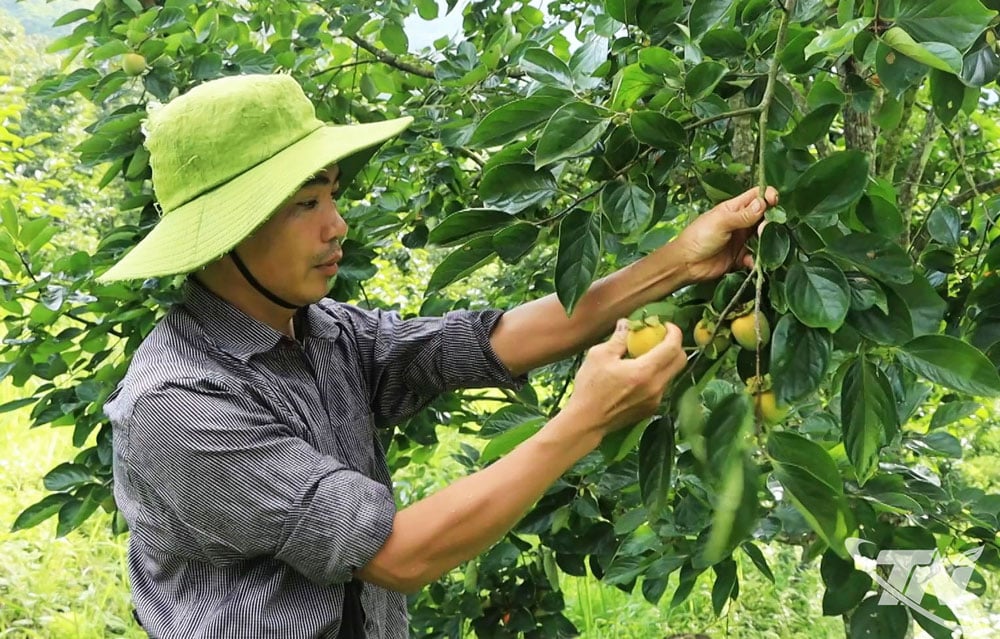
Seedless persimmon trees are commonly grown in the communes of Ba Be, Cho Ra, Thuong Minh, and the areas surrounding Ba Be Lake. According to local people, this variety of persimmon has existed for a long time, and people have been growing it in their home gardens and on their fields. Seedless persimmon trees are well-suited to the local soil conditions, so they grow and develop well.
Seedless persimmons are round in shape, with thin skin and thick flesh. When ripe, they have a beautiful orange-yellow color, a crisp texture, and a rich, sweet taste. They are also easy to preserve and transport over long distances. At this time of year, clusters of ripe persimmons begin to appear on the hillsides and in people's gardens, attracting tourists to visit, enjoy, and buy them as gifts.
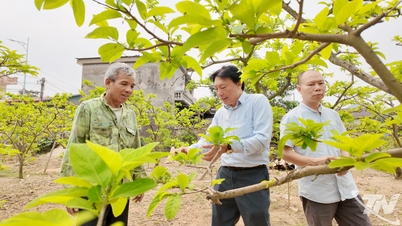
Mr. Duong Van Tien from Cho Ra commune said: "My family has been growing seedless persimmons for over 20 years, and now we have nearly 1 hectare. Most of the area is already producing fruit, averaging tens of millions of dong in income per harvest. However, due to various reasons, some trees have died for unknown reasons, or trees that grow well have few fruits. Many fruits are not aesthetically pleasing, so the selling price on the market is low. These are common limitations for persimmon growers here."
The seedless persimmon tree is closely associated with the lives of many households. Previously, people mainly grew persimmons for personal consumption and as gifts. However, in the last 15 years or so, thanks to increased market demand, persimmon cultivation has been planned for commercial purposes, gradually becoming a key crop in many communes.
According to statistics from the former Ba Be district, by 2025, the entire district will have over 200 hectares of seedless persimmons, with many households owning 1-3 hectares. Many families earn tens, even hundreds of millions of dong annually from selling fresh persimmons and processing products from the fruit.
In Ban Ngu village, Cho Ra commune, many households have been expanding the area for growing seedless persimmons on the hillsides. |
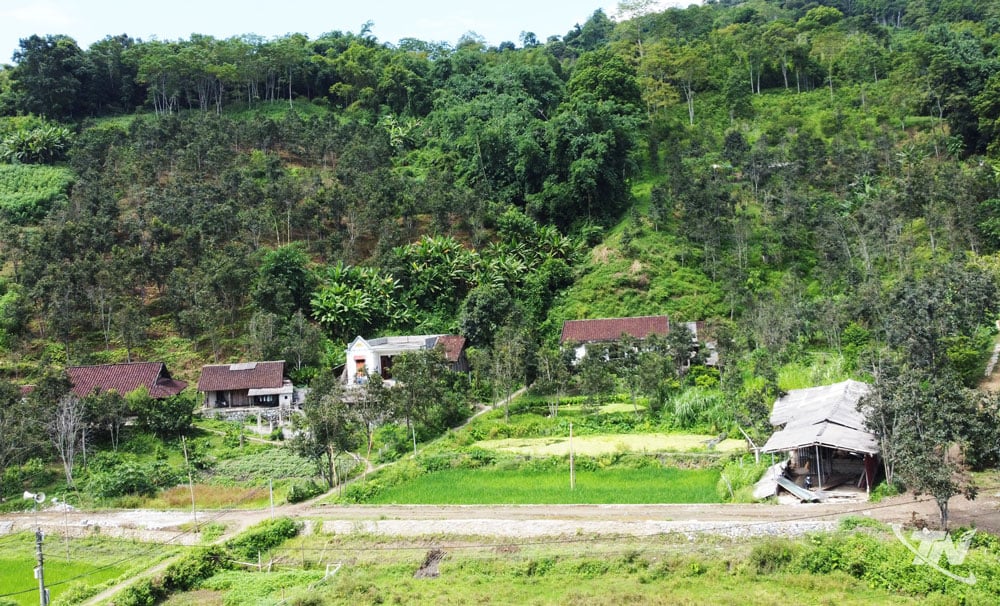
Seedless persimmons are now not only in high demand in northern provinces and cities such as Hanoi, Hai Phong, and Bac Ninh, but are also purchased by tourists and taken to southern provinces. Especially during the tourist season, this fruit is considered a "specialty that attracts visitors," contributing significantly to the income of persimmon growers and those involved in community tourism.
Recognizing the potential of seedless persimmons, in recent years, the communes of Ba Be, Cho Ra, Thuong Minh, and Dong Phuc have included this crop in their list of key agricultural products, as part of the OCOP product development program. To date, seedless persimmons have proven their quality and competitiveness in the market.
Comrade Trieu Anh Chu, Chairman of the People's Committee of Cho Ra commune, said: Along with building the brand of seedless persimmons, the commune will coordinate with provincial departments and agencies to organize training courses on planting, caring for, harvesting, and preserving persimmons after harvest. At the same time, it will support farmers in planting new orchards, renovating old persimmon gardens, grafting varieties, and applying production processes according to biosafety standards, aiming for organic production and eventually linking product consumption. In particular, Cho Ra will cooperate with neighboring communes to jointly develop experiential tourism during the persimmon season.
The difficulties in developing seedless persimmon cultivation, as pointed out by the communes, include the small-scale and fragmented nature of production, and the uneven application of cultivation techniques. Many areas have old, diseased trees, resulting in reduced yields. Post-harvest processing and preservation are limited, easily leading to surpluses and price manipulation by traders.
Faced with this reality, communes with seedless persimmon cultivation areas have been implementing several solutions, such as: establishing concentrated persimmon growing areas, improving the quality of plant varieties and cultivation techniques towards organic farming and VietGAP standards; supporting people and cooperatives in participating in deep processing and diversifying products from persimmons. At the same time, they are developing a product value chain from cultivation, processing, to consumption and experiential tourism; actively participating in agricultural fairs, and bringing products to e-commerce platforms... all aimed at contributing to a more prosperous life for the people.
Source: https://baothainguyen.vn/kinh-te/202507/go-kho-phat-trien-cay-hong-khong-hat-00b2670/
![[Image] National Assembly discusses the implementation of the socio-economic development plan.](https://vphoto.vietnam.vn/thumb/1200x675/vietnam/resource/IMAGE/2026/04/20/1776696707422_ndo_br_img-20260420-185419-jpg.webp)


![[Photo] General Secretary and President To Lam meets with National Assembly delegates from ethnic minorities.](https://vphoto.vietnam.vn/thumb/1200x675/vietnam/resource/IMAGE/2026/04/20/1776696701056_a1-bnd-8331-3342-jpg.webp)

































































Comment (0)