

Strategic vision: "Soft borders" expanding with the wings of flight.
In the context of deep integration, the role of the aviation industry is not limited to transportation. Speaking at a discussion session on the documents to be submitted to the 14th National Congress in early November, Prime Minister Pham Minh Chinh affirmed that aviation development is a strategic pillar for expanding "soft borders" and enhancing Vietnam's position and competitiveness in the international arena. The Prime Minister emphasized that the aviation industry is symbolic of the nation's standing, where each new flight route is a crucial connection for the economy , tourism, and trade. Prime Minister Pham Minh Chinh strongly affirmed: "Wherever Vietnamese aircraft fly, Vietnam's soft borders expand."

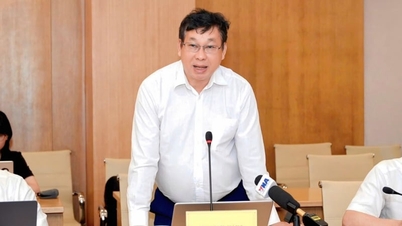
Delegates in the group listen as Prime Minister Pham Minh Chinh further clarifies some issues raised during the discussion of the draft documents for the 14th National Congress. Photo: Nhat Bac
According to the Prime Minister, to realize this vision, development thinking must harmoniously combine infrastructure, technology, and business capabilities, while encouraging resource diversification, especially public-private partnerships in investment. The goal is not only to expand the regional flight network but also to participate more deeply in the aerospace sector, with the aspiration to "fly higher, fly further, even in outer space."
Newcomer Sun PhuQuoc Airways (SPA) is shaking up the market.
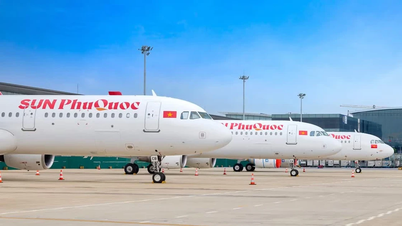
The government's strategic vision is clearly reflected in the renewed vibrancy of the aviation market. In particular, the official commencement of commercial operations by Sun PhuQuoc Airways (SPA) with its first flights to Phu Quoc on the morning of November 1st has rapidly intensified the race to redistribute market share.
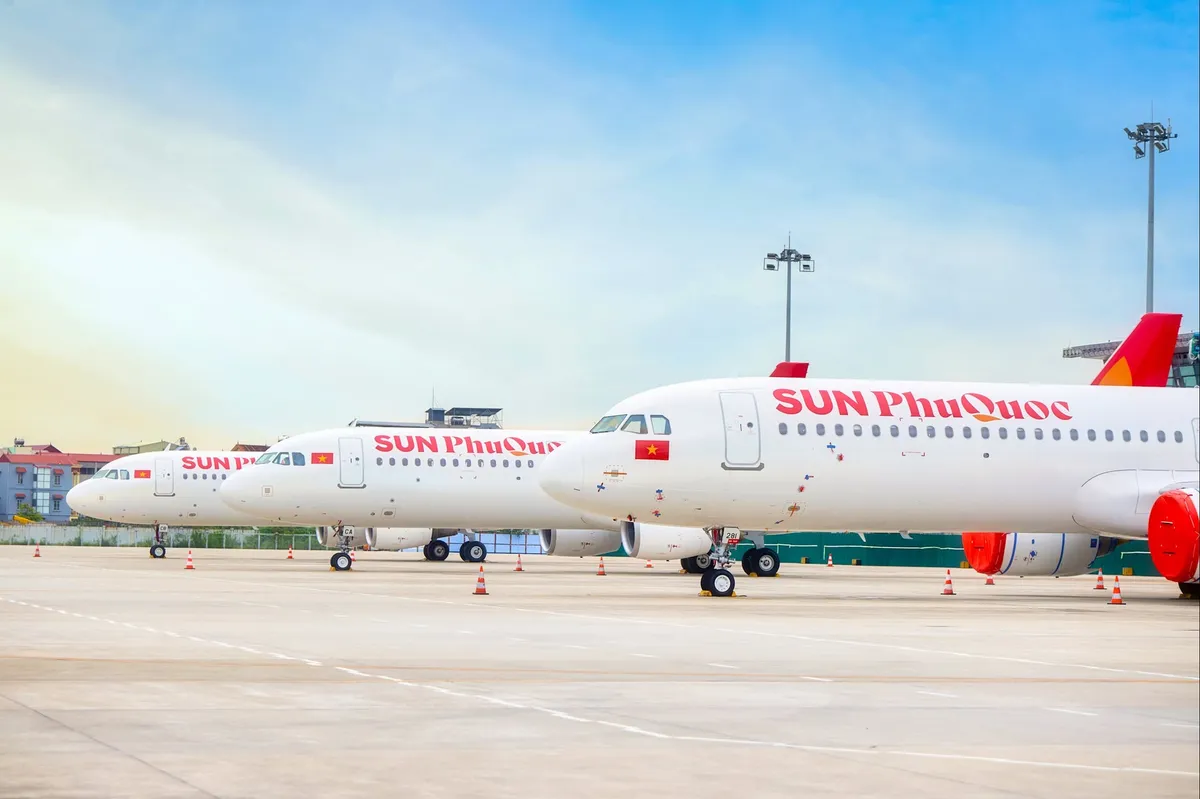
Sun PhuQuoc Airways (SPA) officially commenced commercial operations with its first flights to Phu Quoc on the morning of November 1st. Photo: SPA
Unlike traditional models, SPA is positioned as the first "resort airline" in Vietnam. The airline aims to combine transportation with tourism experiences, becoming a crucial component in Sun Group's comprehensive ecosystem. In its initial phase, SPA focuses on key routes such as Phu Quoc - Hanoi and Phu Quoc - Ho Chi Minh City. However, the airline has shown great ambition, projecting to have 25 aircraft by the end of 2026, and aiming for 30-35 aircraft by 2027.
The surge of the "old guard" and the "giant"
Besides newcomers, the market is also witnessing the strong comeback of established airlines and the explosive growth of established giants.
After two years of restructuring that failed to meet expectations, Bamboo Airways is undergoing a strong transformation following FLC Group's takeover at the end of September. FLC announced a new development strategy for the 2026-2030 period, focusing on strengthening financial capacity, replanning its flight network, and one of the airline's most "customer-friendly" moves is the reinstatement of the premium Bamboo Club membership cards to reward loyal customers.
Meanwhile, Vietravel Airlines is also witnessing a strong comeback after receiving investment from T&T Group. The airline has switched from leasing to owning aircraft, purchasing two more and is expected to receive another new one soon. Vietravel Airlines aims to have a fleet of 30-50 aircraft by 2030, with a flight network covering Southeast Asia, Northeast Asia, and the Middle East.
In the leading segment, Vietjet and Vietnam Airlines are also continuously accelerating. Vietjet, the airline leading in market share for domestic (44.7%) and international (23.2%) passenger services in the first eight months of this year, has recorded outstanding growth. The airline has ordered 20 A330neo aircraft, becoming the airline with the largest A330neo order in the world, along with a historic order for 100 A321neo aircraft.
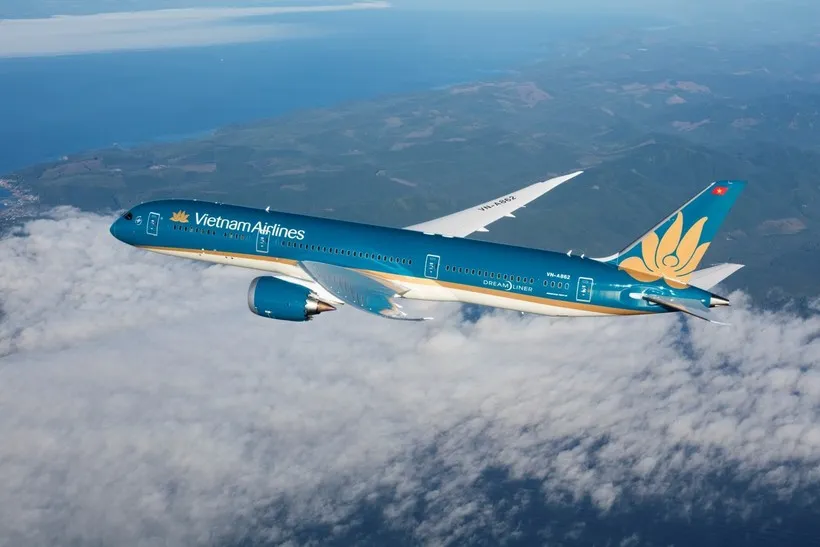
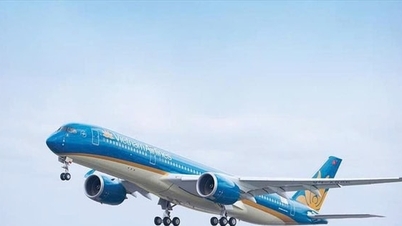
Vietnam Airlines currently operates flights to 21 domestic and 29 international destinations, with an average of 400 flights departing daily.
Vietnam Airlines is also planning to add 30 more wide-body aircraft from Airbus or Boeing, with delivery scheduled from 2028. According to Vietnam Airlines Chairman Dang Ngoc Hoa, the project to invest in an additional 50 aircraft is the minimum requirement for the airline given the huge demand for commercial aircraft from airlines worldwide. Mr. Hoa revealed that if manufacturers cannot deliver the aircraft to the airline before 2030, Vietnam Airlines may have to lease additional aircraft in 2027 and 2028. To date, the national airline operates to 21 domestic and 29 international destinations with an average of 400 flights taking off per day. This year alone, the airline has opened and restored 15 international routes to many key markets such as Italy, Russia, China, UAE, Japan, South Korea, and India.
Consumer benefit: Ticket prices for Tet 2026 are expected to remain stable.
The fierce competition among airlines is creating great opportunities for customers. After a long period of high airfares putting pressure on domestic tourism, the entry of new airlines like SPA has significantly lowered airfares to popular destinations like Phu Quoc.
Ms. Tran Thi Bao Thu, Director of Marketing and Communications at Vietluxtour, commented: "For the domestic tourism market, airfare is a major factor in tour pricing. If more airlines participate with competitive prices, the market will benefit."
This assessment is entirely justified, as many passengers have already begun to benefit. Ms. Mai Lan, from Ho Chi Minh City, shared her experience flying to Phu Quoc during Tet: "For a family of three, the total cost of round-trip tickets was only about 12 million VND, while last year I had to spend nearly 20 million VND for the same trip, not including accommodation and food costs."
Experts believe that the new competition will not only help tourists enjoy "better service at more reasonable prices" but also stimulate demand for tourist destinations. Mr. Truong Quoc Hung, Chairman of the UNESCO Hanoi Travel Club, highly praised SPA's model of integrating air travel with resort tourism, saying that this helps customers save time in choosing and creates opportunities for travel agencies to design more flexible tours.
If this trend continues, experts believe that airfares for the 2026 Lunar New Year holiday could be more stable than in previous years, making it easier for travelers to plan ahead and promoting sustainable development in the aviation and tourism markets. The race to regain market share in the aviation industry is heating up again, not only as a business story but also as a direct driver of consumer benefits, confirming that passengers will ultimately benefit from more choices and more competitive prices.
Vietnam's aviation industry is proving itself to be a key economic driver, constantly striving to realize the strategic vision of a nation with a strengthened "soft border." The current intense competition is a necessary "headwind," driving Vietnamese airlines to continuously improve service quality and operational capabilities, contributing to elevating the country's position on the international stage.
Source: https://vtv.vn/hang-khong-tru-cot-mo-rong-bien-gioi-mem-viet-nam-100251114160622911.htm















































































Comment (0)