

(CLO) Thousands of people gathered in the town of Riesa, in the German state of Saxony, to protest the crucial congress of the far-right Alternative für Deutschland (AfD) party.
This congress officially nominated Alice Weidel, co-leader of the party, as the candidate for Chancellor in the snap election next February.
According to the protest organizers, around 12,000 people from across Germany flocked to Riesa to prevent AfD delegates from attending the congress. Police estimated the number at around 8,000. Roads leading to the convention center were blocked, causing a two-hour delay to the session.
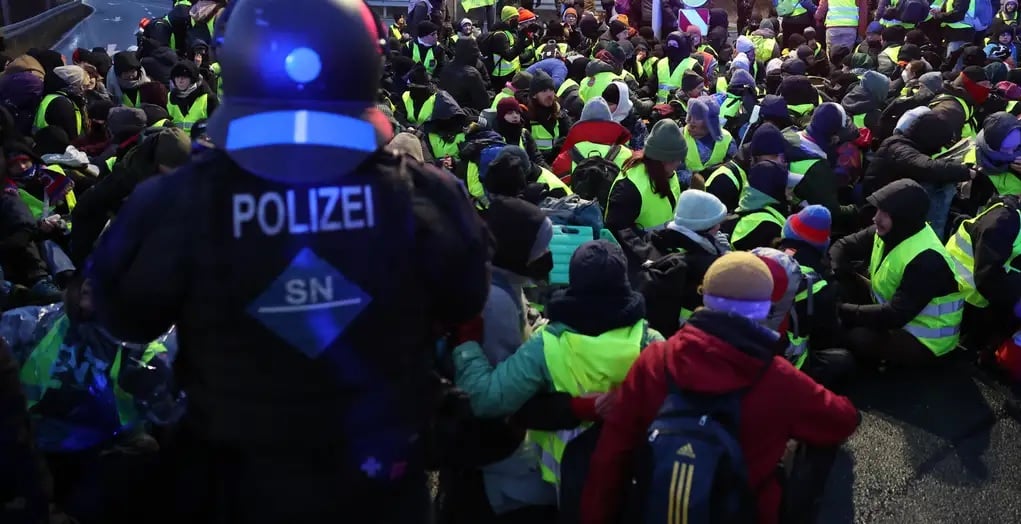
Police respond to protesters to prevent a demonstration against the AfD national conference in Riesa, Germany, on January 11, 2025. (Photo copyrighted by AP, not for re-publication)
Some protesters carried banners and chanted slogans such as "No to Nazis." Police used tear gas and forcibly dispersed the groups blocking the road.
Maria Schmidt, spokesperson for the protest group, stated: "Today, we are defending everyone's right to live safely without fear of eviction or attack. Riesa is not a haven for fascism."
Inside the hall, Alice Weidel praised party members for "bouncing through the far-left crowd" to attend the convention. Party co-leader Tino Chrupalla criticized the protesters as "undemocratic and terrorist."
The AfD party planned to finalize its election platform during its two-day meeting. One controversial proposal was a "remigration" policy aimed at mass deportation of foreigners from Germany.
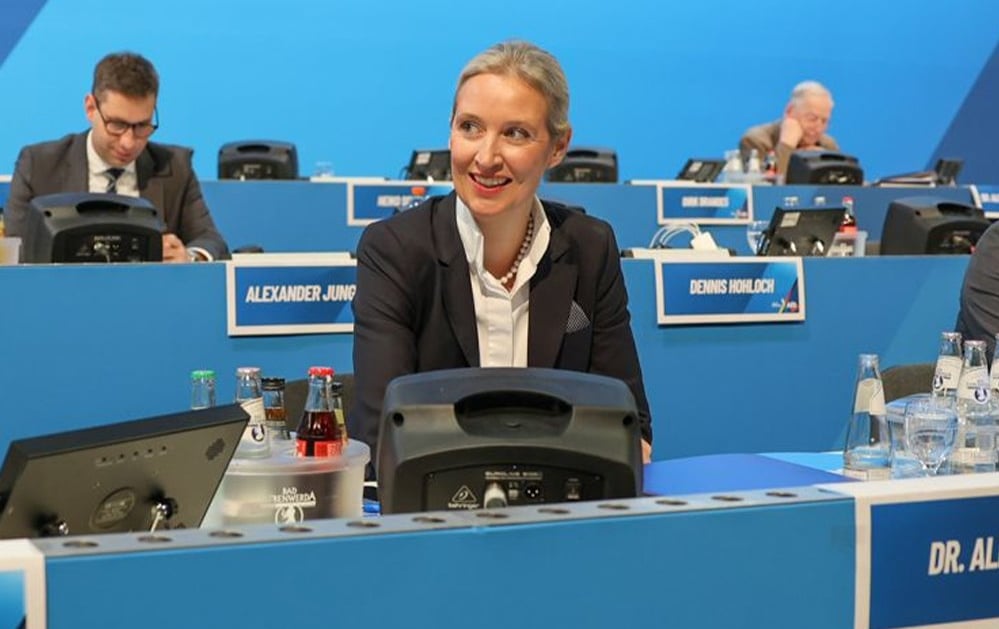
AfD party leader Alice Weidel at the conference. Photo: X
The party is also considering dissolving the Junge Alternative (JA) youth organization, which German intelligence agencies have listed as an extremist group. Furthermore, the draft platform proposes Germany withdrawing from the European Union (EU) and restoring nuclear power plants, contradicting current energy policy.
Although the AfD currently ranks second in the polls with around 20% support, the likelihood of Alice Weidel becoming Prime Minister is very low because other parties have refused to cooperate with the AfD.
This week, Weidel received public endorsement from tech billionaire Elon Musk during an online chat on the X platform (formerly Twitter). However, experts believe this backing is unlikely to create a breakthrough for the AfD.
Currently, the center-right opposition CDU/CSU coalition, led by Friedrich Merz, is leading with approximately 30% of the vote. Merz focuses on economic stimulus policies and immigration control.
Meanwhile, incumbent Prime Minister Olaf Scholz faces widespread criticism after the center-left ruling coalition collapsed in November 2024, leading to an internal crisis and triggering early elections.
Speaking at the party congress in Berlin, Scholz acknowledged making mistakes but called for unity toward the future: "Let's fight together!"
The February 23, 2025 election promises to be a fierce competition between parties with clearly opposing policies. The increasing influence of the AfD is causing many citizens and leaders to worry about the rise of far-right extremism in Germany.
Observers believe the election results will shape Germany's direction on key issues such as immigration, the economy, and energy policy in the coming years.
Cao Phong (according to Al Jazeera, DW, France24)
Source: https://www.congluan.vn/duc-hang-nghin-nguoi-bieu-tinh-phan-doi-dai-hoi-dang-cuc-huu-afd-post330040.html



![[Photo] General Secretary and President To Lam presides over a meeting on preparations for the review of one year of operation of the three-tiered government system.](https://vphoto.vietnam.vn/thumb/1200x675/vietnam/resource/IMAGE/2026/06/02/1780391821195_a1-bnd-4595-9717-jpg.webp)






















































































Comment (0)