

Along with the cautionary lessons learned, it is crucial to establish a robust prevention mechanism to make corruption "impossible," an effective detection and handling mechanism to make corruption "fearless," and a mechanism to ensure reasonable compensation and incentives so that corruption "does not need or want to be corrupt."
Putting power under "control".
The violations that have occurred over the years show that once officials are placed in positions of power, without strict control and supervision mechanisms, it can easily lead to abuse of power, embezzlement, corruption... and, more worryingly, in many cases, they have spiraled into a decadent and morally corrupt lifestyle.
The conclusions of the Central Inspection Committee have consistently pointed out key officials at all levels, including the central level, who have deteriorated in political ideology, morality, and lifestyle, violating Party regulations and State laws on preventing and combating corruption and negative practices, violating regulations on what Party members are not allowed to do, and violating the responsibility of setting an example. Many officials and Party members have abused their authority for personal gain, misused power, and profited illegally, even allowing their spouses, children, and relatives to interfere in and manage their positions of power.
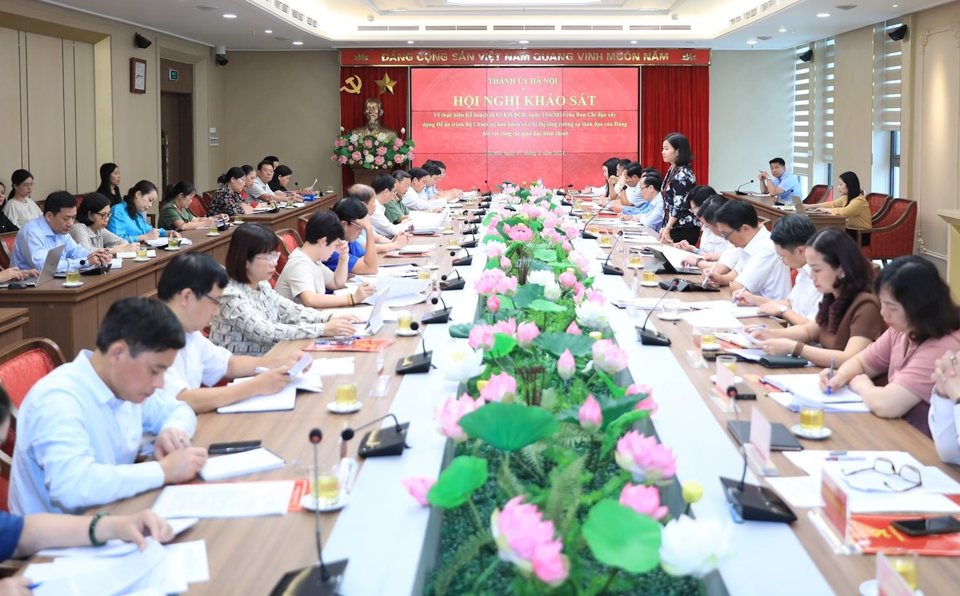
To bring power under "control" and combat manifestations of ideological and moral degradation, the Politburo and the Secretariat have issued and implemented numerous resolutions and directives on Party building, particularly those highlighting the manifestations and behaviors of corruption, degeneration, and deviation from communist ideals among a segment of cadres and Party members. Simultaneously, the National Assembly and the Government have focused on building institutions to concretize the Party's viewpoints, contributing to effective and increasingly transparent and civilized social management.
It can be said that never before has the Party and the State paid so much attention to the building and perfecting of the legal system as in recent years. Just since the 13th National Congress of the Communist Party of Vietnam, a series of regulations on personnel work have been implemented, such as: Regulation No. 37-QĐ/TW, dated October 25, 2021, of the Central Committee on "things that Party members are not allowed to do"; Regulation No. 41-QĐ/TW, dated November 3, 2021, of the Politburo on the dismissal and resignation of cadres; Regulation No. 50-QĐ/TW, dated December 27, 2021, of the Politburo on personnel planning; Regulation No. 58-QĐ/TW, dated February 28, 2018, of the Politburo on "Some issues concerning the protection of the Party's internal political security". Politburo Regulation No. 69-QD/TW dated July 6, 2022, on disciplinary measures for Party organizations and members who violate regulations; Politburo Regulation No. 80-QD/TW dated August 18, 2022, on decentralization of personnel management and appointment and nomination of candidates; Politburo Regulation No. 96-QD/TW dated February 2, 2023, on conducting confidence votes for leadership and management positions in the political system…
The Politburo has issued regulations on "controlling power" in many areas, especially personnel work. This affirms the Party's strong determination to fight against, prevent, and push back against the shortcomings in the Party's "fundamental" work, and the long-standing problems in personnel management. However, a more comprehensive mechanism is still needed, because if we entrust power and resources to officials without supervision, we cannot thoroughly prevent and combat corruption. Unsupervised power corrupts; that is an eternal law.
Associate Professor Dr. Le Van Cuong , former Director of the Research Institute
strategy, Ministry of Public Security
In particular, in 2023, the Politburo issued three consecutive regulations on controlling power in various fields: Regulation No. 114-QĐ/TW dated July 11, 2023, on controlling power and preventing and combating corruption and negative practices in personnel work; Regulation No. 131-QĐ/TW dated October 27, 2023, on controlling power and preventing and combating corruption and negative practices in Party inspection, supervision, and disciplinary enforcement, and in inspection and auditing activities; and Regulation No. 132-QĐ/TW dated October 27, 2023, on controlling power and preventing and combating corruption and negative practices in investigation, prosecution, trial, and execution of judgments. These are all sensitive areas prone to corruption and negative practices. These regulations have created an effective "mechanism" to prevent abuse of power and authoritarianism, which have been causing much concern in society.
Associate Professor Dr. Le Van Cuong (Deputy Director of the Institute of Party Building, Ho Chi Minh National Political Academy) noted that this is the first time we have issued and implemented such a decisive and synchronized institutional framework, meaning that these three key, sensitive, and complex issues have been identified, named, and regulated. This demonstrates a very high level of political determination, in line with the motto "no forbidden zones, no exceptions, regardless of who the person is," and focuses on the areas that voters, Party members, and the people are concerned about.
Upholding self-respect and public service culture.
One of the new and groundbreaking aspects in Party building regarding ethics is the resolute handling of responsibility for leaders who allow violations to occur within their areas of management and responsibility. Based on this, officials are encouraged to voluntarily acknowledge their shortcomings, resign, step down from their positions, or retire. According to Deputy Head of the Central Internal Affairs Commission Nguyen Huu Dong, from the beginning of 2024 to the present, competent authorities have reviewed and approved the resignation, retirement, or reassignment of 14 officials under central management.
Since the beginning of the 13th term, 32 officials under central management have been considered for removal from office, retirement, resignation, dismissal, or reassignment to other positions. Among them are 7 Politburo members, 1 Secretariat member, and 10 Central Committee members. "This demonstrates strictness but also humanity, gradually making the principle of 'promotion and demotion, entry and exit' a normal part of personnel management, creating a new breakthrough in the fight against corruption and negative practices," Mr. Nguyen Huu Dong informed.
It must be said that, until now, it has been very rare for leaders to resign, even when violations occur in units and localities under their jurisdiction… Only when violations are discovered and they are punished are they “forced” to leave their jobs. Therefore, it is time to consider resignation as a cultural norm and a sign of self-respect for Party members and officials. If the resignation of high-ranking officials becomes normal, it will help eliminate the mentality of “being in power” as a way to “eat and sit at the top,” and return to their rightful place as “servants of the people.”
In reality, dismissal and resignation are not new concepts, as they have been institutionalized by Party regulations and State laws for many previous terms. In fact, the Politburo has provided specific grounds for considering the removal, dismissal, and resignation of officials in Regulation No. 260-QĐ/TW, dated October 2, 2009. However, throughout the long period of implementation, the question of when dismissal and resignation become normal practices, with officials voluntarily leaving their positions when they no longer possess the necessary competence and prestige within the Party and State system, has remained unanswered. Based on this reality, the serious implementation of Regulation No. 41-QĐ/TW dated November 3, 2021, of the Politburo on the dismissal and resignation of officials under central management due to legal violations has affirmed the Party's determination in the fight against corruption and negative practices.
According to Nguyen Trong Nghia, Head of the Central Propaganda Department, to close loopholes, mechanisms to bring power under "control" are becoming increasingly sophisticated, not only through Party regulations but also through supervisory mechanisms to prevent those in power from abusing or acting arbitrarily. Implementing power control will contribute to building a foundation of political culture and ethics.
Recent events have shown that the implementation of regulations has created remarkable achievements, with discipline and order gradually being tightened, and many officials who committed violations, regardless of their position, being brought to trial and severely punished according to the law. Associate Professor Bui Thi An (former National Assembly representative) commented that we have achieved very good results in dealing with corruption and abuse of power. A series of cases have been brought to light and severely punished. This has demonstrated a very high level of political determination, reflecting the declaration of the Party and the State that corruption will be dealt with without exception, bringing confidence to the public and the people.
The Central Committee's exemplary implementation of Regulation 41-QD/TW has spread the message of no exceptions, no forbidden zones, and awakened the value of self-respect in each cadre and Party member, especially the heads of agencies and units. At the same time, it has promoted a culture of public service, linking the responsibility of Party committees, cadres, and Party members, especially the collective leadership and heads of agencies and organizations throughout the political system. The majority of cadres and Party members believe that the Central Committee's decisions in strictly implementing Regulation 41-QD/TW have created confidence in a breakthrough in the thinking of "up and down," "in and out" in personnel work, and especially in the strictness of Party discipline. The regulation, when put into practice, has contributed to managing and screening the cadre, gradually building and forming a culture of resignation in public agencies.
According to Nguyen Tuc, Chairman of the Advisory Council on Socio-Cultural Issues (Central Committee of the Vietnam Fatherland Front), when dismissal and resignation become normal occurrences, it will help achieve the goal of building an honest and ethical public service environment with optimal efficiency. Because, if the education and training of Party members do not achieve the virtues of diligence, frugality, integrity, and righteousness, then when they realize they have made mistakes or shortcomings, not all officials will be willing to resign. The effective implementation of Regulation No. 41-QĐ/TW by the Central Committee and some Party committees clearly demonstrates the spirit of parallel construction and combating corruption, so that officials and Party members know how to uphold and remember prohibitions, maintain boundaries, etc., thereby forming a culture of integrity.
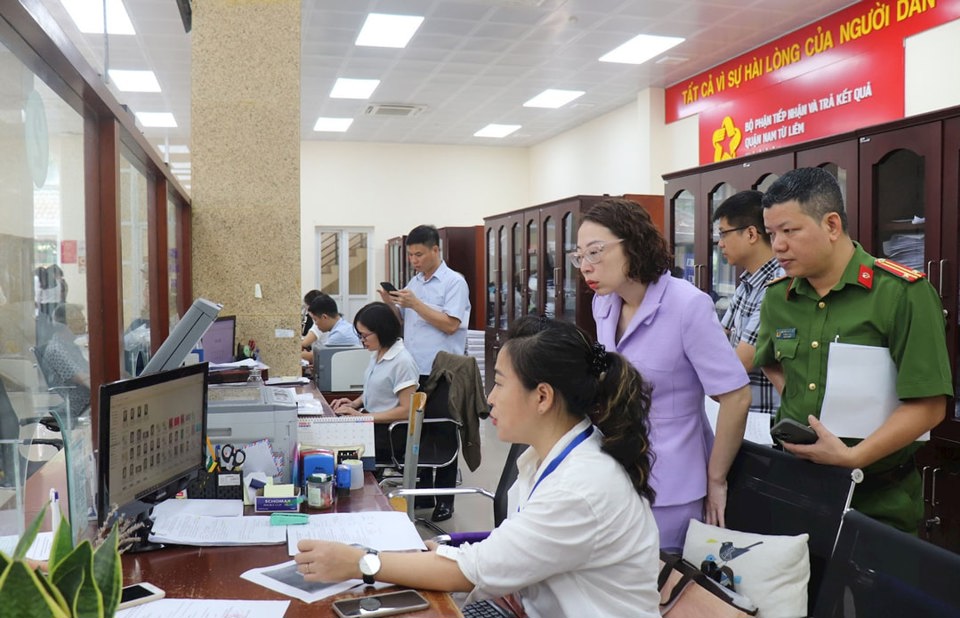
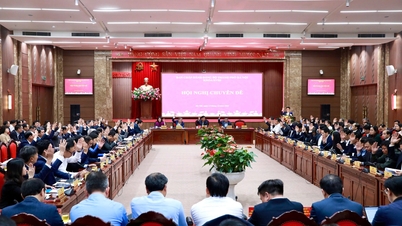
The Central Committee's proactive spirit has spread to provinces and cities, notably the Hanoi City Party Committee, which has issued a system of specific documents to concretize and organize implementation at all levels and sectors. A prominent example is Directive 24/CT-TU dated August 7, 2023, on "Strengthening discipline, order, and responsibility in handling work within the political system of Hanoi City." This directive places "discipline" first, followed by "order" and "responsibility."
This represents a gradual increase in the level and demands of administrative management and public service performance by officials, civil servants, and employees within the political system from the city level down to the grassroots, so that officials continuously improve their spirit, attitude, sense of responsibility, and efficiency in their assigned work; regularly engage in self-reflection and self-correction, relating themselves to the 25 indicators of violations of discipline, order, and responsibility in handling work. Annually, the Hanoi City Party Committee conducts inspections of all 50 subordinate Party committees regarding Party building and organization, integrating this with the work of integrity education…
In implementing integrity education, Hanoi has seen the emergence of effective approaches, such as building and replicating models for studying and following the ideology, ethics, and style of Ho Chi Minh. In addition, the city has promoted the application of information technology, deploying the iHanoi software, which includes a section for citizens to provide feedback. Through this, citizens can report issues 24/7, contributing to improved administrative reform and public service ethics.
During a meeting with the Central Steering Committee's survey team on the implementation of Plan No. 01-KH/BCĐ dated April 15, 2024, regarding the draft proposal to be submitted to the Politburo for the issuance of a Directive on strengthening the Party's leadership over integrity education, the Hanoi City Party Committee proposed that the competent central authorities study and standardize nationwide guidelines on promoting and educating integrity, emphasizing that this education should not only be conducted within Party and State agencies and the political system at all levels, but also in other sectors, fields, and social environments. In addition, the City proposed that the Central Committee allow it to pilot a training course on integrity education for officials within the political system. These are also necessary further solutions to promote the creation of a culture of integrity.
Following the direction of the Politburo, the Central Internal Affairs Commission has issued Plan No. 01-KH/BCĐ on developing a proposal to be submitted to the Politburo for the issuance of a Directive on strengthening the Party's leadership over integrity education. The proposal will clarify the current state of leadership, direction, and implementation of integrity education by Party committees, organizations, agencies, organizations, units, and localities at all levels, in order to identify tasks and solutions for integrity education in the coming period.
“The current challenge is what needs to be done, how to do it, and what the responsibilities of organizations and individuals within the political system are to translate the policies and viewpoints of President Ho Chi Minh, the Party, and the State into reality, in order to build an honest state, an honest society, an honest nation, of the people, by the people, and for the people. This is also the goal of the Politburo's assigned plan.”
Head of the Central Internal Affairs Commission Phan Đình Trạc
(To be continued)
Source: https://kinhtedothi.vn/bai-2-kien-tao-nen-tang-van-hoa-liem-chinh.html







































































Comment (0)