

The use of chemical fertilizers in agricultural production is widespread among farmers, even becoming a crucial factor directly determining crop yields. However, the indiscriminate, unbalanced, and improper use of chemical fertilizers directly affects soil resources, leading to soil degradation and depletion. In particular, it harms beneficial organisms, negatively impacting the environment and human health.
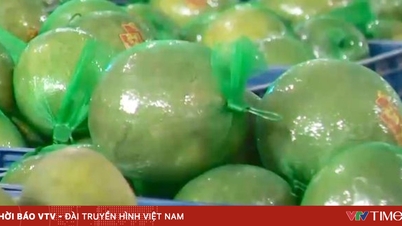
 The area planted with four-season lemons by Ms. Nguyen Thi Hong's family in Ha Long commune (Ha Trung district) is producing uniform and beautiful fruit after limiting the use of chemical fertilizers.
In Xuan Minh commune (Tho Xuan district), Mr. Ha Van Truong's family has a long history of using chemical fertilizers to fertilize rice, corn, etc. Mr. Minh shared: "We all understand the benefits of using manure and organic fertilizers in production and cultivation, however, the cost is quite high and composting manure is laborious, so we buy chemical fertilizers from the store for a quicker and easier solution. We've been using them for 10 years without any problems; sometimes the crops get some diseases, but we can still overcome them."
Besides the long-term overuse of mixed fertilizers, many farmers also use them based on intuition and experience, without accurately calculating the timing and amount of fertilizer to apply. Ms. Le Thi Ly, from Quang Ninh commune (Quang Xuong district), said: “I take care of my crops very simply and don't need to apply base fertilizer. Whenever I see signs of stunted growth after sowing or transplanting, I sprinkle about 2-3 kg of nitrogen fertilizer to help the plants grow. When the rice is about to enter the heading stage, I use NPK mixed fertilizer.”
The misuse of chemical fertilizers, coupled with the indiscriminate use of fertilizers, the use of single fertilizers, and imbalances in nitrogen, phosphorus, and potassium, are largely due to the weak awareness of some farmers. However, many farming households, after receiving training, have gradually realized the serious harm caused by chemical fertilizers. A typical example is the model of growing four-season lemons by Mr. Nguyen Van Bao's family in Gia Mieu village, Ha Long commune (Ha Trung district). For the past three years, they have been using chemical fertilizers interchangeably with organic fertilizers by mixing their own base formulations to produce fertilizer. The ingredients are readily available and inexpensive, such as yogurt, rice bran, yeast, and by-products like chicken eggshells, leftover food, and vegetables. Mr. Bao said: “Previously, when we only fertilized our plants with organic fertilizers, the benefits were quite superior, even increasing crop yields more than conventional fertilizers; along with their rapid absorption and relatively low cost. However, after using them year after year, I noticed the soil became compacted, less fertile, and less porous, leading to increasingly inefficient crop growth. Furthermore, the transformation process released some toxic gases, causing serious air pollution and directly affecting human health. Therefore, I decided to reduce the dosage of organic fertilizers and alternate with conventional fertilizers, aiming for green agriculture.”
Every year, Thanh Hoa province cultivates approximately 250,000 to 300,000 hectares of various crops. On average, about 100,000 tons of chemical fertilizers are used annually – a significant amount. According to Dr. Le Van Cuong, Head of the Faculty of Agriculture, Forestry and Fisheries, Hong Duc University: The overuse of chemical fertilizers prevents crops from absorbing essential nutrients, reducing their resistance to pests and diseases because chemical fertilizers kill the soil's microbial ecosystem. Without these microorganisms, the soil becomes depleted and compacted, so even with continued high-dose fertilization, the plants will not thrive. Furthermore, the current amount of by-products from chemical fertilizers is substantial; most farmers choose to burn or bury them in the fields. This is not only wasteful but also slows decomposition, creating large amounts of heat-absorbing emissions that pollute the environment and increase greenhouse gas emissions. Therefore, it is time to reorient people to gradually say "no" to old production practices in order to minimize harmful impacts on the environment and ensure the safety and health of the community.
Text and photos: Chi Pham
Source
![[Image] National Assembly discusses the implementation of the socio-economic development plan.](https://vphoto.vietnam.vn/thumb/1200x675/vietnam/resource/IMAGE/2026/04/20/1776696707422_ndo_br_img-20260420-185419-jpg.webp)
![[Photo] General Secretary and President To Lam meets with National Assembly delegates from ethnic minorities.](https://vphoto.vietnam.vn/thumb/1200x675/vietnam/resource/IMAGE/2026/04/20/1776696701056_a1-bnd-8331-3342-jpg.webp)









![[Infographics] Hai Tien Beach Tourism Festival 2026 and celebratory activities](https://vphoto.vietnam.vn/thumb/402x226/vietnam/resource/IMAGE/2026/04/20/1776687221715_infographics-le-w1200t0-di2616d199d1165828t11358l1-2026-029.webp)





























































Comment (0)