


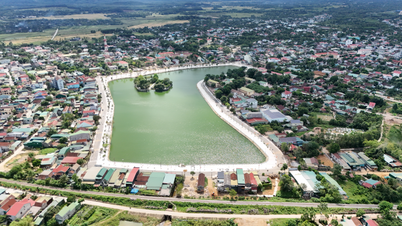
Yen Duc, a land with a long history, lies along the Da Vach and Da Bac rivers. Archaeological excavations in the Thien Long Uyen area have uncovered many wooden piles, remnants of Dong Son culture architecture dating back over 2,000 years. Researchers believe this was also the main command post of the Tran kings during the war against the Mongol invaders in 1288. Later, Yen Duc also became a revolutionary land with many traces remaining from the two resistance wars against France and the United States.
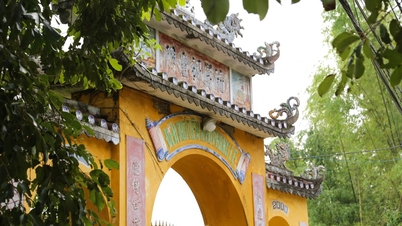
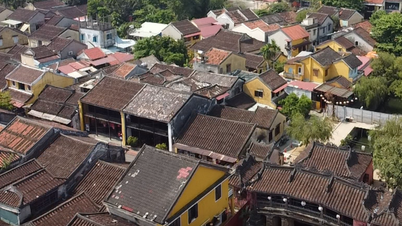
Through the ups and downs of history, time has passed, and the land and people here still preserve the slow, simple pace of life and the scenery that embodies the beauty of a Northern Vietnamese village with rice fields, lotus ponds, red tiled roofs, village temples, and small roads. It is precisely because of this unique cultural value and characteristic landscape that the Yen Duc Village tourism model has been developed and invested in by businesses in the two main hamlets of Yen Khanh and Don Son in Yen Duc since 2011.
This is a pioneering community-based tourism model in Quang Ninh , currently managed by Yen Duc Tourism Co., Ltd. (Sen A Dong Tourism Corporation). The model is integrated with Sen A Dong's tourism ecosystem in Quang Ninh, initially focusing primarily on international tourists, and later expanding to include a diverse range of domestic and international visitors.


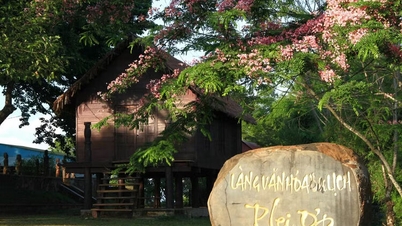
The beauty of the Vietnamese countryside, its historical value, and the traditional crafts of the local people have been brought to visitors from all over the world through tourism. Visitors can stay in tiled-roof houses surrounded by vast rice fields, gazing up at the straight, sun-drenched palm trees. Ponds with pink lotus flowers and purple water lilies are simply beautiful, and lush green taro plants growing densely in the corners of the ponds add to the rustic charm of the countryside.
Besides sightseeing, visitors can also ride electric cars or bicycles around the village to visit historical sites associated with the land and people; wade into ponds to catch fish or plant rice, mill rice, pound rice, weave straw brooms… to experience the daily life of farmers in this rice-growing region.
For a more lively experience, tourists can visit the water puppet show to watch the characters of Teu, a farmer couple, plowing and raising livestock together. The images of simple water puppets, through the skillful hands of the local people, become lively and vibrant, allowing visitors to appreciate the essence of traditional folk art associated with the long-standing rice-farming civilization of the Vietnamese people.
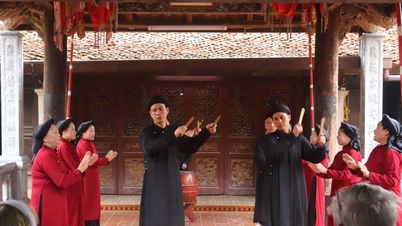
Watching water puppetry, listening to traditional folk songs like Cheo and Quan Ho in the middle of a village pond, under a thatched roof, is a special experience, especially for foreign visitors. The local cuisine also has a strong rural flavor, using locally sourced ingredients and prepared with finesse to leave guests with a unique and unforgettable taste.

Becoming a community-based tourism village is not just about business investment; every resident here is conscious of preserving and working together to build a green, clean, and beautiful environment for tourists and for the lives of each family. Anyone who comes here is easily impressed by the peaceful scenery, the clean, spacious roads shaded by rows of trees…
Having been closely associated with this area for over a decade, Yen Duc Village Co., Ltd. is now planning to develop a pilot model to transform Trai Hamlet (Yen Khanh area) into a model community tourism village at the provincial level, aiming to achieve ASEAN Community Tourism certification by 2027.
Accordingly, the unit plans to invest strategically in essential infrastructure, prioritizing the construction of community centers, standard homestays, restrooms, parking lots, flower-lined walkways, and a clean agricultural experience area to meet ASEAN standards and enhance product quality. The total investment is 25 billion VND, of which 24 billion VND is for infrastructure and 1 billion VND for training community organizations. It is expected that by 2027, Trai Hamlet will have at least 50 standard rooms, at least 5 households operating homestays, attracting 20,000 visitors...
Source: https://baoquangninh.vn/lang-du-lich-trong-long-pho-3379208.html



![[Photo] General Secretary and President To Lam presides over a working session with the Central Policy and Strategy Committee on the development of the materials industry.](https://vphoto.vietnam.vn/thumb/1200x675/vietnam/resource/IMAGE/2026/05/21/1779359935432_a3-bnd-3129-1412-jpg.webp)


























































Comment (0)