

Enriched by the alluvial soil of two rivers, this place not only nurtures lush green vegetable gardens and vibrant flowerbeds, but also offers a peaceful rural atmosphere right next to the city.
Early in the morning in Binh Ngoc vegetable village, dew still clings to the young leaves. Stretching across the fields, rows of water spinach, jute mallow, cabbage, chrysanthemum greens, lettuce… are lush and green like a soft carpet. In the fields, many farmers bend over their vegetable beds, diligently weeding and tilling the soil. From afar, the calls of the farmers echo, making the morning scene even more vibrant and full of life.
In a conversation by the vegetable patch, Mrs. Trinh Thi Bich Lieu, 68 years old, from Ngoc Lang neighborhood, shared: "Vegetable farming isn't hard work, but it's labor-intensive, and the income is modest, just enough to eat, and in good years, a little extra." Having spent her whole life working in the vegetable fields, Mrs. Lieu, like the people here, remains loyal to vegetables as an integral part of her life. Her family owns 3 sao (approximately 0.3 hectares) of land, and every day she and her husband diligently sow seeds, water, and care for the plants until harvest time. Thanks to these vegetable plots, they have raised three children to adulthood, helping them get married and start their own families.
The entire Binh Ngoc area has long relied on vegetable and flower cultivation. Ngoc Lang, Ngoc Phuoc 1, and Ngoc Phuoc 2 have become major suppliers of fresh vegetables to Tuy Hoa ward and surrounding areas. The vegetable fields are bustling year-round, with people working tirelessly from one season to the next, only taking a short break during the two months of the rainy season (September and October in the lunar calendar).
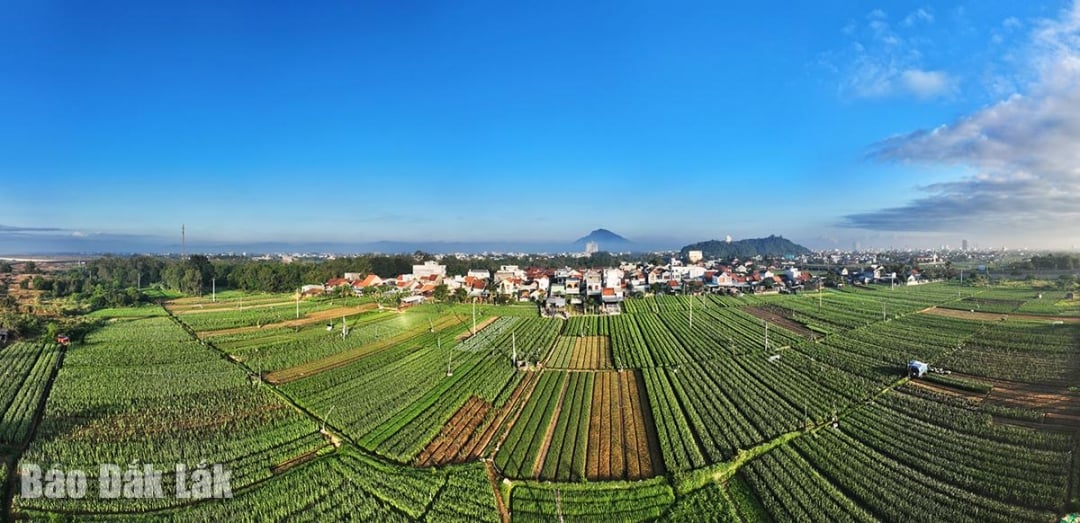 |
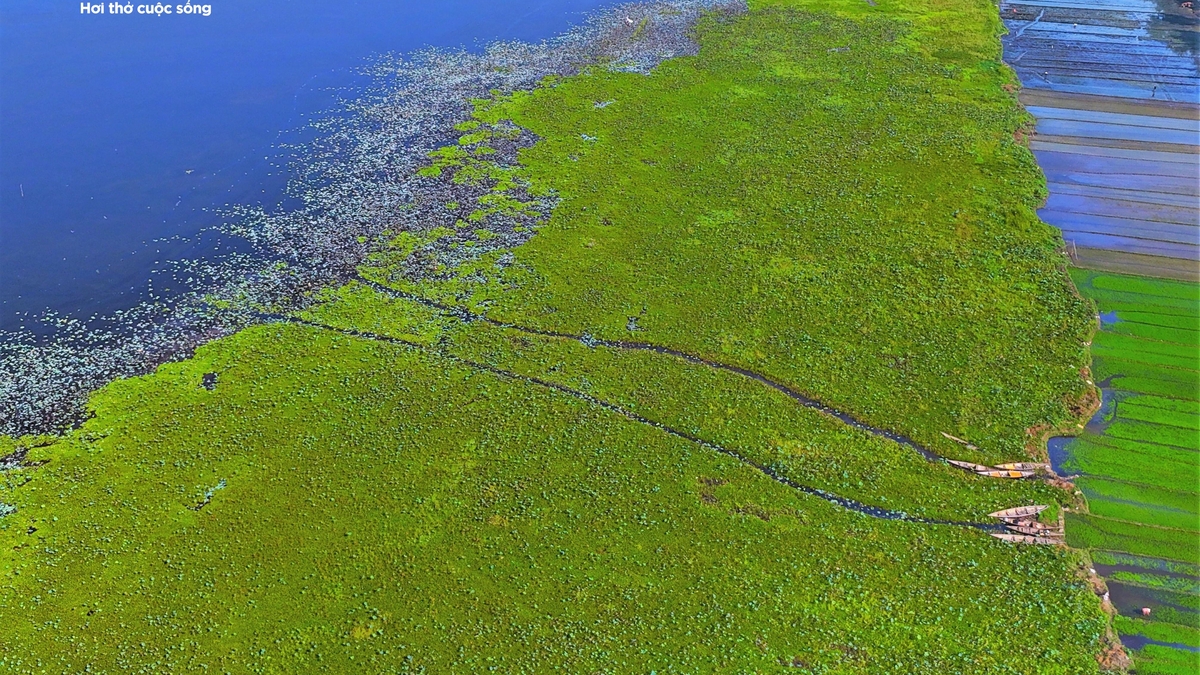
| The Bình Ngọc vegetable and flower village is lush and green beside the Ba River. |
Mr. Ha Van Lam, Standing Vice Chairman of the Vietnam Fatherland Front Committee of Tuy Hoa Ward and Chairman of the Ward Farmers' Association, said: “Currently, the entire ward has about 450 households cultivating over 42 hectares of various vegetables and flowers. Each year, people cultivate 7 vegetable crops and 1 Tet flower crop. This is both a source of income and a way for people to preserve their traditional craft.”
For over 10 years, the people here have persistently built the Binh Ngoc brand of safe vegetables. Many areas have adopted VietGAP production processes, minimizing the use of pesticides. As a result, Binh Ngoc vegetables are increasingly trusted and sold in markets, restaurants, hotels, and supermarkets.
Besides vegetable farming, Binh Ngoc is also famous for its flowers, especially gladiolus during Tet (Vietnamese Lunar New Year). The flowers are imported from Da Lat, and thanks to the care of the locals, they are large, with long stems, and usually bloom right on Tet. When the flowers are in season and fetch good prices, the farmers' Tet is as vibrant as the flowers themselves. From the 15th day of the 12th lunar month onwards, the flower market along National Highway 1 near Song Chua Bridge becomes bustling. Trucks line up, carrying Binh Ngoc flowers to all corners of the country, bringing the beauty of the homeland's flowers to every region.
Beyond its agricultural value, Binh Ngoc vegetable and flower village was also included in a community tourism project by the former Tuy Hoa City People's Committee. Here, visitors can experience daily life, feel the simple rhythm of living in harmony with nature and the countryside.
Today, Binh Ngoc vegetable and flower village not only sustains generations and preserves the spirit of the countryside amidst the city, but also promises to become an attractive community tourism destination. This is how the people here both preserve tradition and open up new avenues for the future.
Ngoc Dung
Source: https://baodaklak.vn/xa-hoi/202509/lang-rau-xanh-ngat-ben-song-71915e4/
![[Photo] National Assembly Chairman Tran Thanh Man attends the policy seminar to promote Vietnam-Türkiye cooperation.](https://vphoto.vietnam.vn/thumb/1200x675/vietnam/resource/IMAGE/2026/04/16/1776351415367_vna-potal-chu-tich-quoc-hoi-tran-thanh-man-du-toa-dam-chinh-sach-thuc-day-hop-tac-viet-nam-tho-nhi-ky-8705791-jpg.webp)















![[Image] Bridges and roads connecting the eastern part of Ho Chi Minh City](https://vphoto.vietnam.vn/thumb/1200x675/vietnam/resource/IMAGE/2026/04/16/1776328595108_ndo_br_bh-vt5-jpg.webp)


























![[Infographic] Details of the Hanoi-Quang Ninh High-Speed Railway Project](https://vphoto.vietnam.vn/thumb/402x226/vietnam/resource/IMAGE/2026/04/16/1776338188424_anh-man-hinh-2026-04-16-luc-18-16-10.png)

![[Photo] National Assembly Chairman Tran Thanh Man meets with the Speaker of the Georgian Parliament](https://vphoto.vietnam.vn/thumb/402x226/vietnam/resource/IMAGE/2026/04/16/1776338494029_anh-man-hinh-2026-04-16-luc-18-21-21.png)













Comment (0)