

The coming-of-age ceremony is an important ritual marking a milestone in the life of a young Cham Muslim girl of the Bani faith. This is the moment when the girls are officially recognized by the community as Bani Muslims. The coming-of-age ceremony for girls is called Karơh, and the rituals are performed by the High Priest and religious officials of the Bani mosque in Luong Tri village.
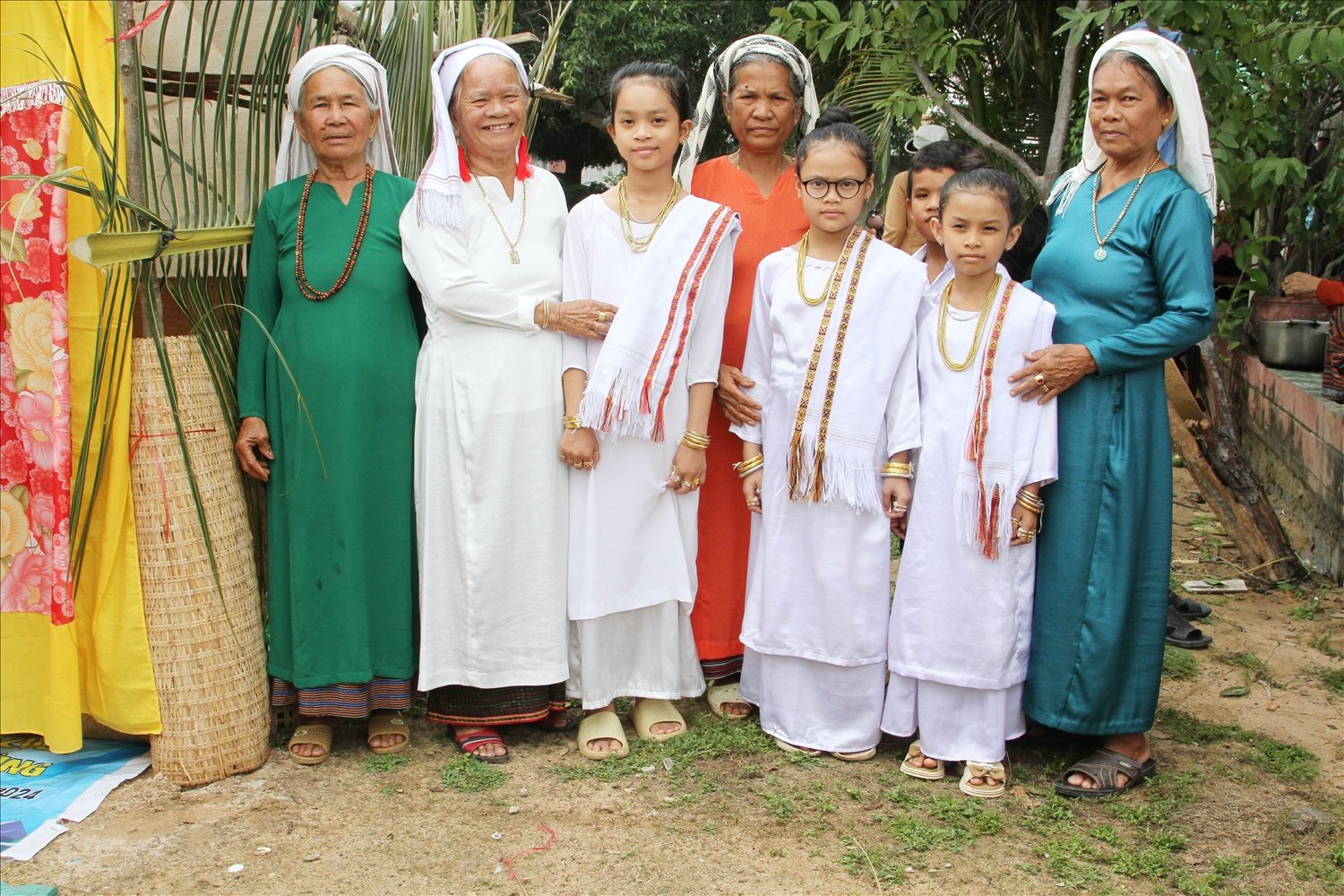
The elders of the Manh Xi clan guide the young girls as they prepare to enter the dressing room awaiting their coming-of-age ceremony.
Visiting Luong Tri village (called palei Cang in the Cham language), Nhon Son commune, Ninh Son district, in the early days of the new year 2025, we had the opportunity to attend the coming-of-age ceremony for young Cham girls practicing the Bani Muslim faith. From early morning on January 3rd, the first Friday of the new year 2025, members of the Manh Xi clan gathered at the home of Ms. Dao Thi Kim Soan at the end of the village. This is a day of great significance for the Manh Xi clan, led by the respected clan leader Dao Van Thi. The clan organized a pre-puberty coming-of-age ceremony for girls aged 9 to 11, namely Dao Ngoc Anh Duong, Dao Quynh Thien An, and Dao Thuy Minh Han.
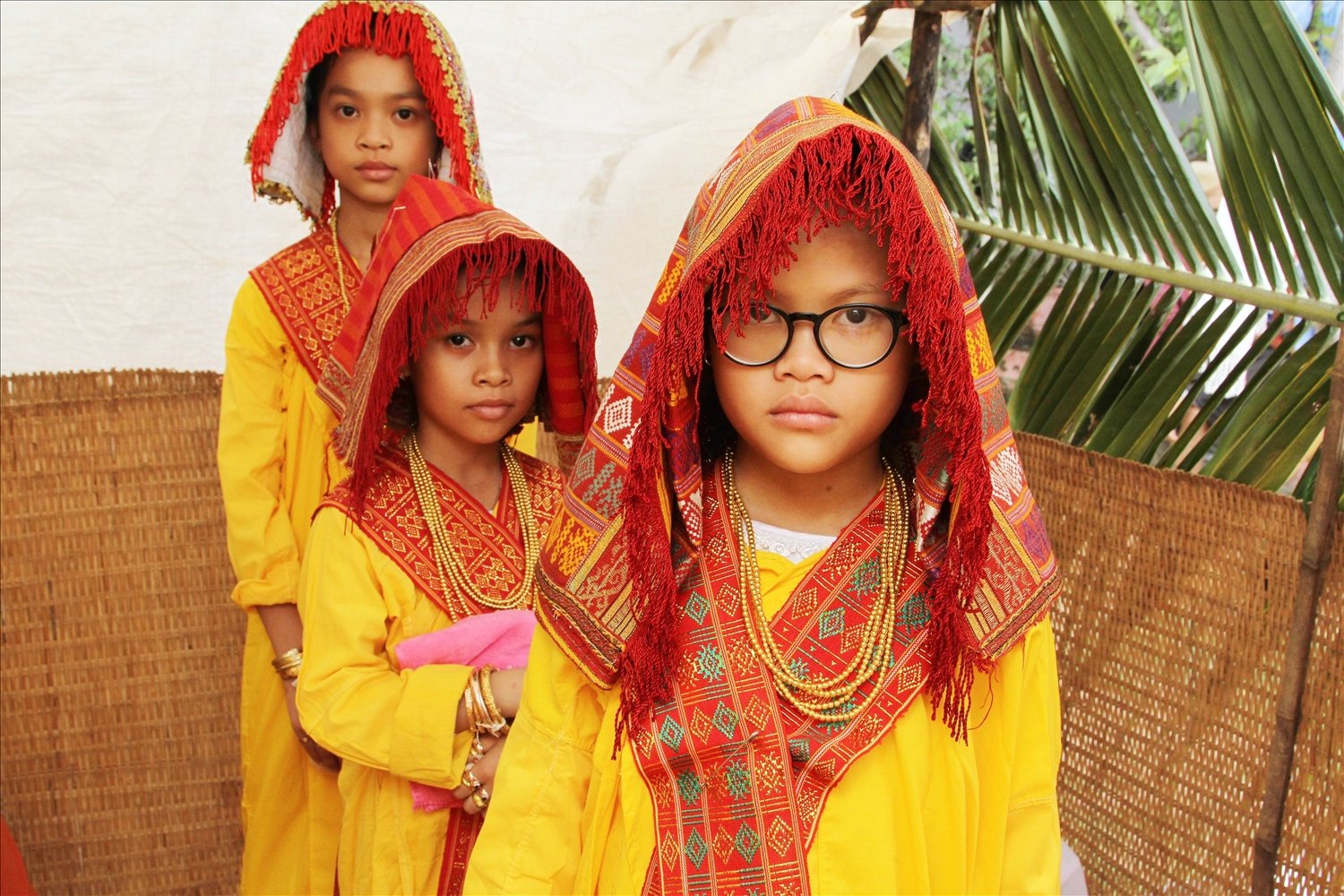
The children, dressed in yellow robes and wearing ceremonial headscarves, prepared to perform the Coming-of-Age Ceremony.
In the spacious courtyard of Ms. Kim Xoan's house, the villagers erected a ceremonial tent covered with canvas, facing south, where the ritual area was draped with brightly colored curtains. Opposite the ceremonial tent was a dressing room where young girls changed their clothes, under the guidance of Mrs. Dao Thi Noi, known as Mrs. Muk Ba, who instructed the girls in performing the rituals.
Before the coming-of-age ceremony, Mrs. Dao Thi Noi takes the girls to bathe and purify them, dresses them in traditional clothing, and adorns them with many gold rings and earrings, symbolizing that girls reaching adulthood are allowed to beautify themselves and enjoy the rights and responsibilities of a Bani Muslim follower. The coming-of-age ceremony includes steps such as purification, makeup, chanting prayers, anointing with fragrant water, haircutting, feeding them salt, offering sacrifices to the spirits, and giving thanks, etc.
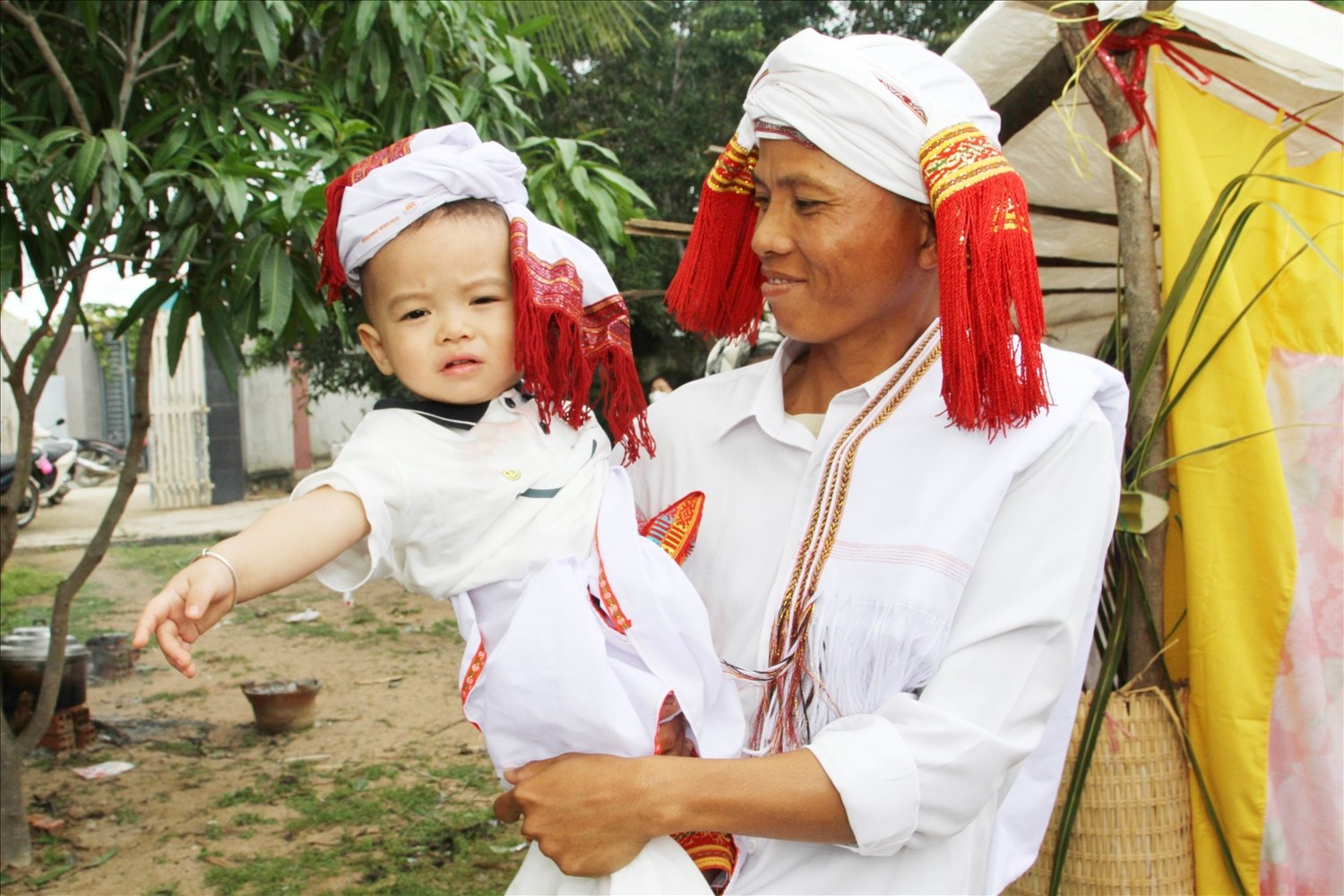
Dao Cong Van, holding his son Dao The Bao, is the "character" witnessing the coming-of-age ceremony for the young women.
According to Senior Monk Dao Bui, Vice Chairman of the Council of Senior Monks of the Cham Bani Muslim community in Ninh Thuan province, abbot of the Bani Muslim mosque in Luong Tri village, and the presiding monk of the coming-of-age ceremony, like other religions, the life cycle beliefs of the Cham Bani Muslim people include the most important rituals: the first month, the first year, coming of age, and the wedding ceremony. Karơh, translated into common Vietnamese, means "mirror," signifying that a girl reaching adulthood knows how to look in the mirror and beautify herself. The coming-of-age ceremony is performed by religious dignitaries within each clan, according to odd numbers of 3, 5, or 7 children. The ceremony is uniformly held on auspicious days, namely Wednesdays and Fridays, and in auspicious months of 3, 6, 8, 10, and 11 according to the Cham calendar. Depending on the economic conditions of the clan and the actual conditions of each village, the ceremony is flexibly adjusted to suit the circumstances. However, according to general regulations, the coming-of-age ceremony must include offerings such as a tray of betel nuts and leaves; The sweet platter includes bananas, sweet rice porridge, and cakes; the savory platter includes goat soup, boiled chicken, braised fish, boiled goat meat, watermelon, and thinly sliced young banana stems with betel leaves...
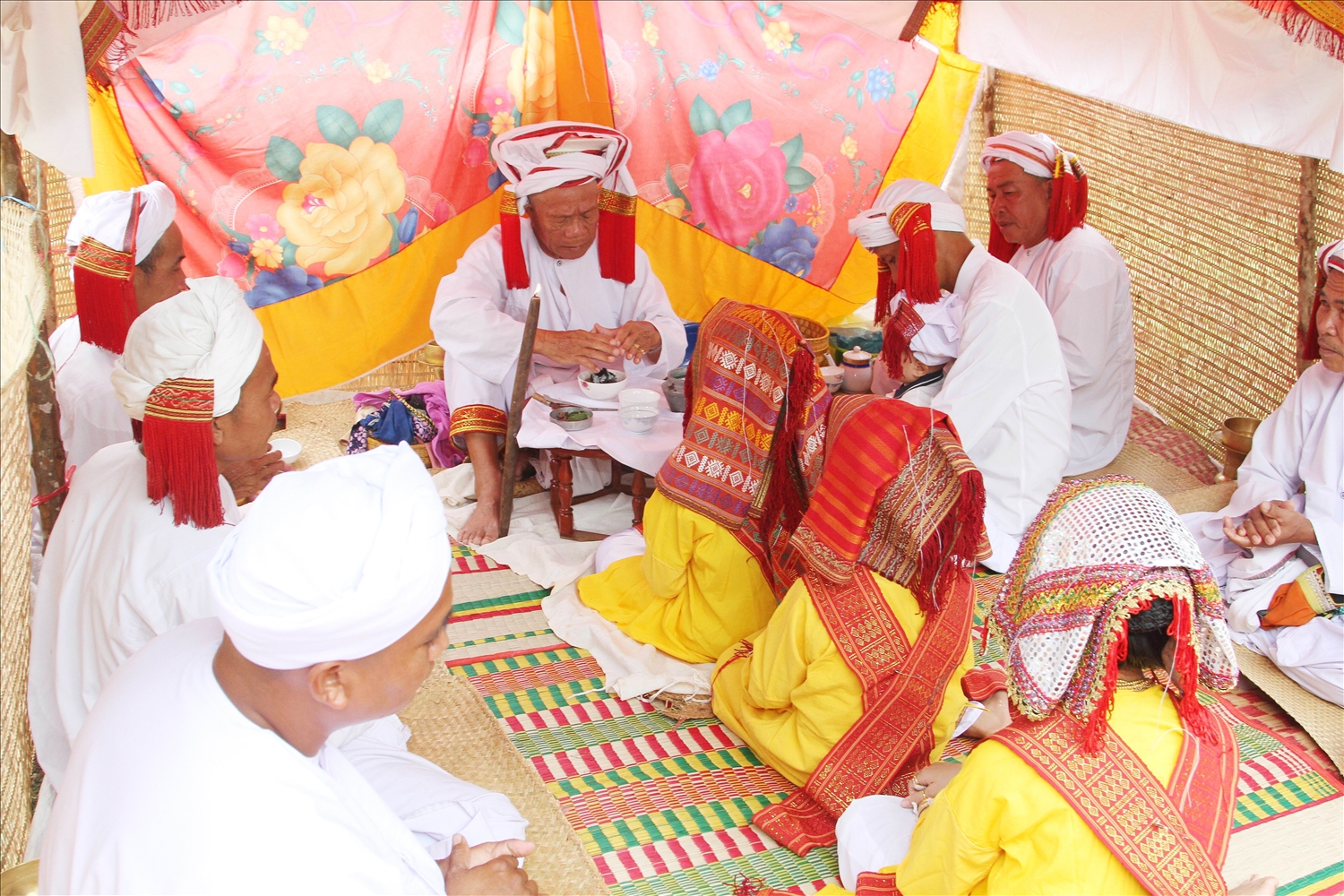
The young woman sits in the ceremonial hall performing the Coming-of-Age Ceremony.
Amidst the fragrant incense smoke and the flickering beeswax candles, Mrs. Muk Ba guided the girls, dressed in traditional attire, from the dressing room to the ceremonial hall, where they knelt before the religious dignitaries. The head monk, Dao Bui, then anointed the girls' foreheads with fragrant water, trimmed their hair from the forehead and temples with scissors, and shaved the sideburns with a ceremonial knife. Afterward, the head monk gave the girls "salt to eat," then spat it into a spittoon. This act of "eating salt" symbolizes the devotees' faith in the divine, their adherence to religious regulations, and their commitment to living virtuous and moral lives.
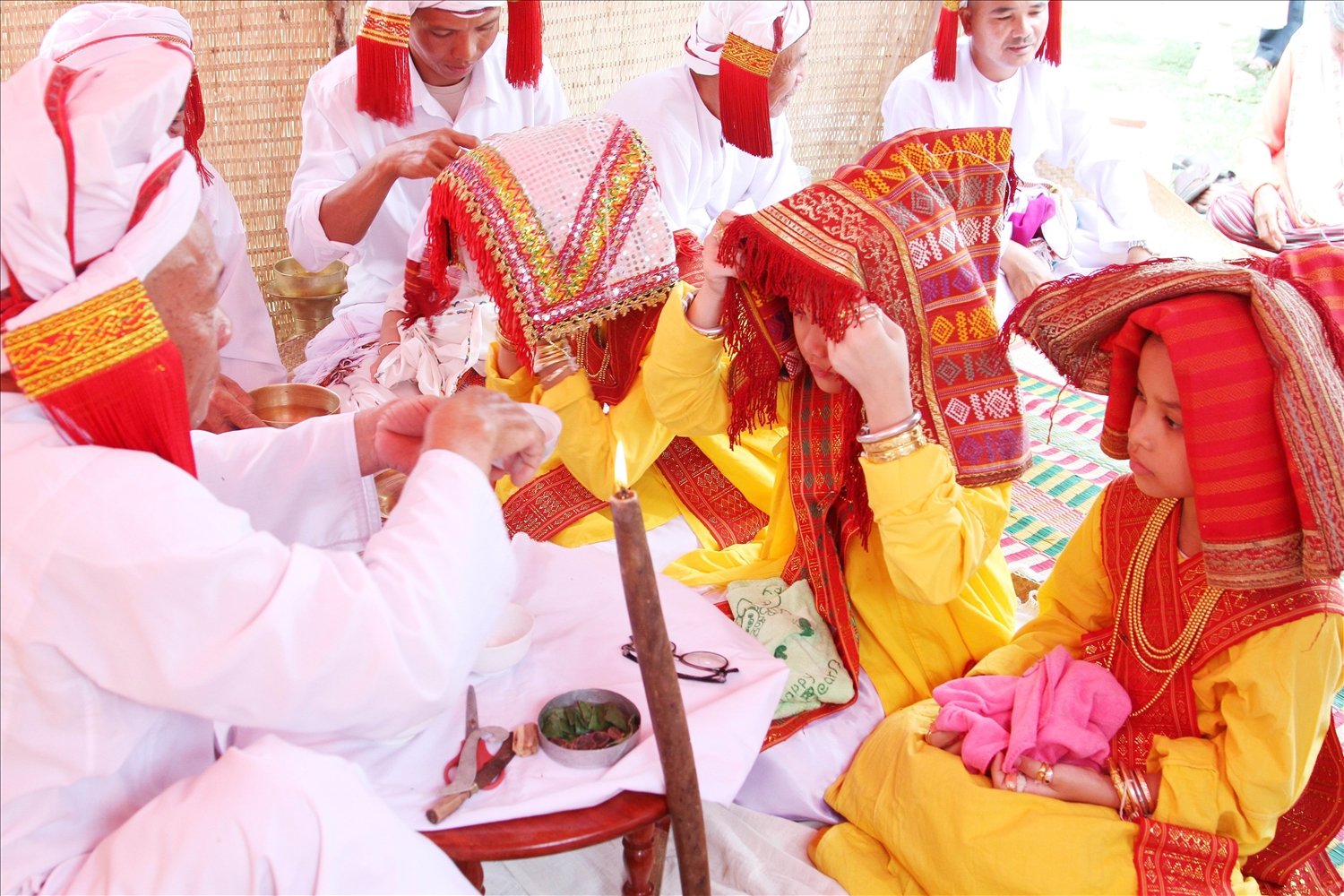
Master Dao Bui used fragrant water to cleanse the young women of their impurities.
After the haircut and the "salt-eating" ritual, the most important part of the ceremony, Mrs. Muk Ba Đạo Thị Nội guides the young girls to the dressing room to change their clothes. Then, they return to the ceremonial hall to pay their respects to the head priest and the Imums, performing the coming-of-age ceremony. Outside the ceremonial hall, the elderly women of the Mành Xi clan offer their congratulations and pray to the supreme being to bless the girls with academic success, to become useful citizens for their families and society, and to actively contribute to building a prosperous and beautiful homeland.
After the ceremony concluded, families held a feast to celebrate the coming-of-age of their children and grandchildren in the Manh Xi clan of Luong Tri village. Ms. Dao Thi Kim Soan, mother of Dao Quynh Thien An, happily shared: “On this auspicious day, my family and clan are delighted to hold a coming-of-age ceremony for our children. This is a very important ritual in the spiritual life of the Cham Muslim Bani people; as they grow older, they can participate in religious beliefs and community activities in the residential area.”
Thai Son Ngoc (Ethnic Groups and Development Newspaper)
Source: https://baophutho.vn/le-truong-thanh-cua-thieu-nu-lang-cham-luong-tri-226160.htm


![[Photo] General Secretary and President To Lam meets with National Assembly delegates from ethnic minorities.](https://vphoto.vietnam.vn/thumb/1200x675/vietnam/resource/IMAGE/2026/04/20/1776696701056_a1-bnd-8331-3342-jpg.webp)
![[Image] National Assembly discusses the implementation of the socio-economic development plan.](https://vphoto.vietnam.vn/thumb/1200x675/vietnam/resource/IMAGE/2026/04/20/1776696707422_ndo_br_img-20260420-185419-jpg.webp)




![[E-Magazine]: Listening in silence to the changing seasons](https://vphoto.vietnam.vn/thumb/402x226/vietnam/resource/IMAGE/2026/04/17/1776436870717_e-magazine-lang-w1200t0-di2615d199d5160004t11920l1-lynkgm-017.webp)








































































Comment (0)