

Ukraine was hit by airstrikes again overnight, sources revealed details of Kyiv's counterattack plan, and the situation at the Zaporizhzhia nuclear power plant following the Kakhovka dam collapse in Kherson are some of the latest developments in the Eastern European country.
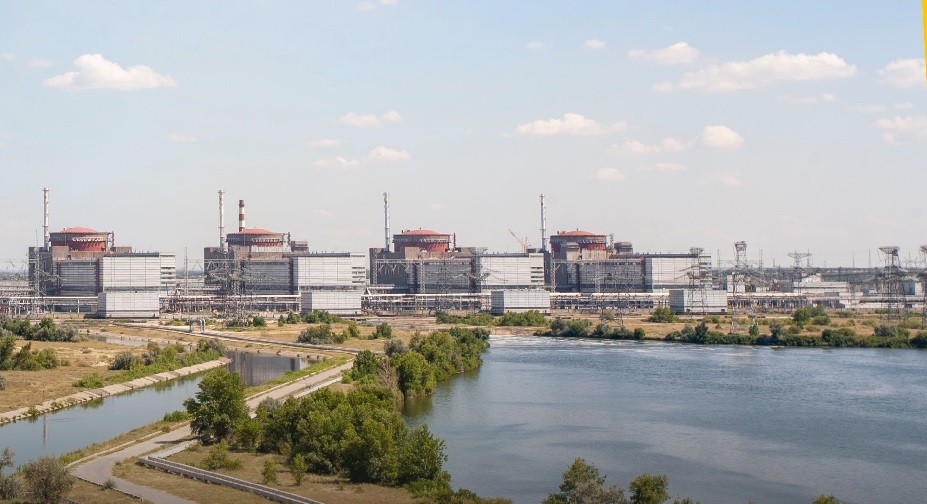 |
| The IAEA has confirmed that the water level supplying the Zaporizhzhia nuclear power plant remains stable despite the Kakhovka dam collapse. (Source: Twitter) |
On June 9th, the Ukrainian Air Force (VSU) issued a statement saying that Russian forces launched 16 unmanned aerial vehicles (UAVs) and 6 cruise missiles in an airstrike last night, of which the VSU shot down 4 cruise missiles and 10 UAVs.
On the same day, the Izvestia newspaper, citing informed sources, revealed details of the VSU's counterattack plan, according to which the Ukrainian army intended to attack from three directions and approach the city of Tokmak in Zaporizhia province.
The Ukrainian army will break through Russia's first line of defense, then attack the strategic port city of Berdyansk in Zaporizhzhia province and possibly the city of Mariupol.
The source said: “The situation remains difficult; although the enemy has suffered losses, they still have sufficient forces and resources to continue the attack. The VSU is continuing to actively probe the defensive forces and trying to find opportunities to continue the assault.”
Earlier, President Volodymyr Zelensky announced that he had approved the counter-offensive schedule, and all important decisions regarding the planned operation had been made.
On the same day, a Japanese government source said that Prime Minister Kishida Fumio was arranging a phone call with President Zelensky that day.
This will be the first discussion between the two leaders since the closing of the Group of Seven (G7) summit, which took place from May 19-21 in Hiroshima, Japan.
Regarding the situation at the Zaporizhzhia Nuclear Power Plant (ZNPP) , the International Atomic Energy Agency (IAEA) stated that the ZNPP is still receiving water from the Kakhovka hydroelectric dam following the dam collapse on June 6th, refuting claims that the Kakhovka reservoir is no longer capable of supplying water to Europe's largest nuclear power plant.
The IAEA statement came after Igor Syrota, CEO of the Kakhovka Ukrhydroenergo dam management company, said that water levels in the reservoir had dropped below a dangerously low 12.7 meters, meaning there would not be enough cooling water for the ZNPP.
The IAEA stated that the ZNPP is continuing to pump water from the Kakhovka reservoir, and so far, numerous reviews indicate that the plant can still pump water from the reservoir even when the water level drops to around 11 meters or possibly lower.
The IAEA noted that the review process also included consulting with experts and those with experience.
According to IAEA Director General Rafael Grossi, in the current difficult situation, this will allow the plant more time before it can switch to an alternative water source.
However, experts remain uncertain about overall nuclear security and safety at the plant, warning that the situation poses potential dangers. The extent of the damage is unclear, as is when and at what level the reservoir water level will stabilize.
Mr. Grossi said that IAEA experts requested access to the area, including the reservoir's water level measurement site, to independently verify the condition of the plant's cooling water supply systems. A team of IAEA experts is currently at the plant.
The Kakhovka hydroelectric dam, which supplies cooling water to the ZNPP, is located about 150 km from the dam. The dam failure is raising concerns about a potential nuclear accident at Europe's largest power plant.
Source




























































































Comment (0)