

Amaranth is a wild vegetable that grows in many places. Although easy to cultivate, amaranth has excellent liver-cooling and heat-reducing properties. In addition, this vegetable is also known as a very effective medicinal herb.
The health benefits of amaranth.
According to an article by Dr. Quang Minh in the Health & Life newspaper, amaranth is a summer vegetable that helps cool the liver and reduce heat in the body. There are many types of amaranth, such as common amaranth, spiny amaranth, and white amaranth. The large-leaved, purplish-red variety is red amaranth, characterized by its succulent stems, quick cooking time, and delicious soup. Red amaranth is rich in protein, carbohydrates, vitamins, and minerals. Its iron content is higher than spinach, and its calcium content is three times higher.
Unlike spiny amaranth and common amaranth, red amaranth has small leaves, about the size of two fingers held together, and both the stem and leaves are purplish-red. When cooked, the broth turns a beautiful bright red.
The benefits of amaranth have been scientifically proven:
Good for bones and joints
Amaranth contains many minerals beneficial to health, especially a high calcium content that few other vegetables can match. According to statistics, amaranth has three times more calcium than spinach and twice as much as milk.
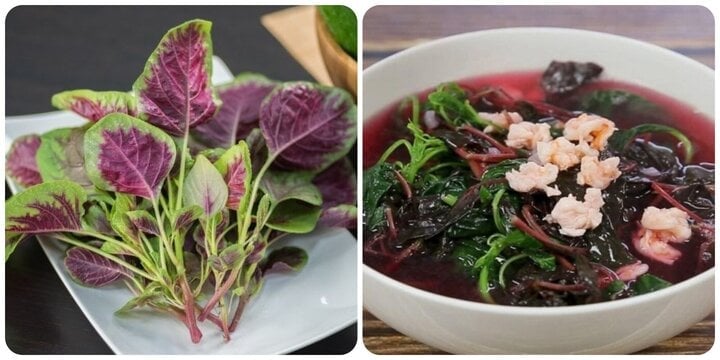
Amaranth has many health benefits.
Therefore, this is one of the superfoods that helps strengthen bones, reducing the risk of osteoporosis and seizures caused by calcium deficiency.
Good for diabetes
Studies show that eating amaranth regularly helps stabilize blood sugar levels, which is very beneficial for patients with type 2 diabetes.
This vegetable also helps reduce the risk of diseases related to high blood sugar levels, such as obesity.
Preventing oral health problems
Amaranth leaves can help reduce oral complications such as pain, swollen gums, sore throat, or mouth ulcers.
Preventing cardiovascular disease
Amaranth also has the ability to lower cholesterol levels in the body. In addition, tocotrienol - a type of vitamin E in this vegetable - helps eliminate bad cholesterol and prevent coronary heart disease.
Improve anemia
Iron deficiency in the body can cause anemia. The abundant iron content in amaranth helps increase hemoglobin and red blood cell counts, which is very beneficial for patients with anemia.
Improve digestion
Amaranth contains a high amount of fiber (three times more than wheat). Therefore, it can help improve digestion and prevent constipation. It is also a very good vegetable for children and the elderly. A decoction made from fresh amaranth leaves can also help treat diarrhea, bleeding, and dehydration.
In addition, along with carrot juice, the cleansing properties of beetroot juice are very effective in treating diseases related to the gallbladder and kidneys.
Some commonly used remedies contain amaranth.
Recipe 1: For a laxative effect: Take a handful of red amaranth leaves, clean and wash them, then boil them for 3 minutes. Remove from the water and mix with sesame oil or black sesame powder. Eating this with rice is very effective. Alternatively, you can cook red amaranth in soup, which is also very effective for constipation.
Recipe 2: Supporting treatment for hypertension: 20g red amaranth, 20g young plantain leaves, 20g young mulberry leaves. Wash all ingredients thoroughly, put them in a pot and cook into a soup, adding seasoning to taste. Consume daily for 10 days as one course of treatment.
Lesson 3: Treating blood heat causing itching and sores: 20g red amaranth, 12g honeysuckle flower, 16g burdock, 16g licorice root. Wash all ingredients thoroughly, put them in a pot, add 750ml of water, and simmer until only 250ml remains. Divide into two doses and drink daily. One course of treatment lasts 10 days.
Lesson 4: Treating dysentery caused by heat: 20g red amaranth, 20g Morus alba leaves, 20g Portulaca oleracea, 16g licorice root. Wash all ingredients thoroughly, put them in a pot, add 500ml of water, and simmer until only 200ml remains. Divide into two doses and drink daily. One course of treatment lasts 10 days. Alternatively, boil red amaranth until cooked through, and eat both the water and the leaves. Eat about 20g daily for several days until cured; you can add Portulaca oleracea.
Lesson 5: Postpartum women with internal heat and constipation: Wash and chop 50g of red amaranth, boil it, strain the liquid, and add glutinous rice to make porridge. Eat throughout the day, for 5 days as a course of treatment.
Lesson 6: Cooling and stimulating digestion: 100g red amaranth, 50g green amaranth, 50g jute leaves, 50g young shoots of *Mảnh cộng* or *Dây đay*; cook with broth powder, shrimp powder, or crab broth.
Note when using amaranth: Amaranth has a cooling effect and is not suitable for people with loose stools and chronic diarrhea, or pregnant women with a weak constitution.
These are the health benefits of amaranth. Remember to include amaranth in your daily meals regularly.
Source































































































Comment (0)