

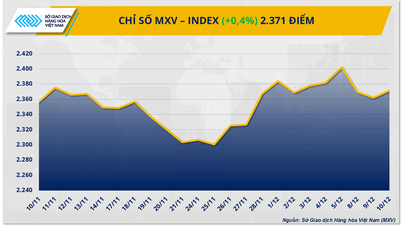
Selling pressure prevailed, dragging the MXV-Index down by more than 2%, to 2,353 points.
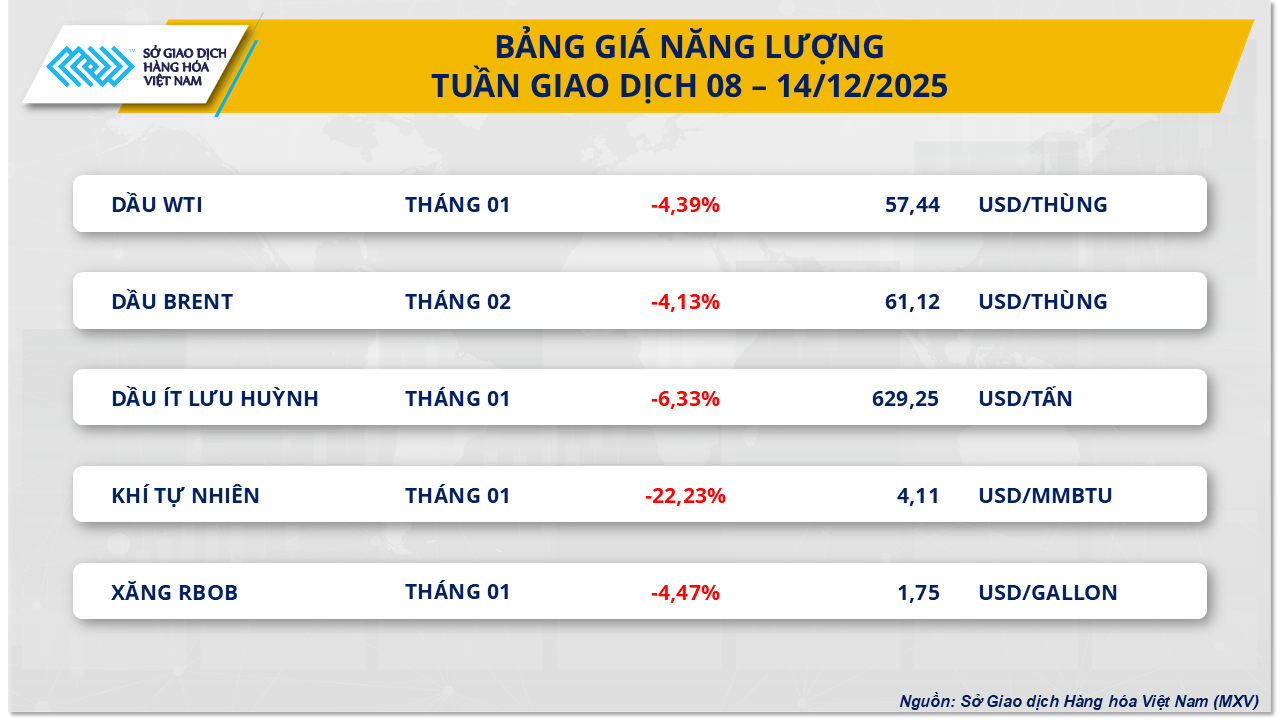
According to the Vietnam Commodity Exchange (MXV), the energy market was deeply in the red last week (December 8-14). Specifically, WTI crude oil prices lost nearly 4.4% compared to the previous week, falling to $57.4 per barrel; Brent crude oil prices also retreated to $61.1 per barrel, a decrease of over 4.1%.
According to MXV, the main reason for the weakening oil prices last week stemmed from growing concerns about oversupply in the global market. The latest reports from the International Energy Agency (IEA), the Organization of Petroleum Exporting Countries (OPEC), and the US Energy Information Agency (EIA) all show an increasingly clear imbalance between supply and demand.
Notably, in its December report, the IEA slightly lowered its forecast for the oil surplus in 2026 to 3.84 million barrels per day, although this level is still equivalent to nearly 4% of global demand, which is considered very high compared to previous periods. The IEA emphasized that supply from outside OPEC+, particularly from the US and the Americas, continues to grow faster than demand growth.
Meanwhile, the EIA further increased pressure by raising its forecast for US crude oil production in 2025 to a record 13.61 million barrels per day, while assessing that oil demand in the US economy will remain virtually flat in 2026.
The prospect of "increasing supply - slowing demand" in the world's largest oil consumer has significantly weakened expectations of a price recovery in the medium term.
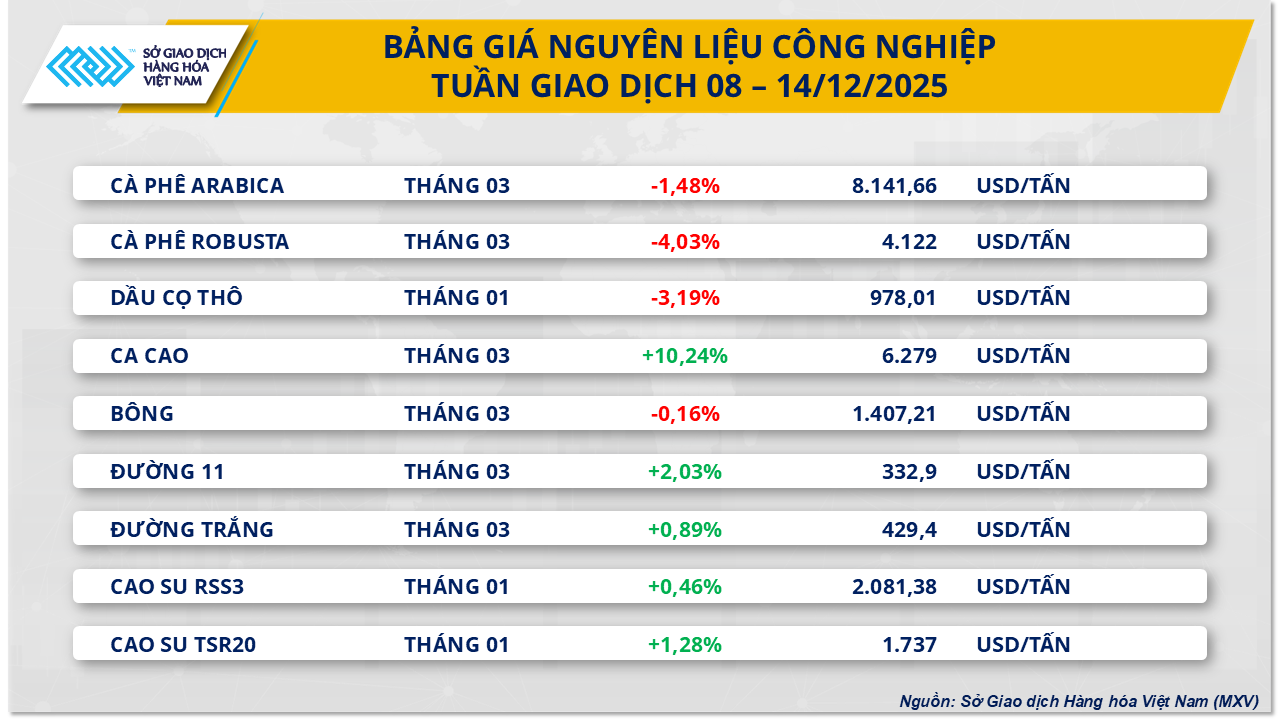
Conversely, the industrial raw materials market last week focused attention on sugar, with white sugar and refined sugar showing positive recovery prices.
At the close of trading on Friday (December 12), raw sugar prices surged 2.03%, reaching $332.9 per ton; white sugar prices also increased by nearly 1%, trading around $429 per ton.
In India, the world's second-largest sugar producer, the sugarcane crushing season has returned to a stable trajectory. Although the crushing rate is being accelerated with expectations of reaching 35 million tons, the country's sugar industry is facing a serious financial paradox: actual production costs far exceed selling prices.
In the domestic market, imported sugar volume reached over 41,000 tons last week, with retail prices remaining high at around 16,600 – 16,800 VND/kg.
Domestic supply is currently in the transition period between seasons, with low inventories of old stock and declining quality, and limited availability of new crop sugar, resulting in relatively quiet market activity.
Source: https://hanoimoi.vn/luc-ban-lan-at-บน-thi-truong-hang-hoa-726859.html




























































































Comment (0)