

The YF-12 fighter jet played a major role in helping NASA engineers overcome the problems of engine stalling and severe vibration when flying at supersonic speeds.
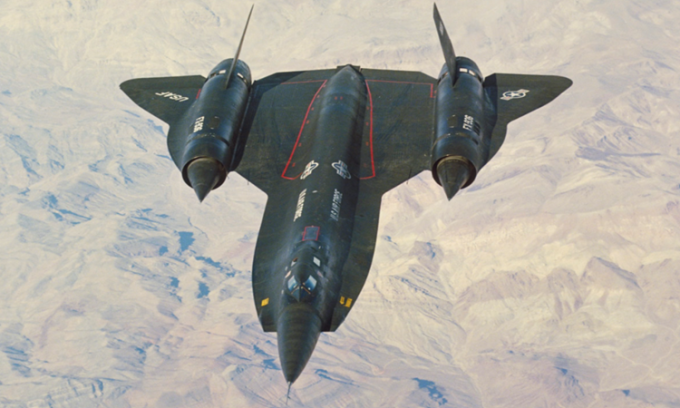
The YF-12 fighter jet can fly at three times the speed of sound. Photo: Wikipedia
NASA's Lewis Research Center in Cleveland once used the YF-12 fighter jet to develop supersonic flight technology, according to Interesting Engineering . This center, which has been a leader in aviation propulsion research since the 1940s, sought to improve technology for longer and faster supersonic flights.
The Bell X-1 rocket-powered aircraft made history in October 1947 as the first aircraft to fly faster than the speed of sound, opening the door to supersonic flight. Many military aircraft after the Bell X-1 achieved supersonic speeds, but none matched Lockheed Martin's Blackbird. The sleek stealth aircraft, including the A-12, the YF-12 interceptor, and the SR-71 reconnaissance aircraft, were among the first to cruise at supersonic speeds for extended periods. They could fly at speeds up to three times the speed of sound at altitudes above 24,384 meters. However, upgrading the technology for large transport aircraft remains a challenge, primarily due to the need for more data revealing how propulsion systems function during supersonic flights.
To address an undetected problem in the design and testing of the Blackbird series, and to advance key technology called supersonic mixed-compression intakes, the military loaned two decommissioned YF-12s to NASA's Dryden (now Armstrong) Flight Research Center. This was part of a collaborative project between NASA and the U.S. Air Force to compare flight data from the YF-12s with data from wind tunnels at NASA's Ames, Langley, and Lewis research centers.
The Lewis team studied supersonic intakes in wind tunnels from the early 1950s and tested supersonic nozzles using Delta Dart interceptors. In the new project, Lewis was in charge of testing the full-size YF-12 intake in a 10 x 10 supersonic wind tunnel and analyzing the Pratt & Whitney J58 engine with 144,567 Newtons of thrust at the Propulsion Systems Laboratory (PSL).
The combined intake port allows the engine to operate as a turbofan jet at low speeds and a straight-flow jet at high speeds, which is highly efficient but susceptible to flow turbulence, often resulting in what are called "unstarts". An unstart is a sudden change in airflow, creating enormous drag that can cause the engine to stall or the aircraft to shake violently.
Researchers at Lewis examined an intake from a crashed SR-71 in a 10 x 10 wind tunnel in November 1971. The following year, they collected aerodynamic data under varying conditions in the wind tunnel. They also tested a new intake control system developed by Lewis engineers Bobby Sanders and Glenn Mitchell, which used multiple mechanical valves to prevent unstarting. This was the first time the system had been tested on full-scale hardware. The research team also examined the interaction between the airframe, intake, engines, and control system under normal and turbulent conditions.
In the summer of 1973, a full-size J-58 engine became the first piece of hardware to be tested in the second PSL pressure chamber at Lewis. Researchers collected data under normal and variable conditions the following year. The PSL tests also measured engine emissions in an effort to assess emissions at the high altitudes of supersonic flight.
The YF-12 program also demonstrated that small-scale models could be used to design full-size supersonic intakes. Flight data was used to better understand the influence of the small-scale model and tunnel on the data. Most importantly, the Lewis program led to the development of digital control systems that improved the supersonic intake's response to flow turbulence, virtually eliminating engine restarts. Many of the program's ideas were applied to the SR-71 design in the early 1980s and contributed to NASA's efforts to create a supersonic passenger aircraft for several decades.
The YF-12 program ended in 1979 when NASA shifted its focus to other aerospace priorities. By then, the YF-12 aircraft had flown nearly 300 research flights, completing a year of ground testing in NASA's wind tunnel.
An Khang (According to Interesting Engineering )
Source link
















































































Comment (0)