

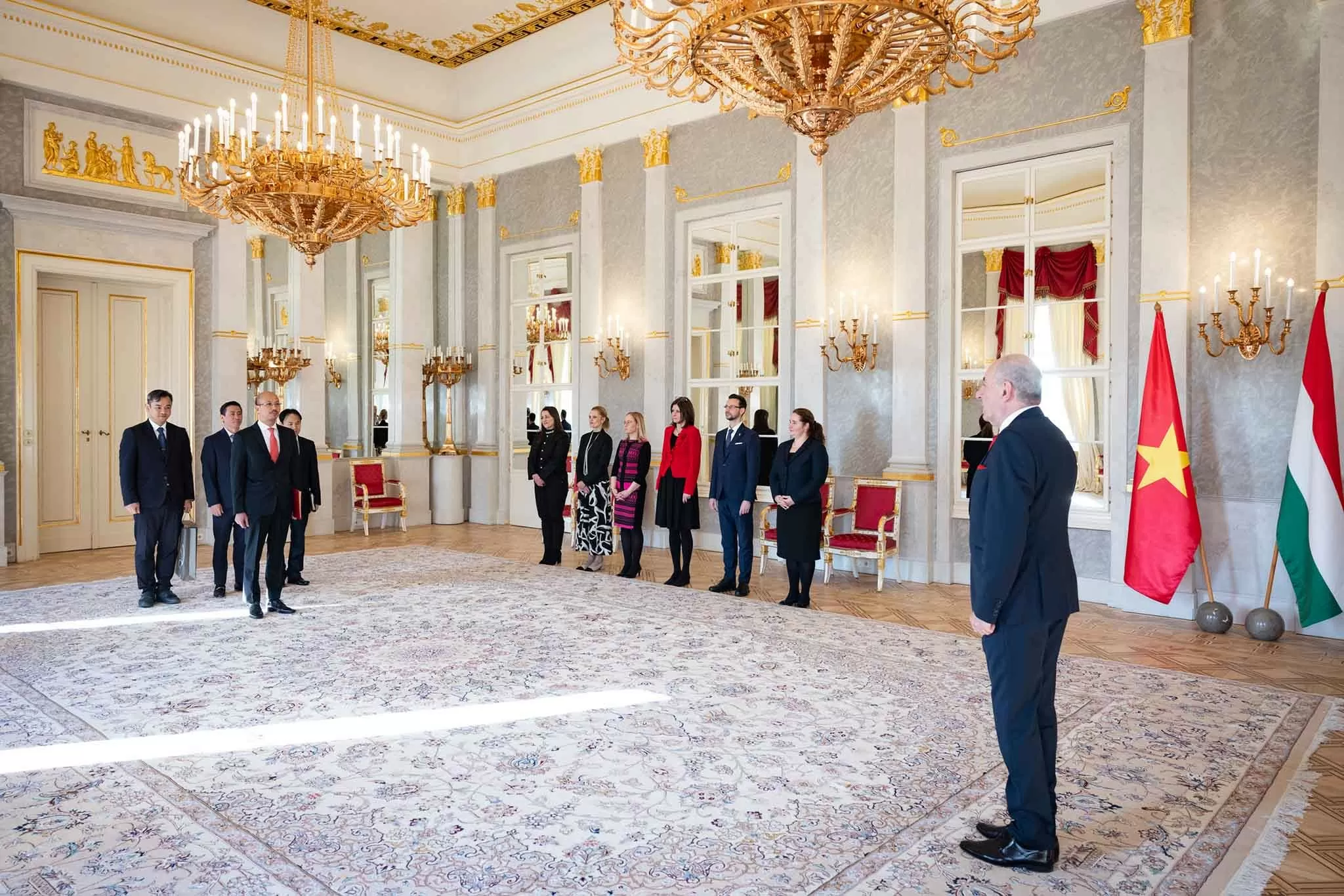
 |
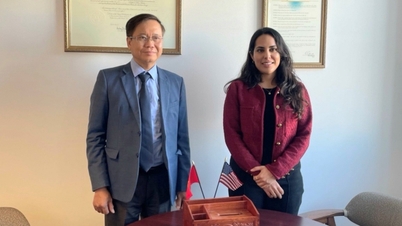
| Ambassador Extraordinary and Plenipotentiary of the Socialist Republic of Vietnam to Hungary, Bui Le Thai, presents his credentials to Hungarian President Sulyok Tamás on January 14, 2025. (Source: Vietnamese Embassy in Hungary) |
Immediately after the Lunar New Year in 2000, I unexpectedly received a phone call from the French Ambassador in Hanoi, Mr. Serge Degallaix. Mr. Degallaix informed me that the French President wished to invite the General Secretary of the Communist Party of Vietnam, Le Kha Phieu, to pay an official visit to France. I immediately reported the matter to my superiors, and shortly thereafter, the Politburo decided that General Secretary Le Kha Phieu would make the historic visit to the French Republic.
A turning point that sets a precedent.
The visit marked a major turning point not only in bilateral relations between Vietnam and France, but also held strategic significance in Vietnam's process of international integration. For the first time, a General Secretary of the Communist Party of Vietnam paid an official visit to a Western European capitalist country. Organizing this visit was no simple task, particularly in terms of protocol. French protocol had no specific regulations for receiving a General Secretary of the Communist Party – a position not considered a head of state or leader of government in the Western sense.
I was assigned to the advance team to Paris to discuss specific issues related to the visit with the French side: talks, meetings, the content of the Joint Declaration, protocol, logistics, etc. These meetings were lengthy and often tense because there was a gap between the two sides regarding their understanding and approach to the draft Joint Declaration, and especially regarding the protocol for welcoming our General Secretary. Since French law does not have regulations on the protocol for welcoming the General Secretary of a foreign political party, this was the most difficult negotiation point. Our side requested that France grant the General Secretary the highest level of reception reserved for heads of state, as he was the head of state and visiting France at the invitation of French President Jacques Chirac.
At the end of each workday, the advance team would meet and report to the head of the delegation, Comrade Nguyen Van Son, a member of the Central Committee of the Party and Head of the Central Committee's Foreign Affairs Department. Upon hearing the report on the difficulties in negotiating the reception protocol, Comrade Nguyen Van Son said something that resonates with me to this day: "What you say is your business. We have our own opinions. We must continue the struggle." This was a skillful application of Ho Chi Minh's thought in diplomatic negotiations: "maintaining constancy while adapting to change"—firm in principle, but flexible and shrewd in strategy. Later, this saying became a guiding principle throughout my career in foreign affairs.
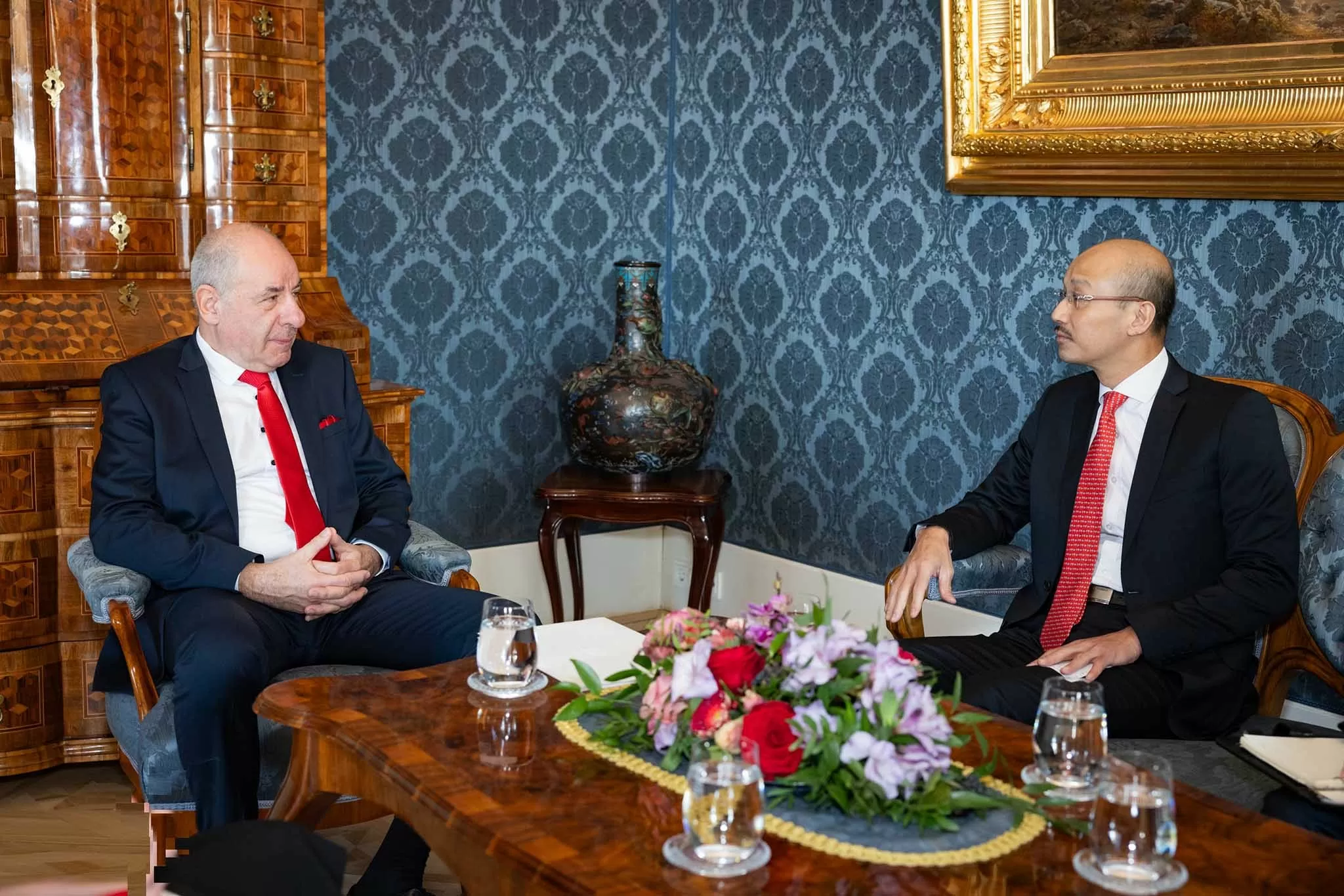 |
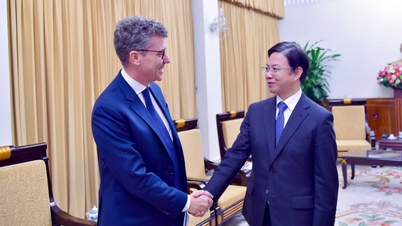
| Hungarian President Sulyok Tamás cordially received Ambassador Bui Le Thai. (Source: Vietnamese Embassy in Hungary) |
"Just tell me what you need."
After much negotiation, persuasion, and even struggle, the French side only acknowledged our requests regarding the reception ceremony and would report them to President Jacques Chirac. Being quite knowledgeable about the French administrative system, I reported this to the then Vietnamese Ambassador to France, Comrade Nguyen Manh Dung, and suggested that he try to approach and lobby President Chirac's foreign affairs advisor to support our requests. Fortunately, we had a "channel" to contact the French President's foreign affairs advisor, and he even arranged for our Ambassador to meet President Jacques Chirac – a rare occurrence for an Ambassador in France at that time.
During the meeting, President Chirac said to Ambassador Nguyen Manh Dung in a very friendly tone: "For our Vietnamese friends, just tell us what you need!" Thus, the most difficult issue regarding the reception protocol was resolved thanks to the personal relationship with the President's foreign affairs advisor. The French side agreed to reserve the state-level reception protocol for General Secretary Le Kha Phieu. This was a show of respect not only for General Secretary Le Kha Phieu personally but also an acknowledgment of the leadership role of the Communist Party of Vietnam.
Following that historic visit, organizing delegations led by the General Secretary to visit countries around the world has become smoother in terms of reception protocol, thanks to the precedent set by France. In 2015, General Secretary Nguyen Phu Trong made another historic visit to the United States, holding talks with President Barack Obama in the Oval Office of the White House. This was the second important milestone marking the recognition by countries around the world, including the United States, of the leadership role of the Communist Party of Vietnam and its General Secretary. Since then, organizing delegations led by the General Secretary to visit other countries has no longer encountered difficulties regarding reception protocol; countries have given the General Secretary the same reception protocol reserved for heads of state, and even implemented special diplomatic measures.
Some reflections
Firstly, Comrade Nguyen Van Son's simple yet insightful statement – "What you say is your business, I have my own opinion" – has become a profound lesson for those working in foreign affairs. Behind this lies the skillful application of the principle of "maintaining constancy while adapting to change" in Ho Chi Minh's diplomatic thought: steadfastly upholding principles while always acting flexibly, wisely, and intelligently in the face of countless practical situations.
Secondly, diplomacy is not just dialogue between nations, but also a connection between people. Building and nurturing personal relationships with politicians, leaders, senior advisors, etc., is sometimes the key to resolving seemingly insurmountable impasses. In the world of diplomacy, personal relationships can create strategic breakthroughs. Behind the handshakes, the formal ceremonies, and the signed documents lies the silent dedication, passion, and wisdom of those involved in foreign affairs.
I recount this story not only as a memorable anecdote, but also as a heartfelt message to young people entering the diplomatic profession: that in diplomacy, every decision, every action, even a single word, can carry the weight of national responsibility. Diplomacy, like life, is a journey of connections. Cultivating sincere and trustworthy personal relationships is sometimes the "opening" in seemingly hopeless situations. And sometimes, just one well-timed, well-chosen word in the right context can become a guiding principle for a lifetime of professional work.
Source: https://baoquocte.vn/mot-bai-hoc-ve-di-bat-bien-ung-van-bien-323475.html

![[Photo] Closing Ceremony of the 10th Session of the 15th National Assembly](/_next/image?url=https%3A%2F%2Fvphoto.vietnam.vn%2Fthumb%2F1200x675%2Fvietnam%2Fresource%2FIMAGE%2F2025%2F12%2F11%2F1765448959967_image-1437-jpg.webp&w=3840&q=75)



![[Photo] Prime Minister Pham Minh Chinh holds a phone call with the CEO of Russia's Rosatom Corporation.](/_next/image?url=https%3A%2F%2Fvphoto.vietnam.vn%2Fthumb%2F1200x675%2Fvietnam%2Fresource%2FIMAGE%2F2025%2F12%2F11%2F1765464552365_dsc-5295-jpg.webp&w=3840&q=75)




























![[OFFICIAL] MISA GROUP ANNOUNCES ITS PIONEERING BRAND POSITIONING IN BUILDING AGENTIC AI FOR BUSINESSES, HOUSEHOLDS, AND THE GOVERNMENT](https://vphoto.vietnam.vn/thumb/402x226/vietnam/resource/IMAGE/2025/12/11/1765444754256_agentic-ai_postfb-scaled.png)




































Comment (0)