

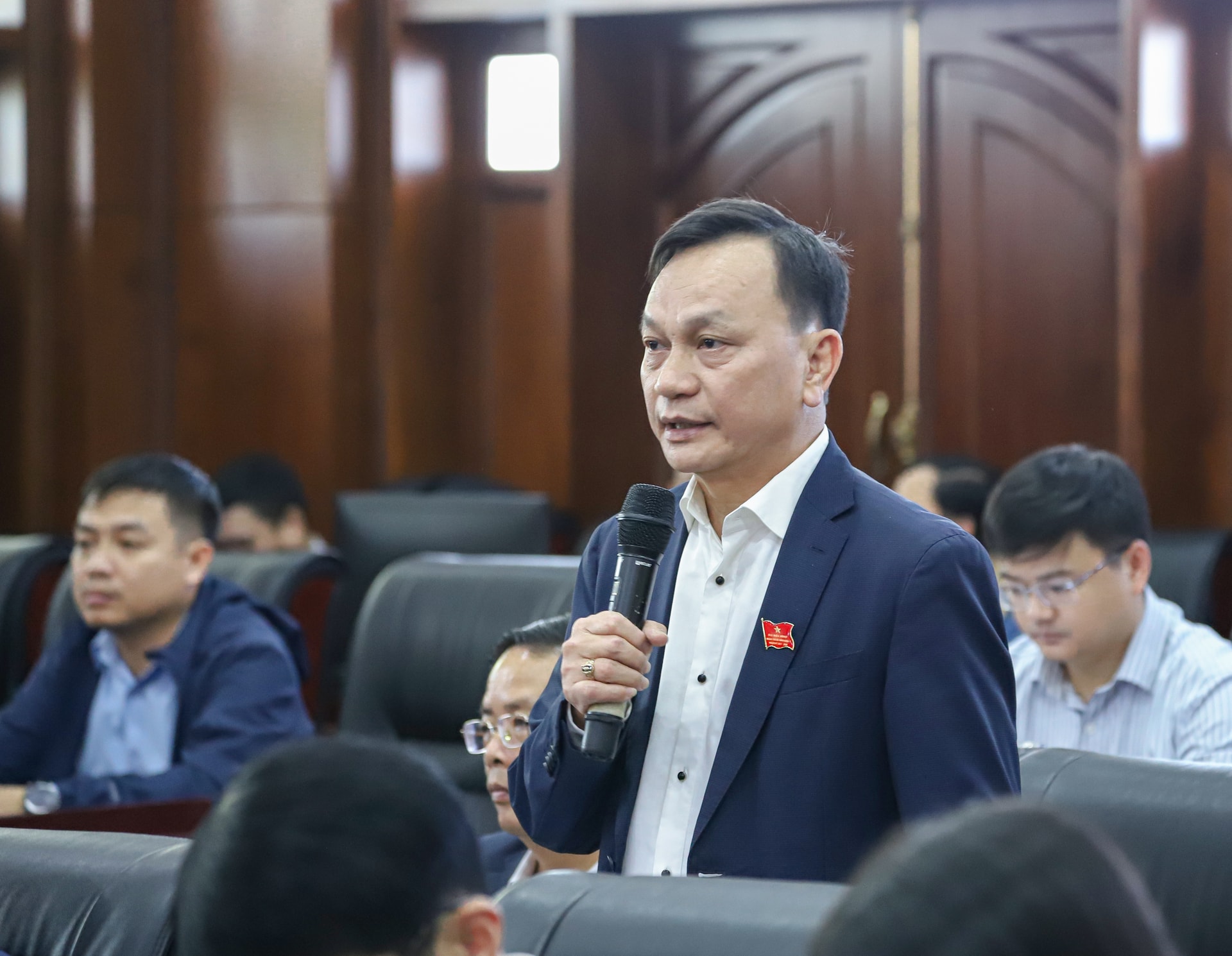
During the discussion, delegates not only assessed the situation but also focused on offering suggestions and proposing fundamental solutions to definitively address bottlenecks, aiming to achieve double-digit GRDP growth for Da Nang next year. Three key issues were thoroughly examined: administrative procedure reform, resolving material supply issues, and land price adjustments.
We need a mechanism for businesses to receive feedback within 72 hours.
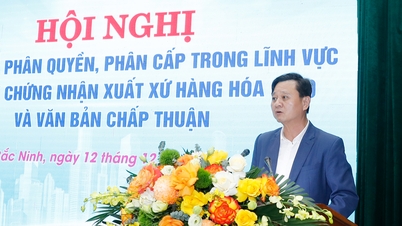
Opening the discussion with the perspective of an insider, delegate Nguyen Thanh Phuc, Deputy General Director of Heineken Vietnam Beer and Beverage Company Limited, presented an analysis of the role of the business community in the economy , especially in promoting GRDP growth.
Representative Phuc argued that for the city's economy to be "healthy," the prerequisite is a smooth flow of business, "ensuring businesses are not hampered at any stage." In particular, to ensure the smooth operation of the merged apparatus in 2026, the representative suggested that the city should immediately organize retraining programs for its staff based on the principle of "one spirit - one process - one way of working."
Mr. Phuc suggested that the city needs to further strengthen decentralization and delegation of power, ensuring that management decisions are issued quickly, reach the grassroots level quickly, and get to businesses as quickly as possible. To concretize this solution, the representative proposed establishing a mechanism to commit to responding within 72 hours to all legitimate business requests. This is seen as a concrete measure of efforts to improve the investment environment, aiming to completely end the situation of "processing documents endlessly" that wastes business opportunities.
In addition, Representative Phuc also proposed the establishment of special task forces to quickly address hotspots such as land issues, investment, fire safety, and environmental impact assessment; and suggested the need for more transparent and fair policies towards FDI enterprises that are making significant contributions to the city.
Solving the bottleneck of construction material shortages.
Turning to the field of public investment, a major "bottleneck" that has slowed down disbursement progress recently is the shortage of common construction materials.
Representative Le Van Dung, Deputy Head of the Urban Affairs Committee of the City People's Council, commented: The localized shortage of sand, soil, and fill stone is causing mounting difficulties for investors, project management boards, and construction contractors in the area.
Warning about the risk of construction disruptions, impact on project quality, and prolonged project implementation time if solutions are not implemented soon, delegate Le Van Dung proposed several key solutions. Regarding planning and licensing, he suggested that the city urgently review and adjust the material exploitation plan, adding potential mines to the plan to ensure a balance between supply and demand locally.
Notably, Representative Dung suggested that the review and licensing of mineral exploitation for common building materials should be carried out with the same speed and decisiveness as the "Quang Trung Campaign" directed by the Prime Minister in repairing houses for people affected by natural disasters. At the same time, market management needs to be tightened to strictly deal with acts of speculation, profiteering, and hoarding to drive up prices.
Looking at the longer term, the Deputy Head of the Urban Planning Department emphasized the importance of regional linkages. Establishing a mechanism for coordinating and sharing resources between Da Nang and neighboring localities will not only help supplement the supply shortage but also reduce price pressure on the domestic market, creating conditions for key projects to maintain their committed schedules.
Consider land prices and the investment environment.
The debate in the National Assembly heated up during the discussion session with the proposal on the new land price framework. This issue directly impacts the "wallets" of citizens and the input costs of businesses.
Participating in the discussion, City Chief Inspector Tran Thang Loi affirmed the necessity of issuing new land prices to comply with the 2024 Land Law. However, he expressed concern about the rather rushed preparation process.
Representative Lợi argued that with more time, the relevant authorities would conduct a more thorough assessment of the impact on social life, investment attraction, and non-agricultural taxes, thereby creating a more balanced price list. Based on this, the representative suggested maintaining current price levels in most areas, only considering localized adjustments in places with significant discrepancies, and carefully reviewing the new price list to ensure it brings about genuinely positive impacts.
Concluding the discussion session, Chairman of the City People's Council Nguyen Duc Dung acknowledged and highly appreciated the sense of responsibility and practicality in the opinions of the delegates. The Chairman affirmed that these contents had been accepted by the City People's Committee; and requested that the City People's Committee and relevant departments and agencies continue to uphold their responsibilities, concretize the proposals into actions in their leadership and management, and strive to build Da Nang into a developed city worthy of the people's expectations.
Sharing the same view, delegate Vu Quang Hung, Head of the Management Board of Da Nang High-Tech Park and Industrial Zones, suggested that "land prices should not be increased at this time," especially for production land.
Citing specific data, Representative Hung pointed out that in 2025, the city adjusted land price tables twice. According to the latest proposals (numbers 288 and 294), the proposed rates for the next period are expected to increase by an average of about 30%, with some areas seeing increases of up to 69%. According to the representative, this is an excessively large increase, creating a cost shock for businesses at a time when Da Nang needs to recover and make breakthroughs after the merger.
Representative Vu Quang Hung analyzed: While the city's industrial-logistics-free trade zone ecosystem is still in the process of being completed, the rapid increase in land prices will inadvertently create more barriers to attracting investment. "We may gain some short-term revenue from increased land prices, but if this leads to the loss of strategic investors, the city will lose much more: jobs for citizens, sustainable revenue from corporate taxes, growth momentum, and most importantly, its competitive position in the region," Representative Hung emphasized.
Based on the above analysis, the message conveyed by the delegates is that the city needs to steadfastly pursue the goal of "Improving the quality of the investment environment instead of raising land prices." Prioritizing infrastructure completion, creating clean land funds, and providing one-stop public services on-site are fundamental solutions to retain investors, thereby ensuring Da Nang's future growth capacity.
Source: https://baodanang.vn/hien-ke-go-diem-nghen-de-dat-muc-tang-truong-2-con-so-3314587.html
















![[Photo] Prime Minister Pham Minh Chinh holds a phone call with the CEO of Russia's Rosatom Corporation.](/_next/image?url=https%3A%2F%2Fvphoto.vietnam.vn%2Fthumb%2F1200x675%2Fvietnam%2Fresource%2FIMAGE%2F2025%2F12%2F11%2F1765464552365_dsc-5295-jpg.webp&w=3840&q=75)










































Comment (0)