

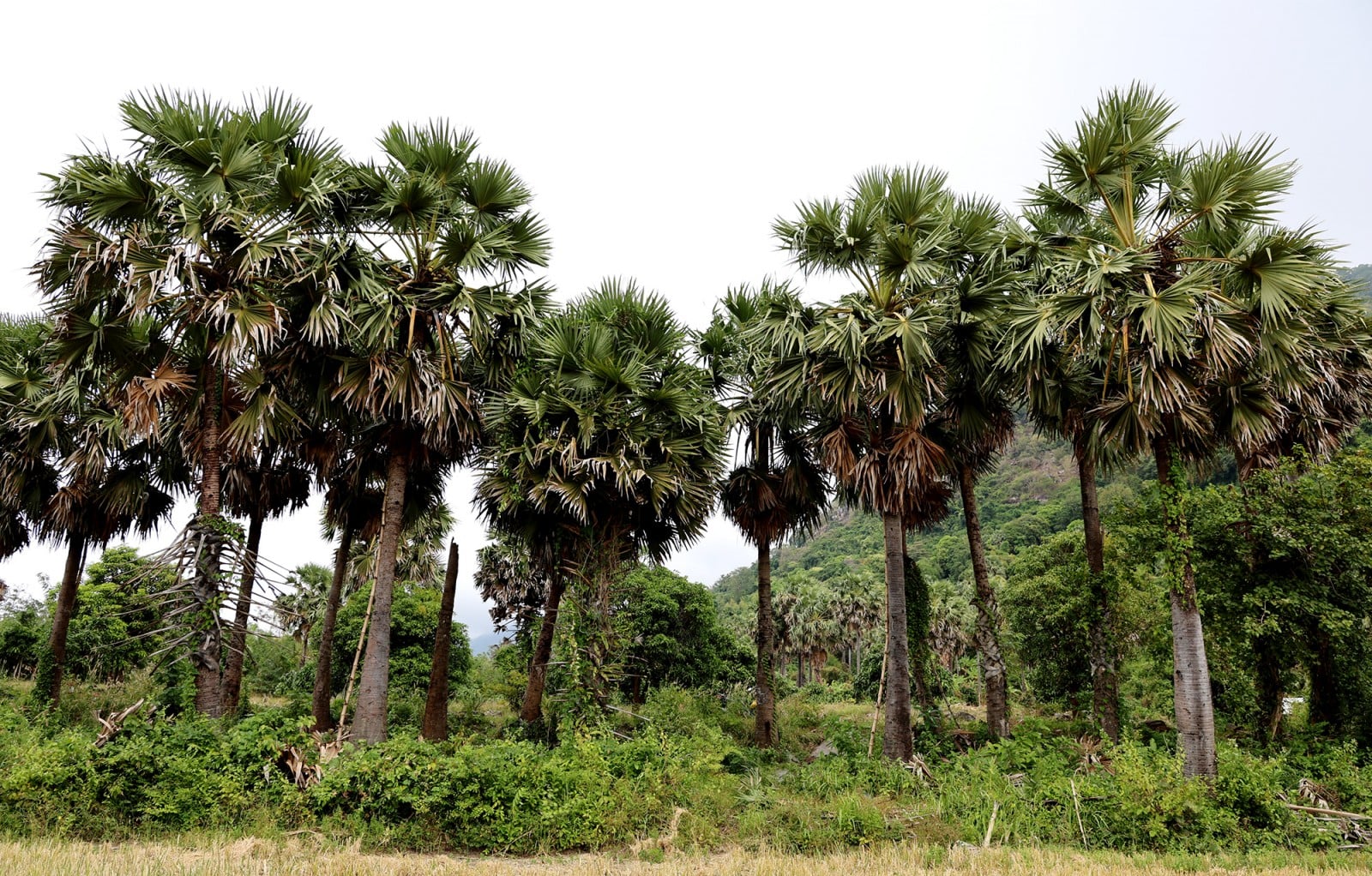
The palmyra palm season begins from the tenth lunar month onwards.
These days, along the road in Ta Lot hamlet, near the foot of Mount Cam (bordering Tri Ton and Nui Cam communes), you can easily spot people harvesting palm sugar. In the distance, small makeshift huts have been erected by locals for making sugar. The palm sugar making season is beginning.
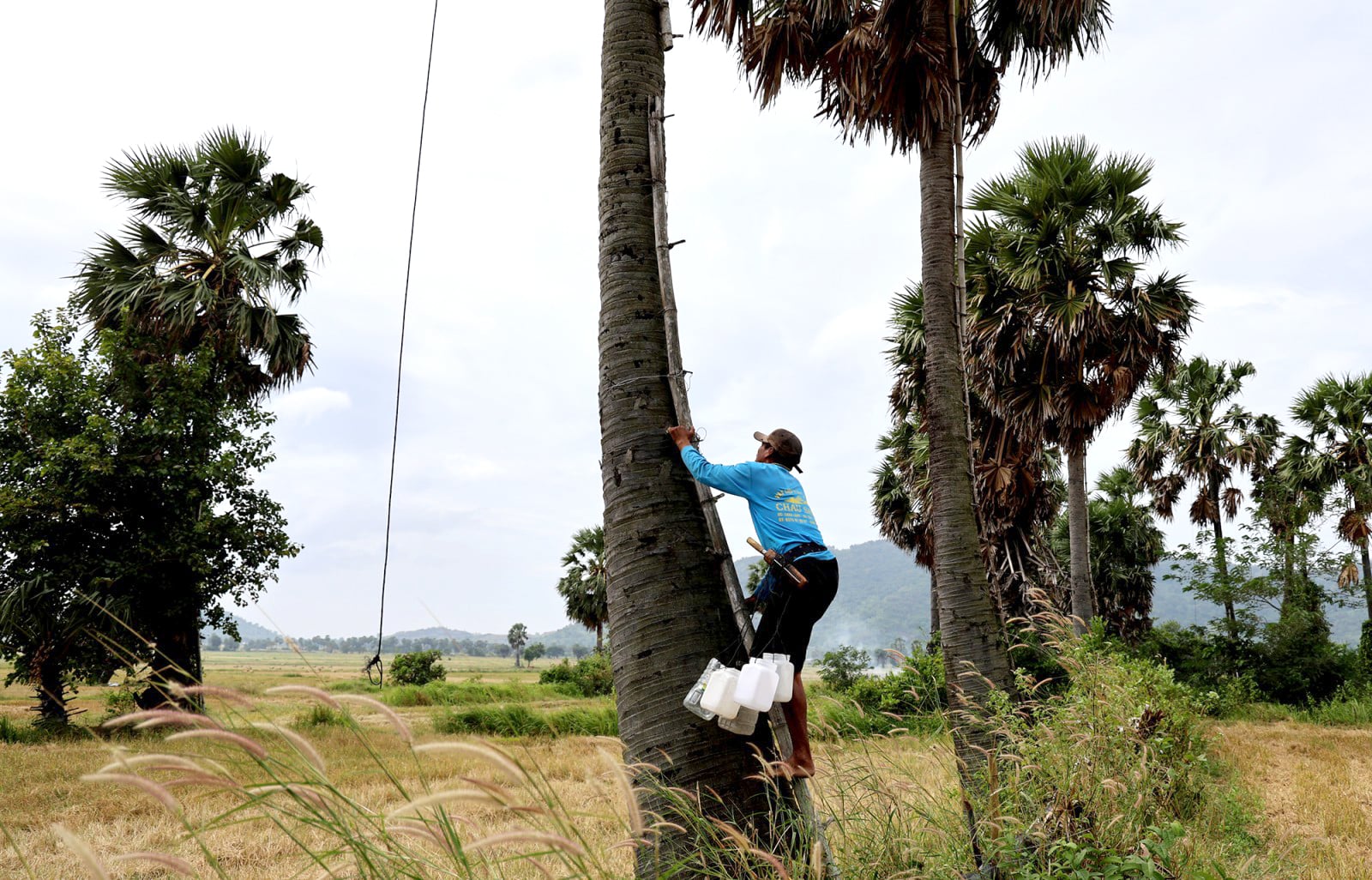
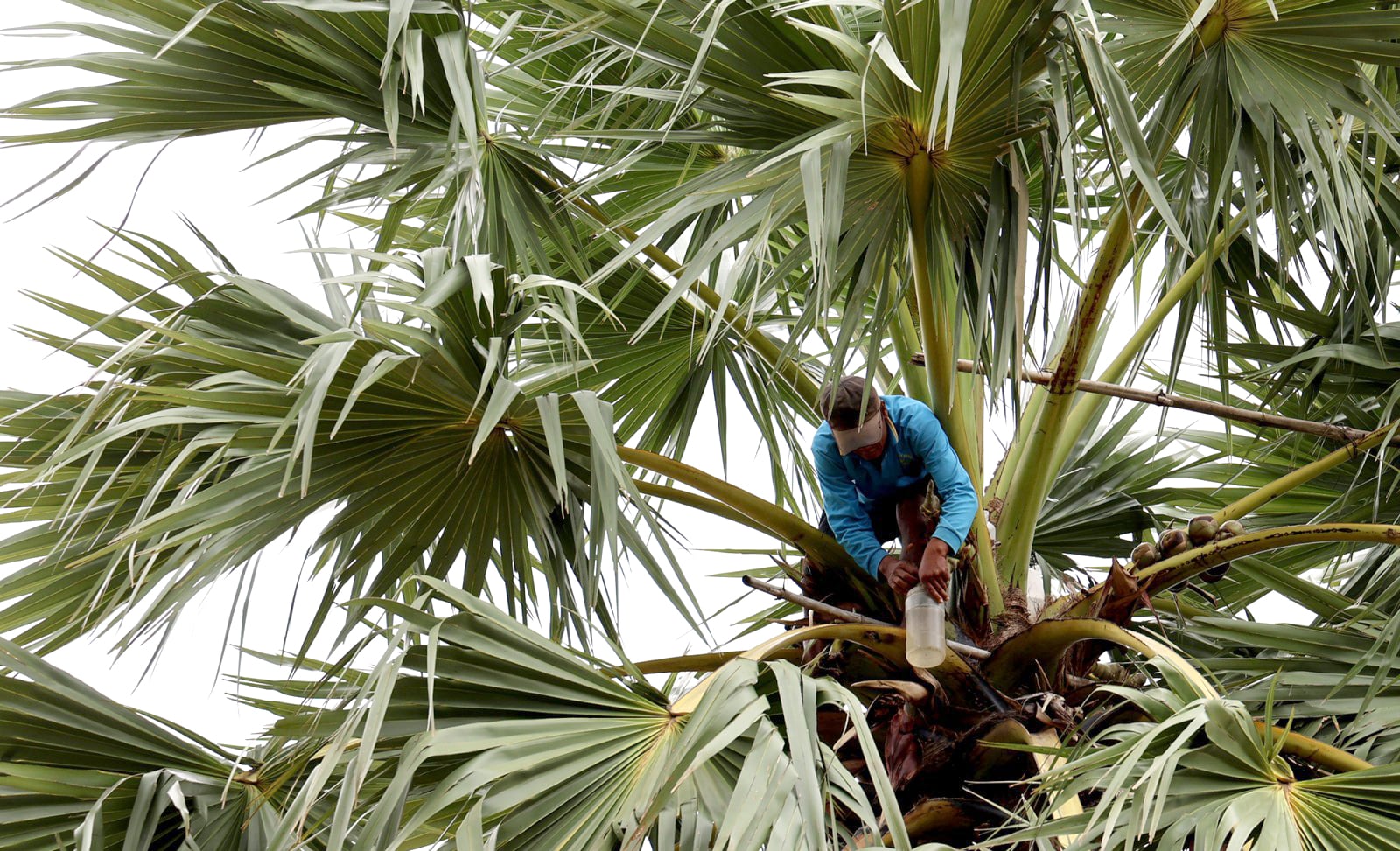
Harvesting palm sap is a difficult and dangerous job.
We met Mr. Chau Sanh (from Tri Ton commune) atop a palm tree, his hands nimbly cutting each palm flower to extract the sap for making sugar. To obtain this sap, he starts climbing the palm trees early in the morning, carefully bringing down containers of water he had stored the day before. The work is repetitive, so he spends almost the entire day "up in the tree."
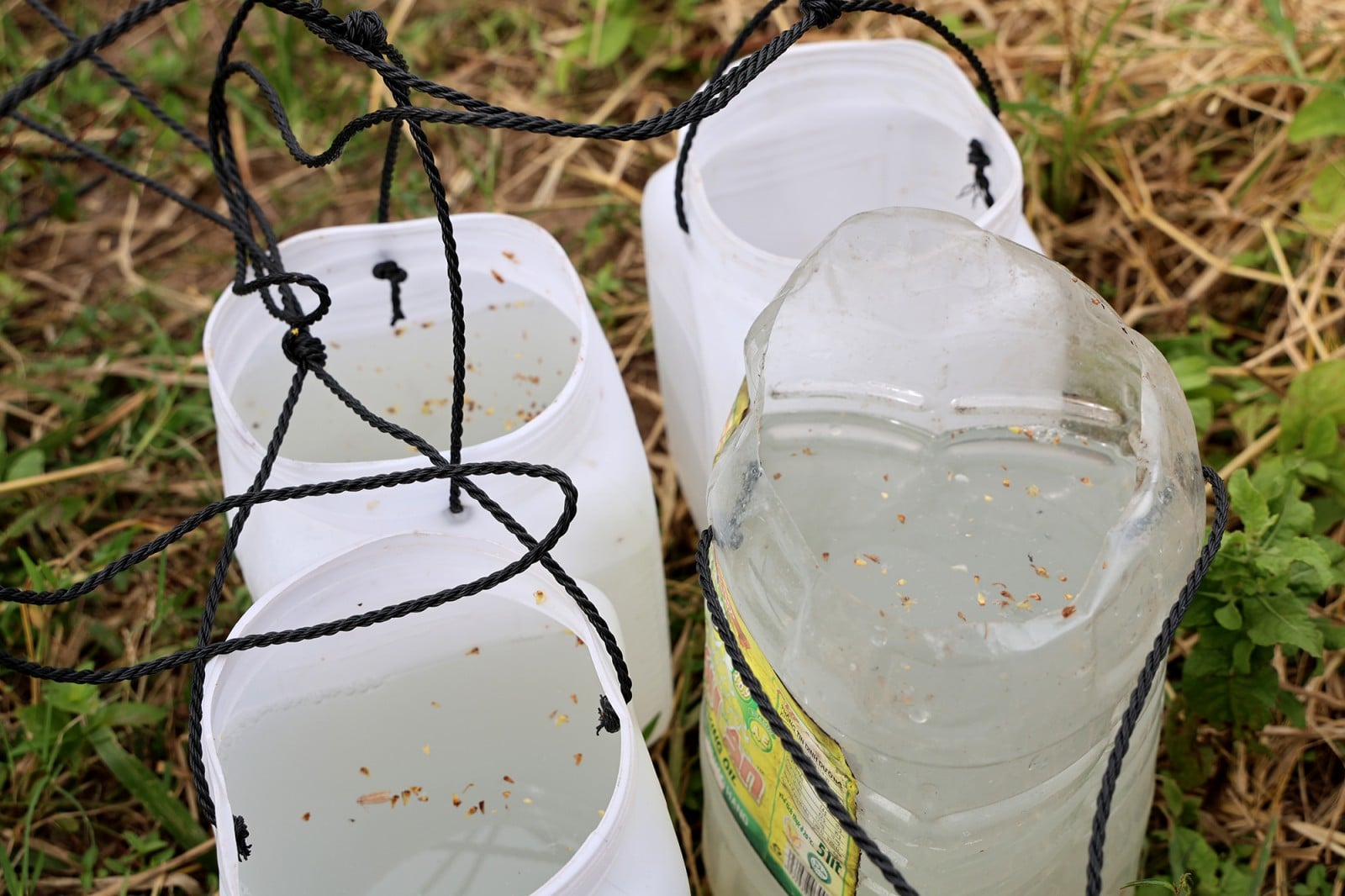
Palm sap after harvesting
Chau Sanh said that his family owns about 100 palm trees (both family-owned and rented). Each day, he climbs about 30 trees, and the sap he collects yields about 20-30 kg of sugar. "Climbing palm trees to collect sap is very dangerous; some trees are up to 15 meters high, and even a small mistake can be fatal. Palm trees have the characteristic that the hotter the weather, the more sap they produce, and the sweeter the sap, resulting in better quality sugar," Chau Sanh shared.
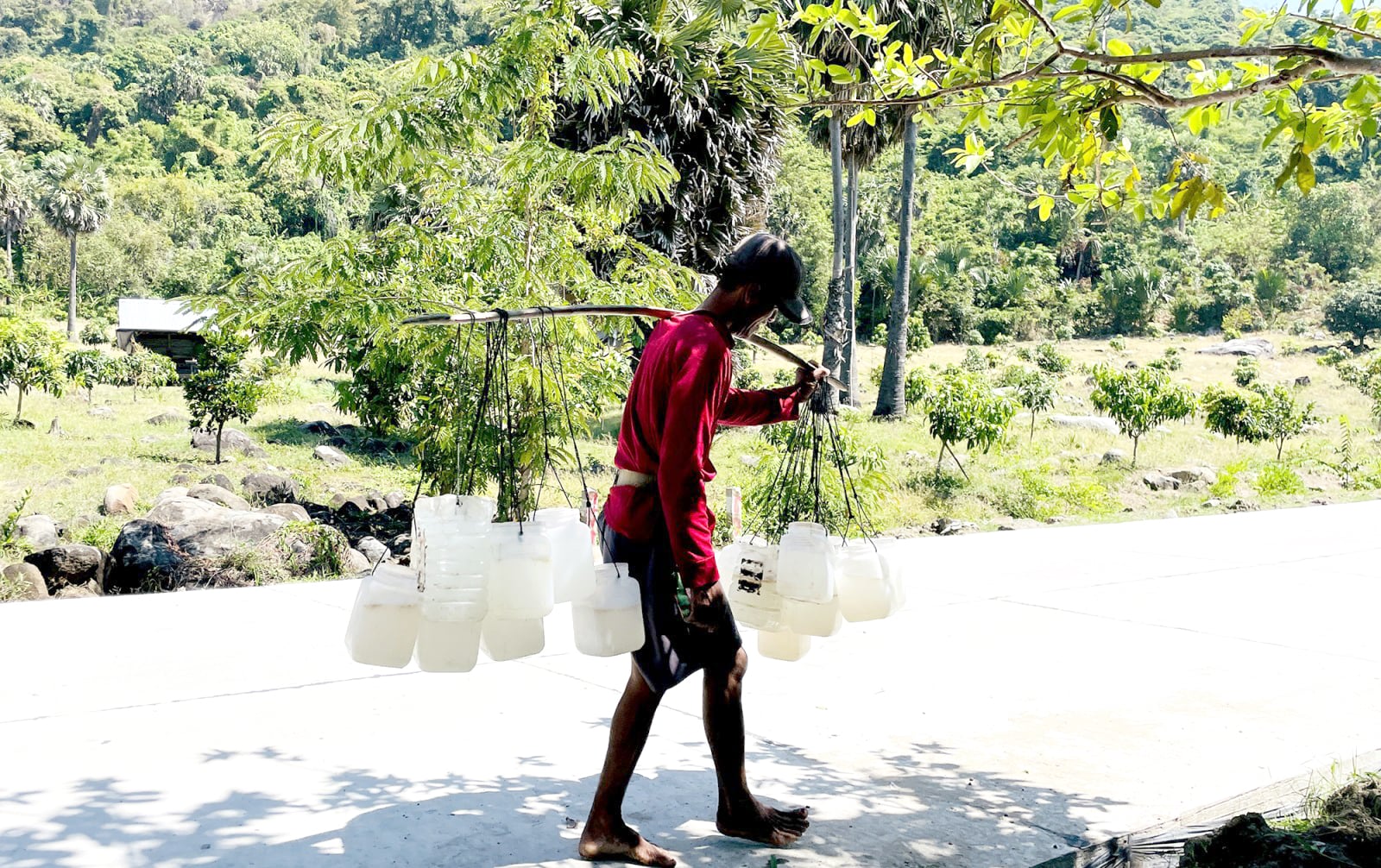
People carry palm sap back to make sugar.
To collect the sap, people usually use long bamboo poles, cutting off the branches to make a ladder. Once at the top of the tree, they cut off the top of the palm flower with a knife, then use a plastic container or jar to collect the sap. Previously, they used thick, interlocking bamboo tubes to collect the sap. Nowadays, bamboo tubes are replaced with smaller, lighter plastic containers for easier carrying up the tree. After each collection, they cut off the top of the flower to continue collecting the sap.
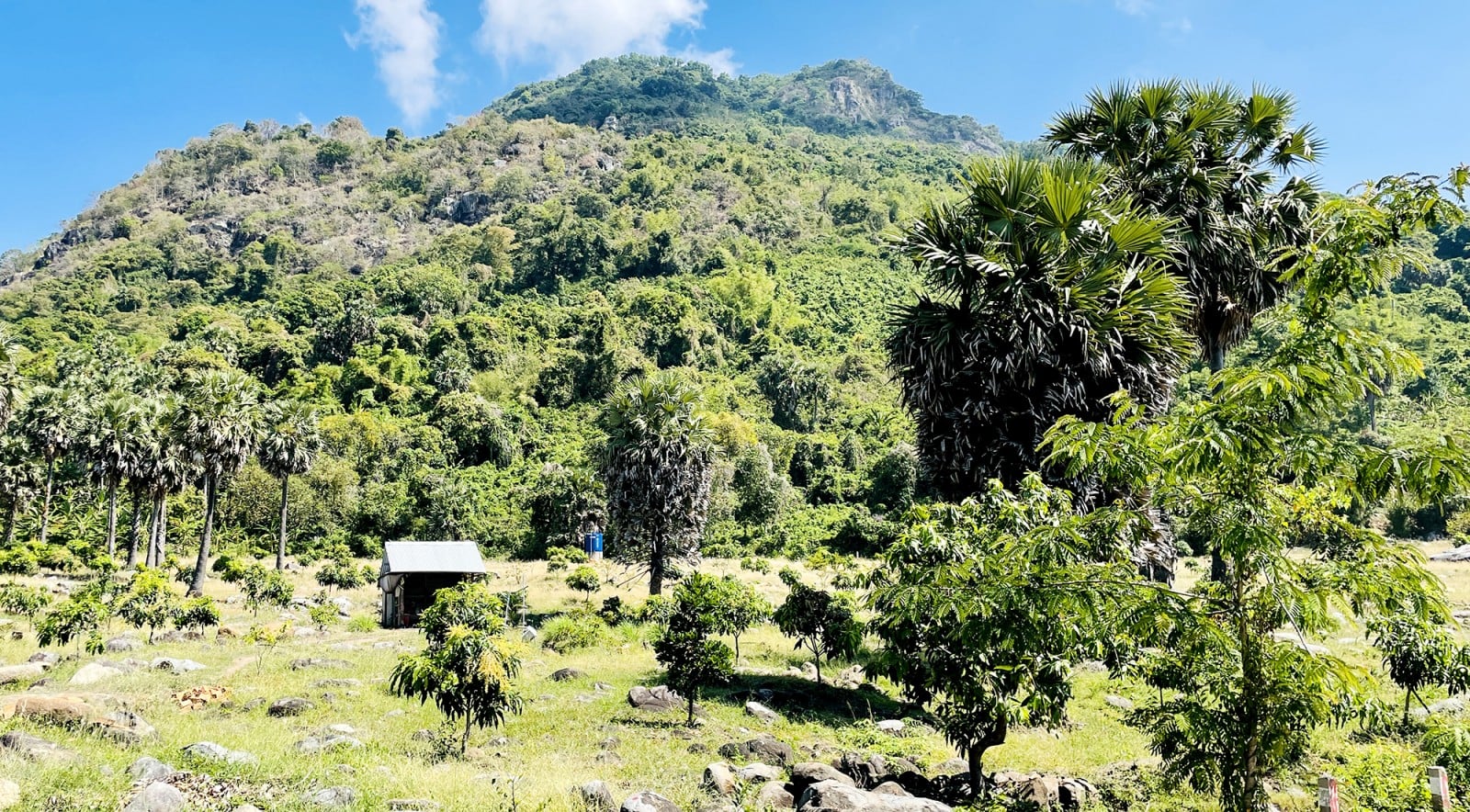
The Khmer people build makeshift huts to make palm sugar.
After the palm sap is extracted, it is filtered to remove dust before being cooked. Ms. Neáng Hiếp (Tri Tôn commune) said that the palm sap is cooked for about 4 hours until it thickens into liquid sugar. After it reaches the desired consistency, the pan is removed from the heat and stirred continuously to retain the characteristic bright yellow color of the sugar. "On average, about 8-10 liters of palm sap will yield 1 kg of sugar. The resulting product will be sold to businesses in the area for bottling or making sugar cubes," Ms. Neáng Hiếp shared.
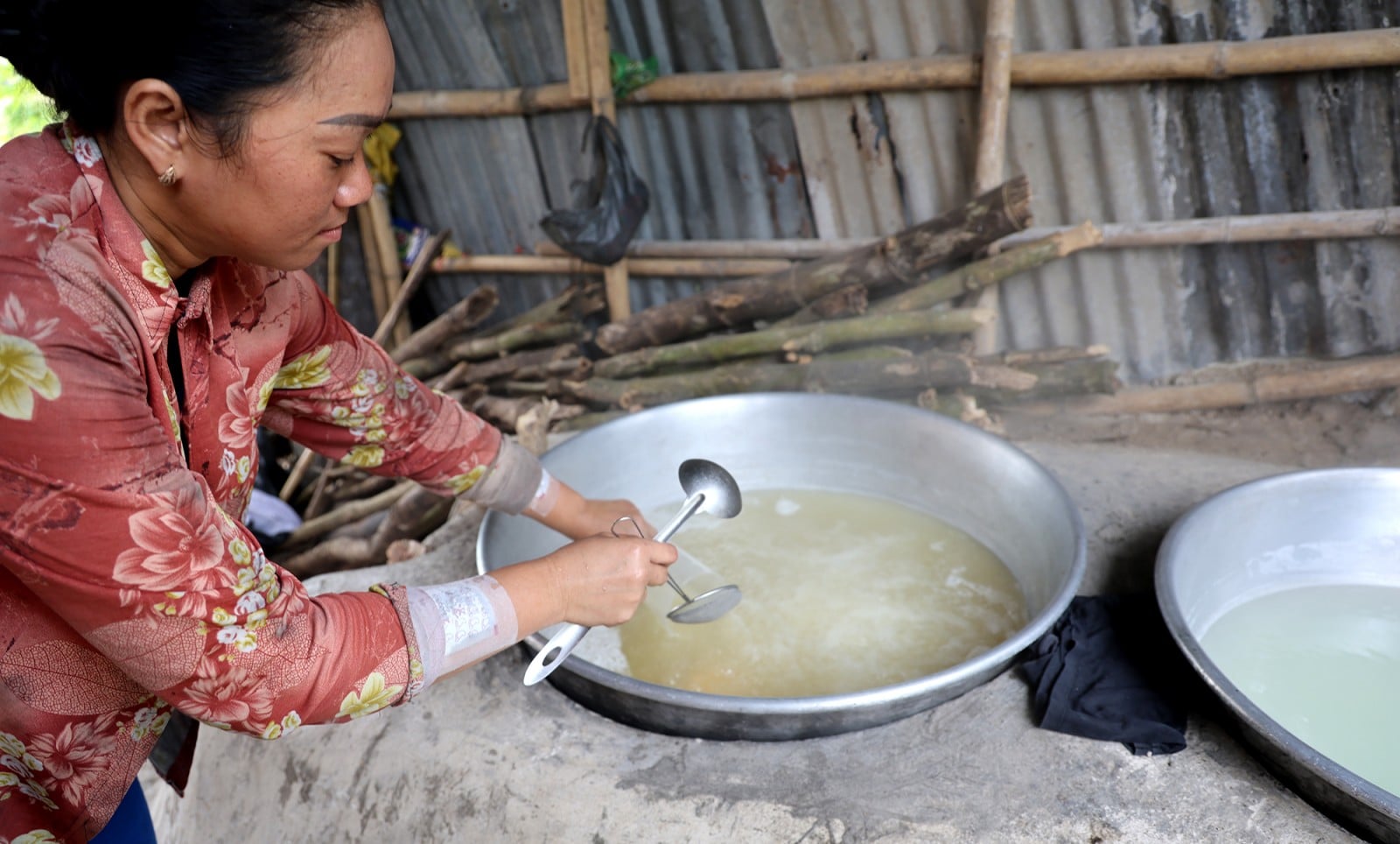
Currently, the price of palm sugar is high, much to the delight of the local people.
At the beginning of the season, palm sugar is sold by households to traders for 50,000 VND/kg; at peak times, the price drops to 40,000 - 45,000 VND/kg. On average, each family produces 20-30kg per day, bringing in an income of 800,000 VND to over 1 million VND.
Local people utilize almost every part of the palmyra palm tree. Palmyra palm sap is used to make sugar, palmyra palm wine, palmyra palm coloring, palmyra palm syrup, etc.; the fruit is used in food, cakes, jams, etc.; and the leaves and trunk of the palmyra palm are used to make handicrafts. Many products derived from the palmyra palm have become OCOP (One Commune One Product) products of various localities.
Source: https://baoangiang.com.vn/mua-nau-duong-thot-not-cua-dong-bao-khmer-a470243.html

































































Comment (0)