

To harvest snake eggs earlier, from the end of March to the beginning of April, many snake farmers in Tu Xa commune have adopted the "furnace burning" method, creating an artificial heat source using a sauna-style heating system that transmits heat through steel pipes running along the underside or sides of the breeding enclosure.
This method helps raise the temperature inside the enclosure to around 28-30 degrees Celsius, stimulating female snakes to become pregnant and lay eggs 15-20 days earlier than usual. This method is mainly applied to multi-story enclosures with enclosed roofs because they retain heat better. Meanwhile, ground-level enclosures usually have to wait until the weather is naturally warm enough, around May or June, before entering the peak harvesting season.
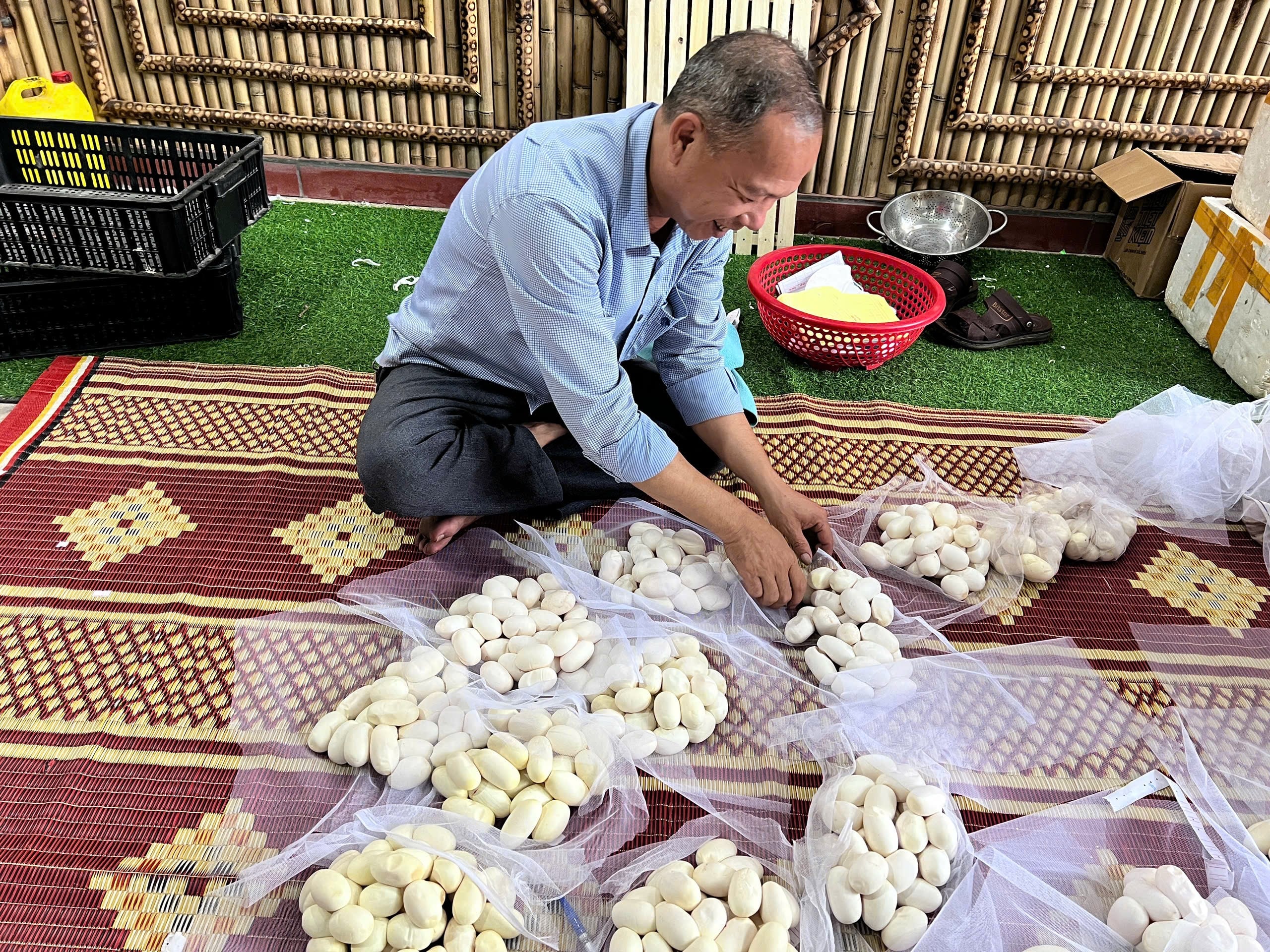
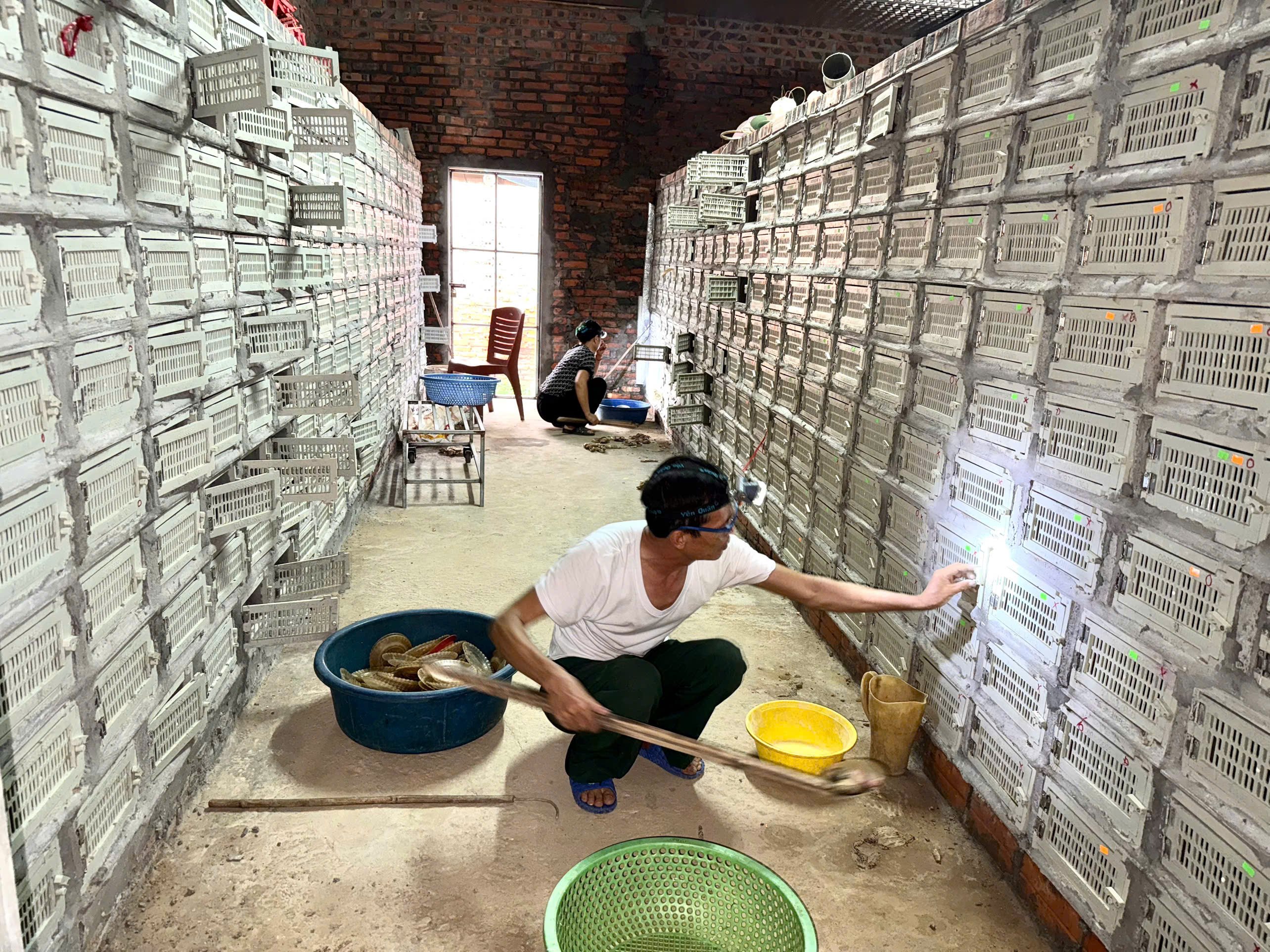
Mr. Bui Tuan Thanh checks the quality of snake eggs before handing them over to traders.
Visiting the snake farm of Mr. Bui Tuan Thanh (Zone 5, Tu Xa Commune), we encountered a miniature "egg market." Some were calculating money, others counting eggs, and still others packing goods for traders. The entire family almost mobilized all their resources for the main season of snake farming: the egg-laying season.
With an area of approximately 100 square meters, Mr. Thanh's facility is built as a multi-story enclosure, divided into two camps, each with about 500 cages. The total snake population reaches over 1,000, including about 600 females and 500 males.
Mr. Thanh shared: "To have eggs to sell at this time, my family has used a 'furnace-burning' method to help snakes lay eggs early. This year, snake eggs are priced from 37,000 to 50,000 VND per egg, depending on the type and time."
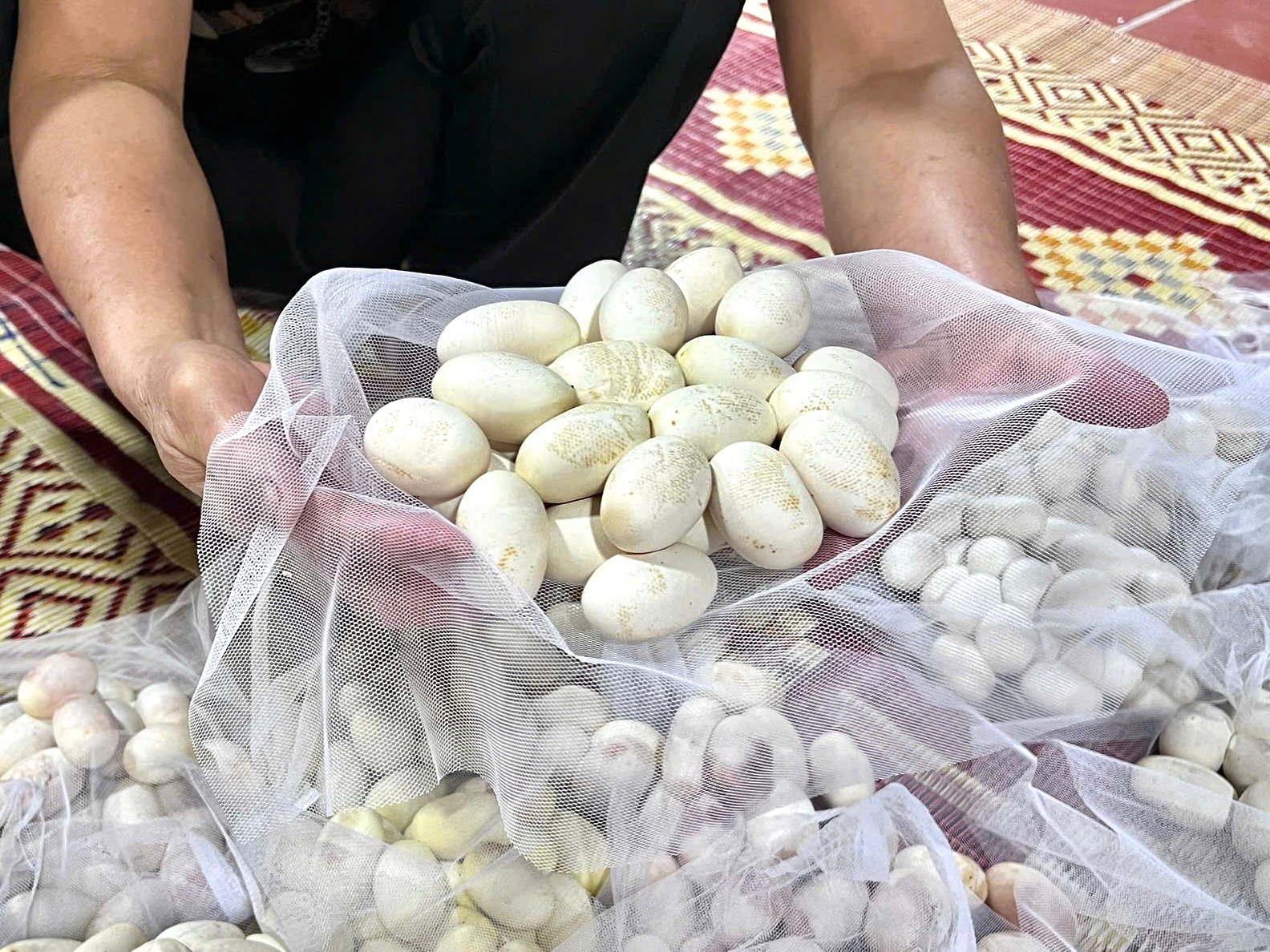
A snake egg is considered to be of good quality when examined under a flashlight, revealing tiny blood vessels inside – a sign that the egg has been fertilized and the embryo is developing.
The breeding season for king cobras typically lasts from May to the end of June. A female snake can lay an average of 15-20 eggs, and some individuals can even lay up to 35-40 eggs. “The eggs are sold directly from our farm to traders in Vinh Phuc province who supply them to China. The reason the Chinese market buys so heavily in snake eggs and breeding cobras is due to their customs and preference for eating snake meat, with a diverse menu of snake dishes. In terms of economic efficiency, snake eggs yield the highest profit,” Mr. Thanh affirmed.
Besides those who raise snakes using temperature control methods like Mr. Thanh, many people in Tu Xa still choose traditional, natural methods, allowing snakes to mate and reproduce according to their biological cycle and harvesting eggs a month later.
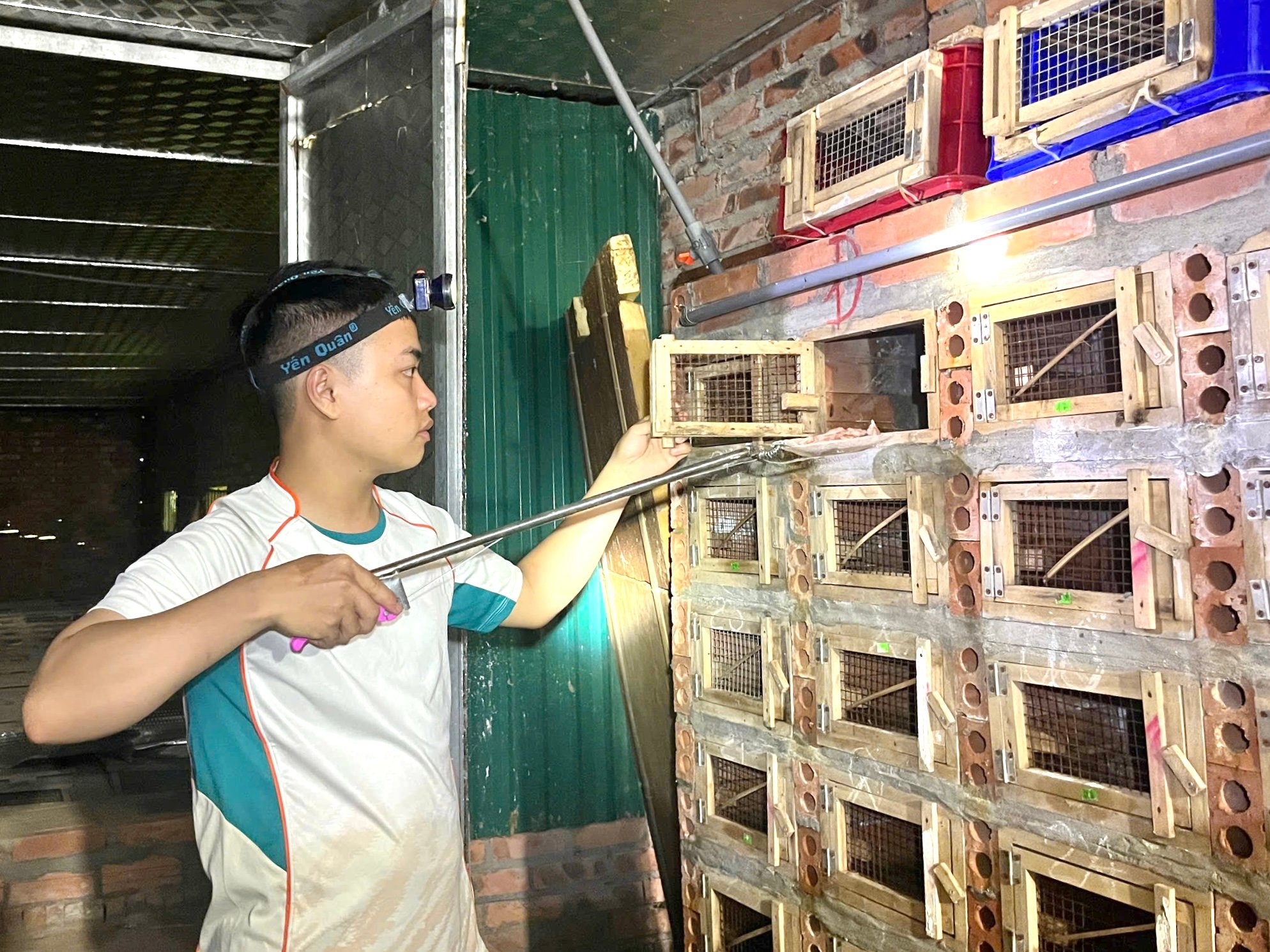
Snakes eat sparingly and are not picky eaters, mainly toads and chicken or duck droppings; they only need to be fed once every 4-5 days.
Ms. Nguyen Thi Hai (Zone 7, Tu Xa Commune) has been in the snake farming business for 28 years. Starting with a small-scale operation of only 40 snakes, her family has now expanded their farm to 300 square meters, housing 2,000 snakes, including 900 females and 1,100 males. With over 800 female snakes currently in their breeding years, each laying an average of about 20 eggs, Ms. Hai expects to collect over 16,000 eggs during the upcoming peak season.
"When the weather starts to get warmer in early May, I breed male snakes with female snakes. After about 1-2 weeks, the female snakes become pregnant and start laying eggs after about 40 days. Last year, when the price of snake eggs fluctuated between 50,000 and 60,000 VND per egg, my family earned nearly 600 million VND from selling the eggs. After deducting the costs of breeding stock, feed, and labor, the profit was over 300 million VND. Compared to many other farming professions, raising snakes is hard work but provides a stable income if you know how to invest properly," said Mrs. Hai.
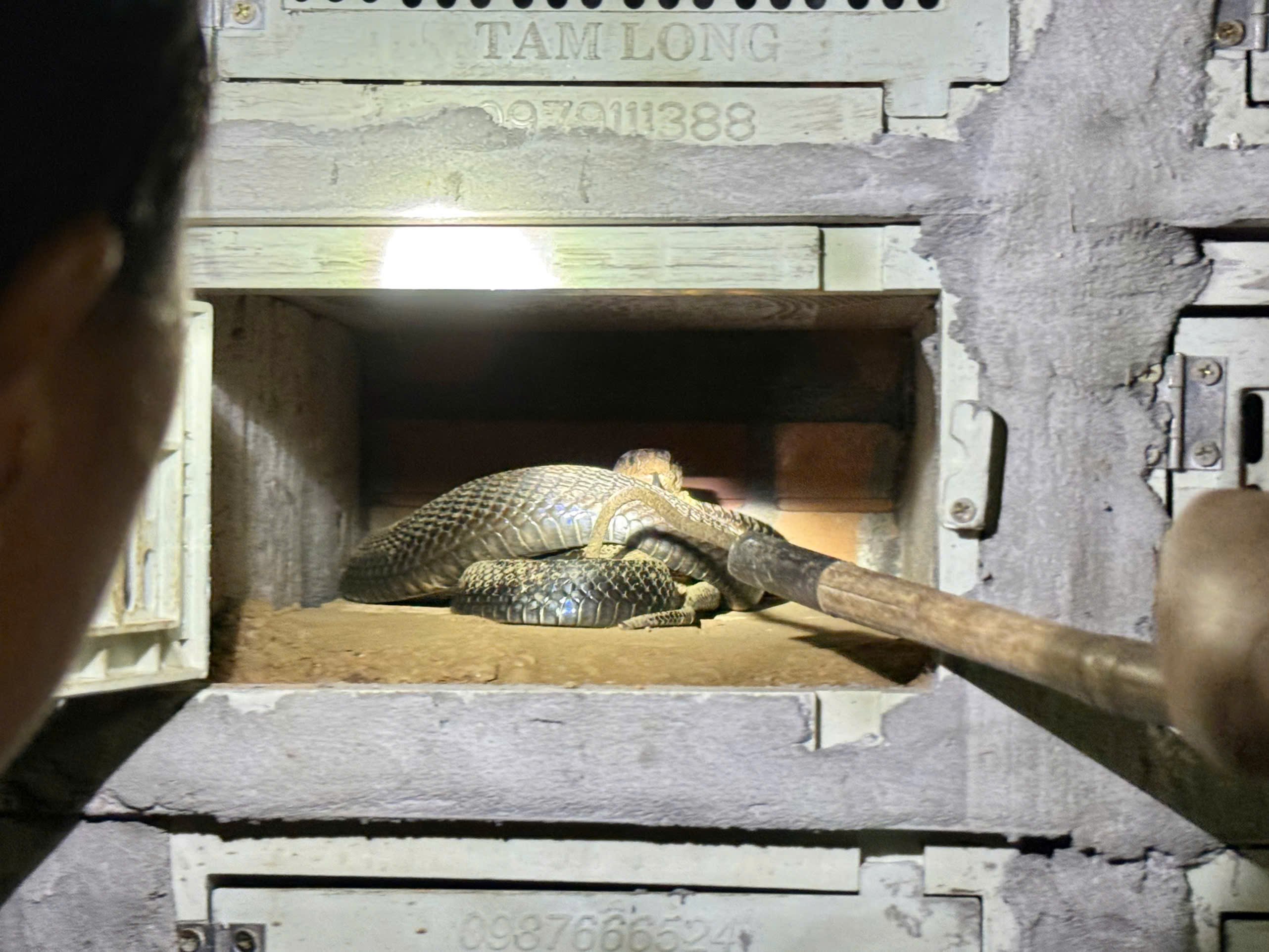
In Tu Xa, the snakes raised are mainly king cobras. When they reach a weight of 2 to 3 kg, the snakes are sold.
Once known as the largest snake-farming village in Northern Vietnam, Tu Xa commune once had a glorious period with over 200 households raising snakes, forming a well-organized supply chain from breeding stock, eggs, meat snakes to processed products. However, according to Mr. Nguyen Huu Thuat - Head of the snake-farming village in Tu Xa commune, Lam Thao district, only about 55 households in the entire commune are still involved in the profession.
“The current market price for king cobras ranges from 550,000 to 650,000 VND/kg, and snake eggs are around 50,000 VND/egg. The total revenue from snake farming in the entire commune reaches over 6 billion VND/year. Although the scale has shrunk, the economic efficiency remains significant for households that maintain good techniques and a reliable market,” Mr. Thuat said.
Mrs. Nguyen Thi Hai's family has been involved in snake farming for 28 years.
Once dubbed the "village of death," Tu Xa commune is associated with stories of the dangers lurking in the process of raising venomous snakes. However, over time, with the involvement of the local government, specialized agencies, and the people themselves, preventive measures have been implemented more strictly.
Today's snake breeders are equipped with knowledge, situational handling skills, and good protection practices. The enclosures have been improved, and the processes of care, harvesting, and transportation are safer than before. The nickname "village of death" is gradually becoming just a memory, giving way to the image of a resilient, professional village that is both developing its economy and preserving a unique craft.
Bao Thoa
Source: https://baophutho.vn/mua-ran-cho-vang-233289.htm


![[Photo] General Secretary To Lam working with Ambassadors and Heads of Vietnamese representative offices abroad attending the 14th National Congress of the Party](/_next/image?url=https%3A%2F%2Fvphoto.vietnam.vn%2Fthumb%2F1200x675%2Fvietnam%2Fresource%2FIMAGE%2F2026%2F01%2F25%2F1769334314499_image.jpeg&w=3840&q=75)



Comment (0)