

Sending workers abroad is one of the important policies of the Party and State in socio -economic development. The purpose of sending workers abroad is to create and solve employment problems, increase income, improve vocational skills and expertise for a segment of the workforce, and contribute to improving living standards and alleviating poverty for workers' families.
The aforementioned policy has been reflected in the resolutions of the Party and the National Assembly , including the Labor Code, the Law on Vietnamese Workers Working Abroad, and guiding regulations issued by the Government and relevant state agencies.
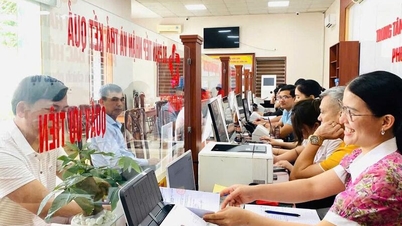
[caption id="attachment_605372" align="aligncenter" width="512"]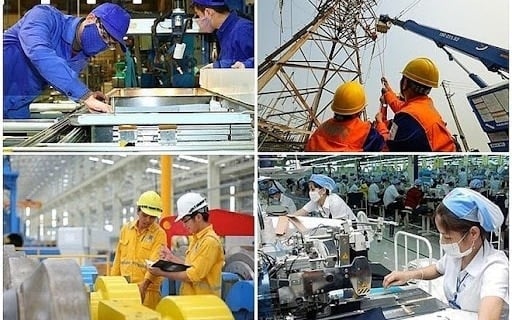 The purpose of sending workers abroad is to create and solve employment problems, increase income, and improve professional skills and qualifications. (Photo: E-commerce Portal)
Integrated economy
As the Vietnamese economy develops and integrates more deeply into the global economy, exploiting and developing overseas labor markets is an essential requirement. Understanding this, the activity of sending Vietnamese workers abroad is being focused on improving not only the quantity but also the quality and effectiveness of the workforce.
"Developing and encouraging vocational training linked to labor market needs, foreign language training, legal awareness education, clarifying the rights and obligations of businesses and workers regarding contract implementation, respecting customs and culture, and integrating into the international labor market" is one of the Party's policies.
In line with this policy, especially since the enactment of the Law on Vietnamese Workers Working Abroad under Contract in 2006, the number of service businesses and the number of Vietnamese workers going to work abroad each year have shown stable growth.
According to the Department of Overseas Labor Management, Ministry of Labor, Invalids and Social Affairs, Vietnamese workers going abroad for employment mainly work in manufacturing (mechanical engineering, textiles, footwear, electronics assembly, etc.), construction, agriculture, fisheries, and services (caring for the elderly and sick, domestic work). Employers in receiving markets have assessed Vietnamese workers as skillful, diligent, quick to learn, eager to learn, and productive with high-quality work.
Therefore, since the promulgation of the Law on Vietnamese Workers Working Abroad under Contract in 2006, approximately 150 enterprises have been licensed to operate services for sending workers abroad; to date, there are over 500 enterprises operating in this field nationwide.
In 2022, the total number of Vietnamese workers going to work abroad was 142,779, reaching 158.64% of the 2022 plan; in the first quarter of 2023, the total number of Vietnamese workers going to work abroad was 37,923, reaching 34.48% of the 2023 plan.
Notably, the labor market is constantly expanding, especially in markets with high incomes and good working conditions. To date, more than 40 markets have accepted Vietnamese workers; these new markets are all high-income countries with good working conditions, such as Germany, Poland, and the Czech Republic. Meanwhile, the number of workers going to traditional markets, such as Taiwan (China), South Korea, and Japan, is increasing annually.
This achievement is due to the timely implementation of policies and mechanisms that help workers access capital to cover the costs of working abroad.
[caption id="attachment_605373" align="aligncenter" width="512"]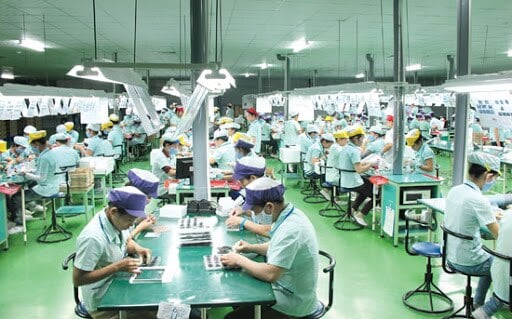 With the increasing number of workers going abroad for employment each year, the responsibilities of state management agencies and participating entities, including service businesses, are growing. (Photo: Tech City Media)
Protecting the rights of workers abroad.
Along with focusing on developing and expanding labor markets in other countries, relevant ministries and agencies always proactively coordinate closely with the functional agencies of host countries and Vietnamese associations to regularly monitor the number and situation of workers in order to support and protect the legitimate rights and interests of workers when necessary.
In addition, many localities nationwide coordinate and support businesses in recruiting and sourcing labor for overseas employment; provide legal support to workers in completing procedures and paperwork for departure, handle arising cases and resolve issues for workers upon their return to the country in accordance with the law.
With the increasing number of workers going abroad for employment each year, the responsibilities of state management agencies and participating entities, including service businesses, are growing. Accordingly, solutions for developing the labor market are being prioritized; research, forecasting, matching labor supply and demand, and updating the labor market information system are being strengthened.
At the same time, the authorities always pay attention to and protect the rights and interests of workers throughout their time working abroad, especially in emergency situations when incidents occur.
For example, in 2011, an emergency evacuation brought more than 10,000 workers back home when the civil war broke out in Libya. When the nuclear power plant accident occurred in Japan, our government was prepared to respond promptly and protect the rights and health of Vietnamese workers.
When the COVID-19 pandemic broke out, the situation became extremely complex. The Vietnamese government directed relevant agencies, the Vietnamese labor management boards in various countries (South Korea, Saudi Arabia, UAE, etc.), and businesses sending workers to the Middle East and Africa to coordinate with local authorities to expedite the resolution of contract disputes; register workers whose disputes have been resolved; and assist with necessary procedures when repatriation flights are available. In just two years (2020-2021), the government repatriated 1,008 workers from Saudi Arabia, 340 from the UAE, 400 from Algeria, 216 from Equatorial Guinea, and 226 from Uzbekistan.
Vietnamese workers have contributed to promoting the positive image and values of Vietnam, its culture, and its people to the international community; many, upon returning home, continue to effectively participate in the domestic labor market with a spirit of responsibility, high competence, and professional skills, serving the process of industrialization and modernization; bringing in a large amount of foreign currency for the country (annually, Vietnamese workers working abroad send home approximately 2.5 to 3 billion USD).
Workers not only escape poverty but also have the ability to support and create opportunities for their relatives to invest in production and business; especially in localities with many workers going to work abroad, the appearance of their hometowns has changed significantly with spacious and modern houses, and social security is increasingly ensured.
Phuong Anh

![[Photo] Prime Minister Pham Minh Chinh holds a phone call with the CEO of Russia's Rosatom Corporation.](/_next/image?url=https%3A%2F%2Fvphoto.vietnam.vn%2Fthumb%2F1200x675%2Fvietnam%2Fresource%2FIMAGE%2F2025%2F12%2F11%2F1765464552365_dsc-5295-jpg.webp&w=3840&q=75)
![[Photo] Closing Ceremony of the 10th Session of the 15th National Assembly](/_next/image?url=https%3A%2F%2Fvphoto.vietnam.vn%2Fthumb%2F1200x675%2Fvietnam%2Fresource%2FIMAGE%2F2025%2F12%2F11%2F1765448959967_image-1437-jpg.webp&w=3840&q=75)




































![[OFFICIAL] MISA GROUP ANNOUNCES ITS PIONEERING BRAND POSITIONING IN BUILDING AGENTIC AI FOR BUSINESSES, HOUSEHOLDS, AND THE GOVERNMENT](https://vphoto.vietnam.vn/thumb/402x226/vietnam/resource/IMAGE/2025/12/11/1765444754256_agentic-ai_postfb-scaled.png)















































Comment (0)