

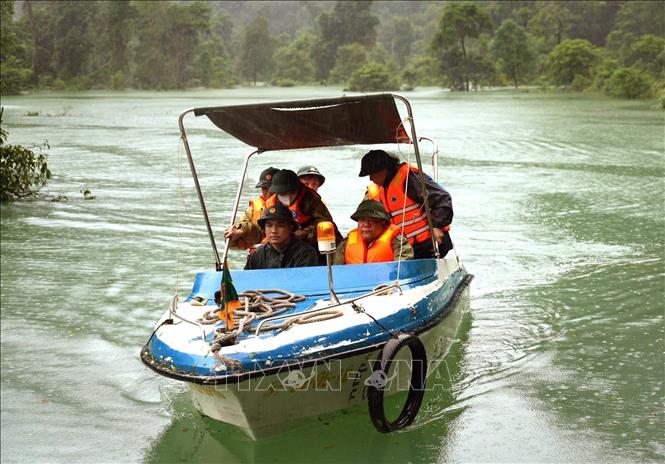
In the era of data and artificial intelligence, technology must become the primary tool to help Vietnam be more proactive in the face of natural disasters. Enhancing forecasting and early warning capabilities is not just a requirement, but a necessity of practice.
Disaster response platform
At recent meetings to assess the situation and implement urgent measures to overcome the consequences of Typhoon No. 11 and floods, as well as emergency meetings on responding to and overcoming the consequences of widespread floods in Central Vietnam, Prime Minister Pham Minh Chinh commended the efforts of ministries, sectors, and localities, including forecasting work.
To continue responding to future natural disasters, the Prime Minister instructed the Minister of Agriculture and Environment to direct meteorological and hydrological forecasting agencies to closely monitor, coordinate, and refer to international forecast information to provide the most complete, timely, and accurate information on the development and impact of storms and the risk of floods... in order to prevent and mitigate them promptly, effectively, and in the right direction, focusing on key areas.
According to Nguyen Hoang Hiep, Deputy Minister of Agriculture and Environment and member of the National Steering Committee for Civil Defense, forecasting and warning have proven effective, becoming the foundation for timely direction and management from the central to local levels, contributing to minimizing natural disaster risks. Forecasting and warning play a crucial role in disaster prevention and control. Therefore, forecast and warning information needs to be early, far-reaching, timely, and accurate.
According to Pham Duc Luan, Director of the Department of Dike Management and Disaster Prevention and Control, disaster forecasting in general, and typhoon forecasting in particular, has achieved many results, approaching the standards of advanced countries in the region and the world . This helps to proactively prevent and control disasters from an early stage and from afar, thereby improving the effectiveness of leadership, proactive response, and damage reduction.
However, according to Dr. Hoang Duc Cuong, Deputy Director of the Department of Meteorology and Hydrology, meteorological and hydrological forecasting and warning in general, and early forecasting and warning, especially for dangerous natural disasters such as typhoons, tropical depressions, flash floods, and landslides, still face many difficulties due to the limited forecasting skills of current forecasting models in Vietnam. In addition, there are difficulties in updating information and data on socio-economic activities at sea and on land, areas likely to be affected by typhoons and tropical depressions, in order to determine appropriate levels of natural disaster risk in typhoon and tropical depression bulletins.
Regarding early warning of flash floods and landslides, providing detailed warnings down to the individual residential areas and villages remains a challenging task. Currently, the world cannot predict where and when flash floods and landslides will occur.
Vietnam has adopted the Southeast Asia Flood Warning Support System (SEAFFGS). However, this system is not yet able to support the prediction of the specific locations where flash floods and landslides will occur.
Assessing the difficulties in meteorological and hydrological forecasting, Deputy Minister of Agriculture and Environment Nguyen Hoang Hiep also stated that the forecasting and early warning of some types of extreme natural disasters occurring in narrow areas, such as forecasting extreme heavy rainfall, exceptionally large floods, and floods exceeding historical levels, is still limited, and there is a lack of early forecasting of values exceeding historical levels during flood events.
Increase the number and quality of meteorological, hydrological, and oceanographic monitoring stations.
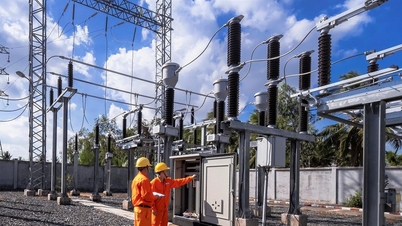
According to the Director of the Department of Meteorology and Hydrology, Nguyen Thuong Hien, in implementing Resolution No. 57-NQ/TW dated December 22, 2024, on breakthroughs in the development of science, technology, innovation, and national digital transformation, the sector has implemented many solutions to improve the capacity for forecasting and early warning of natural disasters, such as: increasing the number and quality of meteorological, hydrological, and oceanographic observation stations, especially in key areas, at sea, and areas at high risk of natural disasters, towards modernization and automation; strengthening modern observation solutions such as weather radar, marine radar, and the application of satellite cloud imagery, etc.
The sector is developing modern forecasting and warning technologies that are on par with developed countries in meteorology and hydrology, such as high-resolution numerical models for forecasting storms, rainfall, floods, flash floods, and landslides. It integrates the impacts of climate change on natural disaster patterns into meteorological and hydrological forecasting methods, while continuing research and application of artificial intelligence (AI) in forecasting and warning of natural disasters, initially focusing on storms, rainfall, and other less frequent dangerous weather phenomena. In addition, it is promoting international cooperation in information and data exchange, especially regarding storms at sea; adopting and developing advanced forecasting technologies and processes from other countries through bilateral and multilateral cooperation.
The sector continues to coordinate with localities and units under the Ministry of Agriculture and Environment to accelerate the implementation of the Project "Early Warning System for Landslides, Mudslides, Flash Floods, and Torrential Floods in the Mountainous and Mid-Mountainous Areas of Vietnam" and the Program for Updating Natural Disaster Risk Zoning and Creating Natural Disaster Warning Maps, especially for natural disasters related to typhoons, storm surges, floods, flash floods, landslides, droughts, and saltwater intrusion...
In the long term, the sector will continue to implement the National Meteorological and Hydrological Station Network Planning for the period 2021-2030, with a vision to 2050, which was issued by the Prime Minister on April 8, 2024. Along with that, the sector will continue to implement Decision No. 372/QD-BTNMT dated February 16, 2024, of the Minister of Natural Resources and Environment (now the Ministry of Agriculture and Environment) promulgating the Plan for implementing Decision No. 1261/QD-TTg dated October 27, 2023, of the Prime Minister approving the Project “Modernization of the Meteorological and Hydrological Sector by 2025 and the period 2026-2030”...
Referring to the situation regarding Typhoon No. 13 and the resulting floods, Mr. Nguyen Thuong Hien suggested that the National Center for Meteorological and Hydrological Forecasting and regional meteorological and hydrological stations increase the frequency of bulletin updates, especially during peak periods. The bulletins should be concise, clear, and easy to understand so that the public and local authorities can grasp the information and take timely action.
Relevant units within the sector are focusing their resources and closely monitoring weather developments in the coming days, especially heavy rainfall, the risk of flash floods, landslides, and flooding in the Central region, in order to promptly warn localities and people to proactively respond. In case of personnel shortages, regional meteorological and hydrological stations must immediately report to the Department for additional deployment, ensuring uninterrupted data collection.
To enhance coordination with hydropower and irrigation reservoir owners, meteorological and hydrological stations need to establish direct contact with each reservoir owner to update operational status, water levels, and flood releases. This must be done quickly to avoid delays in information, which could hinder proactive management.
Director Nguyen Thuong Hien suggested that, given the high water levels on rivers in the Central region and widespread flooding occurring in many localities, he requested that ministries and provincial People's Committees direct their specialized agencies and reservoir management and operation units to closely monitor meteorological and hydrological developments, implement observation and forecasting procedures, provide information and data, and report to the Department of Meteorology and Hydrology as prescribed to support forecasting and warning efforts.
Source: https://baotintuc.vn/xa-hoi/nang-nang-luc-du-bao-va-canh-bao-som-thien-tai-20251105170302582.htm











![When forestry is a 'weakness' of Nghe An?: [Part 1] Living a precarious life amidst the golden forests](https://vphoto.vietnam.vn/thumb/402x226/vietnam/resource/IMAGE/2026/05/30/1780156547904_1-2-001514_717-225327.jpeg)


















































































Comment (0)