

The Twin Temples are located in Tien Bat village, Trung Tiet commune (now Tien Giang neighborhood, Thach Quy ward, Ha Tinh city). Currently, there are no documents to confirm the specific time when the Twin Temples were built.
This is where the rain-praying ceremony (the opening of the harvest season) takes place, where local farmers pray for favorable weather, fertile land, and express their beliefs and aspirations in agricultural production.
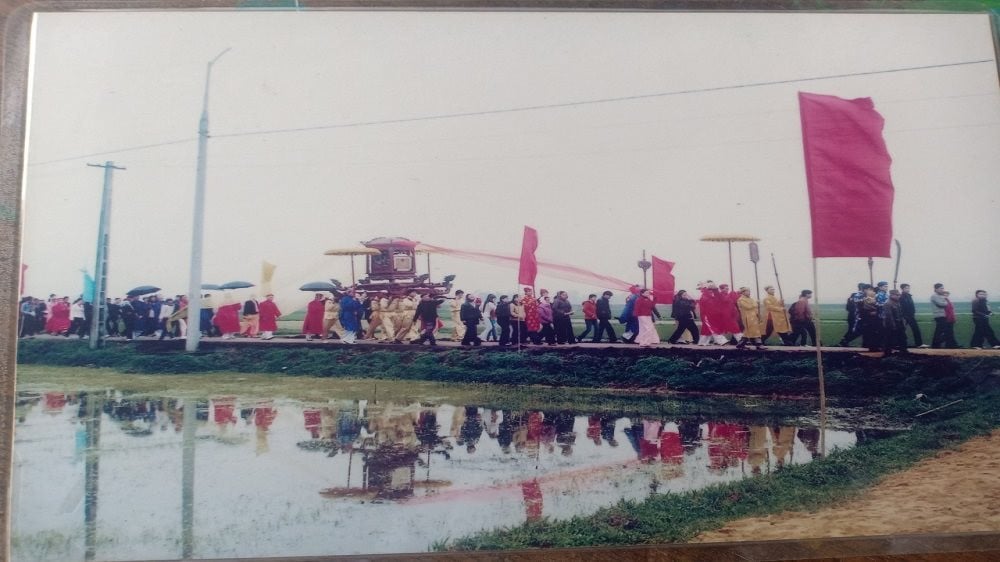
The Twin Temples are located near the Rao Cai River, at the confluence of the Cut River, in front of which stands an ancient banyan tree that is 700-800 years old. This area was originally an agricultural region. Therefore, the rain-praying ceremony is one of the important rituals in the spiritual and cultural life of the local people.
Mr. Nguyen Duy Ngan, Secretary of the Party Committee of Thach Quy Ward, Ha Tinh City, said: The rain-praying festival at Mieu Doi Temple is organized by the local people on the seventh day of the first lunar month and the fifteenth day of the sixth lunar month every year. People come here to pray for rain, organize boat races, and rowing competitions.
This is one of the beliefs in worshipping water deities, with the concept that "every land has its guardian spirit, every river has its water god." These river and land deities have a significant impact on the well-being of the people here, which is why the people worship and offer sacrifices to them.
The time for people to hold the rain-praying ceremony is in January and the middle of the following month. This is also the time to prepare for a new planting season. The festival consists of two parts: the ritual part, inviting deities and supernatural forces to witness the ceremony, and the celebratory part with folk games.
The rain-praying ritual of the local people is very elaborately prepared. The offerings to the deities include a full range of agricultural products. Before the altar, the shaman prays, inviting the deities to partake in the ceremony and witness, blessing the people with prosperity and happiness.
The items used in the ritual include wine bottles, plates, bowls, and other utensils. Traditionally, these items are only used for religious ceremonies and are not to be used on ordinary days.
According to Ms. Le Thi Ha, an elderly villager, the rain-praying festival of the people of Tien Bat has been held at the Twin Temples for generations, embodying the fervent and intense aspirations of the farmers regarding the sacred belief in praying for rain since ancient times.
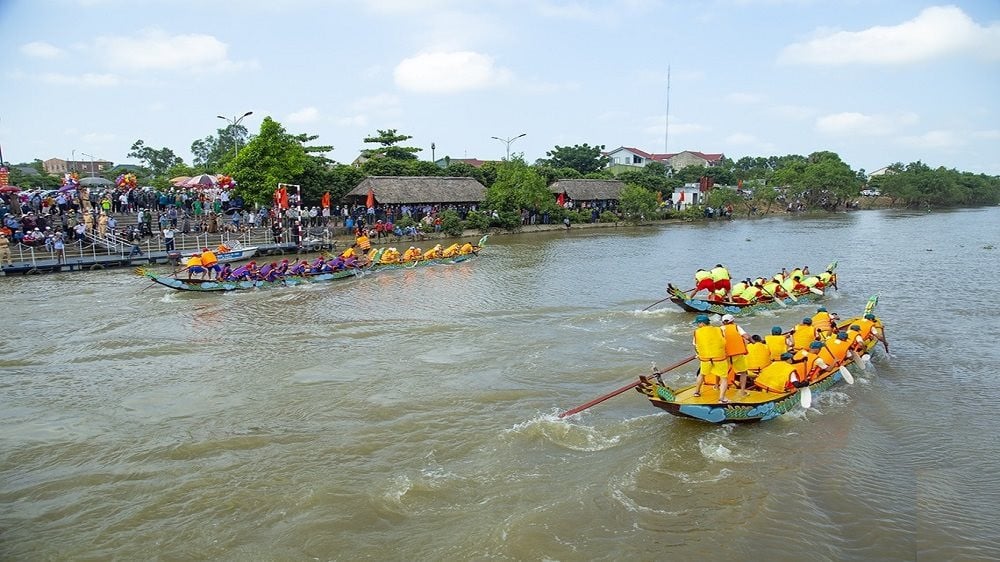
Besides the two main holidays, every year, on the 15th and 1st days of the lunar month, and during other festivals, people in the region and visitors from afar often come to light incense and pay respects. These are places where religious activities take place to promote and spread the beauty of traditional culture, creating momentum and goals for socio-economic development.
Besides the rain-praying ceremony, which holds significant religious value for the local people, the Doi Temple also possesses important cultural and historical value. Legend has it that the Doi Temple has existed for a long time, a place of worship for Uy Minh Vuong Ly Nhat Quang and Thai Uy To Hien Thanh of the Ly Dynasty, who contributed to fighting foreign invaders, reclaiming land, attracting people to settle and expand the country's territory in the late 11th and 12th centuries. They are revered by people in many places in Nghe Tinh as the tutelary deities of their villages.
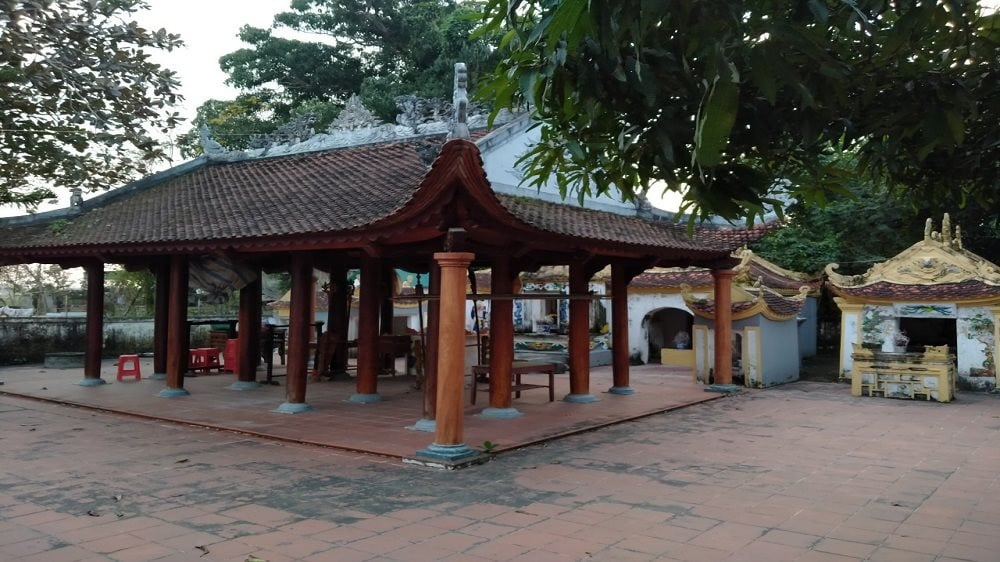
During the founding period of the Indochinese Communist Party, from 1930 to the pre-insurrection period of 1945, it served as a meeting place for Party members of the Trung Tiet commune branch. During the resistance war against the US, the Doi Temple was severely damaged by bombs and bullets; the entire structure of the auxiliary temple was razed, leaving only the main temple standing.
The temple complex, covering 6000 square meters, includes the main hall, the central hall, and the main shrines of the main and auxiliary temples (which were destroyed by war). It is an architectural structure preserved through generations, retaining many ancient and majestic features after hundreds of years of existence.
The people of Tien Bat village, Thach Quy ward, Ha Tinh city, consider the festival at Mieu Doi very important, having a significant impact on the village's well-being. Therefore, the government, the people, and philanthropists have contributed their efforts, along with the enthusiasm of the elders in the Senior Citizens' Association, to restore, preserve, and enhance the village's spiritual life and promote its historical values and traditional cultural beauty.
Source

































































Comment (0)