

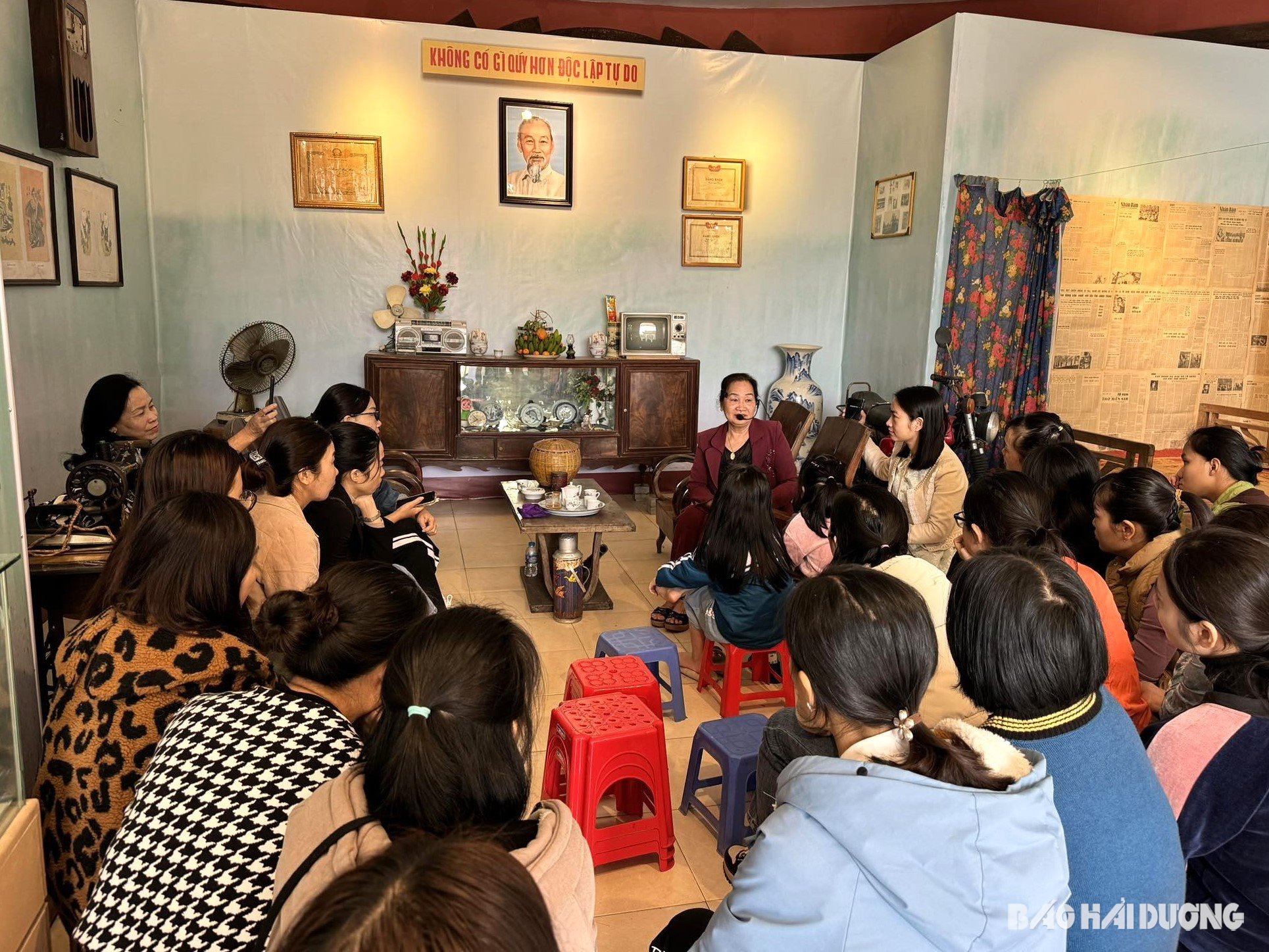
Hai Duong has a rich tradition of folk culture. Studies of folk culture help today's generation see the roots and sources that have shaped the values of modern cultural life. However, currently, few young people are interested in the field of research on folk culture and arts.
Aging
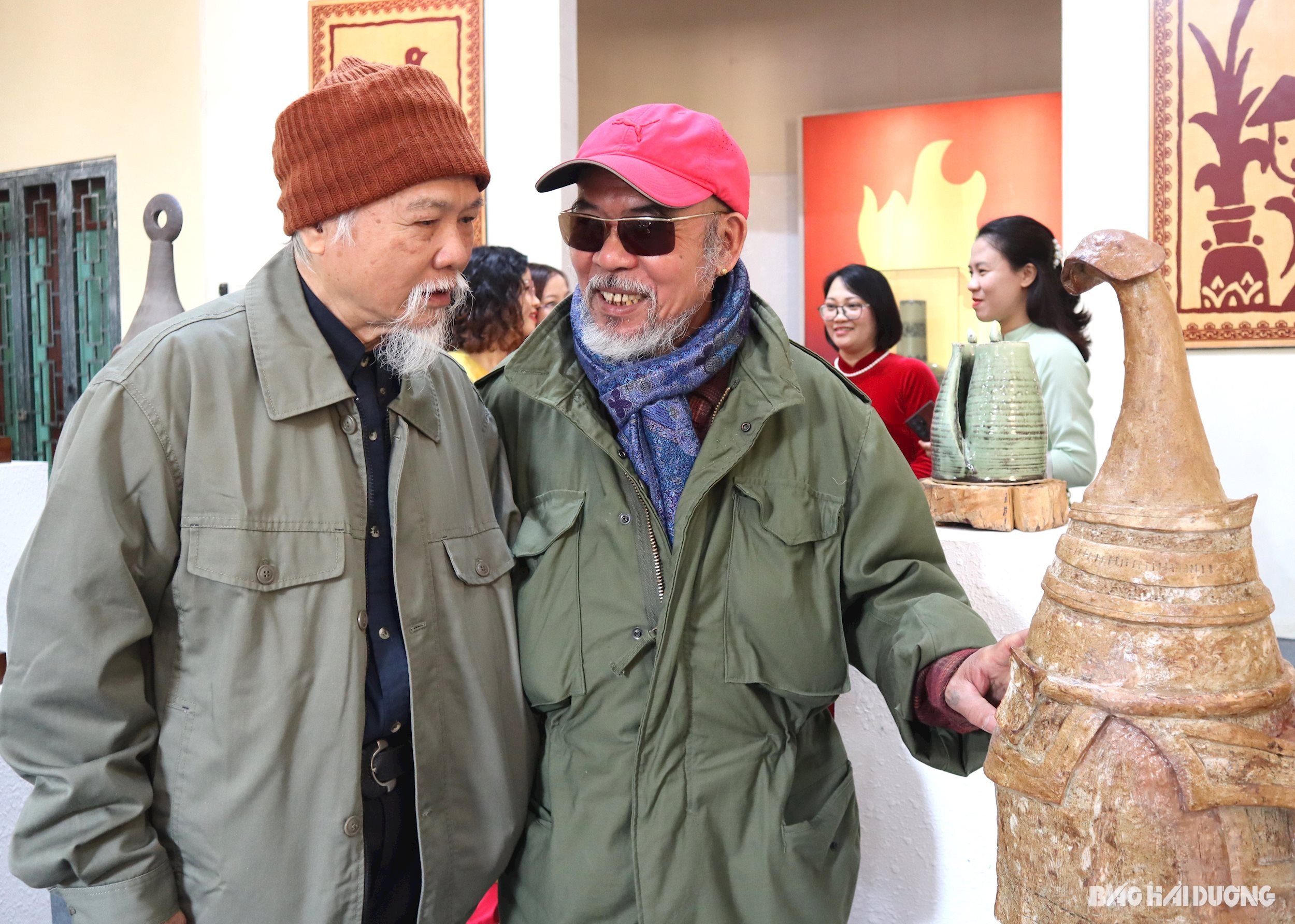
Mr. Nguyen Quoc Van, though over eighty years old, still strives to travel and write. He worries that the imprints of folk culture in the Eastern region will fade away and become little known. Therefore, while he is still healthy, he dedicates his time to fieldwork. To complete his book "Land and People of Thuong Coc Village in the Eastern Region," he spent nearly a decade researching and compiling. This work also won the A prize at the 8th Con Son - Hai Duong Literature and Arts Award in 2022.
"The number of researchers studying the folk culture and arts of Hai Duong is decreasing, and most of them are elderly. While researching folk culture requires many days of fieldwork, good health, and genuine passion, the older the researcher, the more difficult the research becomes," shared Mr. Nguyen Quoc Van.
Due to a small number of members, the Folk Arts Committee had to merge with the Theoretical and Critical Research Committee to form the Theoretical and Critical Research and Folk Arts Committee. Despite the merger, the number of people researching folk arts remains at only nine. The youngest member is nearly 40 years old. Over the past period, the Theoretical and Critical Research and Folk Arts Committee has sought various solutions to encourage young people to participate in research activities. Those with more experience are willing to pass on their passion and expertise, but not many young people are willing to do so.
Mr. Pham Chuc, who has spent many years researching the folk culture and arts of Hai Duong province and is now over 60 years old, said that while in his younger years he could climb mountains or walk all day to research and explore new lands and cultural and artistic heritage in the lives of people in and outside the province, it is now truly difficult. "Old age is one of the factors that significantly affects the process of fieldwork, exploration, and research of folk culture and arts," Mr. Chuc said.
Young people are not interested.
The study of folk culture and arts is closely linked to the history, culture, and art of each locality. Over the years, researchers in this field in Hai Duong have produced many valuable works.
Many elaborate studies have been published in books, such as: "Chu Dau Pottery" by researcher Tang Ba Hoanh, "The Art of Drum and Drum Singing in Thuc Khang (Binh Giang)" by author Le Thi Du, "Folk Culture of Hoang Xa Village" by author Nguyen Long Nhiem, "The tutelary deity and village communal house in Binh Giang" by journalist Nguyen Huu Phach, "A Chronicle of Exploring the Sacred Chi Linh" by journalist Pham Chuc...
Through these works, the unique cultural characteristics of the localities in Hai Duong are preserved in written and visual form. This is a valuable source of information for research, preservation, and development of Hai Duong's culture, both now and in the future. However, most of these valuable studies are by older authors. Recent research works still lack contributions from younger researchers.
Ms. Nguyen Thi Van, originally from Tu Ky town, studied Literature at the University of Social Sciences and Humanities (Vietnam National University, Hanoi). She also defended her graduation thesis on folklore. However, after graduation, Ms. Van did not choose to return to Hai Duong to work in the field of folklore research, nor did she choose to work in her field of study even when she decided to stay in Hanoi. “I am very passionate about researching folklore, but during my internship, I witnessed the hardships of the elderly people and the low income, so I decided to apply for a communications job at a company in Hanoi,” Ms. Van explained.
Ms. Vân's sharing highlighted one of the reasons why the workforce researching folk arts in Hai Duong in particular, and the whole country in general, is increasingly lacking and failing to attract young people.
Ms. Le Thi Du, from the Research Committee on Theoretical Criticism and Folk Arts, said: “It took me many years of research, field trips to various localities, and even working without days off to complete two books of over 100 pages each: 'Folk Culture of Hoach Trach Village' and 'Typical Customs, Traditions and Festivals of Ninh Giang District'. When publishing the books, I received support from the Association for Folk Arts Research and the Provincial Association of Literature and Arts, but that support only partially compensated for the costs.”
The team of researchers in Hai Duong's folk culture and arts is aging. They are constantly worried about the lack of a new generation to continue the passion and enthusiasm needed to preserve Hai Duong's folk culture and arts.
BAO ANHSource















































































Comment (0)