

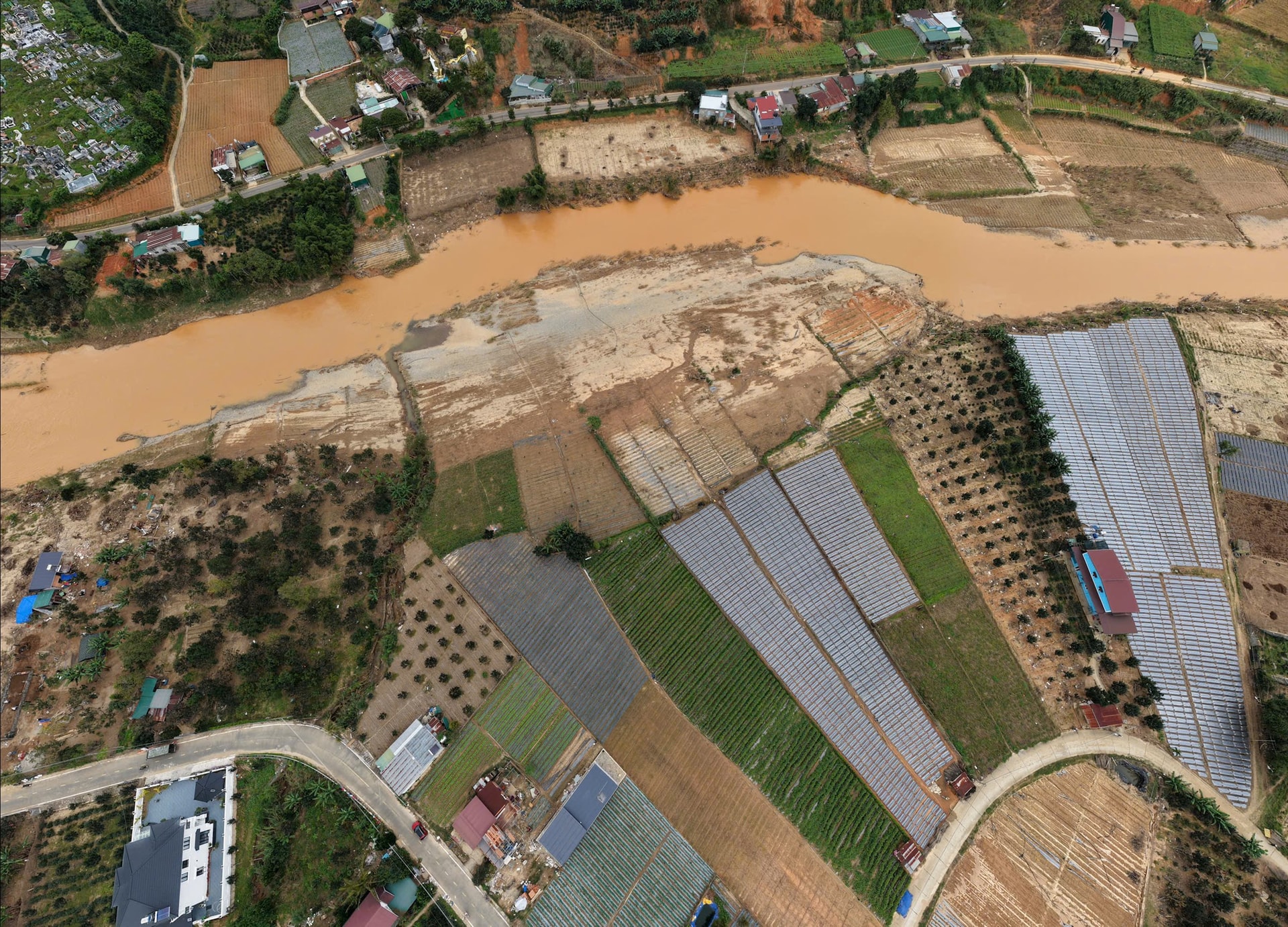
Severe damage caused by floods.
The floods on the morning of November 20th caused severe damage to many vegetable-growing areas in Lam Dong province. Hundreds of hectares of crops were swept away by the water, many greenhouses and net houses were completely destroyed, and agricultural production in many localities came to a standstill.
Returning to the villages specializing in vegetable cultivation at this time, alongside the fields deep within the production areas that are being restored by the people, the low-lying areas along the river still have scattered broken greenhouses and eroded, washed-away arable land.
Ms. Nguyen Thi Hoa, from Ka Do commune, planted over 3 sao (approximately 0.3 hectares) of cabbage this season. During the recent floods, the entire crop, which was about 10 days away from harvest, was completely swept away. Ms. Hoa said: “When the water receded, I went down to the garden to see if I could salvage anything, but all the vegetables were washed away. Only the field, submerged in water for many days, remained, looking pale and barren.”
Meanwhile, the family of Mr. Hoang Gia Hung, in Ka Do commune, cultivated over 3 sao (approximately 0.3 hectares) of herbs and spices, but the recent flood also swept away their crops, leaving them beyond recovery. The sudden flood, which occurred overnight, not only washed away the vegetable garden but also destroyed the entire irrigation system, including the motor and water pipes, making restoration impossible. “My family relies on these few sao of herbs and spices for our livelihood. Each harvest is just enough to cover our debts and living expenses. Now, the land is gone, the crops are gone, and all our hard work over the years has vanished in a single night,” Mr. Hung said.
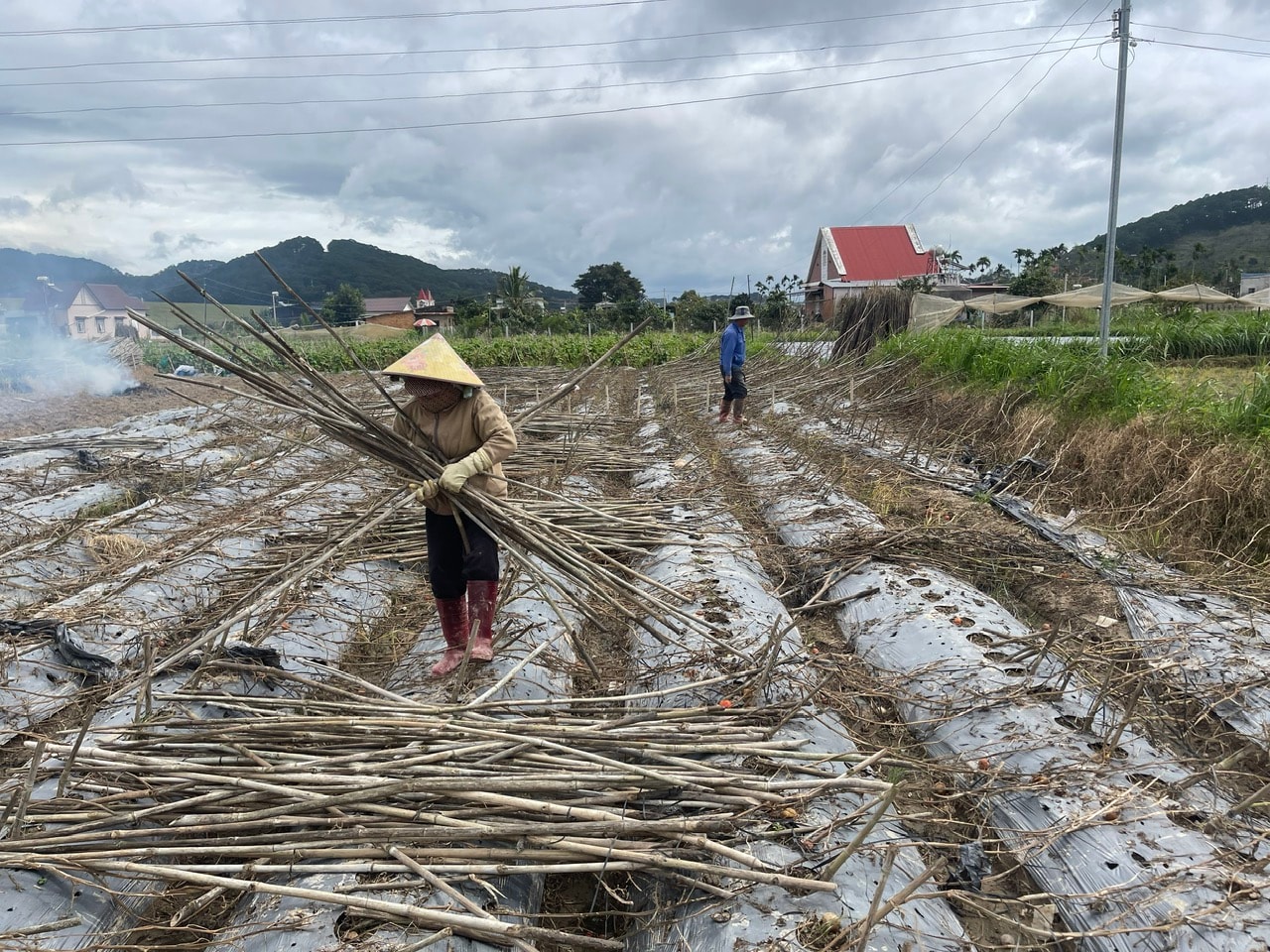
Similar to Mr. Hung's situation, in the Kazam Dam area of Ka Do commune, about 30 households with more than 5 hectares of agricultural land were also severely affected. Many areas of short-term vegetable crops were buried under thick layers of mud and soil, and internal field transportation was cut off, making travel and the transportation of agricultural products very difficult.
According to Mr. Nguyen Huu Chi, Chairman of the People's Committee of Ka Do commune, more than 80 hectares of vegetable crops in the area have been flooded, 8,000 square meters of greenhouses have collapsed, and many rural roads, canals, and irrigation works have suffered serious erosion. The total damage in the entire commune is estimated to amount to billions of dong.
In response to this situation, the Ka Đô commune authorities mobilized militia forces, youth union members, and local residents to urgently address the consequences. However, many households suffered complete losses and faced significant difficulties in finding capital to resume production. “The commune is directing relevant departments to compile detailed damage statistics to propose urgent assistance to the people from higher levels. At the same time, we are requesting investment in stream embankment systems and upgrading drainage infrastructure to ensure sustainable long-term production,” said Mr. Nguyen Huu Chi.
.jpg)
Overcoming natural disasters, replanting crops.
More than two weeks after the historic flood, many households in the vegetable-growing areas along the Da Nhim River in the communes of D'ran, Ka Do, Don Duong, etc., have begun restoring production. Before the flood, this area was a "capital" of vegetables with rows of cauliflower, lettuce, tomatoes, etc., that were either ready for harvest or about to be harvested.
But when the floodwaters receded, all the vegetable beds, flower gardens, power poles, and greenhouses were swept away. The once lush green vegetable gardens were now just mud, weeds, debris, and branches scattered everywhere by the raging current.
Mr. Tran Phuc Duyet, from Hamlet 3, D'ran Commune, is clearing his garden and preparing the soil for his family's 2.5 hectares of vegetable plot. After preparing the land, Mr. Duyet called to order seedlings for delivery from the nursery. Mr. Duyet said: "My family's cabbage field was due for harvest in more than 15 days. I expected to earn over 30 million VND this season to cover living expenses and reinvest in production, but the flood swept everything away."
According to Mr. Duyet, after the floodwaters recede, reinvesting in production faces many difficulties because the soil, having been submerged for a long time, is waterlogged and needs to be rehabilitated. Even if the soil isn't washed away, lime, manure, and bio-fertilizers must be added to restore humus and nutrients for the next crop of vegetables.
Not far from Mr. Duyet's vegetable field, Ms. Nguyen Thi Thuy's family is clearing up the scattered piles of bean trellises washed away by the flood. The bamboo trellises used for the bean vines are now broken and bent, needing to be burned, while others have been swept away by the flood. "Buying new trellises to replant the beans will cost more than ten million dong. At a time when every household's vegetable garden is damaged, buying materials for replanting takes a lot of time."
According to a report from the People's Committee of D'ran commune, the floods affected all 31 villages, causing damage to over 1,320 hectares of various crops such as vegetables, bananas, persimmons, flowers, and perennial plants. Agricultural land was flooded, greenhouses and net houses were destroyed, and the total damage to the commune amounted to 441.22 billion VND.
The commune has guided farmers to take advantage of the opportunity to plant short-term vegetables for the Tet holiday such as various types of cabbage, lettuce, onions, and herbs. They have also been instructed on methods to restore lightly affected areas by pruning and treating fungal diseases after waterlogging. Areas with damaged flowers have had their care schedules adjusted, and nutrients increased to ensure flower production, maintain income, and supply the market.
Meanwhile, in the communes of Don Duong, Duc Trong, Dam Rong 4, etc., many farming households have begun plowing the land, rebuilding greenhouses, and reinforcing glasshouses to resume production. The canal and field road systems are being prioritized for dredging and clearing to ensure irrigation water and agricultural transportation are restored as soon as possible.
Local authorities have also petitioned the Lam Dong Provincial People's Committee and the Provincial Civil Defense Command to consider providing urgent financial assistance, supplies, and plant seeds to restore production; and have requested funding to repair severely damaged infrastructure.
Despite the extensive damage, with proactive and decisive action and the collective efforts of the community, post-flood recovery efforts in the affected communes are being accelerated. It is expected that from the beginning of the twelfth lunar month, many of the local area's key vegetable and flower crops will stabilize, contributing to ensuring the supply of agricultural products to the market.
.jpg)
United in overcoming difficulties
Faced with the situation of hundreds of hectares of vegetable crops, greenhouses, and polytunnels being damaged, and large areas of agricultural land being covered by silt and eroded, leading to difficult living conditions and livelihoods for the people, the people in the flood-affected areas of Lam Dong province are overcoming difficulties and stabilizing their livelihoods with the help of hard work, diligence, and determination to overcome hardship.
The provincial agricultural sector has coordinated with the People's Committees of the communes to guide production measures after flooding. In addition, besides government support funds, the policy credit system and commercial banks have been implementing debt restructuring, debt deferral, and supplementary lending mechanisms for affected farmers, contributing to reducing financial pressure during the recovery phase.
According to the Provincial Department of Crop Production and Plant Protection, the province's plan for vegetable cultivation in 2025 is 92,000 hectares. To date, more than 90,500 hectares have been planted, with a production of approximately 2.6 million tons. Floods alone have damaged 3,000 hectares, equivalent to 90,000 tons of vegetables.
During the recent floods, the entire province suffered damage to over 4,570 hectares of crops, including 4,439 hectares of vegetables and rice, and 130 hectares of perennial crops. Some localities were severely affected, such as D'ran, Ka Do, and Quang Lap communes with over 205 hectares damaged, Don Duong commune with 100 hectares, Duc Trong with 180 hectares, and Quang Phu with over 300 hectares.
Mr. Ha Ngoc Chien, Head of the Department of Crop Production and Plant Protection, stated: "The damage has affected local supply but will not cause a shortage of goods during Tet (Lunar New Year), as the planting season begins from the end of November to the beginning of December." To support people in the flood-affected areas, the Department of Agriculture and Environment has requested localities to urgently implement remedial measures to stabilize production.
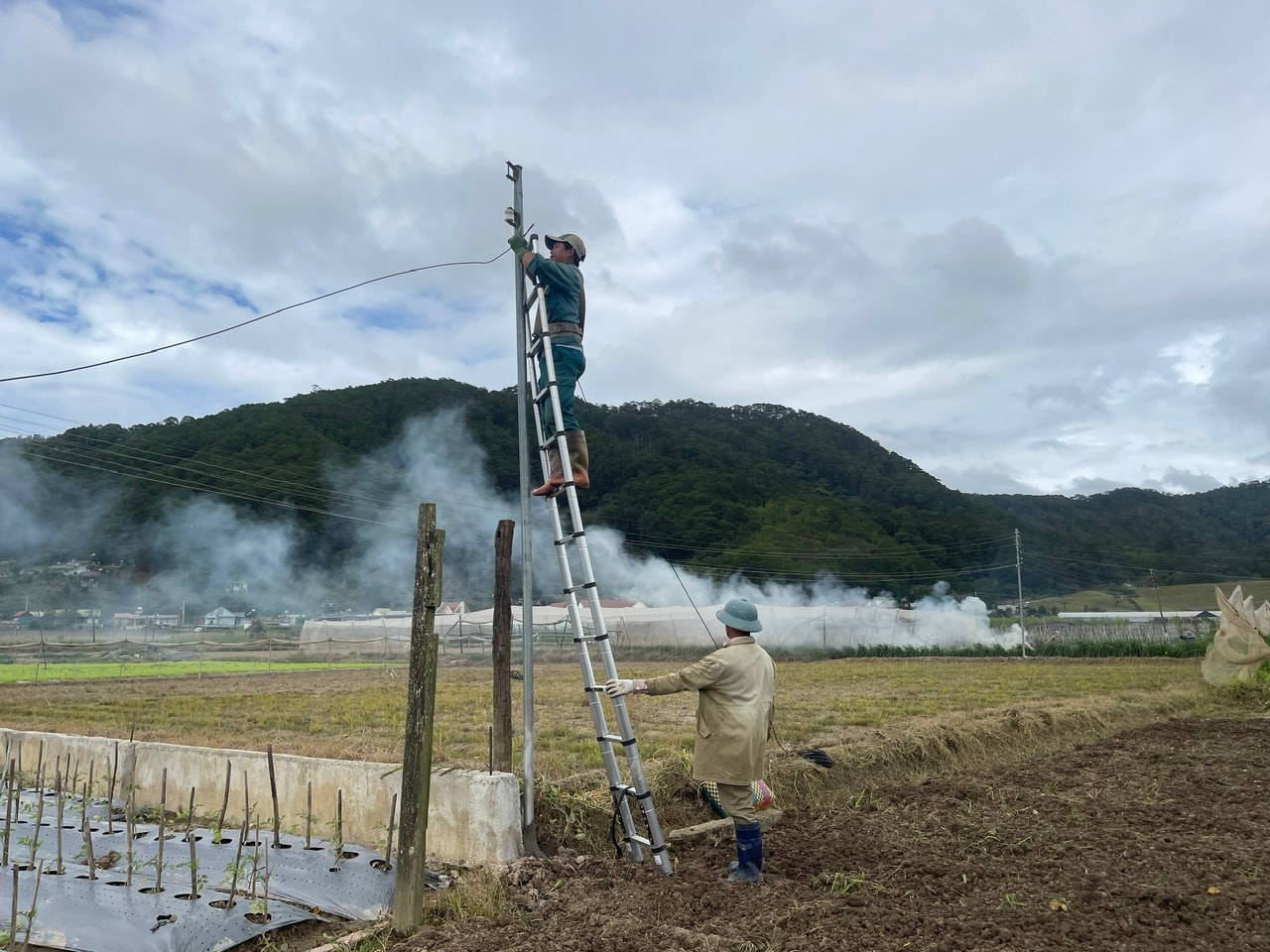
According to Nguyen Hoang Phuc, Deputy Director of the Provincial Department of Agriculture and Environment, specialized agencies have implemented many decisive and coordinated solutions such as environmental treatment, disinfection of livestock facilities, and disease control; while also guiding people to restore land and clear canals to restore production. To date, the communes have basically restored and treated approximately 4,215 hectares out of a total of 4,570 hectares of crops affected and damaged.
Mr. Nguyen Hoang Phuc advised farmers to inspect and utilize areas of vegetable crops that are still harvestable, destroy damaged plants, plow and use soil improvement products. For industrial crops and fruit trees, it is necessary to clear ditches, remove debris, and loosen the soil to improve root aeration. For orchards bearing fruit, micronutrients should be added to reduce cracking and fruit drop. For pepper plants, loosening the soil only when the soil is dry is necessary, along with increased prevention of diseases after floods.
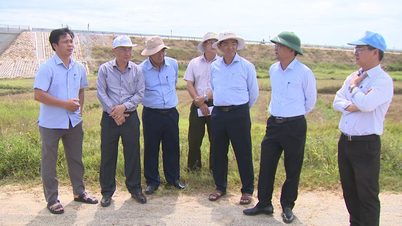
Following the floodwaters receding, the restoration of production remains challenging. The Standing Vice Chairman of the Provincial People's Committee, Le Trong Yen, requested that localities prioritize restoring production, repairing houses, and ensuring environmental sanitation after the floods. "Areas severely damaged need urgent assistance so that people can quickly restore their crops and ensure the supply of vegetables to the market, especially during the crucial period ahead," the Standing Vice Chairman of the Provincial People's Committee emphasized.
Source: https://baolamdong.vn/nong-dan-lam-dong-vuc-day-san-xuat-sau-bao-lu-410127.html
![[Photo] First session of the 14th Congress of the Vietnam Trade Union](https://vphoto.vietnam.vn/thumb/1200x675/vietnam/resource/IMAGE/2026/06/03/1780465947883_ndo_br_img-3852-jpg.webp)

![[Photo] Secretary of the National Assembly Party Committee, Chairman of the National Assembly presides over the meeting of the Standing Committee and Executive Committee of the National Assembly Party Committee.](https://vphoto.vietnam.vn/thumb/1200x675/vietnam/resource/IMAGE/2026/06/03/1780480353201_ndo_br_bnd-2585-jpg.webp)

![[Photo] General Secretary and President To Lam presides over a meeting with the Central Organizing Committee.](https://vphoto.vietnam.vn/thumb/1200x675/vietnam/resource/IMAGE/2026/06/03/1780482764658_a1-bnd-4741-3342-jpg.webp)

















































![[Video] Sunset at Lap An Lagoon – Where the sun sets over the fishing nets](https://vphoto.vietnam.vn/thumb/1200x675/vietnam/resource/IMAGE/2026/05/31/1780192137701_beach-landscape-sea-water-nature-grass-745871-pxhere-com.jpeg)


































Comment (0)