

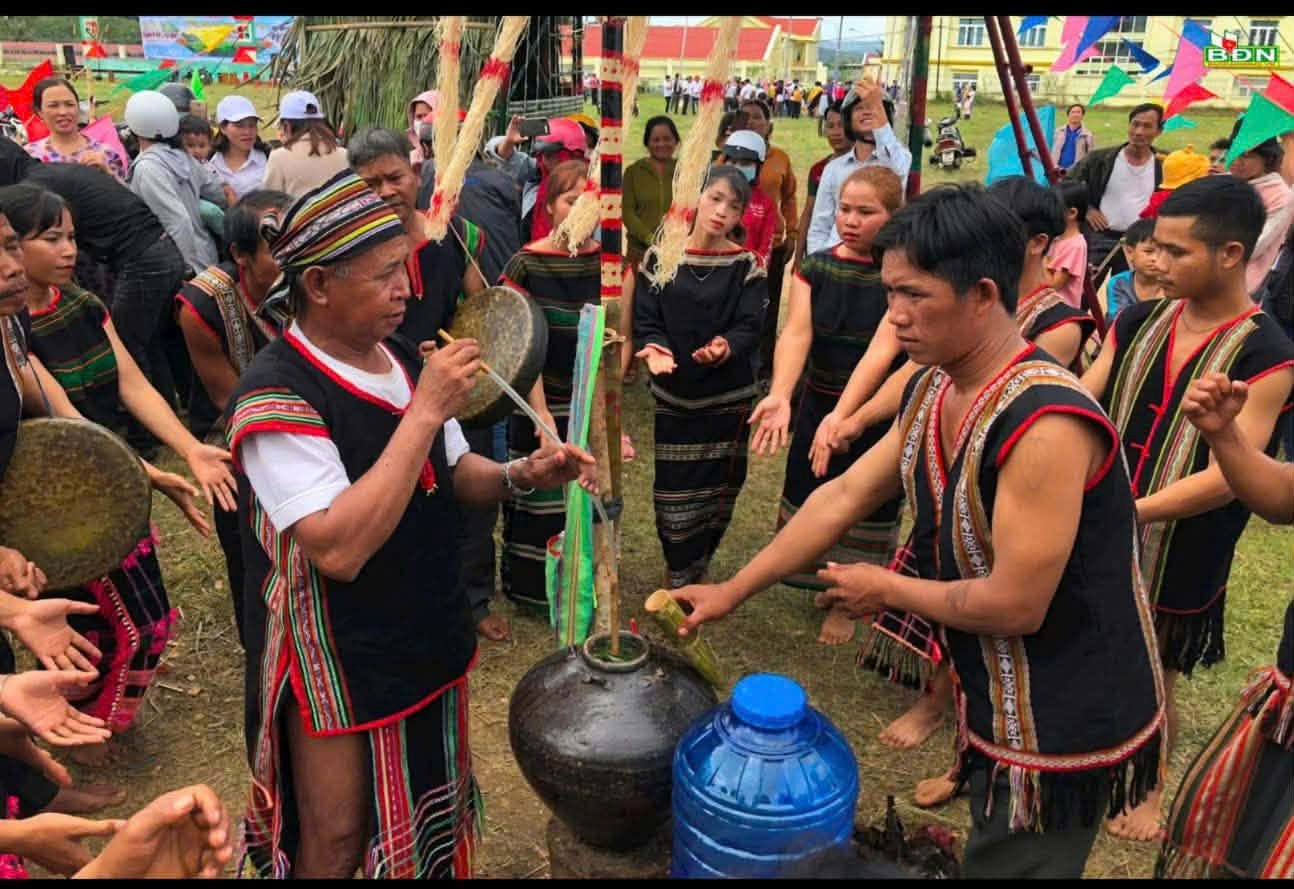
A drink passed down through generations.
Rice wine has accompanied the M'nong people since their nomadic lifestyle, when they made mountains and forests their homes and viewed springs as their lifeblood. Each time a jar of wine is placed in the center of the stilt house, it signifies the entire village preparing for an important event such as the harvest festival, weddings, housewarming parties, or welcoming honored guests. In that place, the sound of gongs and drums echoes throughout the villages, flowing across the mountains and hills, accompanied by lively and joyful dances; faces light up in the firelight, and eyes brimming with vitality, faith, and hope.
In the sacred and majestic epic space of Ót N'drông, amidst the lively gong and drum dances, beside the blazing fire, the jar of rice wine exudes an air of both majesty and serenity, like a tranquil witness to countless seasons of farming and countless stories of the village.
.jpg)
How the M'nong people make rice wine.
No one knows exactly when rice wine first appeared in the village. All we know is that, through generations, the method of making rice wine has been passed down from grandmother to mother, and from mother to daughter, through evenings by the fire and whispered, sacred words of advice.
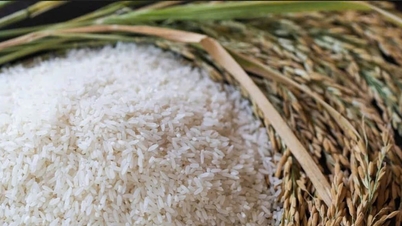
The ingredients that make up this drink, steeped in the culture of the indigenous people of the vast Lam Dong plateau, are yeast, white rice, brown rice, purple sticky rice, yellow sticky rice, green rice flakes, etc. The yeast is a blend of various leaves of the nkụ tree, doong tree bark, rmoanh tree bark, wild ginger, and other ingredients, along with brewing secrets known only to the M'nong people. Each ingredient is harvested early in the morning, when the forest is still covered in dew, preserving the essence of the mountains and forests. The leaves are pounded, dried, and then mixed with rice flour to form small, round yeast cakes. These yeast cakes act like the heart, ensuring the wine is properly fermented and produces the best quality product. White rice and upland sticky rice are gifts from the deep red basalt soil. The grains are long, fragrant, and firm, grown by the M'nong people on sloping land, watered by the night dew. After the rice is cooked, it is loosened and allowed to cool, then yeast is sprinkled on it, and it is mixed with rice husks. This mixture is then placed in a clay pot for fermentation. Each step is performed with care and precision, treated with the utmost respect and appreciation by the maker.
Steeped in traditional culture
Ms. H' Doen Sinur, residing in residential area 3, Bac Gia Nghia ward, is a M'nong woman born and raised in the legendary Nam Nung region. For generations, her family has had a tradition of making rice wine. She learned to brew rice wine from a young age, thanks to her grandmother and mother. The rice wine from her family and some other M'nong people in the western part of Lam Dong province has become a popular beverage at village festivals and a traditional product loved by tourists. Ms. H' Doen Sinur shared: “The traditional M'nong method of brewing rice wine requires a full range of flavors: bitter, spicy, and sweet... The rice wine needs to be aged for at least 1-3 months, or even a year or more. The longer it's aged, the richer and more fragrant it becomes. Each aging period creates a unique character for the wine: some jars have a gentle sweetness like the first breeze of the season, while others have a deep, strong flavor like the urging sound of gongs during a festival. The yeast determines the quality of the wine, so the brewer adjusts the yeast according to the customer's taste. Importantly, the leaves used to garnish the wine must absolutely not be mango leaves or sour leaves, as these will affect the quality of the wine. The M'nong people use sweet leaves or harmless leaves such as banana leaves, sugarcane leaves, and cogon grass.”
The M'nong people choose their earthenware jars as carefully as they choose friends: the jars must be round, fired at high temperatures, and retain the aroma of the yeast. Before brewing, the jars must be washed with water infused with Barringtonia leaves to remove any unpleasant odor. The mixture of ingredients is placed in the earthenware jars. The jars are sealed with dried banana leaves and placed in a corner of the house where the yeast will slowly seep in, expand, and mature.
During the festival night, when the jar of rice wine is opened, that's when all the stories begin. The elders insert the longest straw into the jar, praying to the spirits: the god of rice, the god of water, the god of the mountains. Then the village elder takes the first sip of wine – a sip carrying the warmth of the earth and sky. After that, one by one, each person inserts their straw into the jar, like connecting threads forming a circle of unity. The usual way of drinking is for the drinker to insert their straw into the jar, then pour in cooled boiled water or spring water until the jar is full, wait about 20 minutes to an hour, and then drink as the water level decreases, stopping when the next serving is finished. This continues until the water level is empty, then another serving is added, until the taste of the wine gradually fades. Rice wine is not drunk hastily, but slowly, the intoxicating drops gradually permeating the taste buds, sweetly gentle, intensely fragrant, creating a feeling of euphoria and intoxication with each sip, making people feel happy, cheerful, open, and sociable; even when drunk, they still want to drink more.
In M'nong culture and customs, when making rice wine, the yeast is not used when mango trees are in bloom or rice plants are forming ears; the jars must not be broken, and the straws must not be damaged. Those making rice wine must maintain their own cleanliness, both literally and figuratively, so that the wine tastes good and they do not offend the spirits. When welcoming guests and offering rice wine, the host drinks first, followed by the guest. This demonstrates hospitality and proves that guests can drink with peace of mind because the host has already tasted it; the host always reserves the best for the guest. When drinking, one should not release the straw without permission; when receiving the wine, one must use the right hand. When finishing one's portion and handing the straw to another, both hand and receive with the right hand. This signifies always living and acting according to what is right and just.
Rice wine is not for drowning sorrows, nor is it drunk alone, regardless of age, gender, or social standing. Therefore, it is considered a communal drink by the villagers. Drinking rice wine is for conversation, for listening to each other sing, for the gongs and drums to blend with the rhythmic drumming, inviting kindred spirits. Then, the joyful and lively songs of the M'nong boys and girls rise, accompanied by the lingering sound of the gongs, making everyone feel as if their ancestors are present, rejoicing with their descendants.
The glaze connects the past and the present.
Today, M'nong rice wine is featured in many community tourism tours, Central Highlands cultural festivals, and as souvenirs to take home from all over the country. M'nong rice wine has become a brand with OCOP 3-star certification, appearing at cultural and tourism events, fairs, etc. But what makes rice wine special is not its familiarity, but its simplicity and authenticity. Only when drinking rice wine by the fire, listening to the wind rustling through the stilt house roof, the long-lasting sound of gongs echoing across the mountains and hills, and smelling the smoke intertwined with the Ót N'drông songs of the M'nong people… can one fully appreciate the soul of this exquisite rice wine.
M'nong rice wine is not just a drink; it's the story of the vast forest, the warmth of the villages, an invisible thread connecting the past with the present. Through each drop of wine, the M'nong people preserve their entire cultural heritage for future generations.
Source: https://baolamdong.vn/ruou-can-m-nong-men-nong-nan-giua-dai-ngan-410120.html




















































































Comment (0)