

Love for the Old Quarter
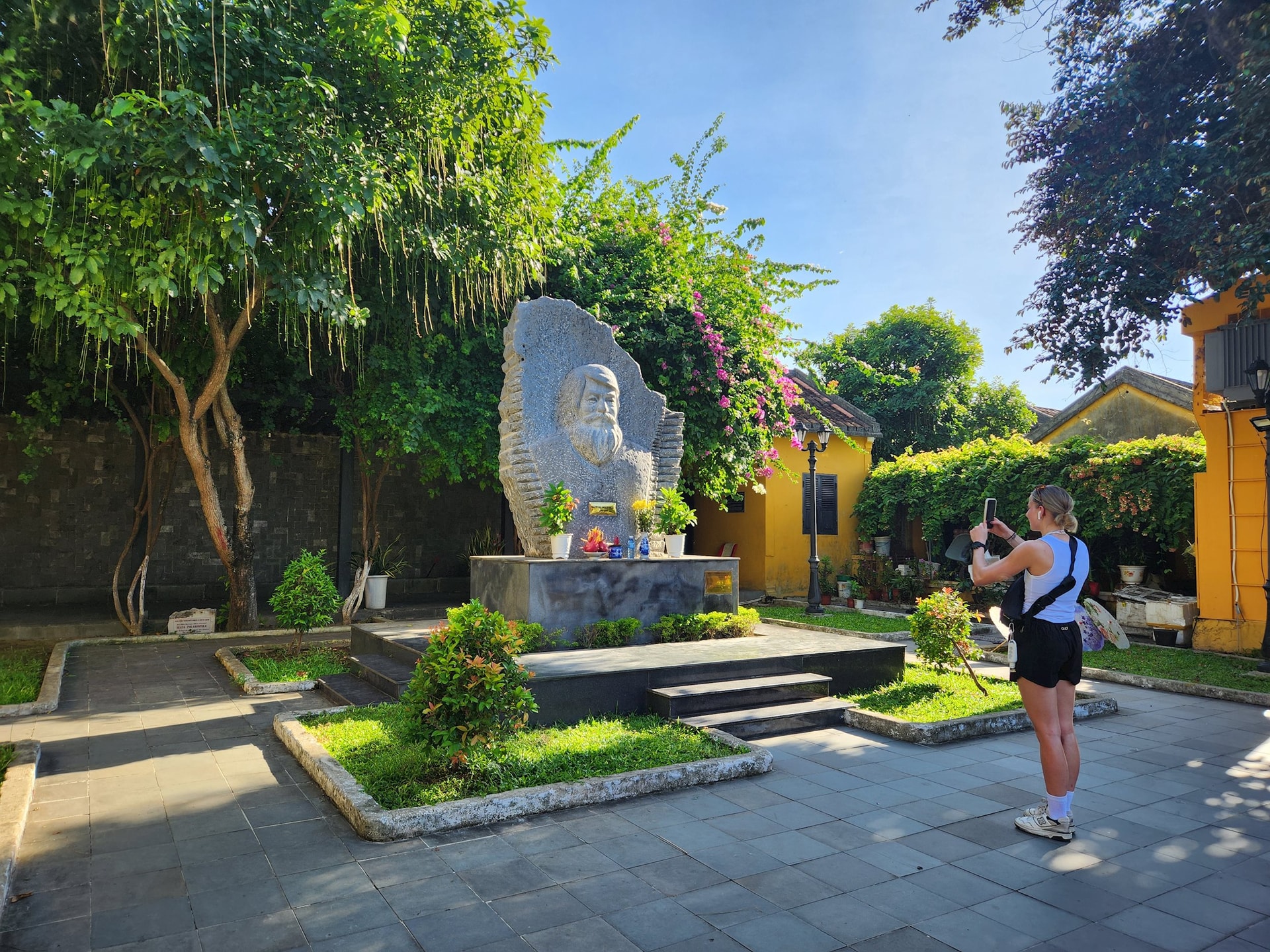
Many tourists visiting Hoi An ancient town linger curiously by the small park where a bas-relief depicting a foreigner is located. To passersby, the face in the bas-relief may be unfamiliar. But to the people of Hoi An, it is a benefactor – a very dear friend – Kazik.
The connection between the late Polish architect Kazimierz Kwiatkowsky (1944-1997) (affectionately known as Kazik) and Hoi An was quite serendipitous. Professor, Doctor, and Architect Hoang Dao Kinh, a member of the National Council for Cultural Heritage, recounts that Kazik's first encounter with Hoi An took place in the spring of 1982.
"At that time, we had heard about the beauty of Hoi An but had never been there, so I invited Kazik to visit Hoi An because I knew that Polish experts had a lot of experience in preserving and restoring ancient cities, in addition to implementing conservation of Cham tower relics. Before that, no one in Hoi An had mentioned preserving this heritage city. After touring Hoi An and returning to meet the town's leaders at the time, Kazik exclaimed that Hoi An was a mythical story," Professor Hoang Dao Kinh recounted.
Kazik asserted that Hoi An must develop through tourism and will certainly become wealthy from tourism.
"At that time, Hoi An was not included in the Vietnam-Poland cooperation plan that we were assigned by the Ministry of Culture and Information, but after this trip, we agreed to help Hoi An outside of the plan," Professor Hoang Dao Kinh recalled.
According to Mr. Nguyen Su, former Secretary of the Hoi An City Party Committee, during those years, Kazik sacrificed his days off to work with officials from the Hoi An Town Culture and Information Department, the Conservation and Museum Department of the Quang Nam - Da Nang Department of Culture and Information, and the Central Center for Design and Restoration of Monuments (now the Institute of Conservation of Monuments under the Ministry of Culture, Sports and Tourism) to survey, conduct fieldwork, and evaluate each house in Hoi An.
He also actively prepared the necessary documents so that on March 19, 1985, the Hoi An Ancient Town was recognized as a National Historical and Cultural Monument by the Ministry of Culture and Information.
Kazik was one of the pioneers who laid the foundation stone for Hoi An's recognition as a World Cultural Heritage site.
Professor Hoang Dao Kinh: “It is already precious enough for a person of any nation to know how to love, be proud of, protect, and fight for the cultural heritage of their nation. For a foreigner to deeply love and dedicate themselves to the cultural heritage of another country until their last moments is truly wonderful and rare. Kazik is such a person.”
Stay on the same street
As if by fate, the Polish architect passed away suddenly in Hue on the very day that Hoi An was recognized as a National Monument (March 19, 1997), and also the day Hoi An was about to be recognized as a World Cultural Heritage site. Kazik passed away with his dreams for Hoi An still unfulfilled.
In the years that followed, this ancient town gradually reaped the rewards, fulfilling Kazik's earlier assertion that "Hoi An must become wealthy from tourism." And in every step of the town's transformation, its residents silently remain grateful to Kazik.
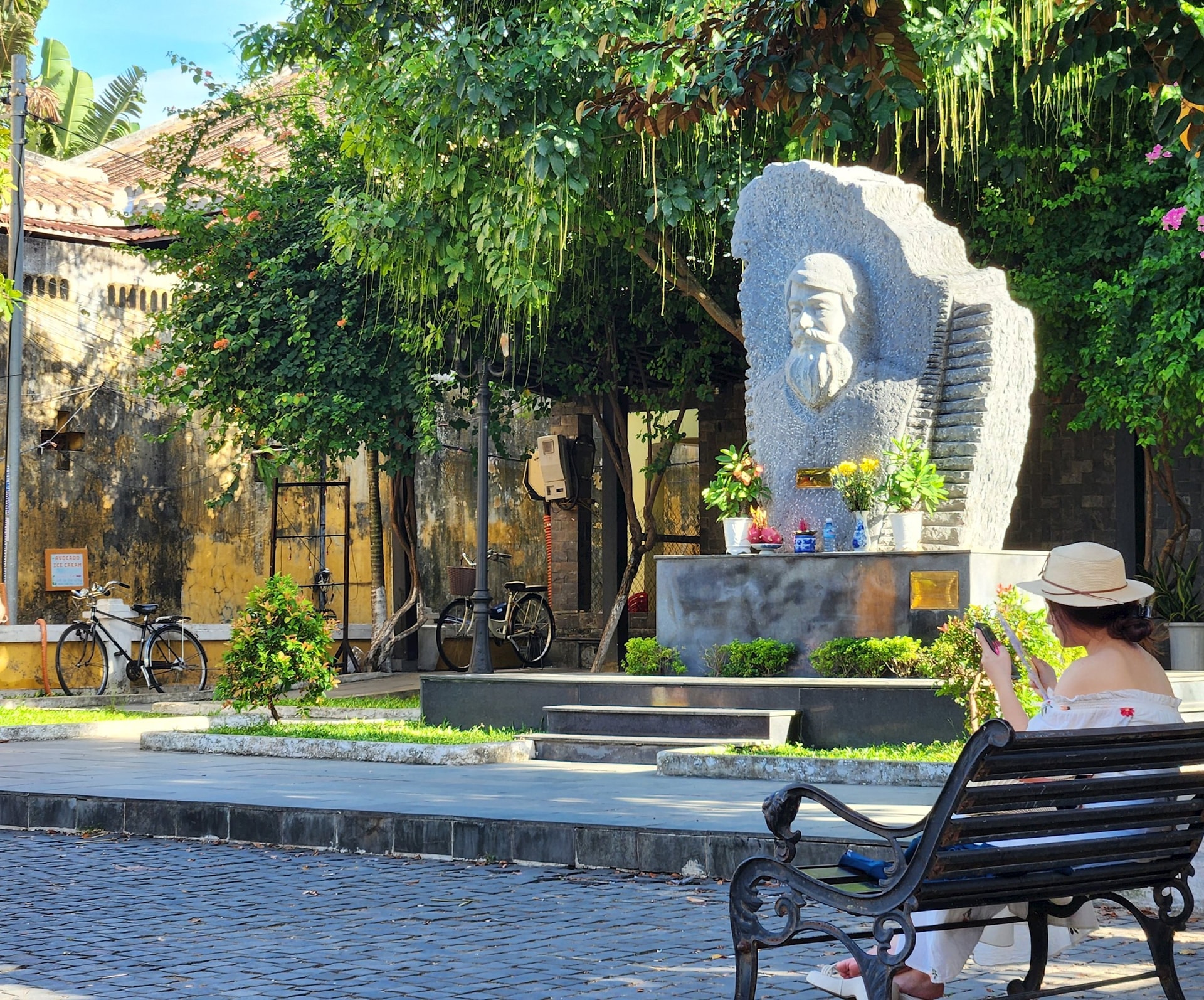
In 2007, the Hoi An authorities began constructing a small park in the heart of the old town and erected a bust to commemorate Kazik's contributions. Every morning, as one strolls through this park, it's easy to spot vendors meticulously sweeping the grounds, occasionally placing a few fruits as a token of gratitude to Kazik, even though many have never met the Polish architect.
According to Professor Hoang Dao Kinh, in Vietnam and even globally, it is very rare to place a statue of a conservationist in a public space. Establishing Kazik Park right in the Old Town is a beautiful gesture to ensure Kazik remains with Hoi An forever, and also demonstrates the affection of the people of Hoi An for Kazik's contributions to this ancient city.
Behind the relief sculpture is the shade cast by the crape myrtle tree and the bougainvillea trellis – two characteristic plants of the old town where Kazik lingered countless times during his 15-year journey in Hoi An. Perhaps in some conceptual space, Kazik found contentment in staying with the town and always being affectionately welcomed and remembered by its residents with so much gratitude.
Source: https://baodanang.vn/nguoi-o-lai-cung-pho-co-3298777.html
![[Photo] Secretary of the National Assembly Party Committee, Chairman of the National Assembly presides over the meeting of the Standing Committee and Executive Committee of the National Assembly Party Committee.](https://vphoto.vietnam.vn/thumb/1200x675/vietnam/resource/IMAGE/2026/06/03/1780480353201_ndo_br_bnd-2585-jpg.webp)

![[Photo] First session of the 14th Congress of the Vietnam Trade Union](https://vphoto.vietnam.vn/thumb/1200x675/vietnam/resource/IMAGE/2026/06/03/1780465947883_ndo_br_img-3852-jpg.webp)
![[Photo] General Secretary and President To Lam presides over a meeting with the Central Organizing Committee.](https://vphoto.vietnam.vn/thumb/1200x675/vietnam/resource/IMAGE/2026/06/03/1780482764658_a1-bnd-4741-3342-jpg.webp)
















![[Infographic] Over 1.2 million candidates registered for the 2026 High School Graduation Exam](https://vphoto.vietnam.vn/thumb/402x226/vietnam/resource/IMAGE/2026/06/03/1780496872518_w_20260603205412.jpeg)








































![[Video] Sunset at Lap An Lagoon – Where the sun sets over the fishing nets](https://vphoto.vietnam.vn/thumb/1200x675/vietnam/resource/IMAGE/2026/05/31/1780192137701_beach-landscape-sea-water-nature-grass-745871-pxhere-com.jpeg)




































Comment (0)